• F2
  • F4
  • F1
  • F3

The Textile Research Centre, Leiden.The Textile Research Centre, Leiden.From early 2026, the Textile Research Centre, Leiden, the Netherlands, is offering a total of seven junior and four senior fellowships for up to six months each. The first junior fellow has started her work in Leiden in April.

The fellowships are being sponsored by the Gieskes-Strijbis Foundation, Amsterdam. Fellows are invited to carry out research based on the TRC’s extensive textiles and dress collection of some 53,000 objects (click here for the catalogue). The junior fellows are supervised and assisted by TRC staff; senior fellows carry out independent research.

We are now opening the second round of the fellowships that covers:

  • Two junior positions
  • One senior position

These will be starting in October 2026 (with a degree of flexibility), for a duration of up to 6 months. Applications for these positions should be submitted by email to the TRC by 20 June 2026 (Dit e-mailadres wordt beveiligd tegen spambots. JavaScript dient ingeschakeld te zijn om het te bekijken.)  with the reference: ‘Fellowship programme Junior/ Senior' (depending on the position applied for).
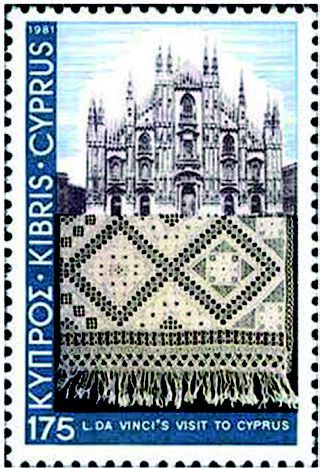
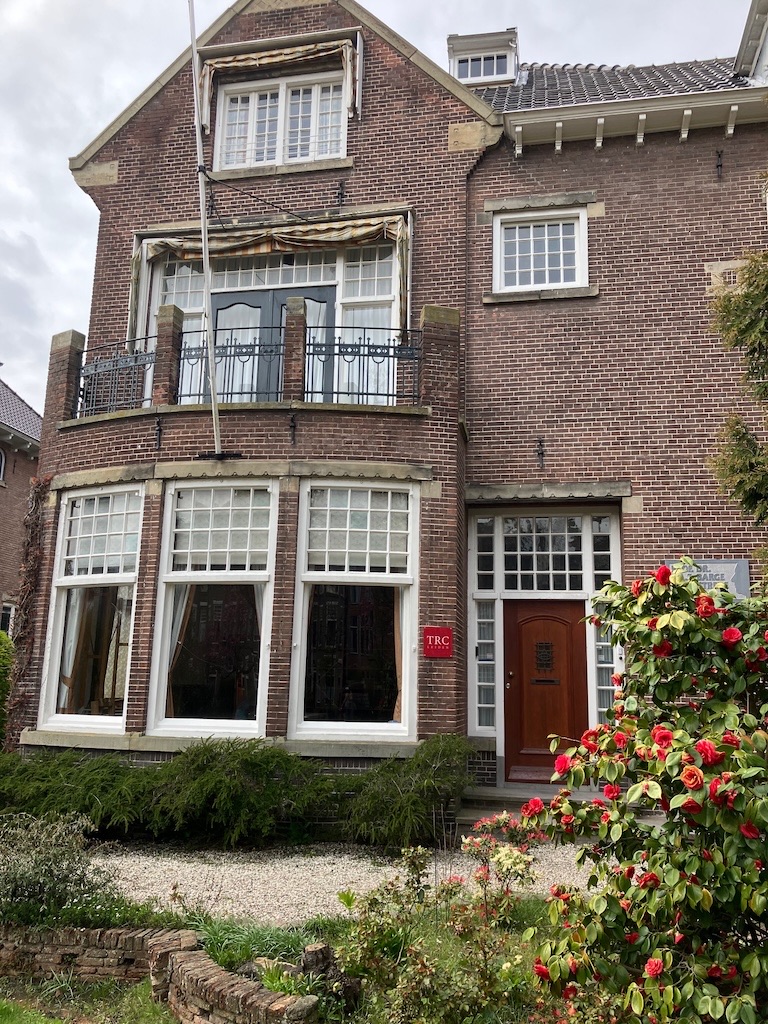
Fig. 1. Postage stamp issued in Cyprus in 1981 to commemorate the 500th anniversary of the visit of Leonardo da Vinci to Cyprus. Above: The Duomo in Milan. Below: A piece of Lefkara lace.Fig. 1. Postage stamp issued in Cyprus in 1981 to commemorate the 500th anniversary of the visit of Leonardo da Vinci to Cyprus. Above: The Duomo in Milan. Below: A piece of Lefkara lace.The TRC Leiden is very pleased to announce a special workshop on Lefkara or Lefkarika lace, scheduled for 21 May, and repeated on 22 May. The workshops are given by Eleni Anemomilou, who is coming especially to The Netherlands to give these and other workshops. Her trip is organised by the Cyprus Handicraft Service. 

Lefkara lace or whitework is one of the embroidery techniques that were traditionally practised in Cyprus. It is a form of cutwork with satin stitch details. It is often classed as a form of embroidered lace. Nelleke Ganzevoort wrote a detailed blog about this fascinating technique five years ago, which the TRC published on 21 December 2021. In 2009, the Lefkara lace technique was included in the UNESCO Representative List of the Intangible Cultural Heritage of Humanity.

Lefkara lace is said to originate from the village of (Pano or Kato) Lefkara, Cyprus, and is locally called tayiadha (compare the Italian term punto tagliato, for cutwork ). Lefkara lace is said to have been developed in the time of the Venetian occupation of Cyprus (1489-1571), when reticella work was introduced to the island and local women copied the whitework's appearance, but using a different technique.

The move to Boerhaavelaan 6 is nearly finished, just a few more weeks and all the rebuilding, painting, furnishing, packing and putting away of boxes will be over! A great relief to all.

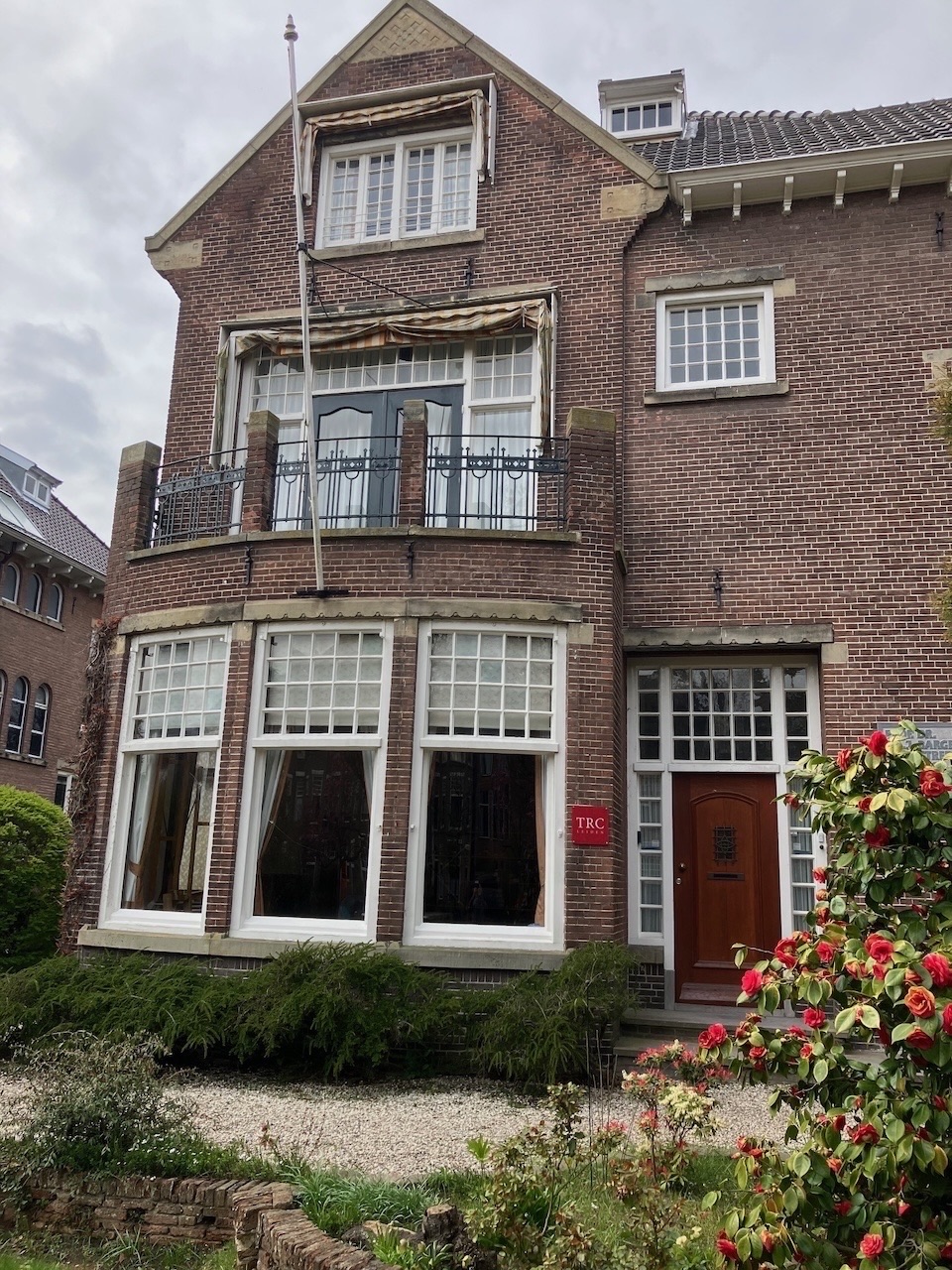
I would just like to extend a big ‘Thank You’ to everyone who has made a donation to the TRC moving fund. It made such a difference to have your support, best wishes and interest in what we are doing and plan to do. Please feel free to come and see what you have helped to create - the new and improved TRC is an elegant, early 20th century town villa!

Inevitably, we continue looking for help with different projects, and any further financial assistance will be greatly appreciated.

The TRC will open again to the public on Monday 11th May, but in the meantime, workshops, study days and lectures are already being presented. And I can assure you, there is lots more to come!.

Gillian Vogelsang-Eastwood, Director TRC, 4 April 2026.

The new home of the TRC, from the garden. Photograph: Willem Vogelsang.The new home of the TRC, from the garden. Photograph: Willem Vogelsang.From April 1st, we are officially the proud tenants of the urban villa Boerhaavelaan 6, Leiden. The house is located some 200 metres from the Central Leiden Railway Station, Oegstgeest exit.

Please have a look at the list of activities below (you can find the provisional list of activities for 2026 here), and let us know which ones you would like to attend. Please register in advance at Dit e-mailadres wordt beveiligd tegen spambots. JavaScript dient ingeschakeld te zijn om het te bekijken..

1 April. Workshop Irish crochet lace

3 April. Study day: Khayamiya appliqué panels from Cairo, Egypt

8 April. Beginners course: Bobbin lace (3)

15 April. Workshop: Basics of band weaving

19 April. Sunday lecture: The history of the paisley motif

20-24 April. TRC Five-Day Intensive Textile Course

29 April. Advanced course: Bobbin lace (4) 

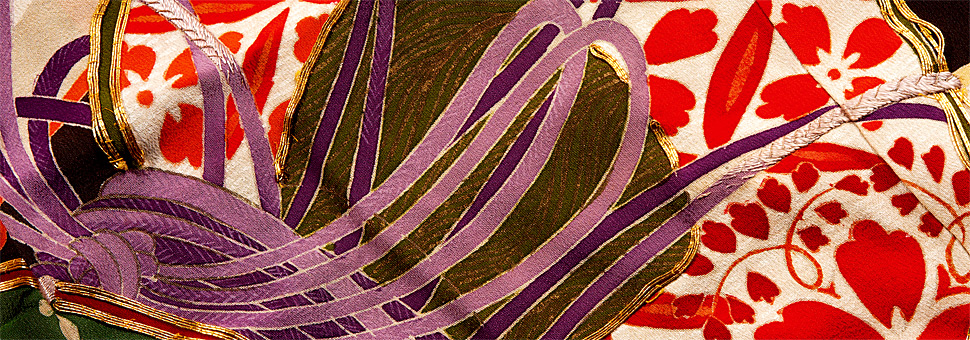
Moroccan kaftan for a woman, made from a Japanese kimono sash (obi), 1950s (TRC 2001.0074).Moroccan kaftan for a woman, made from a Japanese kimono sash (obi), 1950s (TRC 2001.0074).

3 May. Sunday lecture: Sustainability and WWII textiles

6 May. Workshop: Basics of felt making

8 May. Study day: What is embroidery?

13 May. Workshop: Historical handsewing techniques

13 May. Advanced course: Bobbin lace (5)

20 May. Workshop: Palestinian embroidery

27 May. Advanced course: Bobbin lace (6)

31 May. Sunday lecture: Tutankhamun's wardrobe

Yesterday, Friday 20th March, the rental contract for Boerhaavelaan 6 was signed between the owners, the Stichting Monumentenbezit, and the TRC! This may be one small step for mankind, but it is one large step for TRC’s plans for becoming the international hub for textile and dress studies and for making Leiden into the ‘City of Textile Knowledge’ a reality! 

Photograph, from left to right: Mark van den Bos, Director Monumentenbezit, Dr. Gillian Vogelsang-Eastwood, Director TRC and Prof. Bas ter Haar Romeny, Chair of the TRC Board.Photograph, from left to right: Mark van den Bos, Director Monumentenbezit, Dr. Gillian Vogelsang-Eastwood, Director TRC and Prof. Bas ter Haar Romeny, Chair of the TRC Board.

An extensive programme of research, events, and textile outreach is being organised for this year and indeed for the years to come. And the signing of the contract is a very significant moment for us all.

The new premises of the TRC, from the back garden.The new premises of the TRC, from the back garden.Robert Spiegelman is an American friend of the TRC who has been visiting Leiden and the TRC for some years, and has been supporting our work in many ways.  Here is his personal appeal:

I am a huge, and hugely unlikely supporter of the TRC.

Let me explain. I am an American who loves Leiden and spends more than a tenth of my time there every year. A few years back, my curiosity was peaked. I had read about the TRC and while cycling by I met Gillian. It was truly inspirational. She gave me a tour, told me about their work, explained the plan/intention to go from an “academic volunteer run knowledge center” in a nondescript street front location to become everything it could be, a fully professionally run organization and an internationally recognized expert and leader. The dedicated group has done an amazing job.

I was impressed and immediately began making contributions to keep the lights on.

Why do I say “unlikely?” While I love Leiden, it is not my home. I have no interest in fashion and while I suppose textiles and textile history are important, neither was an interest of mine. What impressed me was the importance of the work that was being done, the idea that textiles, fashion, and the textile trade could be used to trace changes in civilization worldwide for several centuries. The parallels are fascinating.

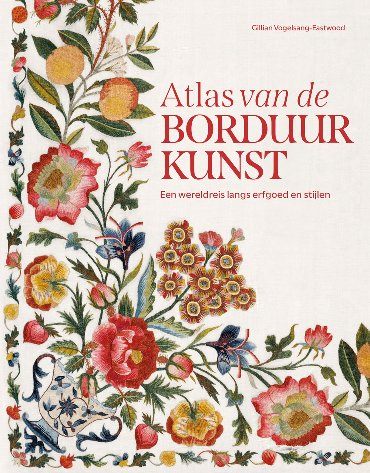
Dutch national newspaper Trouw published a review by Els de Baan of the Dutch edition of the Atlas of Embroidery / Atlas van de Borduurkunst, written by Gillian Vogelsang-Eastwood and published last week by Princeton University Press and (in Dutch) by WBooks.
You can read the review (in Dutch) by clicking here.


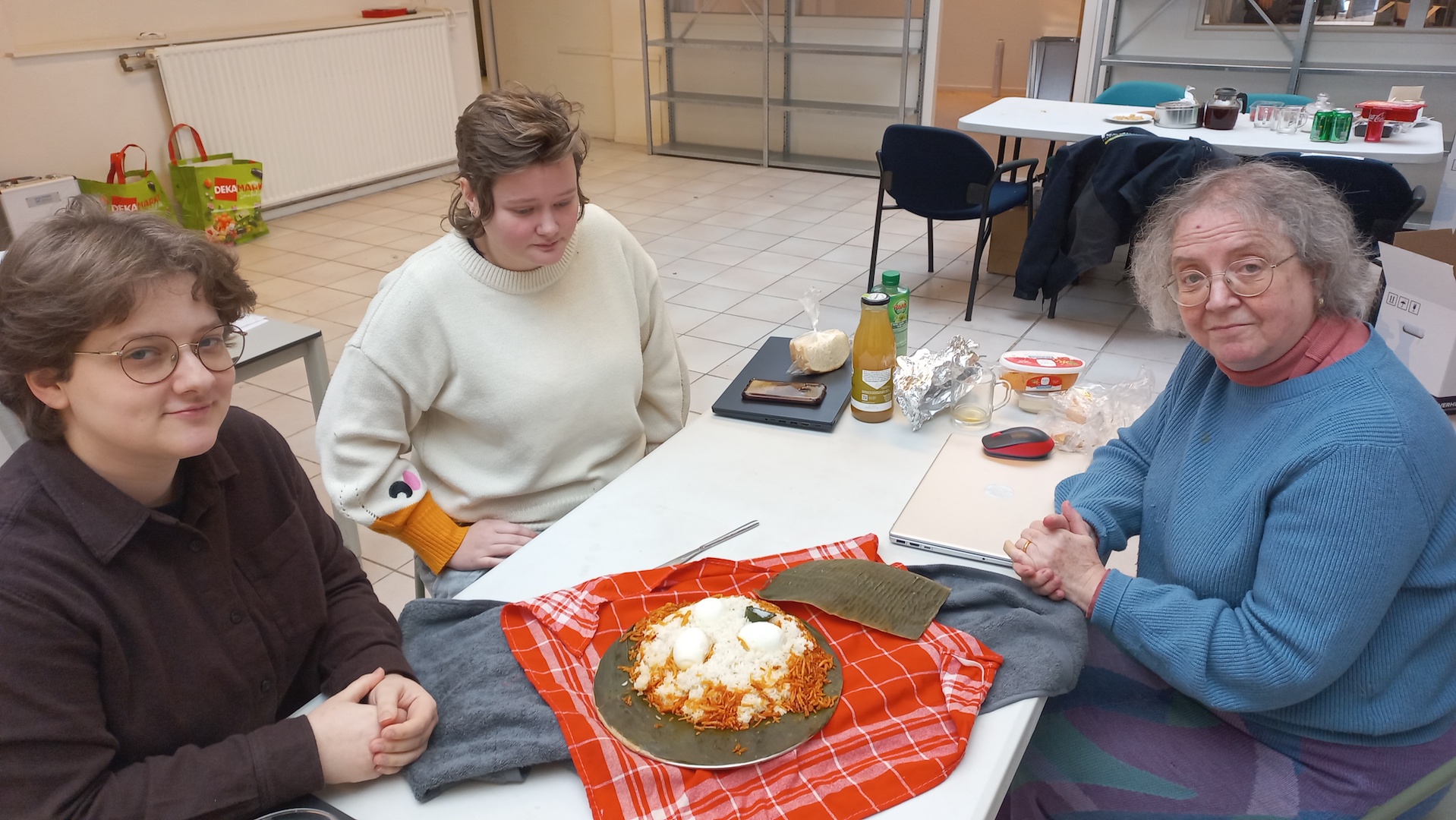
Today, Friday 16th January, we finished the first stage of the TRC move to other premises. We started off today with a traditional meal prepared by Herra, our Indonesian volunteer. The meal included rice, salt and boiled eggs. Such food, accompanied with shrimps, is associated with the blessings for a move and good luck with all that will happen in the future. How appropriate. And how kind of her to prepare and bring the meal. 

For three days the removal people have been busy loading the c. 4,000 boxes of the textiles and dress collection, plus furniture and whatever else that has to be shifted, into twelve containers. These will be stored and be taken to the Boerhaavelaan in Leiden in early March.

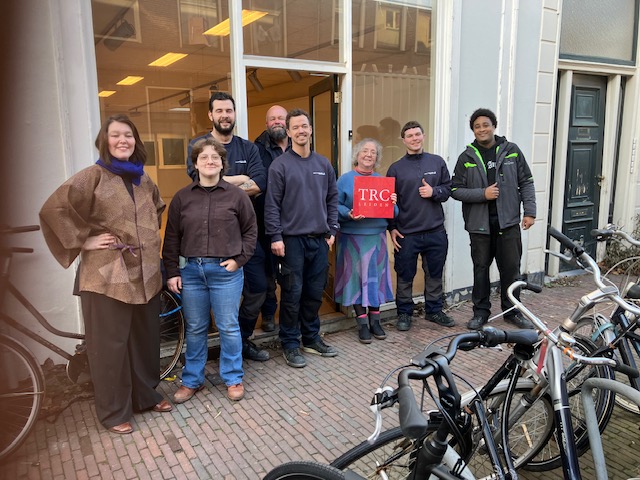
The removal team and TRC staff posing in front of the rapidly emptying former premises of the TRC along the Hogewoerd.The removal team and TRC staff posing in front of the rapidly emptying former premises of the TRC along the Hogewoerd.

The last few days were very exciting, and the removal lads were absolutely great. They worked very hard, perhaps stimulated by the coffee and biscuits that we provided. We are looking forward to seeing them during the second stage of the move, and we are sure that they won't mind helping us again.

Indonesian meal, prepared by one of the TRC volunteers, to guarantee good fortune with the move. Friday morning, 16th January.Indonesian meal, prepared by one of the TRC volunteers, to guarantee good fortune with the move. Friday morning, 16th January.

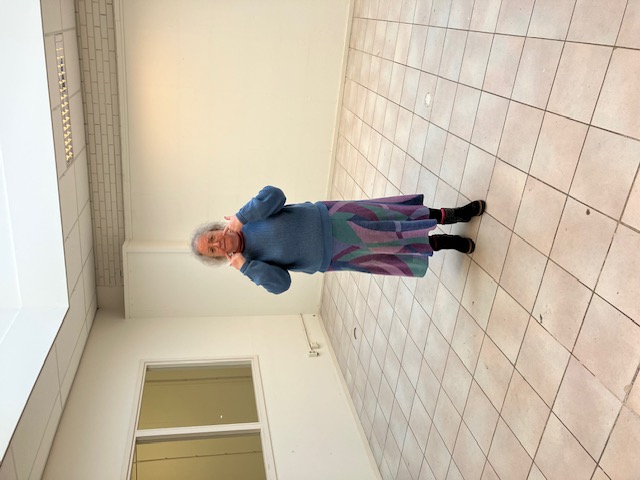
It is very empty!It is very empty!

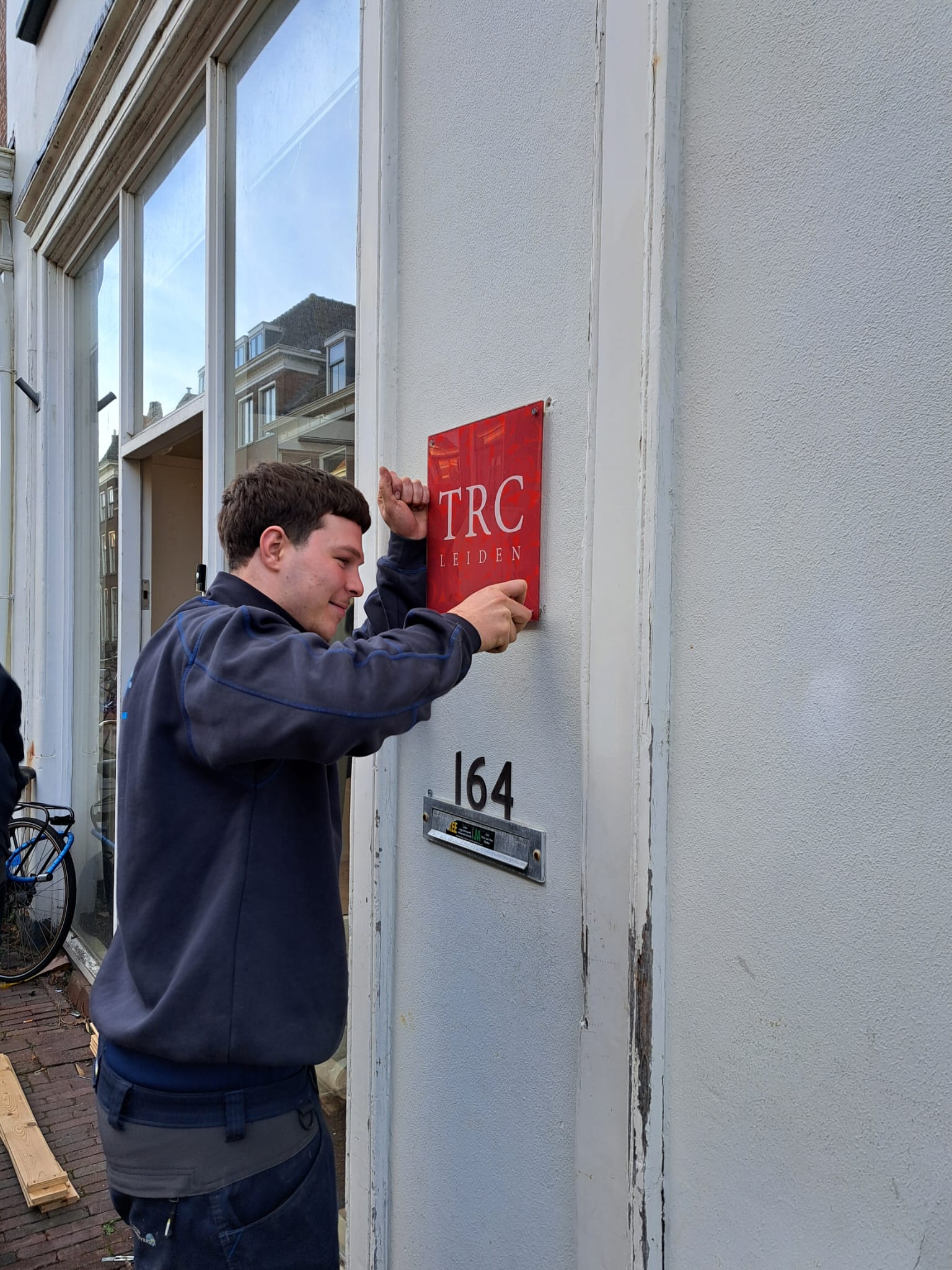
 The last act: Removing the TRC sign board. We will stick it up in the new building.The last act: Removing the TRC sign board. We will stick it up in the new building.


Subcategorieën

Zoek in TRC website

Contact

Boerhaavelaan 6
2334 EN Leiden.
Tel. +31 (0)6 28830428  
office@trcleiden.org

facebook 2015 logo detail


instagram vernieuwt uiterlijk en logo


Bankrekening

NL39 INGB 0002 9823 59, t.a.v. Stichting Textile Research Centre.

Openingstijden

Het TRC is gesloten tot maandag 4 mei vanwege de verhuizing naar de Boerhaavelaan. We blijven bereikbaar via email (office@trcleiden.org) of telefoon: 06-28830428.

Financiële giften

Het TRC is afhankelijk van project-financiering en privé-donaties. Al ons werk wordt verricht door vrijwilligers. Ter ondersteuning van de vele activiteiten van het TRC vragen wij U daarom om financiële steun:

Giften kunt U overmaken op bankrekeningnummer (IBAN) NL39 INGB 000 298 2359, t.n.v. Stichting Textile Research Centre. BIC code is: INGBNL2A

U kunt ook, heel simpel, indien u een iDEAL app heeft, de iDEAL-knop hieronder gebruiken en door een bepaald bedrag in te vullen: 


Omdat het TRC officieel is erkend als een Algemeen Nut Beogende Instelling (ANBI), en daarbij ook nog als een Culturele Instelling, zijn particuliere giften voor 125% aftrekbaar van de belasting, en voor bedrijven zelfs voor 150%. Voor meer informatie, klik hier