
 Angora goat.2 December 2022: The last few days at the TRC have had a rather Turkish feel to them! On Tuesday we welcomed a group of Turkish scholars, namely Dr Arzu Beril Kirci, Dr Alev Ayaokur and Dr Mehtap Türkyilmaz, from Koç University in Istanbul. More specifically, our visitors came from Koç University’s Ankara Research Centre, which is carrying out research into the history of this ancient Turkish city.
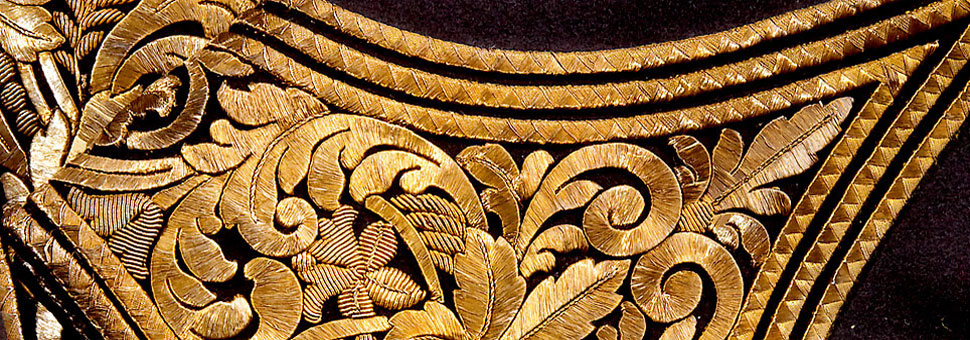
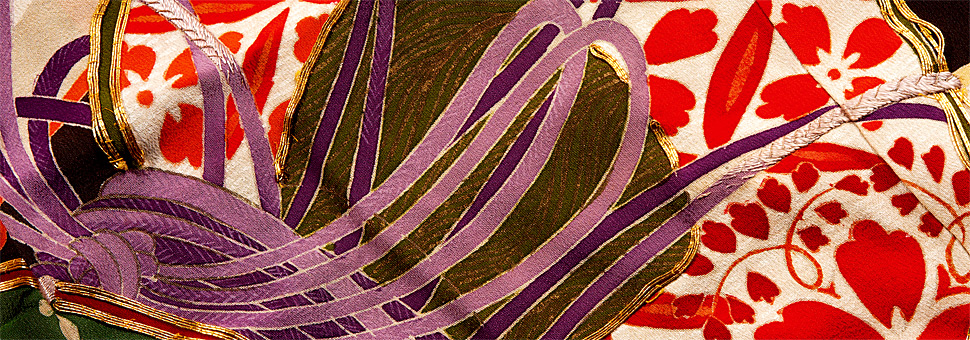
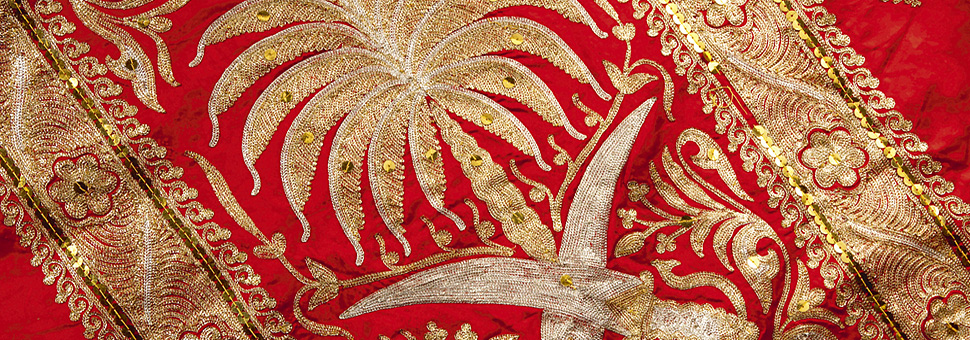
Part of their research includes understanding and tracing the history of sof, or mohair, which is a fibre that traditionally comes from the hair of the Angora goat. For hundreds of years Ankara was a major international centre for the breeding of Angora goats for the fibres, yarns and woven items, all of which were particularly popular in various West European countries including Britain, France and the Netherlands.
Arzu Beril Kirci donated to the TRC Leiden a book in Turkish and English that tells the story of sof with numerous historical and modern illustrations. This book will be included in the TRC Library catalogue shortly (Sof. Weaving the History: Mystery of a City, by Filiz Yenisehirlioglu (Editor), Gözde Çerçioglu Yücel (Editor). Koc University Press 2021).
We had a long talk about sof, about research ideas and methodology, and indeed about dreams for the future. We have many aims and goals in common, especially wanting to make the study of textiles accessible to people with a wide range of academic and non-academic interests and backgrounds.
 Pediment of In den Vergulden Turk (AD 1673), Breestraat, Leiden. The Angora goat can be seen to the right. Photograph courtesy Robbiedoes.
But why the interest in Leiden? Well, the city was an important centre for mohair cloth (known in Dutch as grein) from the early 17th century, and various Dutch merchants, including some from Leiden, had commercial centres/houses in Ankara and elsewhere in Turkey from this date onwards. There was even a 'grein-hal' in Leiden
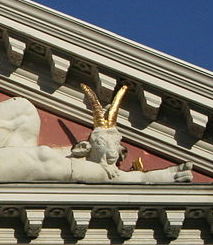 Detail of the Angora goat in the pediment of In den Vergulden Turk, Leiden (AD 1673). Photograph courtesy Robbiedoes.A reminder of the importance of this trade can be seen in the facade of a building in central Leiden (In den Vergulden Turk, 'In the gilded Turk'; AD 1673) that depicts the Turkish admiral Hayreddin Barbarossa or Barbarossa Khair ad-Din Pasha (c. 1475-1546), flanked by the Roman gods Neptune (water, overseas contacts) and Mercury (trade) and an Angora goat!
Sometimes the raw mohair fleeces were sent from Turkey, on other occasions it were yarns and/or woven textiles. What is emphasised in the book and during our talks was the importance of this trade in Turkey, and yet how little we know about the actual local processes and how few surviving examples of sof have actually been analysed for fibre percentage (100% mohair or perhaps a mohair and wool or silk mix, and what percentages of each were being used?), and what were the spin forms? Additionally, the dyes used to make a wide variety of colours with recorded Turkish names ranging from violet to grass hint at a wide range of nuances in the colours produced. But what plants were used and what sort of mordants did they use?
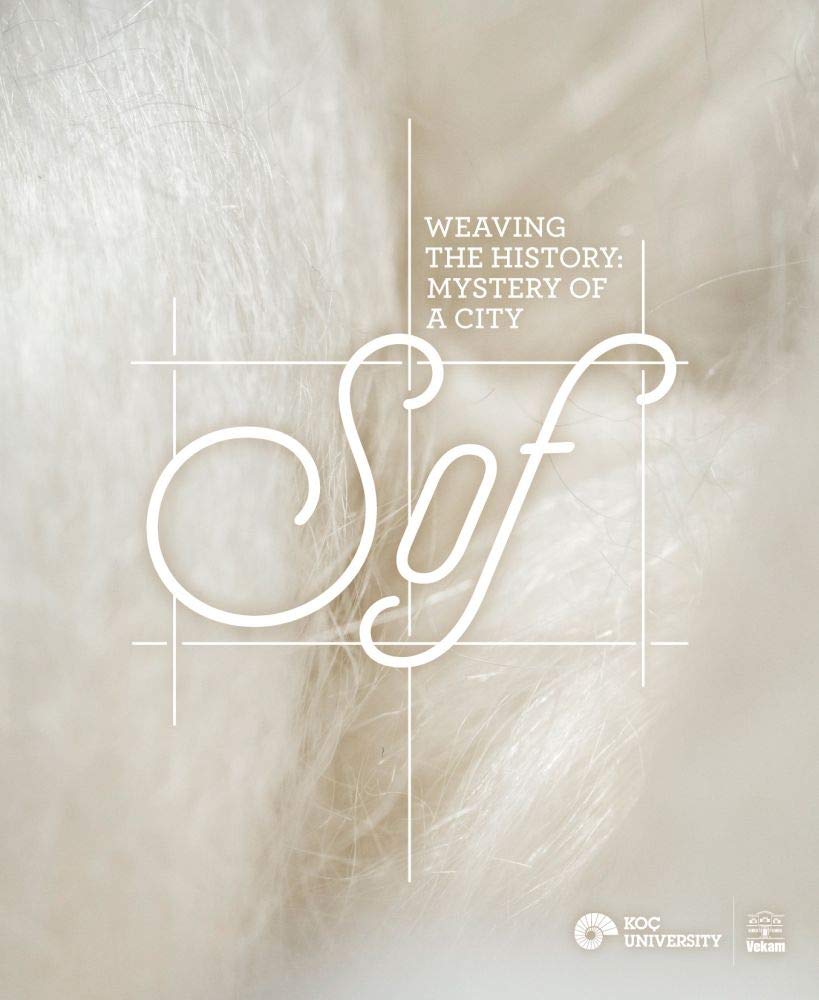 Sof. Weaving the History: Mystery of a City, by Filiz Yenisehirlioglu (Editor), Gözde Çerçioglu Yücel (Editor). Koc University Press 2021.The need for more research and technical equipment is something both our Turkish visitors from the Ankara Research Centre, and the TRC share a desire for!
The next day (Wednesday 30th November) saw my TRC colleague AJ Salter and myself representing the TRC Leiden at a symposium on the theme of sof held at the Museum De Lakenhal, here in Leiden. It was organised in conjunction with Durmus Dogan of TOVER (Turkse Ondernemersvereniging Rijnland), and it was held in the presence of H.E. Saban Disli, the Turkish ambassador to the Netherlands, and Henri Lenferink, the Mayor of Leiden, all of whom gave short talks on the importance of Turkey in the golden age of Leiden textiles, including the production of grein.
Arzu Beril Kirci, who had been at the TRC the day before, gave a very interesting talk on the economic history of mohair, Angora goats, and the Dutch market. There was also a lovely, short film at the end showing a flock of Angora goats! Another talk was by Mehmet Tütüncü, who addressed the historical relations between the Ottoman Empire and the Netherlands.
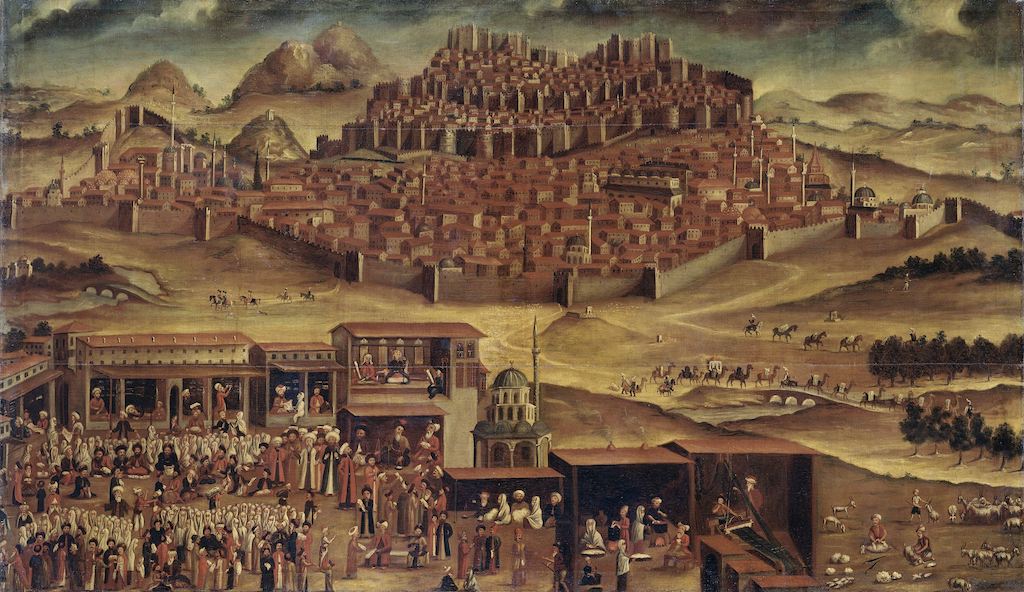 Gezicht op Ankara (‘View of Ankara'), anonymous, 18th century (Courtesy Rijksmuseum Amsterdam, SK-A-2055).
Various speakers mentioned a painting called Gezicht op Ankara (‘View of Ankara), anonymous, 18th century (Rijksmuseum SK-A-2055), which is housed in the Rijksmuseum, Amsterdam and currently on loan to the Rahmi M. Koç Museum in Ankara, possibly for a five year period.
The painting depicts, among many other things, different stages in the process of making mohair cloth, literally from the shearing of the goats to the weaving of the cloth. I was interested to see the type of hand spindle being used. it has no whorl, and the spinning is carried out from a point at the top of the shaft.
This is a type of spindle that is still used in the Balkans. There are several examples in the TRC collection (e.g. TRC 2011.0546). Is it a coincidence that a week ago we had a discussion atthe TRC with a Romanian lady who showed a film of her grandmother using the same type of spindle as in the painting?
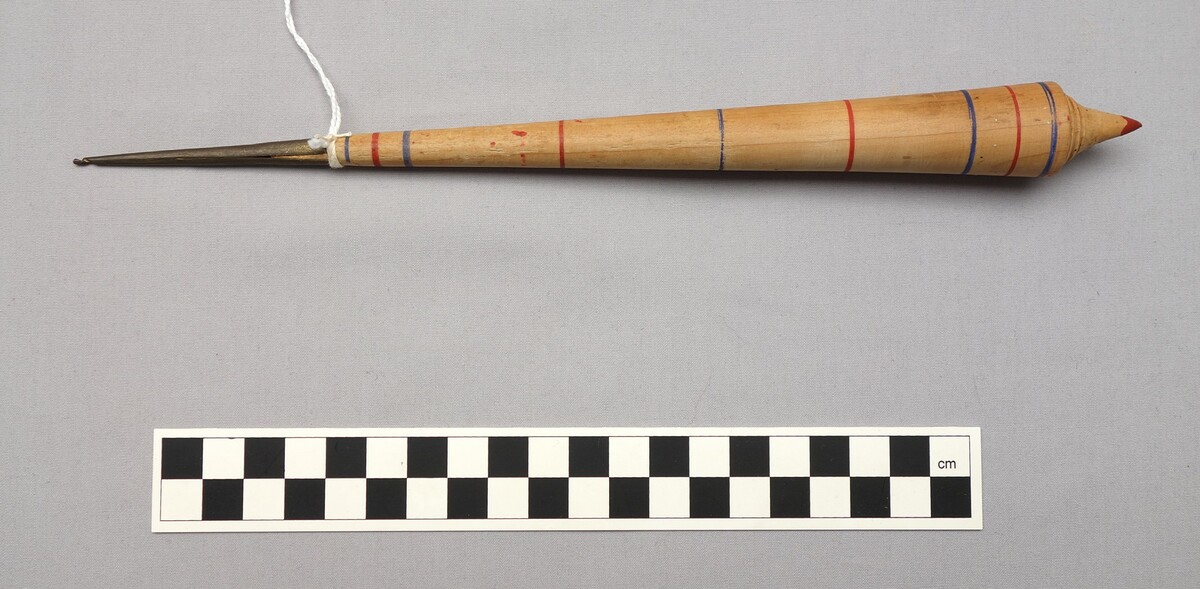 Drop spindle without a whorl, Balkans, mid-20th century (TRC 2011.0546).
I would really like to examine the painting in closer detail – as I am sure there is a depiction of a man holding some form of niddy-noddy used for the reeling of the spun yarn from the spindles prior to the thread being washed.
Another question I have is when did these activities take place? Were different people shearing, spinning, dyeing and weaving all at the same time or does the painting represent some jobs that took place at specific times of the year (such as the shearing in the spring and autumn), while other jobs could take place at any time of the year? So many questions, so few answers.
There was also a talk by Eveline Sint Nicolaas from the Rijksmuseum, Amsterdam, talking about what is now the Palace in Amsterdam (and formerly the city's townhall) and how important it was for several hundred years for merchants, including traders in mohair. She also discussed in general the painting Gezicht op Ankara and other 18th century paintings from the museum's collection that have a Turkish theme.
One last note: We also met Emine Guney, who has long been active in supporting research into the Turkish community in the Netherlands. She is also helping to build up the TRC’s traditional Turkish dress collection and has been acquiring items for us. In addition, next year we are going to have oya classes at the TRC organised by the Stichting Guney. More details to be announced.
In conclusion, there are many possibilities for the TRC Leiden to co-operate with both Koç University and the Stichting Guney in promoting research into the history of Turkish textiles and dress and make these fascinating subjects more widely known here in western Europe! All we need is more space, for research and teaching, including a textile laboratory!
Gillian Vogelsang-Eastwood, 2 December 2022