We have recently been given a linen bag with an embroidered panel (TRC 2023.1972) by Marijke Loots, after a previous visit to the TRC. The bag comes from her brother-in-law’s family, the Bergstra's. They originally come from Friesland, in the northern part of the Netherlands, but nobody is really sure where the bag comes from or how long it has been in the family. The bag and embroidery were examined at the TRC using an ADSM 302 Digital Microscope.
 Detail of an embroidered linen bag from the north of the Netherlands, dated 1815 (TRC 2023.1972).
The bag is 59 x 58 cm in size and is made from hand spun (z-spun) and hand woven linen, as well as being hand stitched with a linen sewing thread. One edge is a fold, the opposite one is finished with a narrow French seam. The front section is made from one piece of cloth, while the back is made from three rectangles of varying sizes, which have been neatly sewn together.
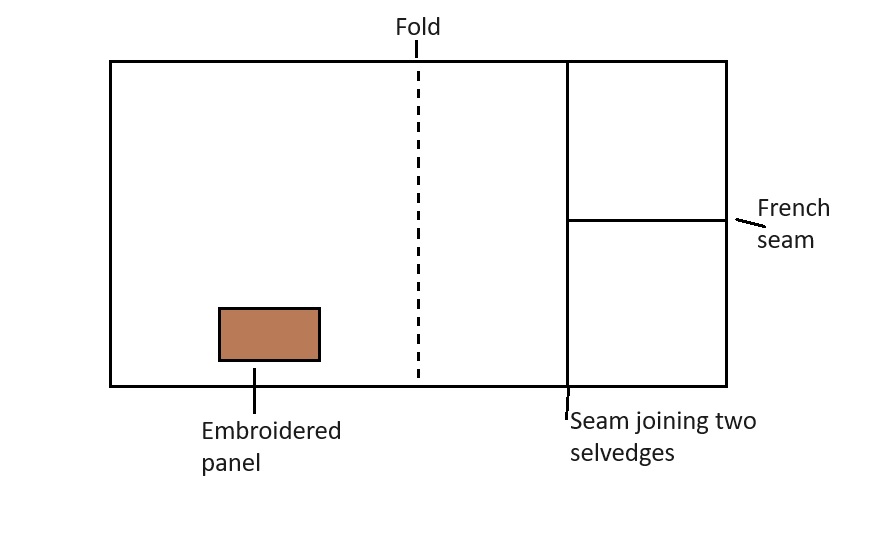 Layout of the bag showing the position of the embroidery, seams and fold lines.
 Detail of the faggoting line that joins the two lower edges of the bag together.
 Close-up photograph of the linen ground and the dark brown cross stitches.The lower edge of the bag has been stitched using a line of decorative faggoting using a white, linen thread. The upper edge is open and has two sets of ties, so it is possible that it is a pillowcase or possibly a laundry bag. There is no evidence of mending or patching.
The embroidered panel consists of a central motif of three carnations in a vase with the number 2 underneath it, and flanked by the initials T and A and the date ANNO 1815 (twice), all worked in cross stitch in a dark brown silk thread that is very lightly spun (S, 2-ply). The stitching is not totally regular, but in the chart given below the design has been slightly ‘neatened’.
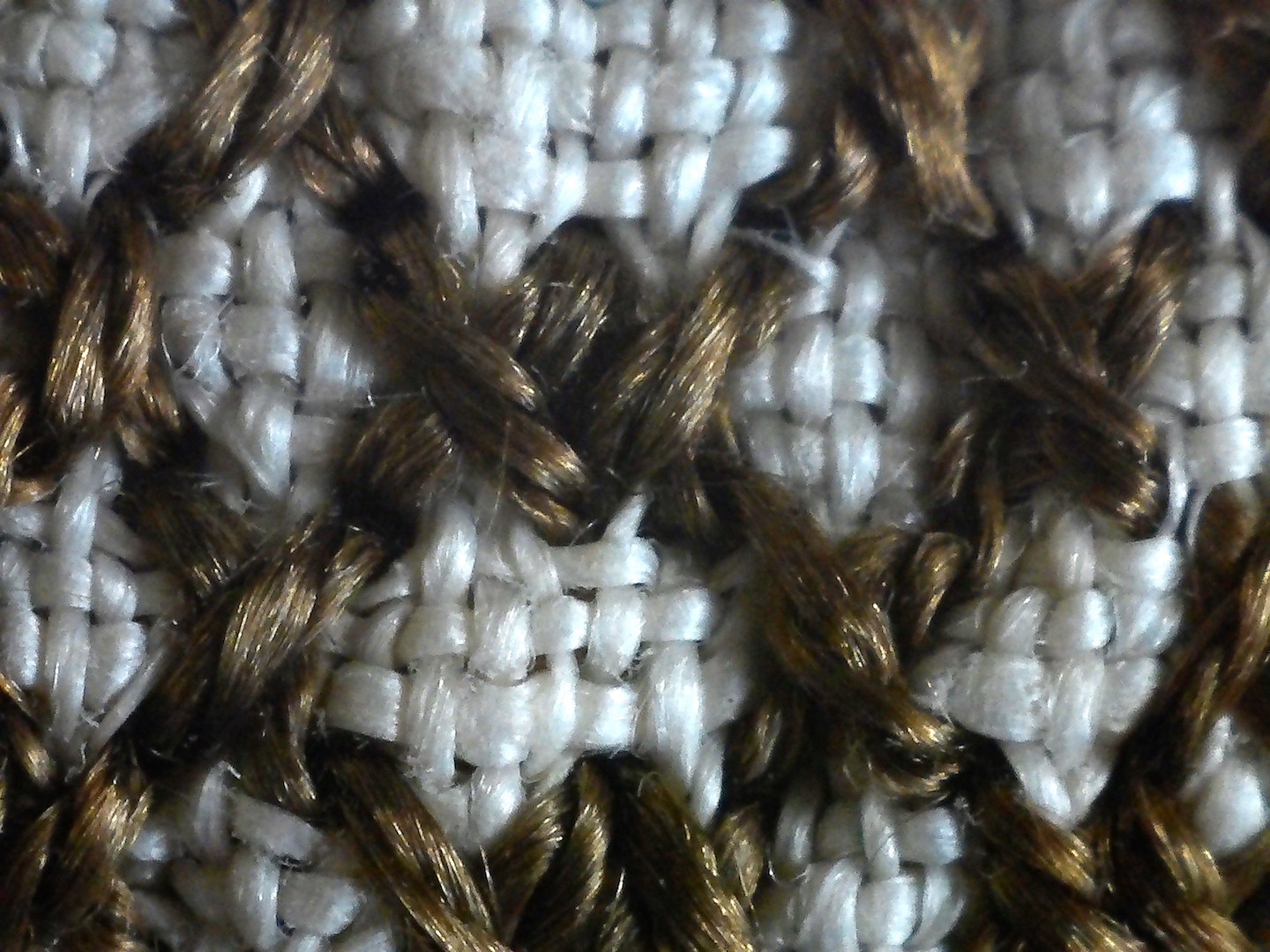 Close-up photograph of the dark brown cross stitches.
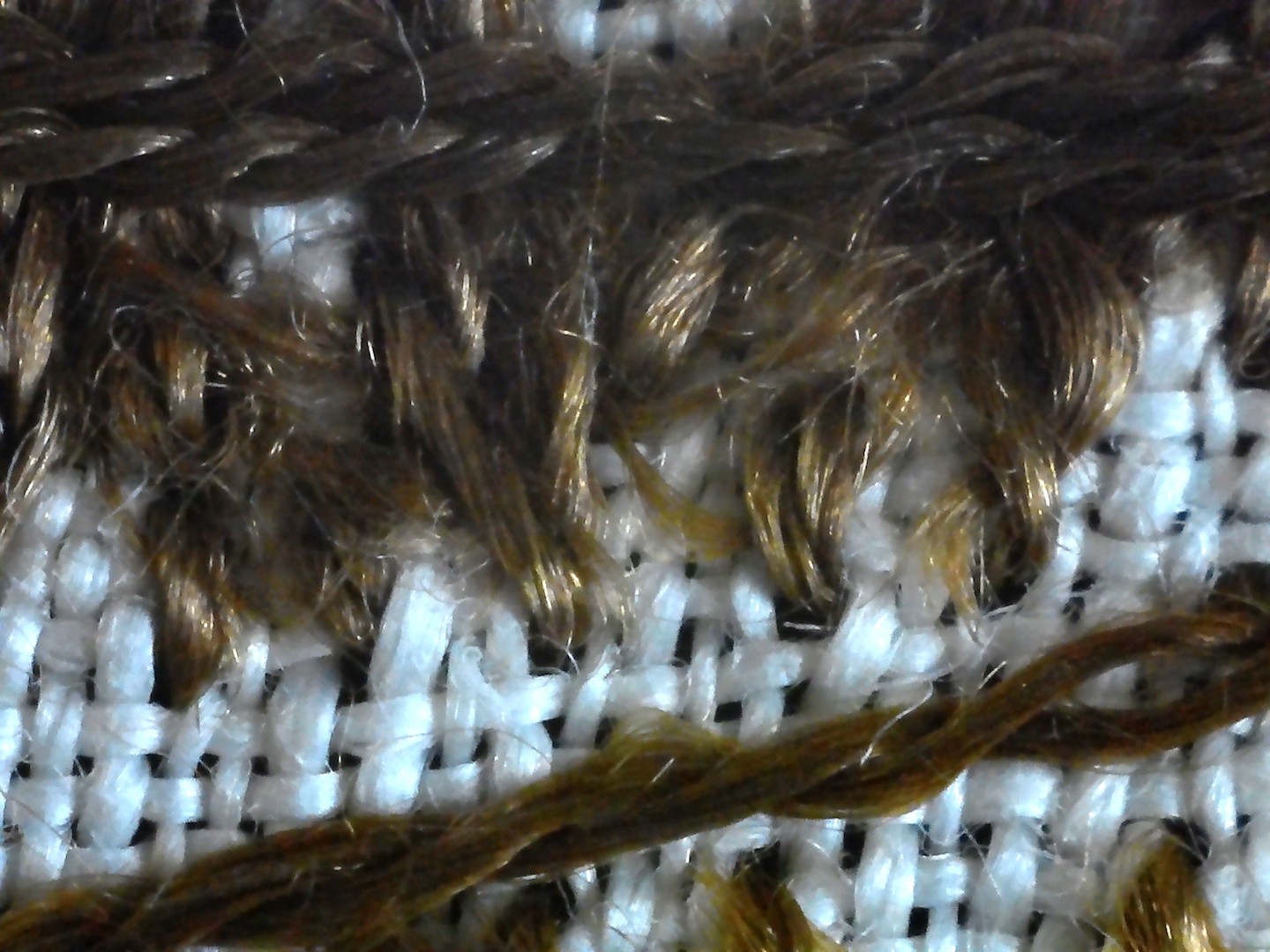 Detail showing the reverse side of the cross stitch stitching, and the ply of the brown silk thread.This style of embroidery and colour are associated in the Netherlands with Friesland and Groningen, in the north of the country.
The ornate style of the A, for example, was often used in Friesland, although it is not unique to this part of the Netherlands (see TRC blog of 25 December 2019).
And yes, when looking at the date 1815 my first reaction was Napoleon, as it is the year of the Battle of Waterloo, when the French leader and his armies were finally defeated.
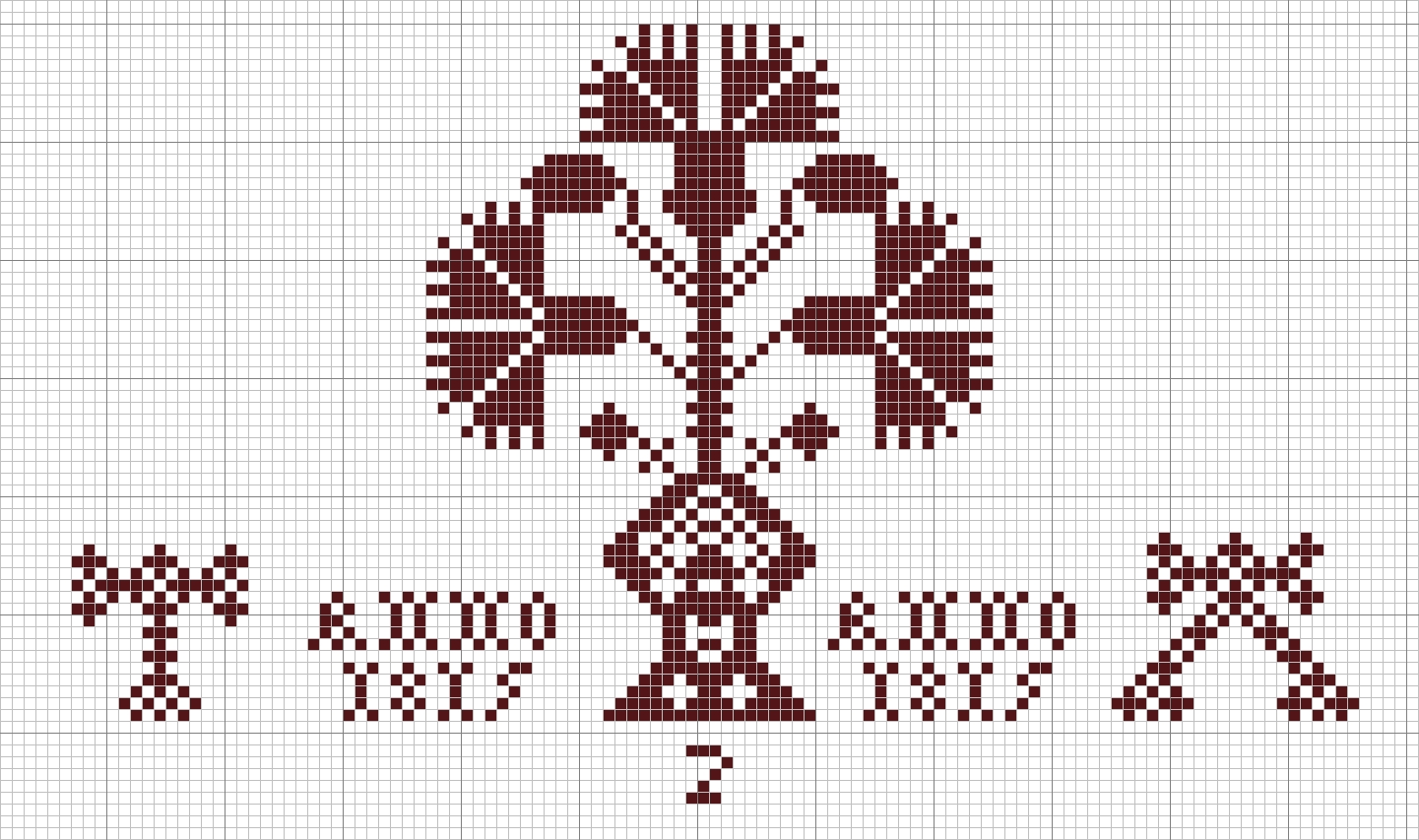 Embroidery chart of linen bag (TRC 2023.1972).
Napoleon Bonaparte was eventually exiled to the remote island of St. Helena. It is worth noting that the TRC houses a piece (TRC 2020.4528) of thick, dark purple woollen broadcloth that is accredited with being part of the pall the covered the coffin of Napoleon when his body was taken in 1840 from St Helena to Paris, prior to being buried in Les Invalides (see a TRC blog of 7 November 2020).
Gillian Vogelsang-Eastwood, 15 October 2023