
I recognised them straight way when going through the TRC collection: bindi stickers (TRC 2014.0519). As a child, I used to stick them on my forehead during dress-up parties with friends. I knew they were something Indian, but my understanding did not go much further than that. Now, seeing them again at the TRC, in a completely different context, I find myself curious about what they actually mean.
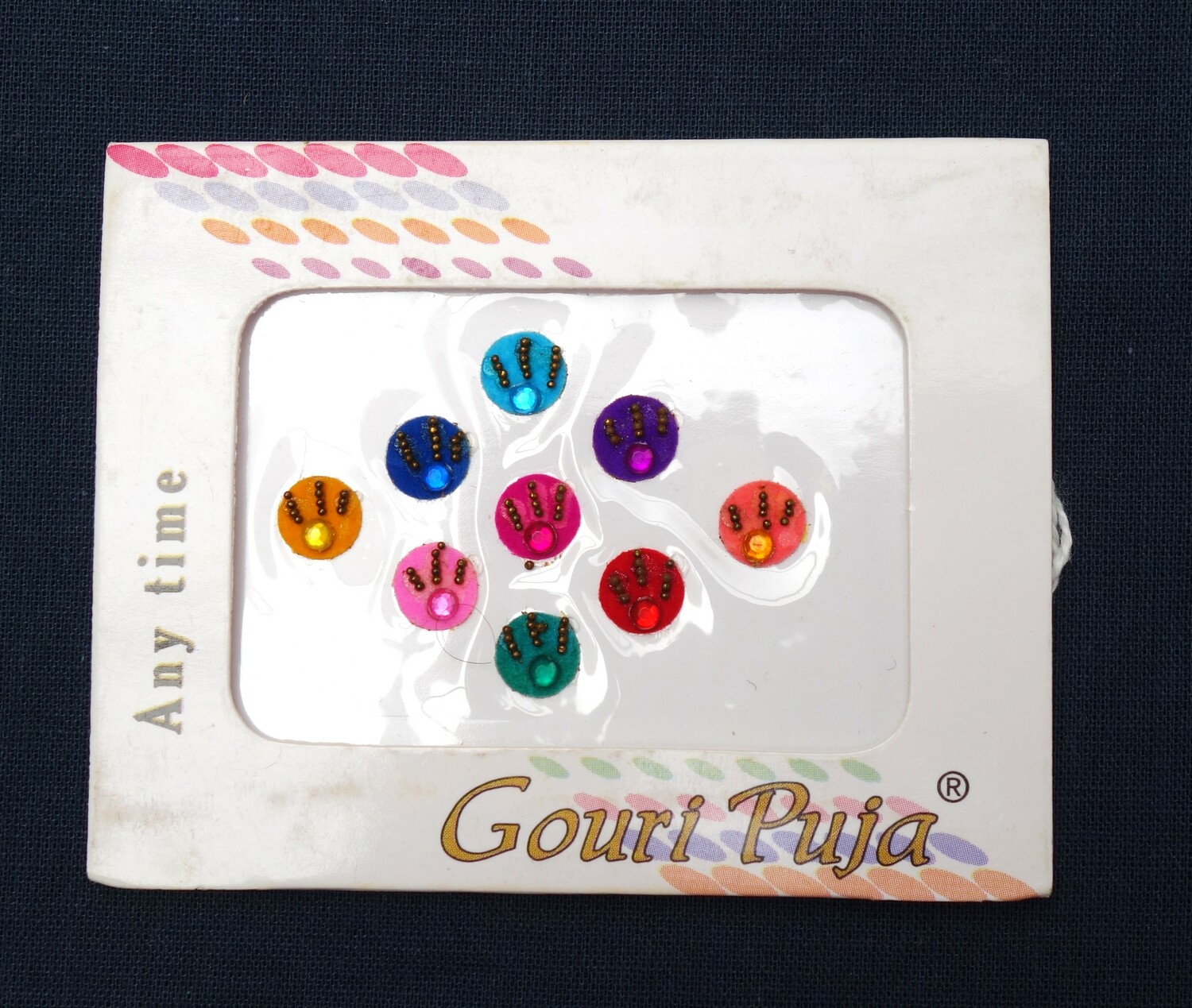 Bindi set from India. Early 21st century. TRC 2014.0519.
The word bindi comes from Sanskrit bindu ( बिंदु)), meaning “drop” or “dot”. It is a form of tika or tilaka, which is the general term for a decoration, worn by men and women and placed in the middle of the forehead, between the eyebrows. It is the spot known in Hinduism as the (Skt) Âjnâ chakra or “third eye”. This third eye symbolises wisdom, inner vision and spiritual insight. A bindi was originally applied by dipping the tip of a finger into vermilion powder (sindoor) It was traditionally worn by married Hindu women as a form of protection for themselves and their husbands and as a sign of devotion and good fortune.
In the past, a bindi had a clear religious and cultural meaning. It was not just decorative, but a marker of a woman's role and status in society. Red was the most common colour, symbolising marriage and fertility, but different regions developed their own customs. In parts of southern India, for example, unmarried girls and women would often wear a black bindi to ward off negative energy. Over time, the practice evolved and bindi began to appear in a wide variety of colours and shapes, gradually becoming less strictly associated with marriage and gender.
Today, bindi stickers are mass-produced and come in endless styles, from simple dots to elaborate designs featuring glitter, rhinestones and sequins. This has made them acceptable for many different occasions, both in India and far beyond. They are worn during religious ceremonies, weddings, cultural festivals or simply as everyday fashion accessories. At the same time, their broad and sometimes superficial use, particularly in Western fashion and pop culture, has sparked conversations around cultural appropriation.
The packaging of the sticker set that I came across in the TRC collection reads “Gouri Puja”. This refers to a ritual honouring of the goddess Gauri, a manifestation of Parvati, the wife of Shiva. She represents purity, marital happiness and feminine strength. During this ritual, newly married women honour the goddess and pray for happiness, prosperity and harmony in their marriage. The bindi plays an important role in this context: not just as adornment, but as a sacred symbol that connects the wearer to the divine.
29 July 2025
Some of the other bindi sets in the TRC collection:
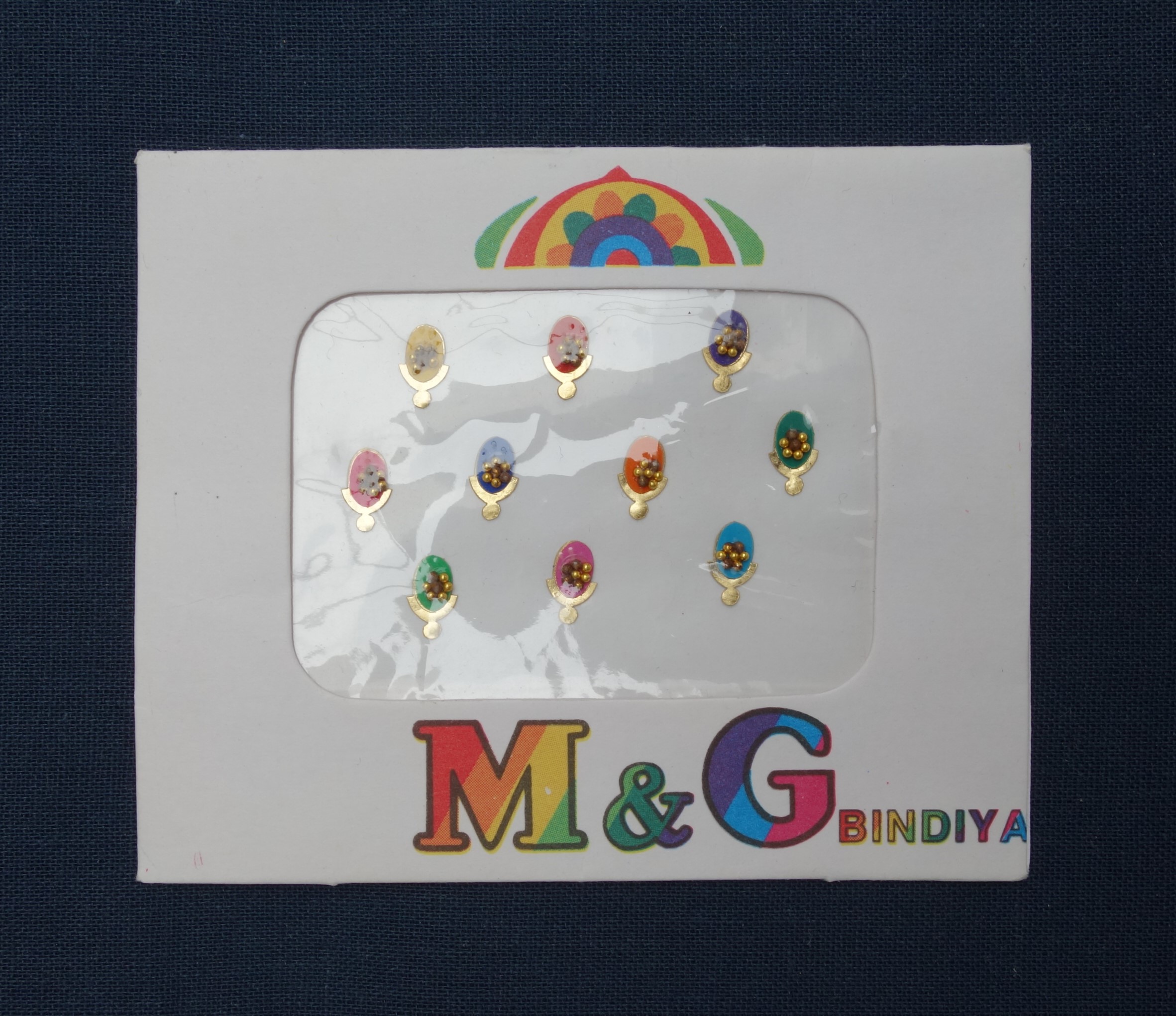 Bindi set. TRC 2008.0467.
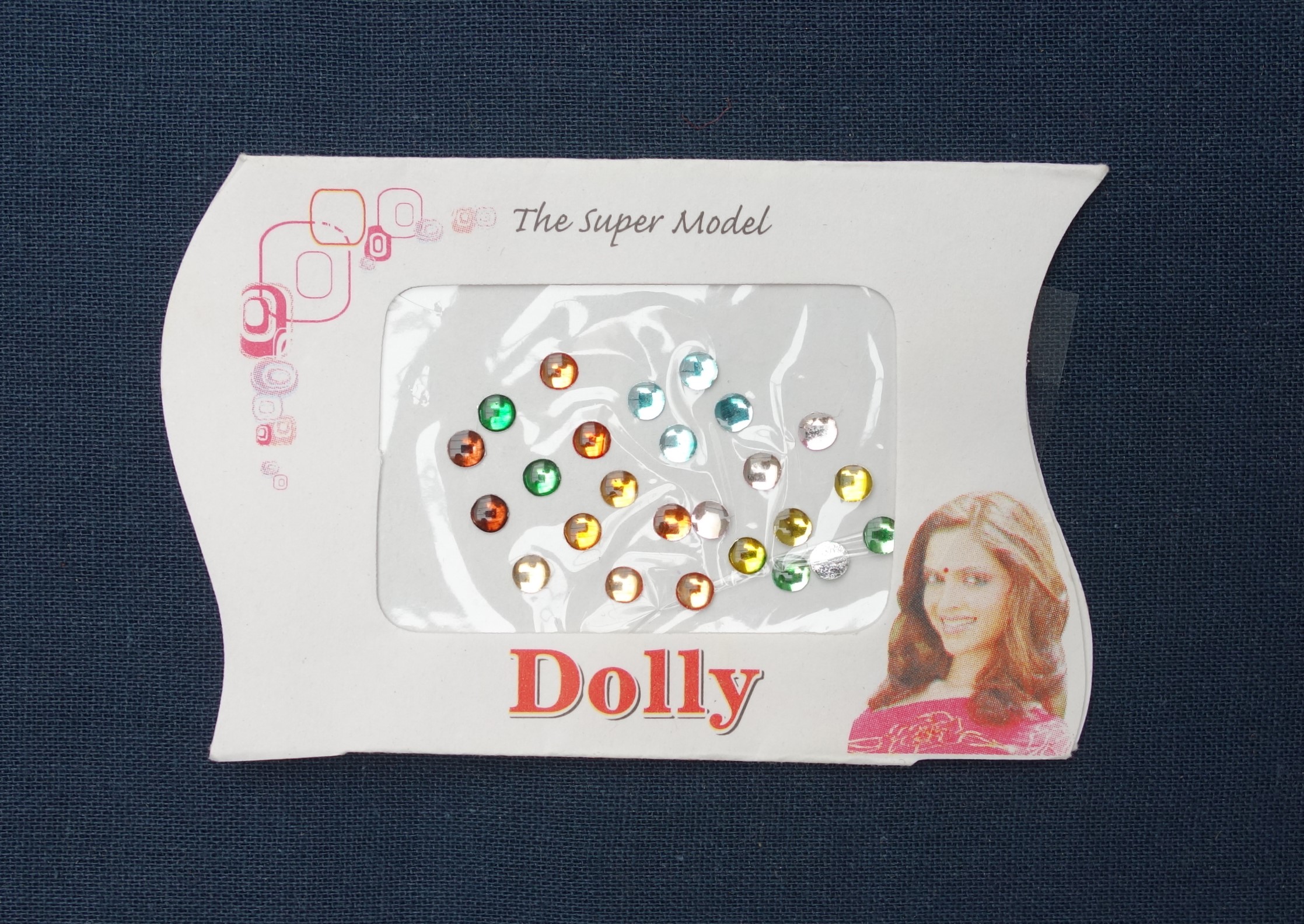 Bindi set. TRC 2008.0466.
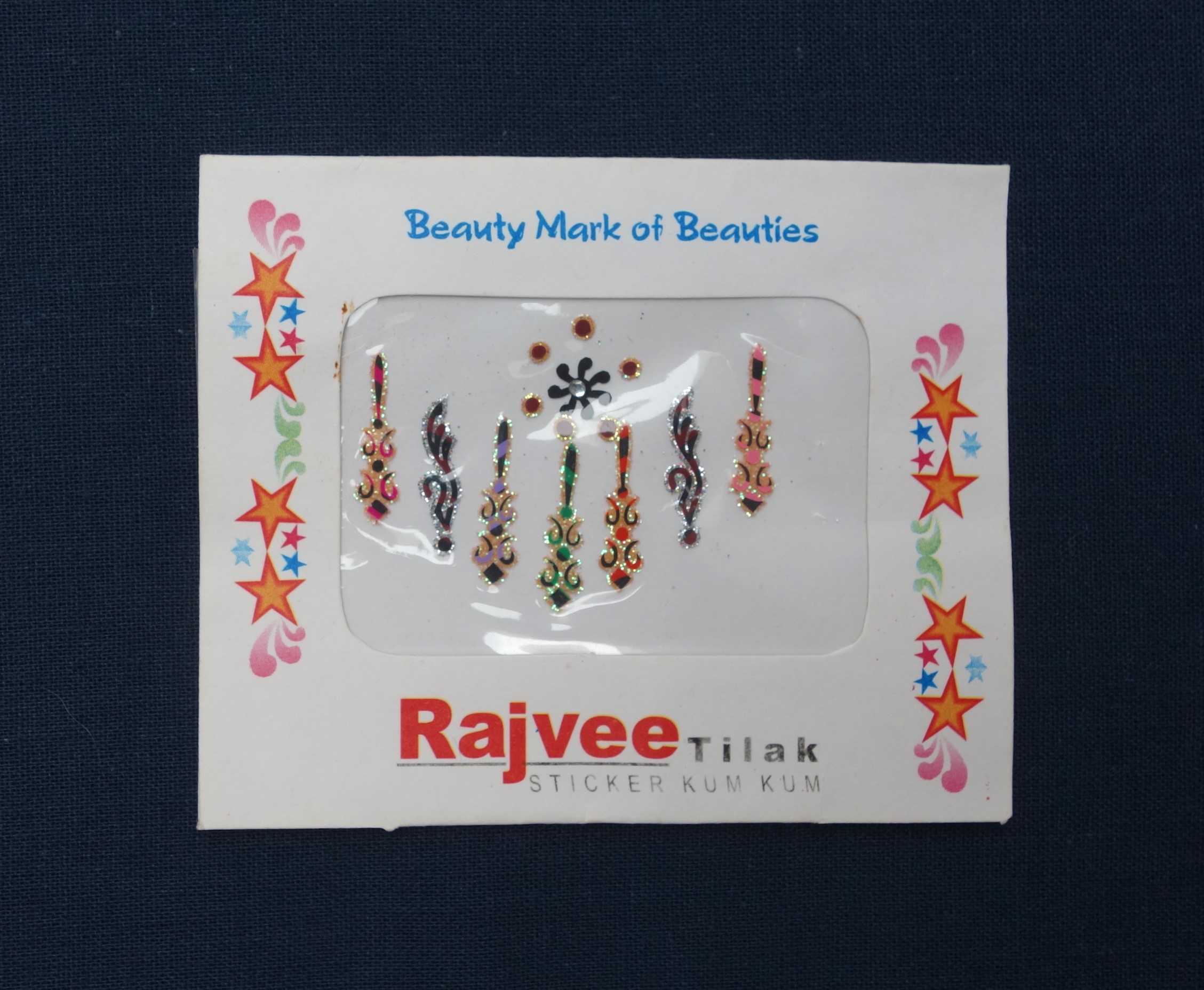 Bindi set. TRC 2008.0472.
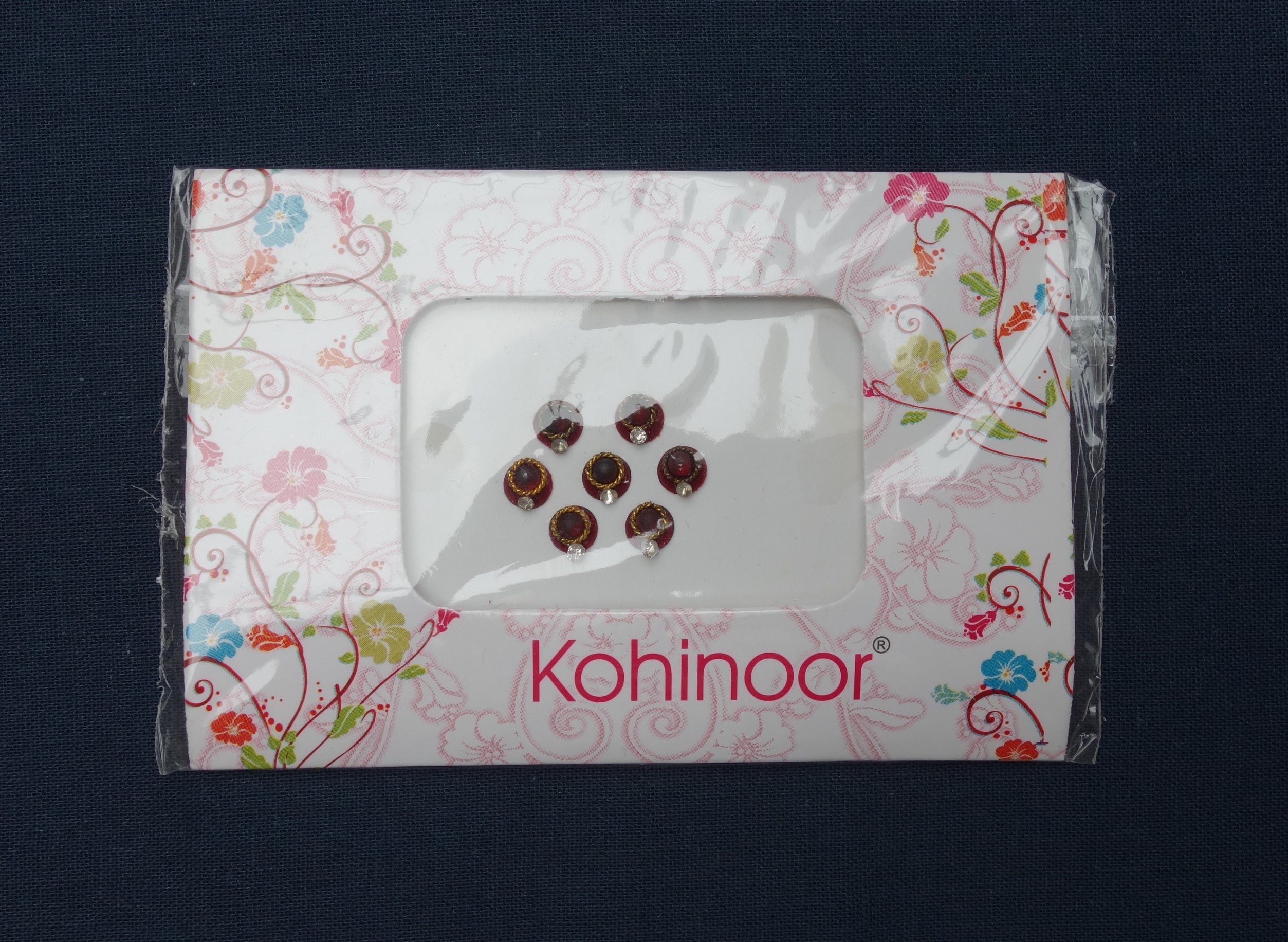 Bindi set. TRC 2008.0468.