
The TRC has just received its first Roman fibulae! It is a gift from Sytske Wijnsma in Wormer, who has also donated in the past a large collection of books, textiles and clothing. These bronze fastenings were typically used for securing a variety of outfits and later transitioned into the more decorative brooch. Many cultures used similar fastenings, before and after the Romans. However, Roman fibulae are the most famous.
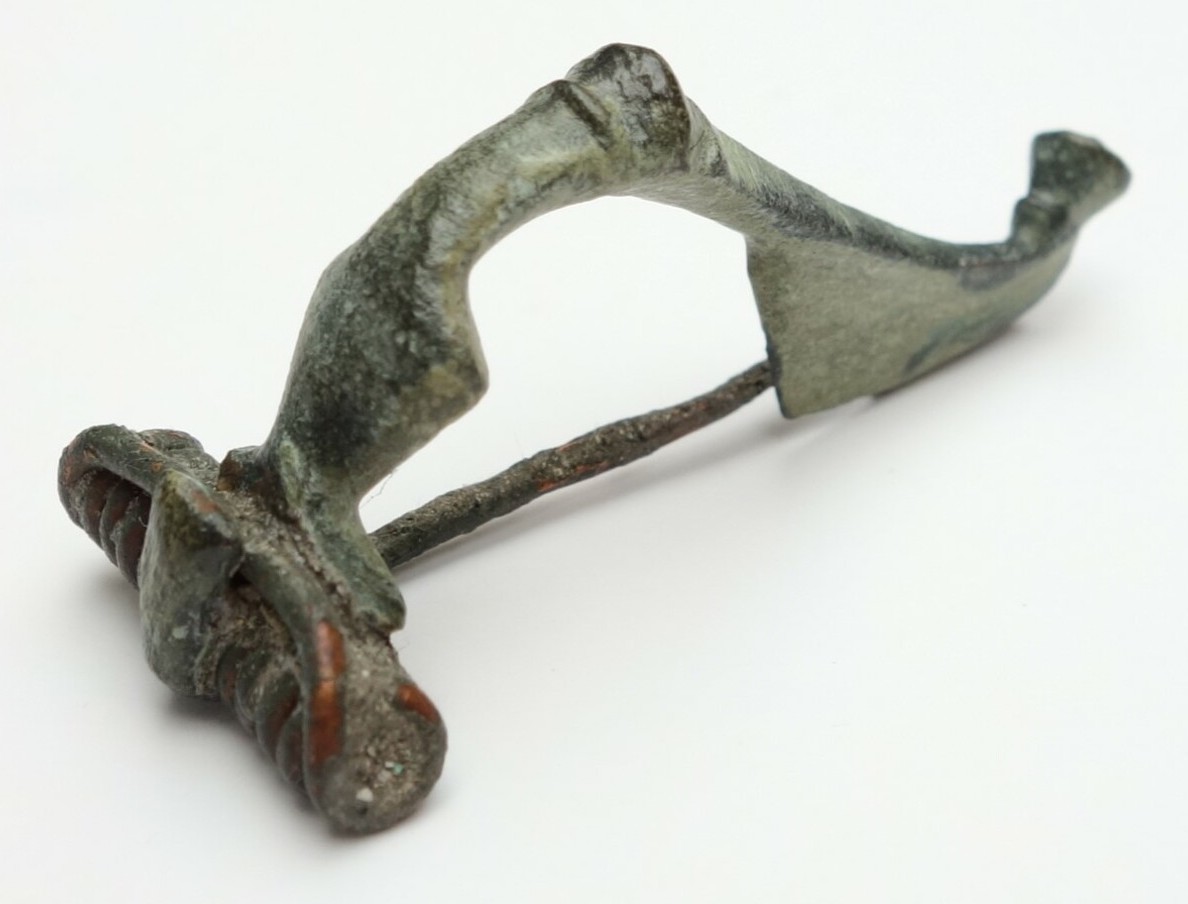 Fig. 1. Roman-period, 'trumpet'-type bronze fibula (TRC 2025.0464).A variety of shapes and decorations were used to signal various social factors, such as profession, military rank or marital status. The donation consists of three fibulae, each at first glance very similar but with a little research and a closer look during the cataloguing process I realised that they are very different from one another.
Still, all three are bronze, bow fibulae (as opposed to plate and penannular types). Note that the terminology is not standardised, and below I refer mostly to terms used in the NumisWiki website, which is a useful source regarding terminology and typology. The context of these finds is unclear, but by assigning them a particular typology and time period they are useful for archaeological references.
Fig. 1. The first fibula (TRC 2025.0464) matches descriptions of a ‘trumpet’ typology which dates to 75-175 AD, the earliest of the three. These are distinguished by their wide spring pin, high arch and flared base.
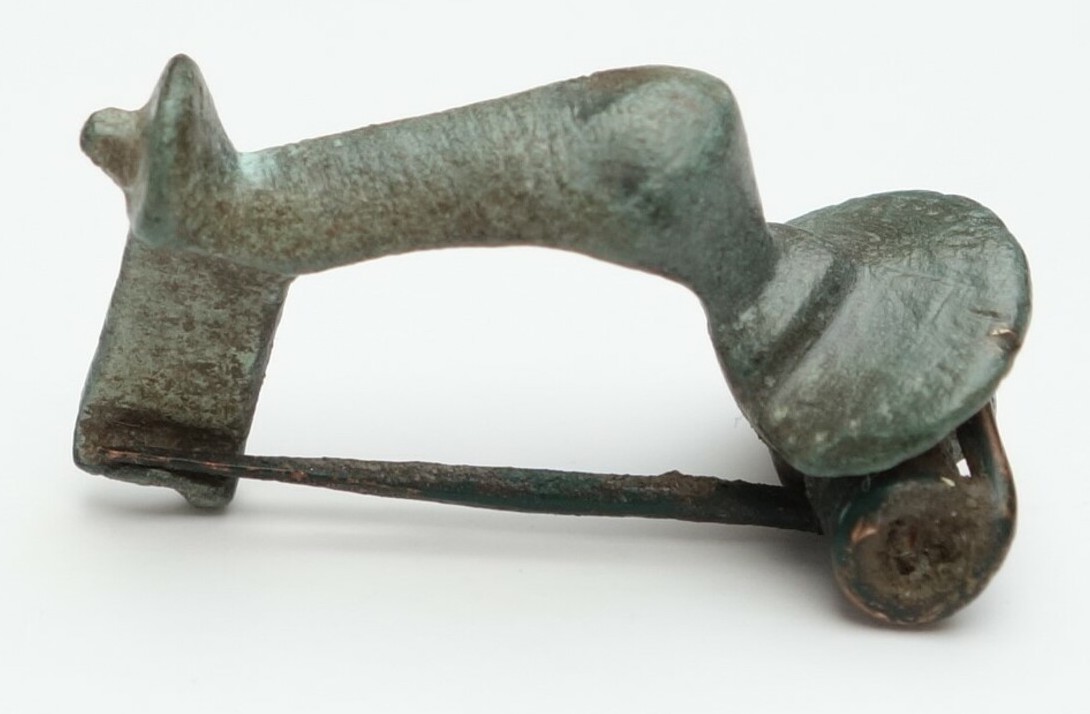 Fig. 2. Roman-period, 'knee'-type bronze fibula (TRC 2025.0466).Fig. 2. The second (TRC 2025.0466) is called a ‘knee’ type fibula and dates roughly a century later (150-250 AD). This form has a flared base over the wide spring pin, extending in an L-shape (the ‘knee’) ending with a long parallel catch blade. This type is often associated with the Roman military.
Fig. 3. The third fibula (TRC 2025.0465) corresponds to the ‘light crossbow’ typology, with a high arch and three-pointed ornamentation at the head with a hinged pin that secures into a tubular pin catch. These date to a similar period to the knee type at 175-250 AD.
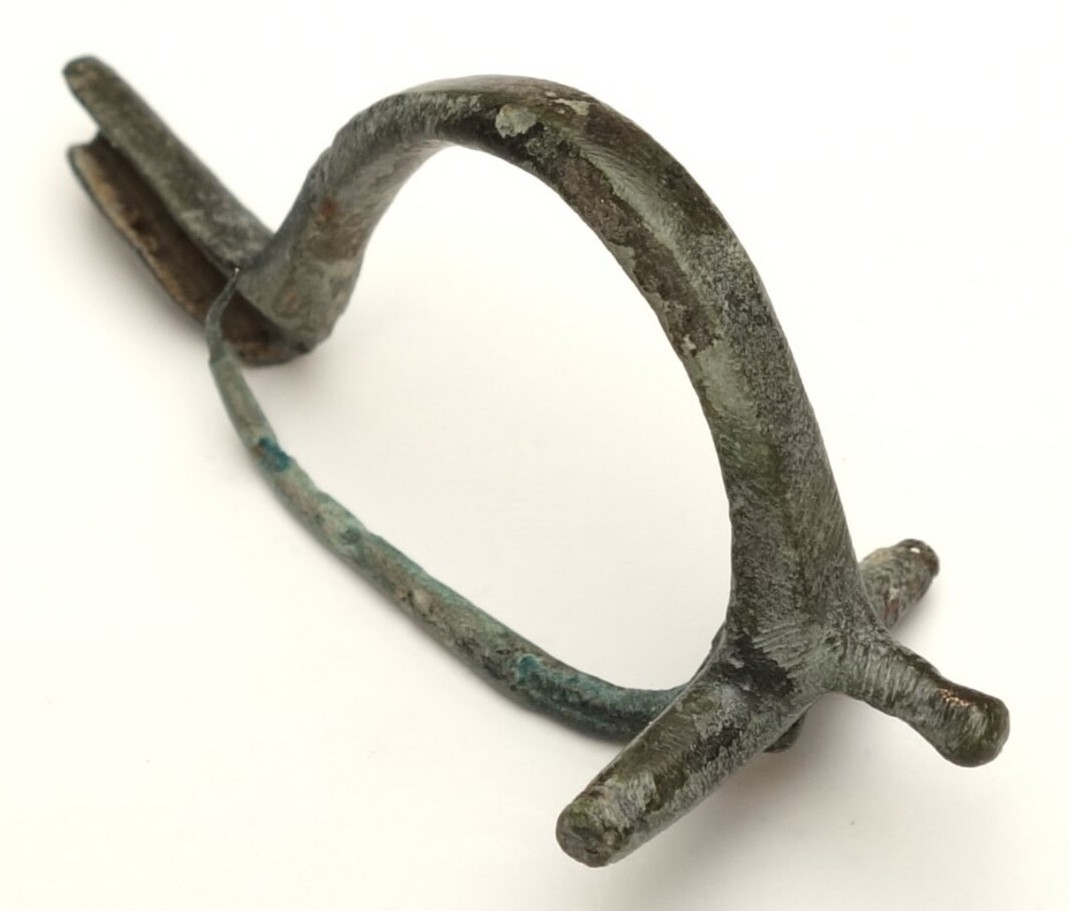 Fig. 3. Roman-period, 'light-cross-bow'-type bronze fibula (TRC 2025.0465).The fibulae are an interesting addition to the collection, expanding the archaeological side of the TRC! They offer a chance to explore dress and identity.
During this study I have learned that Roman fibulae were typically worn with the foot (where the pin latches), turned upwards. They would attach most clothing items at the upper chest or shoulder, particularly cloaks or robes.
Romans wore primarily woollen, linen, or silk clothing, but fibulae are best suited to woollen cloth, so as not to cause any damage. They were worn by anyone and everyone, were structurally functional, decorative, and conveyed symbols of various social contexts all in one.
For further information about fibulae, click here.
Emilie Lambert, MSc Archaeology at Leiden University and TRC volunteer, 20 April 2025