
Another ‘quiet’ week at the TRC Leiden! We have been involved in giving the 5-day Intensive Textile Course, which as many of you will know, is a basic and yes, intense, introduction to textiles.
In just a short time, a wide variety of subjects are discussed and actually practised, ranging from fibre identification to what is embroidery via weaving (including velvet making), not to mention natural dyeing, resist-dyeing, leather and printing….. a tiring week but fun to be immersed in textiles for a short period of time.
 Fig. 1. Sample of Siberian, woolly mammoth hair (Mammuthus primigenius) (TRC 2023.1510).The course wants to help people to understand and be able to ‘read’ a textile and its practical, social, economic and cultural significances. For a participant's impression of the December 2024 version, click here.
This week’s course participants included museum curators, academics, commercial world people, students, as well as people who are ‘simply’ interested in textiles. It was noticeable that they all ended up at the café around the corner, some with a beer, celebrating the week (or was it their survival?) and making new textile friends.
A highlight moment? It must be when we discussed a sample of Siberian mammoth hair from the TRC collection (Fig. 1). The fibres had been analysed, DNA’ed and dated by the National Forensic Institute in a joint project with the TRC.
The idea of having fibres that are +/- 43,000 years old was a lot, but when the participants were told that so much mammoth hair has been found in Siberia because of the melting permafrost and climate change that people were knitting jumpers with mammoth hair they were astounded. Telephones came out, Google was checked and yes, jumpers and even beanie hats in mammoth wool were reported. Definitely a moment of thought, disbelief and astonishment. And some people think textiles are boring …..
 Fig. 2. Embroidered tunic from Georgia, pre-1940 (TRC 2022.1089).Speaking of which: Some old friends turned up during the week, including David and Bonnie Smith, who gave the TRC an amazing collection of textiles and garment, especially from Georgia (the country, not the US state) a few years ago (Fig. 2). And yes, they came bearing gifts, including a lovely saddle bag and a cloth container in soumak (a form of weave, or is it embroidery?) often used for floor coverings and hard-wearing bags. They were immediately used for teaching purposes and will come online in the TRC Collection next week.
Then someone else came to see some of our Palestinian dresses and embroidery, especially our ANAT pieces (see for example, Fig. 3), for an exhibition to be held in Belgium later in the year. More about this in due course.
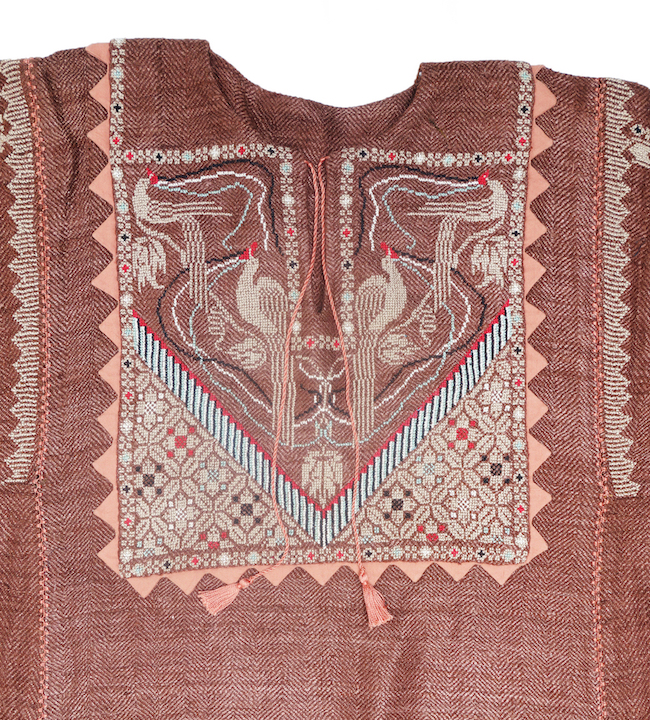 Fig. 3. Front of an embroidered Palestinian dress, late 20th century, made by ANAT, Syria (TRC 2003.0004).Several people popped in to look at our current exhibition about Japanese coats that were acquired thanks to our successful crowdfunding event held in 2025. The exhibition includes men’s, women’s and children’s jackets, summer, winter, daily, working, as well as festive versions. A gentle, restful exhibition, which has already encouraged several TRC members to make their own haori-style jackets – by coincidence I met a friend in Leiden’s wonderful Saturday market last weekend looking at Japanese-style cloth to make such a jacket. Cultural appreciation in action!
At the same time we have also been discussing with various people and groups the fact the TRC has to move to new premises because we have literally grown out of our current home at the Hogewoerd 164 here in Leiden. We are actively being supported by Leiden Council in this hunt for a new home. We have been looking at various possibilities and hope to be able to announce some good news shortly.
If (or rather when) that occurs, then the ‘hard work’ will begin! Packing up 50,000 objects, 7,000 plus books, office archives, teaching equipment, not to mention pots, pans and kettles (and of course knowing the TRC, biscuit tins), is going to be a massive job, but we have an amazing team of students, volunteers and others who will all be helping.
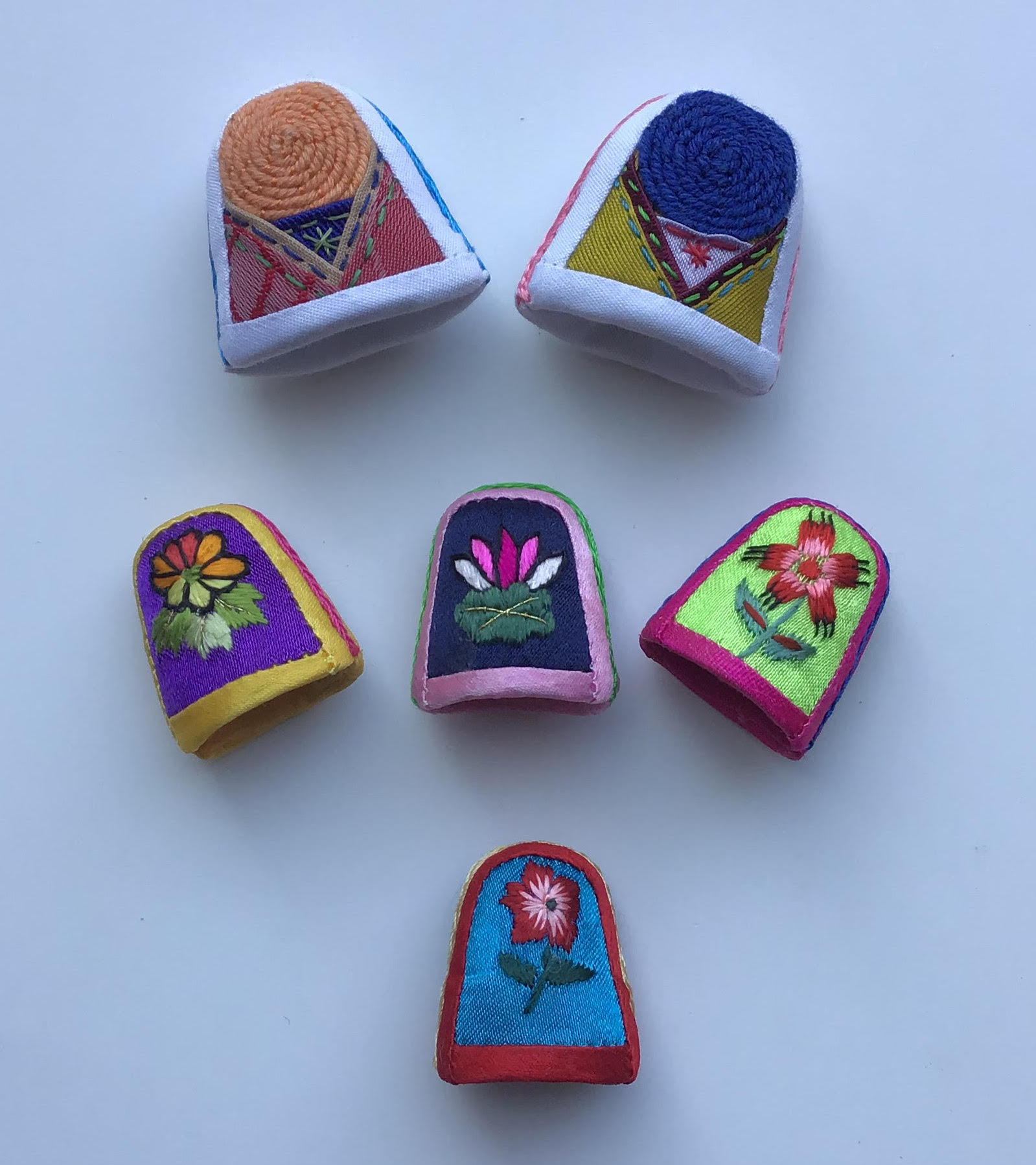 Fig. 4. A collection of embroidered thimbles from Korea, early 21st century, recently donated to the TRC.Which is not to say that teaching textiles, a TRC core actively, will stop. We have put online details about a wide variety of workshops, study days, and yes, 5-day courses (most of which are fully booked for 2025, but the dates for 2026 are now available online).
What else – fund raising, public awareness activities, talking with potential sponsors, getting ready for a new crowdfunding event. Oh yes, I must not forget that on Friday the postman brought a small package with a gift from a Korean friend, Boyoung Lee, namely some Korean embroidered thimbles (Fig. 4). These are called gol-moo and there are various forms from the different regions of Korea.
They are a fantastic way of using up small scraps of cloth, while making a pretty and useful sewing tool. More about these in due course! Which brings me to the idea: Perhaps we should make a mini-exhibition about the history and use of thimbles from around the world?
I wonder what next week will bring….
Gillian Vogelsang-Eastwood, 13 April 2025