
We are visiting the small university city of Tartu in southeastern Estonia, as part of the preparation of Vol. 5 of the Bloomsbury World Encyclopedia of Embroidery (central and eastern Europe). What we did not expect to see was a workshop run by Estonian volunteers and Ukrainian refugees that designs and produces camouflage nets for the Ukrainian army. Since last year, they have produced more than three thousand square metres of netting.
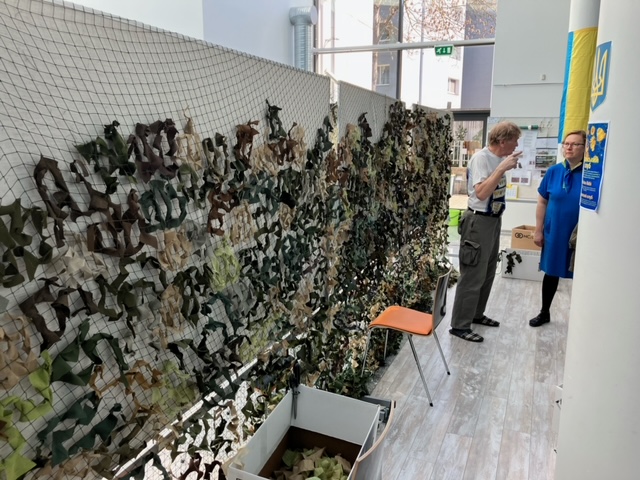 Camouflage netting for Ukraine in the making: University of Tartu, Estonia. 11 May 2023. Photograph by Willem Vogelsang.
These workshops, of which there are two in Tartu, have sprung up all over the country and beyond. They form part of a much larger Estonian volunteer organisation called Aitan Kaitsta (Helping Defend) that was set up three weeks after the start of the war in Ukraine (21 February 2022). Since then, some 24 thousand square metres of camo netting have been produced.
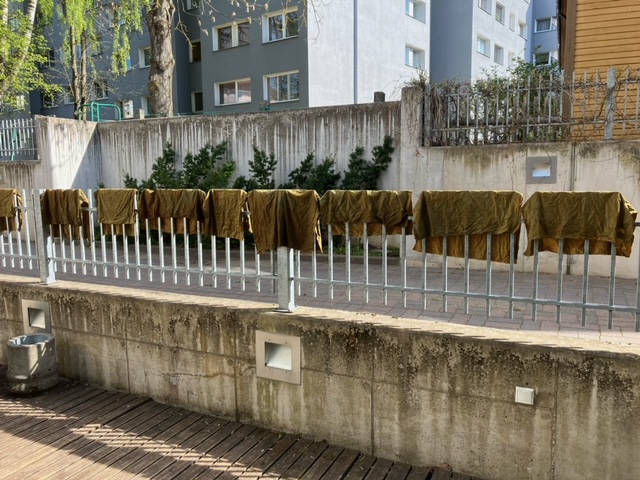 Textiles drying after being dyed in camo colours. University of Tartu, Estonia. 11 May 2023. Photograph by Willlem Vogelsang
The volunteers explained that the Russian invasion of Ukraine has led to the general realisation that if Ukraine falls, the Baltic states, including Estonia, will be next in line for Russian encroachments.
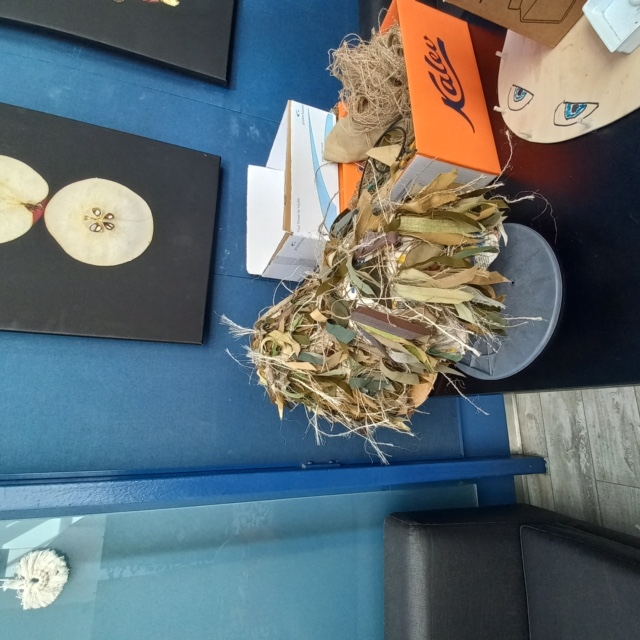 Helmets being covered with camo netting. University of Tartu, Estonia. 11 May 2023. Photograph by Gillian Vogelsang.Against the backdrop of a long history of Russian/Soviet occupation of the country, Estonians feel that they have to do whatever is possible to support the Ukrainians, and indirectly thereby defending themselves.
We were introduced to the production line of the netting process, and the volunteers explained the methods being used. Old clothing and other textiles were being cut up and, if necessary, dyed in camouflage colours, before being knotted onto large nets of some seven by ten metres. The finished nets are then sent to Ukraine.
 Camo netting being made. University of Tartu, 11 May 2023. Photograph by Gillian VogelsangThe University of Tartu is actively supporting the initiative, and the programme has received national awards.
Examples of the net, cloth, etc, used in Tartu will be added to the TRC Collection as a textile reminder of a tragic situation and moment in European history.
Gillian and Willem Vogelsang, 13 May 2023.
.