
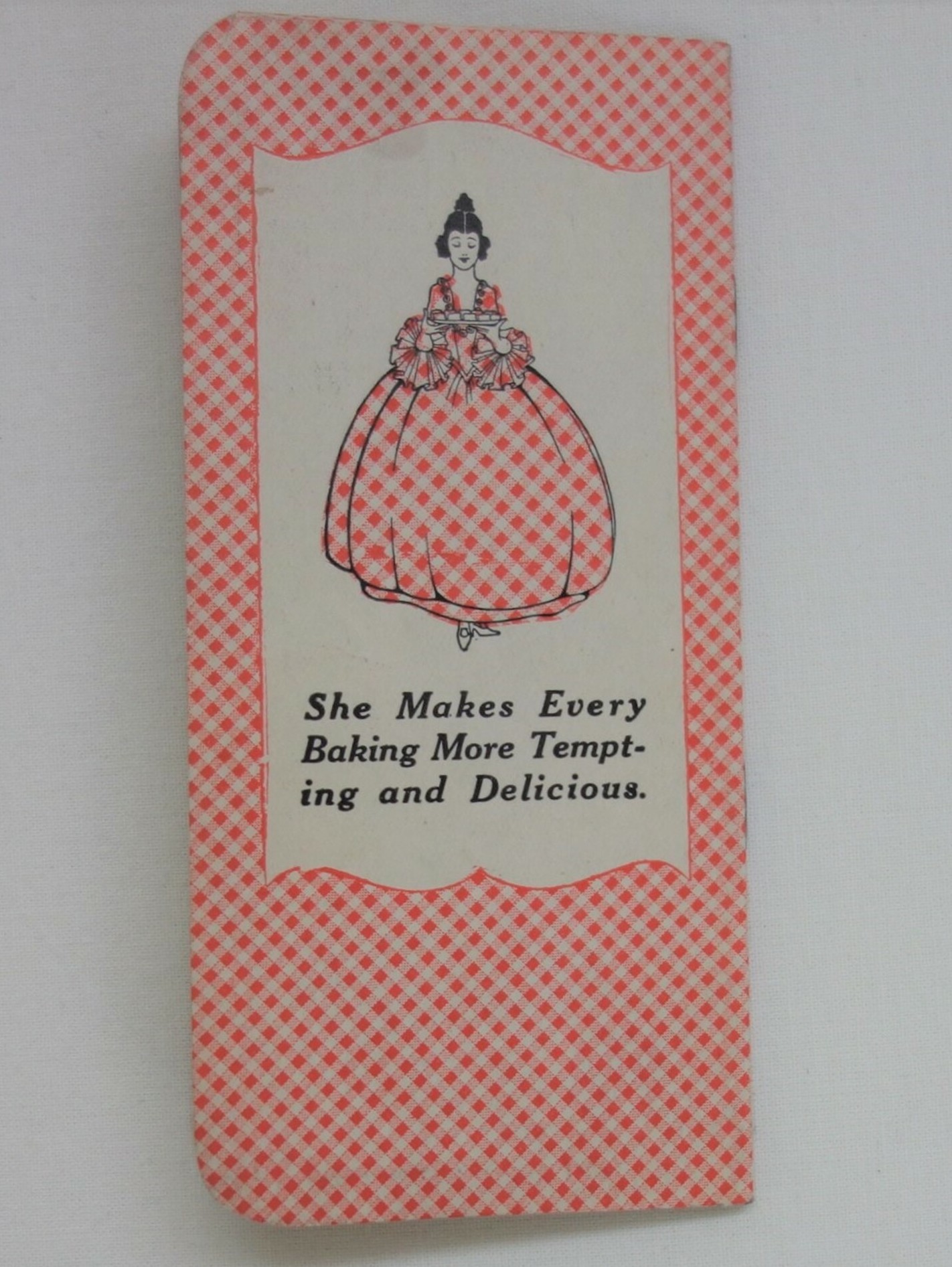
 Notebook published by the Gingham Girl Flour Company, with the gingham-design also printed on their feed sacks (TRC 2018.0002).A few days ago we were talking with people of the Leidse Deken foundation, who want to re-establish the weaving of woollen blankets in Leiden, as part of the growing world-wide attention and interest in sustainability in all its many forms.
I started to wonder if there was a textile printing works in the Netherlands, or indeed elsewhere in Europe, which are involved in producing printed cotton bags that can be up-cycled into garments, toys or other items such as cushions and curtains, rather than plastic bags that cause huge environmental problems.
In other words, a modern version of the feed sack textiles that were so popular in northern America between 1925 and 1965! Ironically, these cotton feed sacks went out of production as a result of the increased use of paper and plastic bags.
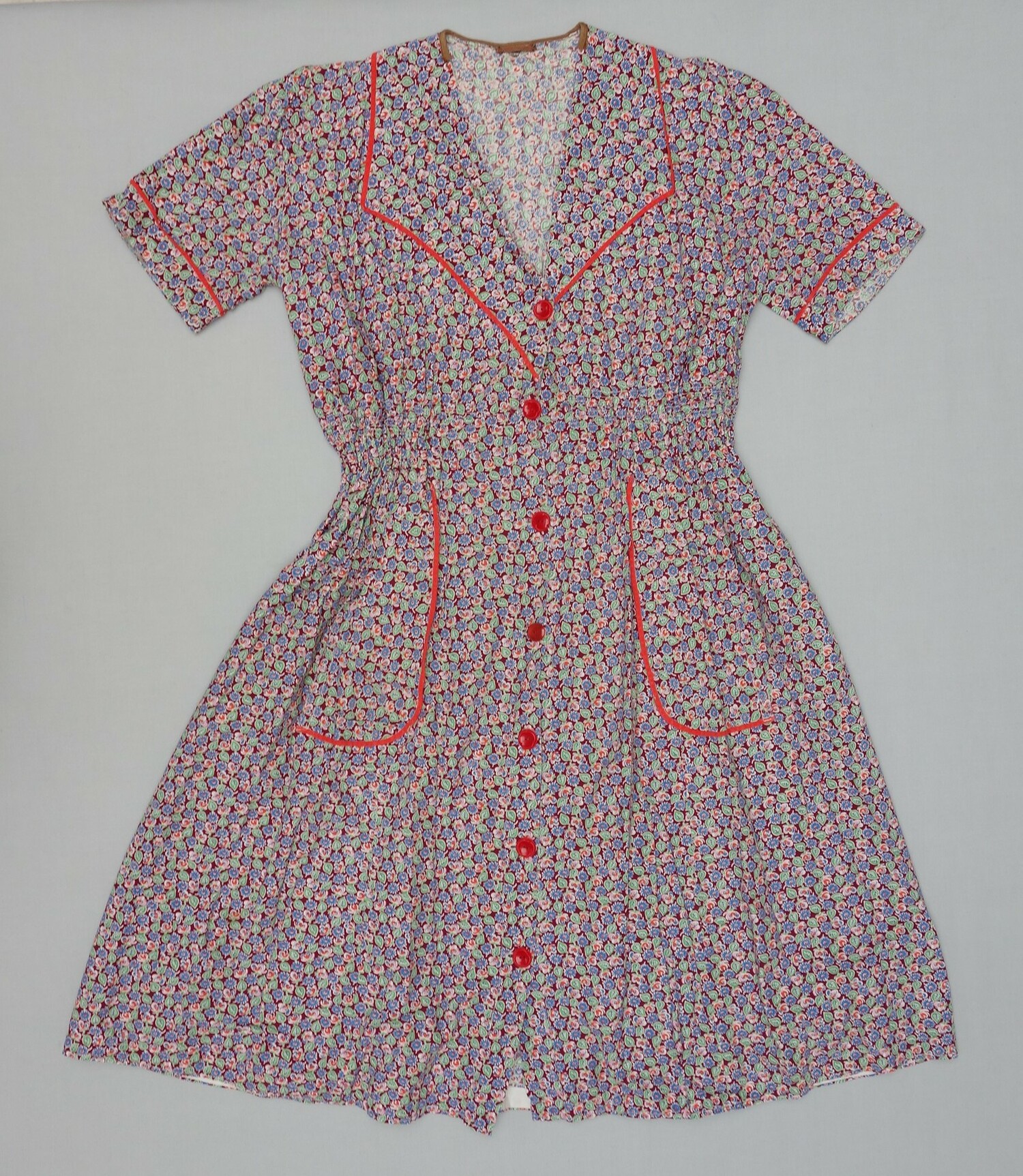 Woman's dress made from feed sack material, 1940s-1950s, USA (TRC 2017.3005).The idea for printed (as opposed to plain versions) feed sacks appears to have been started by the American firm of Gingham Girl in c. 1925 (TRC 2018.0001 and TRC 2018.0002).
By the 1930s and during the Great Depression these printed textiles became an important source of garment cloth for many American and Canadian communities. There were even peddlers in feed sacks and exchange programmes to swop, buy and discuss different methods of collecting and using such sacks.
Initially the printed patterns were quite neutral (often gingham-style checks), but they soon became more fashionable, colourful and at times responding to specific social and festive events (such as World War II and presidential elections).
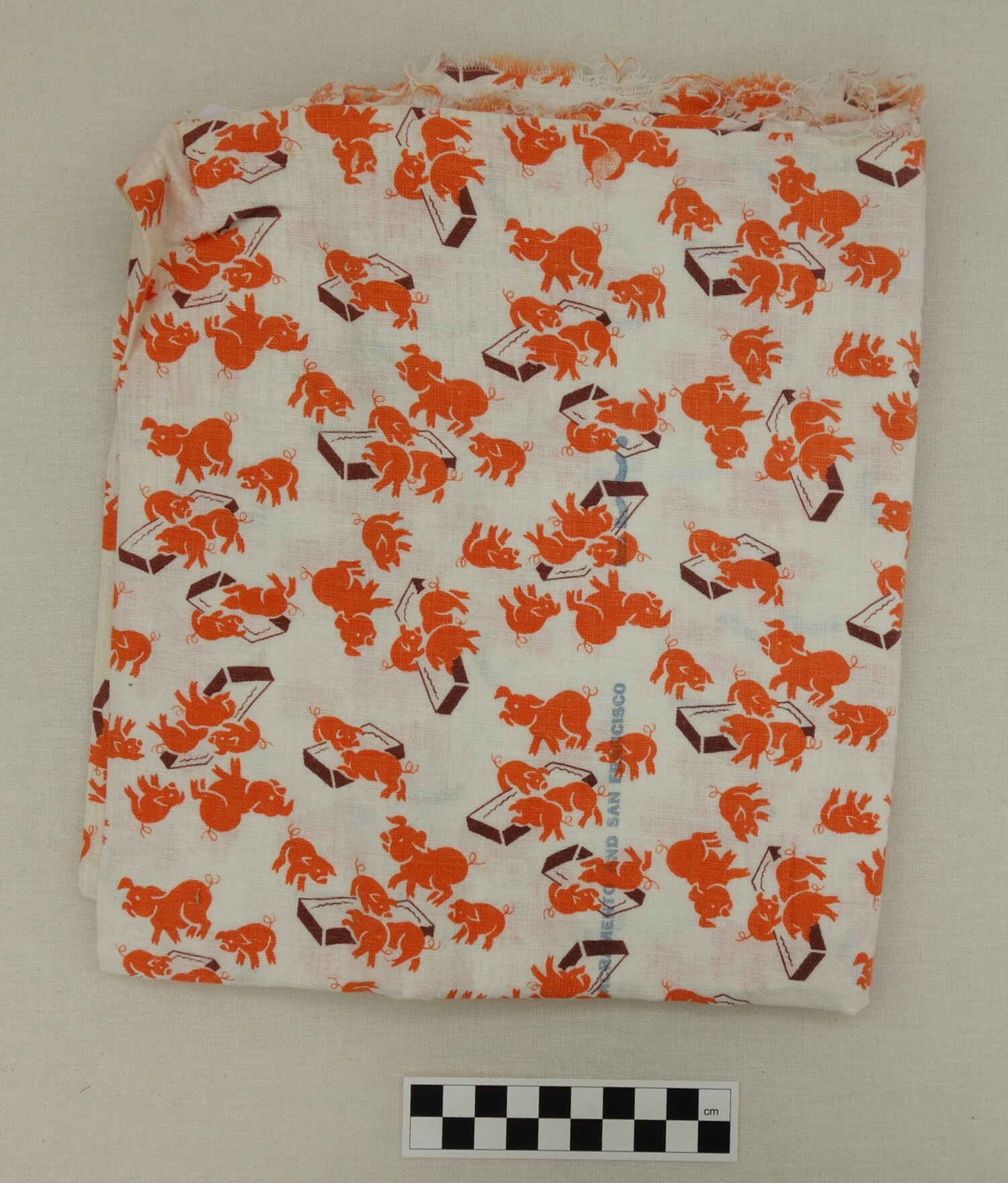 Feed sack cloth, folded in half, with a design of orange pigs of various sizes eating at brown troughs. 1940s, USA (TRC 2017.1366).The original sacks came in a wide variety of sizes, from small bags of about 60 x 33 cm that were often used for rice and flour (TRC 2017.3041) to c. 95 x 52 cm forms that were used for various types of animal feed. All the bags were made from a length of cloth that was folded in half and then stitched together using a cotton thread that could easily be pulled out.
The thread itself was often also collected and wrapped into a ball for future use (TRC 2017.4316). Then three or four sacks could be used to make a dress (TRC 2017.2646, TRC 2017.3005), or perhaps a blouse (TRC 2017.3350), apron (TRC 2017.3307) or something similar. Small lengths were used for making baby clothing as well as for patchwork quilts of various types (TRC 2019.2044, TRC 2019.2040), and toys (TRC 2017.3232).
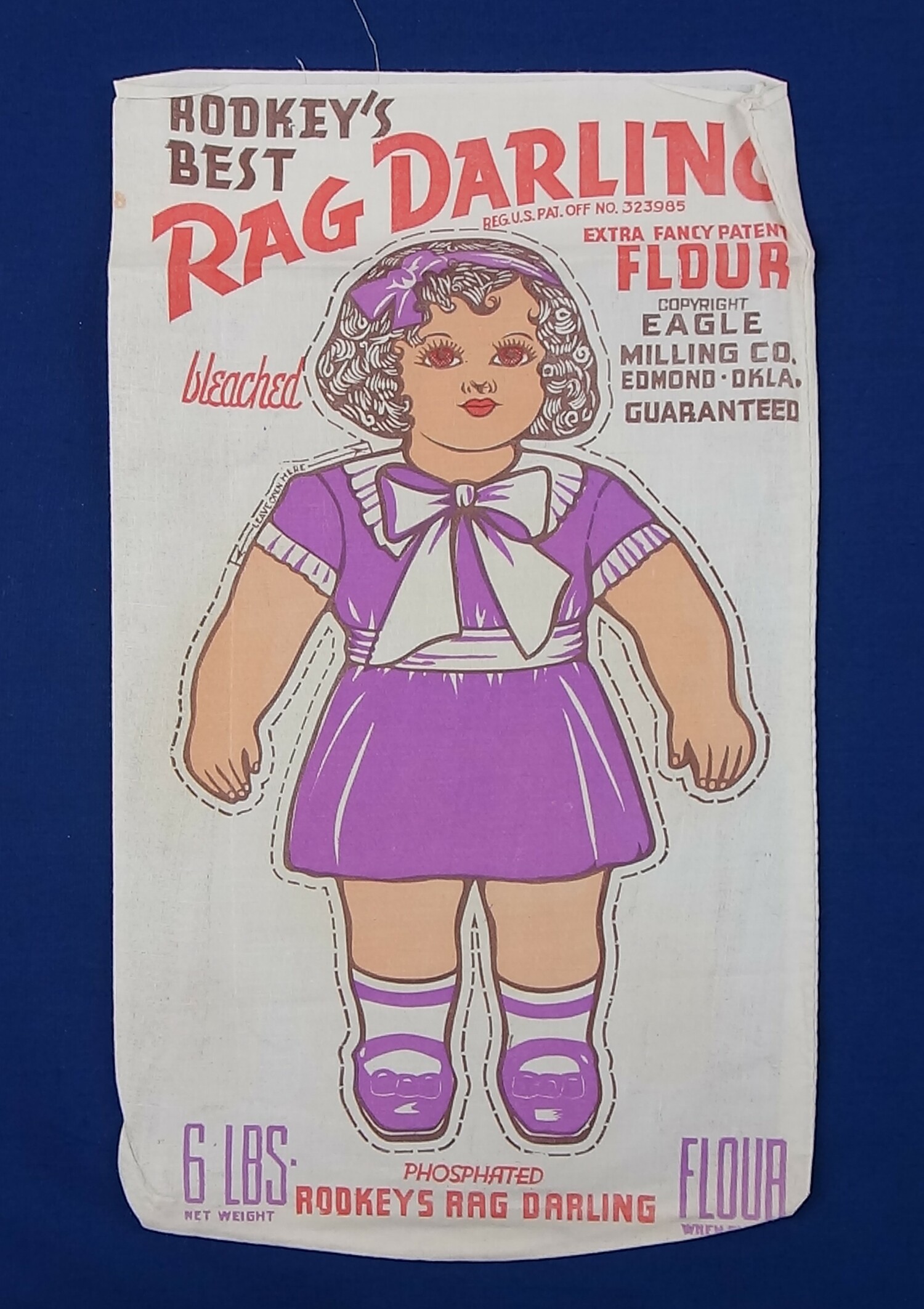 Feed sack with pattern of a doll, USA, c. 1937 (TRC 2017.3232).The reason I am asking this question is that the TRC has a large collection (over 800 items! Thanks to the help of Sherry Cook, Lindzee McCray and Gloria Nixon) of original bags, cloth lengths, garments, as well as small samples that date back to the 1920s and 1930s that could provide inspiration for modern designs.
It would be wonderful if someone or a company would be willing to produce such cloth bags again (using re-cycled cotton cloth?) that could help reduce the number of plastic bags in use, as well as provide cloth for clothing, etc. And yes, if there is someone already busy in Europe, then we would like to have examples in the TRC Collection to highlight and archive this particular form of modern sustainability.
It is also worth noting that the TRC has staged several exhibitions that have included feed sacks, thanks to the financial support of the American Embassy, The Hague.
There is also a digital version of the TRC exhibition – ‘For a few sacks more’, which explains the history of feed sacks with numerous examples from the TRC Collection. The actual exhibition is available for loan should a museum or similar institute be interested.
Gillian Vogelsang-Eastwood, 24 January 2023