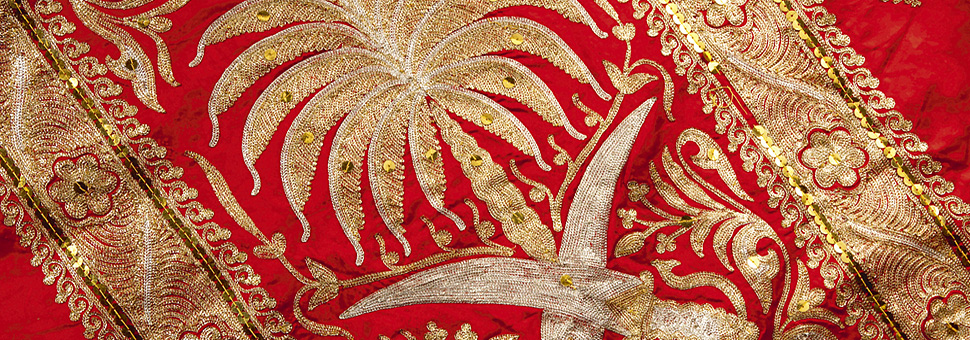
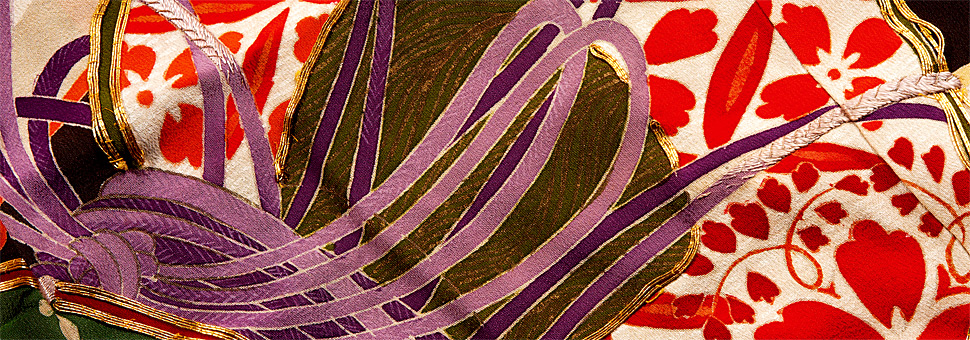
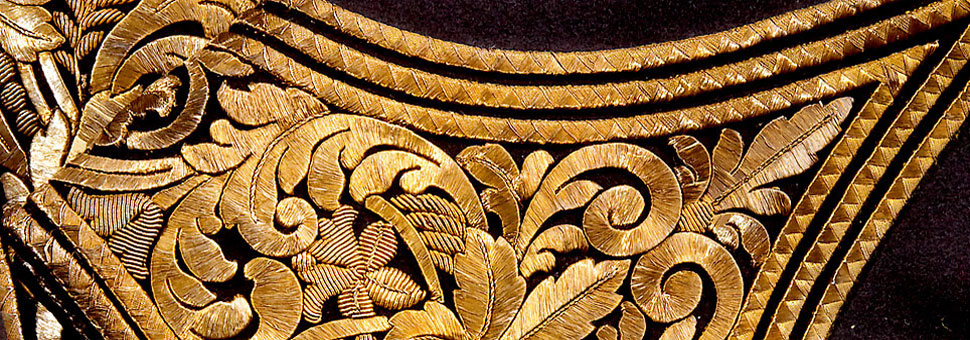
It is estimated that traditional Ukrainian embroidery utilises at least 200 different stitches. While there is wide regional variety as to stitches, thread colours and motifs, one motif is found across the entire country: a red geometric star (sometimes called a rose), done in a running stitch.
 Detail of Romanian/Ukrainian Hutsul shirt, late 20th century (TRC 2022.0366).
Ukrainian embroidery teacher Hanna Rohatynska explained in a recent on-line workshop that the motif was thought to have a protective function. This made me curious and I spent an enjoyable afternoon looking at more examples of Ukrainian embroidery in the TRC’s on-line collection, especially the two dozen long-sleeved tunics (TRC 2022.0366—2022.0389) from the recent TRC’s Amsel donation.
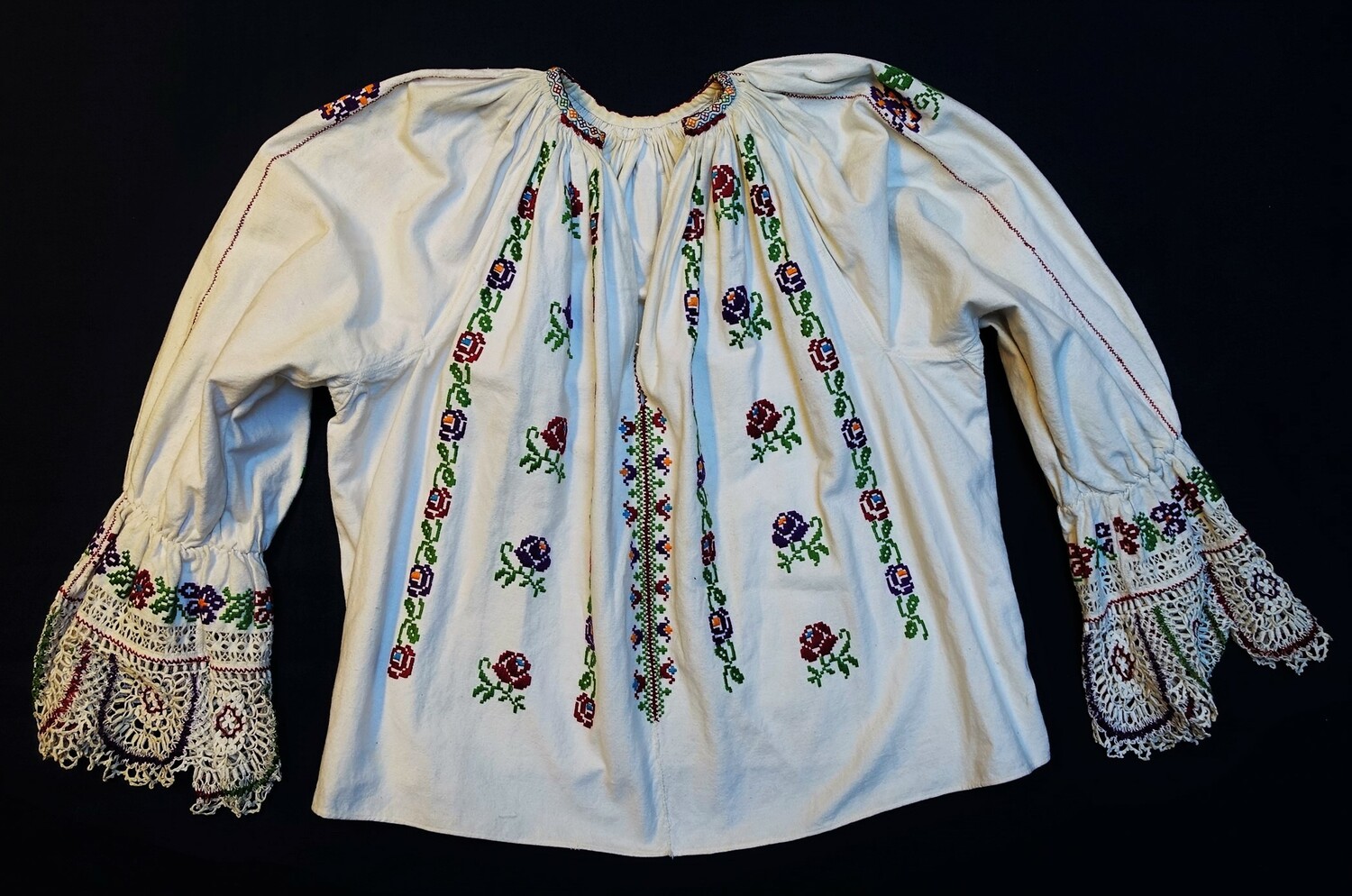 Embroidered blouse from Romania/Ukraine, Hutsul, 20th century (TRC 2022.0379).
The embroidery on the sleeves and around the V-neck collars is simply stunning. The designs are geometric, especially diamonds, crosses and triangles, in colours such as red, black green and yellow. These tunics, in cotton and linen, come from the Hutsul ethnic group, who live in western Ukraine and Romania.
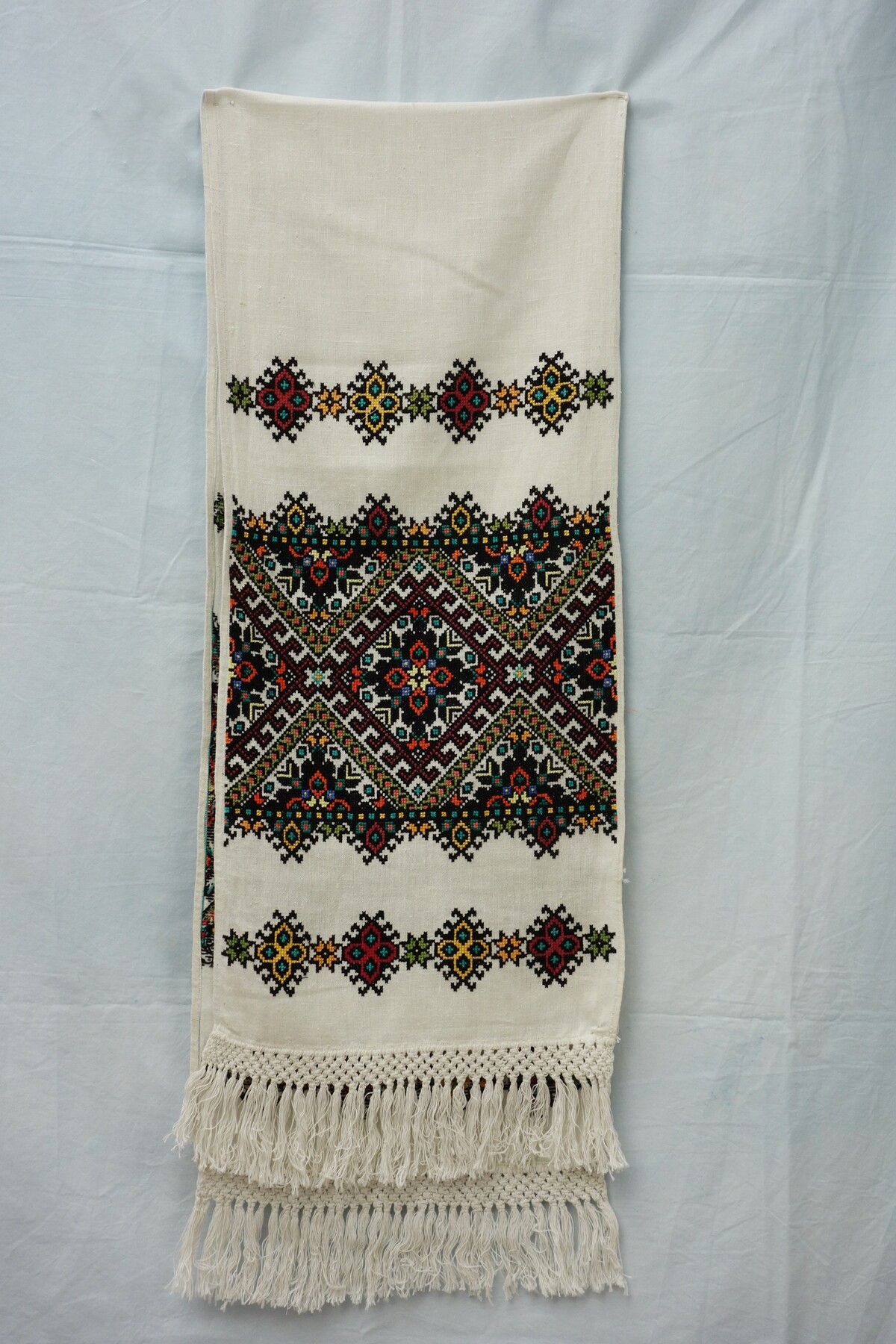 Rushnyk are also produced and used in lands neighbouring Ukraine: This is a rushnyk-type embroidered towel from Hungary (TRC 2016.0306).My curiosity also led me to towels. Not any towels, but the embroidered towels called rushnyk, which have a special place in the culture of Ukraine and among Ukrainian groups in neighbouring countries (compare TRC 2016.0306 and TRC 2016.0310). These are rectangular cloths, from 20 to 50 cm wide, a metre or longer, made today from a linen and cotton mix. Both ends are heavily decorated, either by embroidery or weaving, with motifs that vary by region. In the Podilia region, geometric patterns of stylised animals and birds are common, while more floral designs are found around Kyiv, Poltava and Chernihiv.
Everything about rushnyk is heavy with meaning. The rectangular shape represents life’s journey: traditionally a new born baby is laid on a rushnyk and baptised with another rushnyk, this time plain white, to symbolise innocence and purity. At death, the coffin is covered with a special rushnyk, which is according to tradition also used to lower the coffin into the grave. Among the Hutsuls a rushnyk was hung in a window to announce a death in the family. A rushnyk embroidered by an ill person could never be used as a gift or given away. Instead, it was taken to a cemetery or a battle field, and allowed to rot away.
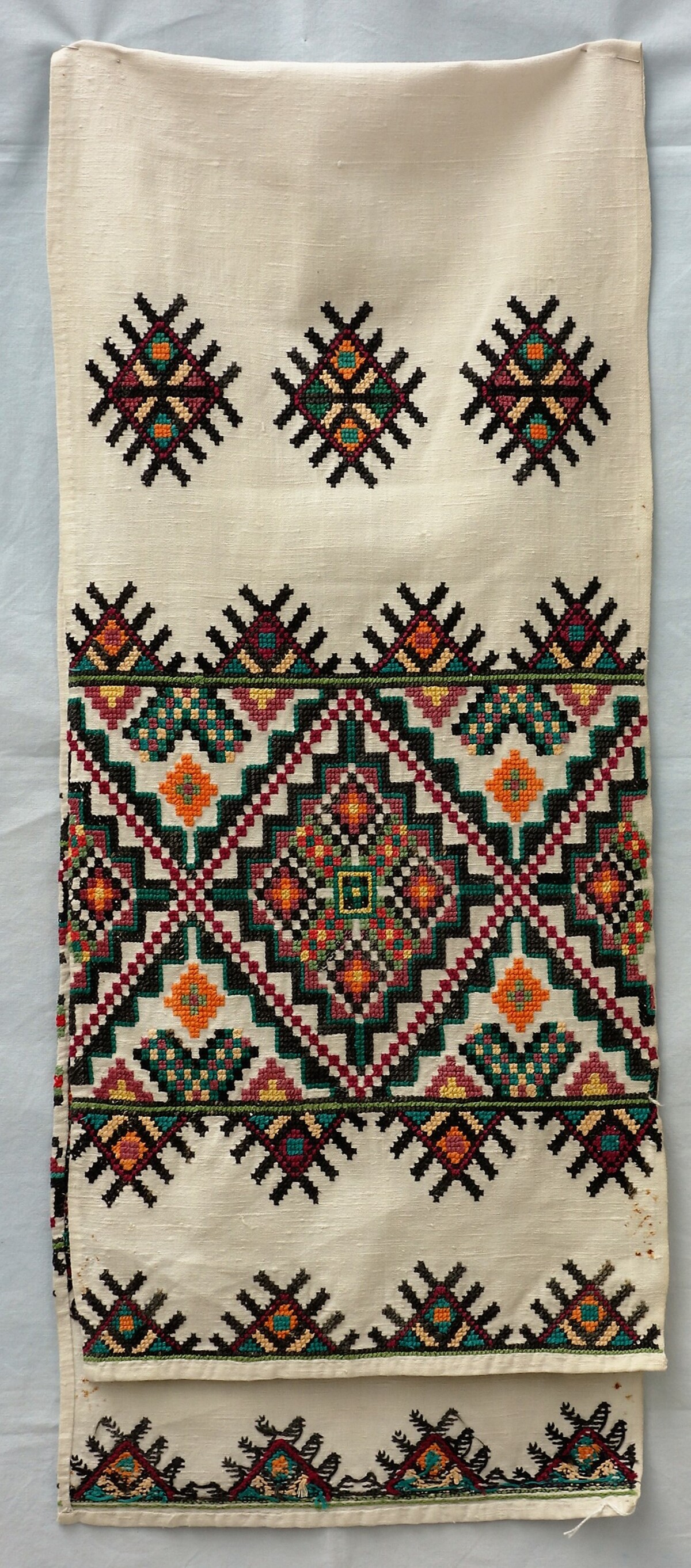 Rushnyk-type embroidered towel from Hungary (TRC 2016.0310).Rushnyk have happier uses, too: the final beams of a new house are hoisted in place covered with rushnyk, which are then distributed to the workers; and roadside crosses are decorated during festivals with rushnyk. During the Middle Ages rushnyk were used as currency and as part of clothing. Today rushnyk, most often made in specialized workshops or factories, are still used in homes to decorate icons and they have a special role in wedding ceremonies, to tie the bride and groom’s hands together.
I love the folklore and symbolic meanings around these textiles. But perhaps the best magic? Ukrainian embroidery teacher Hanna Rohatynska, now in Lviv, thought that her classes would end when the war began, as no one would be interested. But she continues to teach because people from around the country ask her to. Embroidery, they say, helps to keep them calm in the midst of the war’s chaos.
To learn more about Ukrainian rushnyks see www.ukrainianmuseumdetroit.org or www.ukrhec.org.
Shelley Anderson, 3 May 2022