
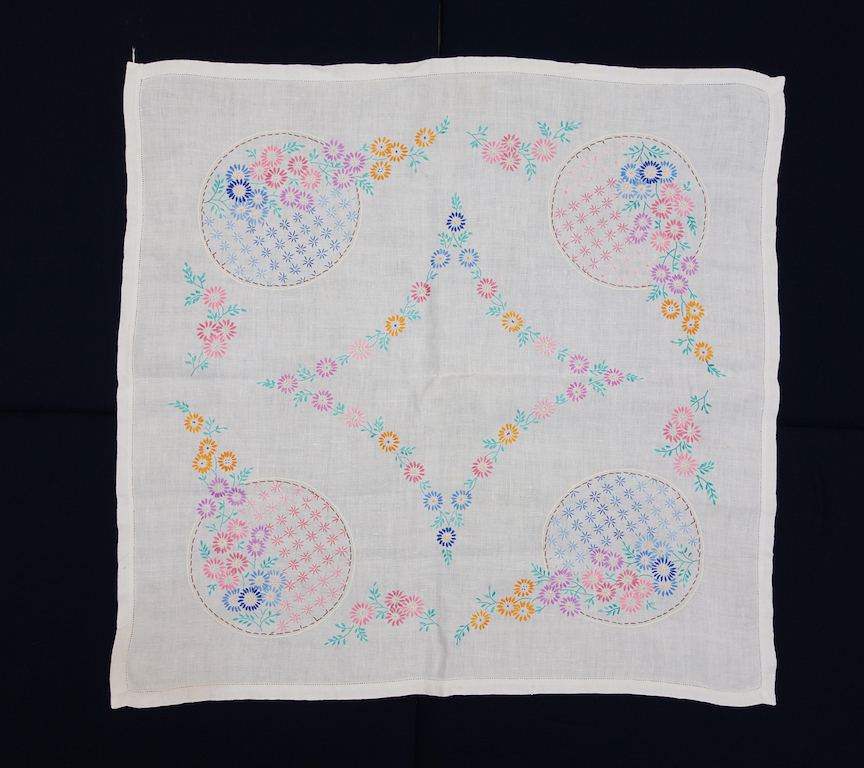
 Afternoon table cloth embroidered at Scapa Flow, Orkney Islands, Scotland, early 1940s (TRC 2021.1331).Today is the 5th May, Liberation Day in the Netherlands, so I was thinking what would be a suitable blog, and immediately thought about a recent donation to the TRC Collection. The gift, which arrived in the post a few weeks ago, consists of four embroidered afternoon table cloths, made from linen and cotton and embroidered with simple patterns of stylised flowers. The cloths were donated by Sharon Bruce from California, who happens to be the sister-in-law of Dale Gluckman from Los Angeles, who has been working with the TRC for many years.
 Issue of the wartime journal Needle Woman and Needlecraft, No. 17, 1941 (TRC 2019.2155).
Sharon Bruce included the following information: "Back in the late 1970ies, when my husband and I were still living in San Francisco, we would go flea market shopping, searching for interesting things to decorate our Victorian house. One sunny weekend, we went to the Oakland flea market. I was taken with four tea cloths, carefully hand embroidered all around the edges. Two very jolly English women were selling them out of their van as they traveled across America. When I admired the embroidery, they told us that they had both been radio operators in WW II, stationed in the Orkneys by Scapa Flow listening for German U Boats. They told us they spent hours in the dark Scottish winter with nothing to keep busy.
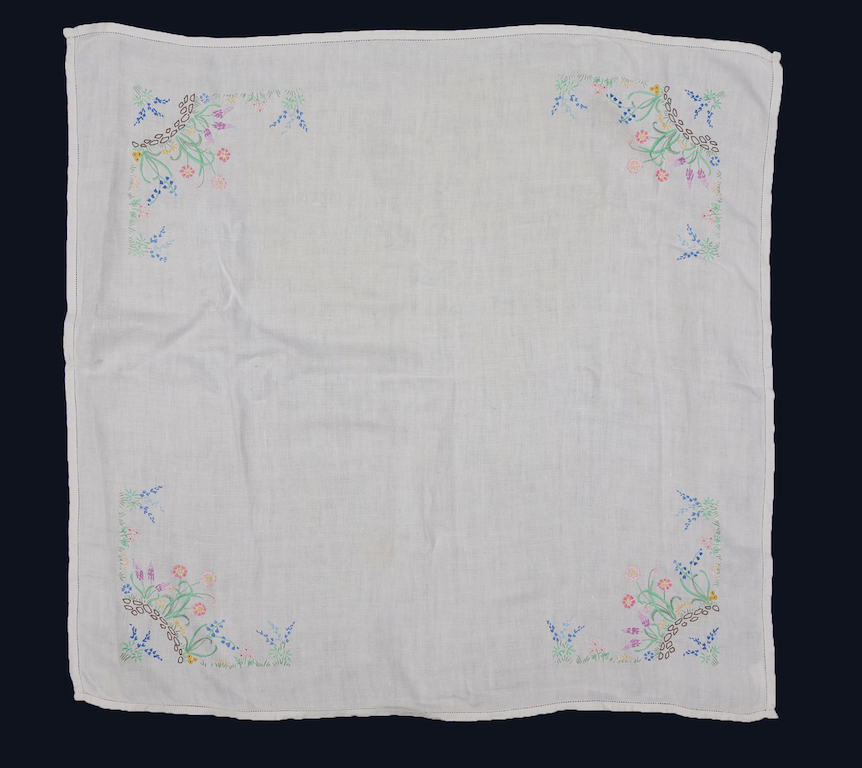 Afternoon table cloth embroidered at Scapa Flow, Orkney Islands, Scotland, early 1940s (TRC 2021.1332).So, they embroidered. [Having visited Scotland, Scapa Flow and the Shetlands, I believed their story because there isn't anything to do there]. Where they got the thread and cloth is a mystery, although they were on a military base, so maybe they had base exchange privileges or perhaps embroidery supplies were sent to them by family members or friends."
 Afternoon table cloth embroidered at Scapa Flow, Orkney Islands, Scotland, early 1940s (TRC 2021.1333).These cloths will feature in the Encyclopedia of Scandinavian and West European Embroidery, in the chapter about embroidery and war. And yes, where did they get the cloth and threads from? One of the answers is that British firms such as Anchor produced a series of patterns and embroidery kits for men and women in the services. These were sold in the various canteens and shops that were known as NAAFI’s (Navy, Army, Air Force Institutes). There were also magazines, such as the Needlewoman and Needlecraft (the TRC has booklet no. 17, from 1941, TRC 2019.2155), which provided transfers and addresses where kits could be bought. And indeed, many women had supplies dating from before the war at home.
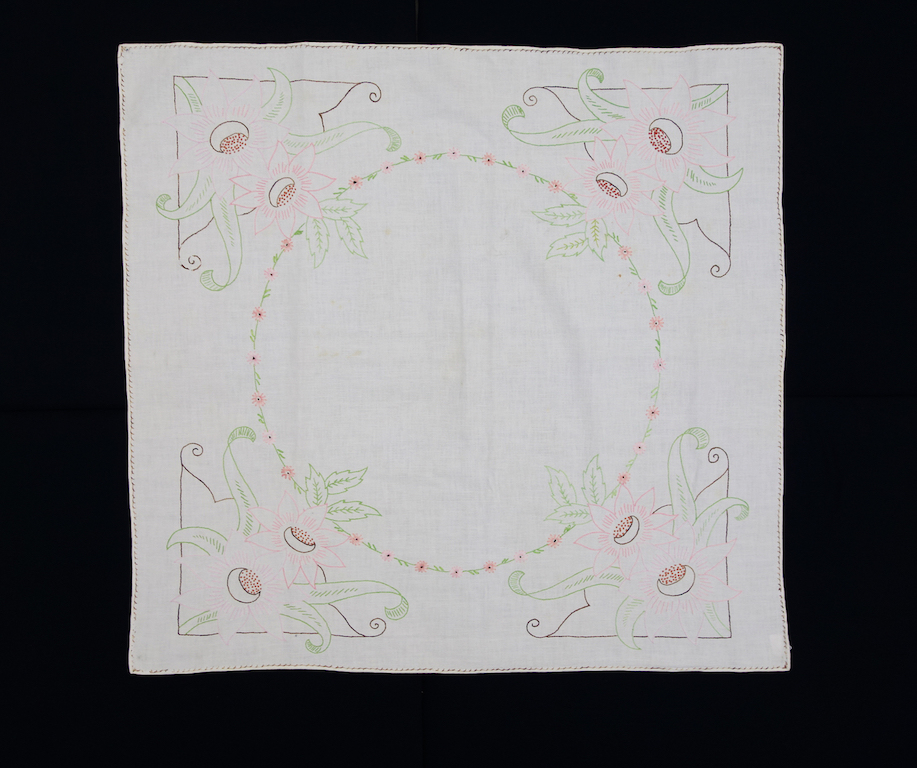 Afternoon table cloth embroidered at Scapa Flow, Orkney Islands, Scotland, early 1940s (TRC 2021.1334).The four afternoon table cloths are catalogued, and accessible online, under the accession numbers TRC 2021.1331, TRC 2021.1332, TRC 2021.1333, TRC 2021.1334.
Gillian Vogelsang, Director TRC, 5 May 2021.