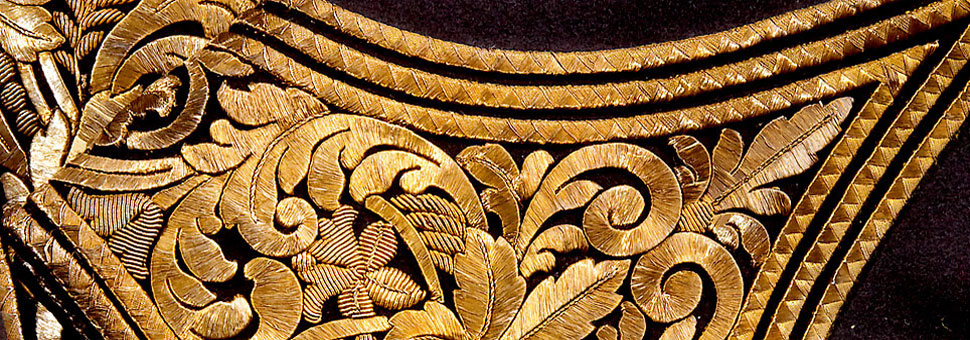
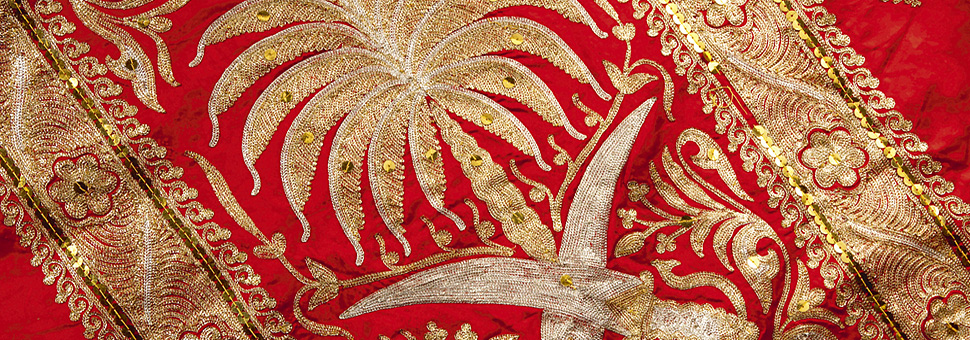

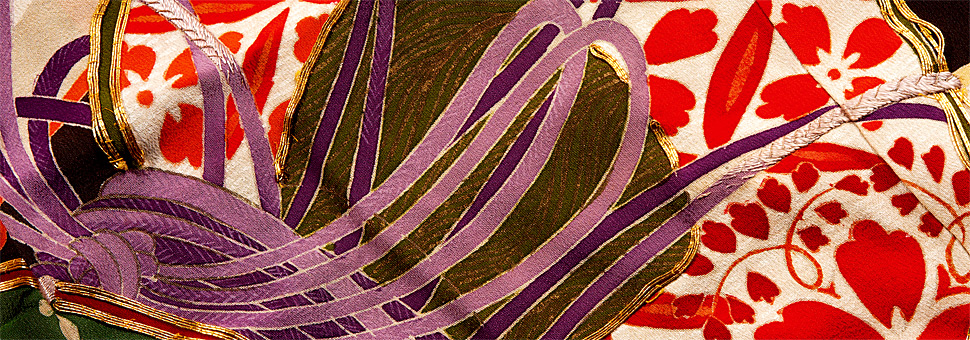
 Native American, Ojibwe (Minnesota) shirt, 2019 (TRC 2019.1605).November is Native American Heritage month in the US. Its aim is to highlight the traditions and modern cultures of Native Americans, including indigenous textile traditions.
A ribbon shirt (TRC 2019.1605), made in 2019 expressly for the TRC collection by Ojibwe textile artist Jenny Kappenman, also illustrates this connection between tradition and modernity. This traditional garment features coloured ribbons representing the Four Directions. But it is made from a non-traditional synthetic fabric that sports a floral motif, imitating traditional Ojibwe beadwork.
The Volkenkunde Museum’s (National Museum of Ethnography, Leiden) exhibition “The First Americans”, also shows that North American indigenous communities, numbering about eight million people, firmly belong in the 21st century.
The exhibit opens with objects one expects, such as sashes, moccasins and bags decorated with 18th – 19th century beads made from oyster shells or from porcupine quills. The bright green, red and black colours of the quill work might be surprising, but indigenous artisans knew and used at least forty different plants that supplied natural dyes. This tradition of natural dyeing was almost lost when settlers introduced, in the mid-19th century, new, less labour intensive aniline dyes.
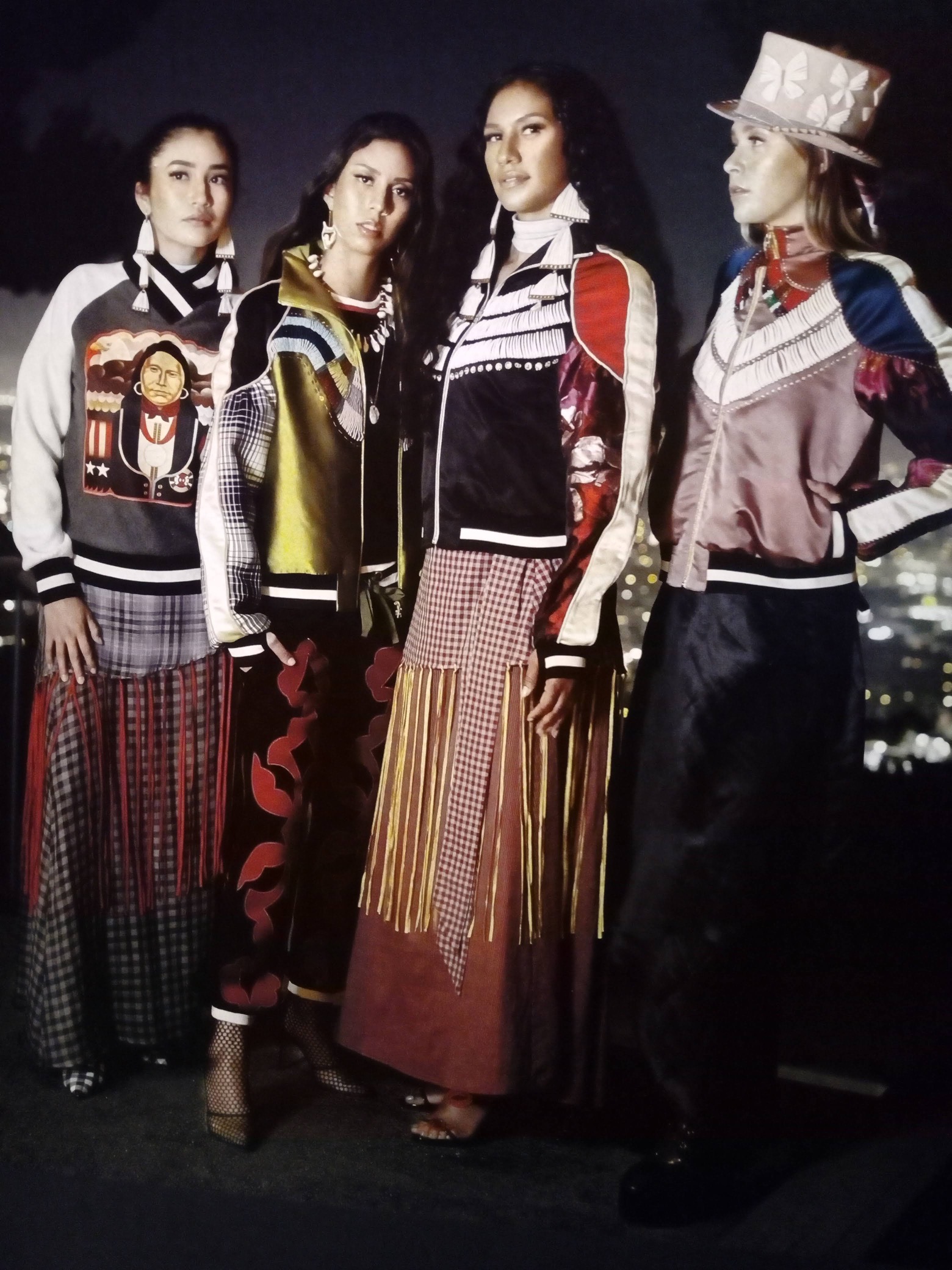 Photograph of Jaime Okuma clothing, by Cameron LintonThese older objects are displayed alongside an unabashedly 21st century ensemble of Italian felt hat, scarf, bomber jacket and jogging pants by Jamie Okuma (b. 1977, Luiseno/Shoshone-Bannock). The materials used include silk, velvet, wool, bamboo and soy stretch fabric, decorated with beadwork of new and antique glass beads, antique sequins and rhinestones.
Digital artist Skawennati Kanien’keha:ka (Mohawk) has designed an even more futuristic white gown, based on her retelling of a traditional creation story.
The portrait photographs of Cara Romero (Chemehuevi) are also memorable. She photographs indigenous women in traditional dress, surrounded by objects meaningful to them. For example, Julia Romero is in a black, blanket-like tunic of Pueblo clothing, holding ears of maize, surrounded by her grandmother’s baskets and her great, great uncle’s drum.
The photographs show not only the dress, but hair style and jewellery as well. Most importantly, the photos show how everything is worn and puts the textiles in a cultural context.
The exhibit “First Americans: Honoring Indigenous Resilience and Creativity” will be on display until 25 July 2021.
By Shelley Anderson, 19 November 2020.