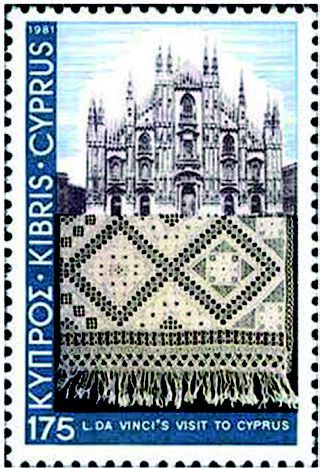
 Fig. 1. Postage stamp issued in Cyprus in 1981 to commemorate the 500th anniversary of the visit of Leonardo da Vinci to Cyprus. Above: The Duomo in Milan. Below: A piece of Lefkara lace.The TRC Leiden is very pleased to announce a special workshop on Lefkara or Lefkarika lace, scheduled for 21 May, and repeated on 22 May. The workshops are given by Eleni Anemomilou, who is coming especially to The Netherlands to give these and other workshops. Her trip is organised by the Cyprus Handicraft Service.
Lefkara lace or whitework is one of the embroidery techniques that were traditionally practised in Cyprus. It is a form of cutwork with satin stitch details. It is often classed as a form of embroidered lace. Nelleke Ganzevoort wrote a detailed blog about this fascinating technique five years ago, which the TRC published on 21 December 2021. In 2009, the Lefkara lace technique was included in the UNESCO Representative List of the Intangible Cultural Heritage of Humanity.
Lefkara lace is said to originate from the village of (Pano or Kato) Lefkara, Cyprus, and is locally called tayiadha (compare the Italian term punto tagliato, for cutwork ). Lefkara lace is said to have been developed in the time of the Venetian occupation of Cyprus (1489-1571), when reticella work was introduced to the island and local women copied the whitework's appearance, but using a different technique.
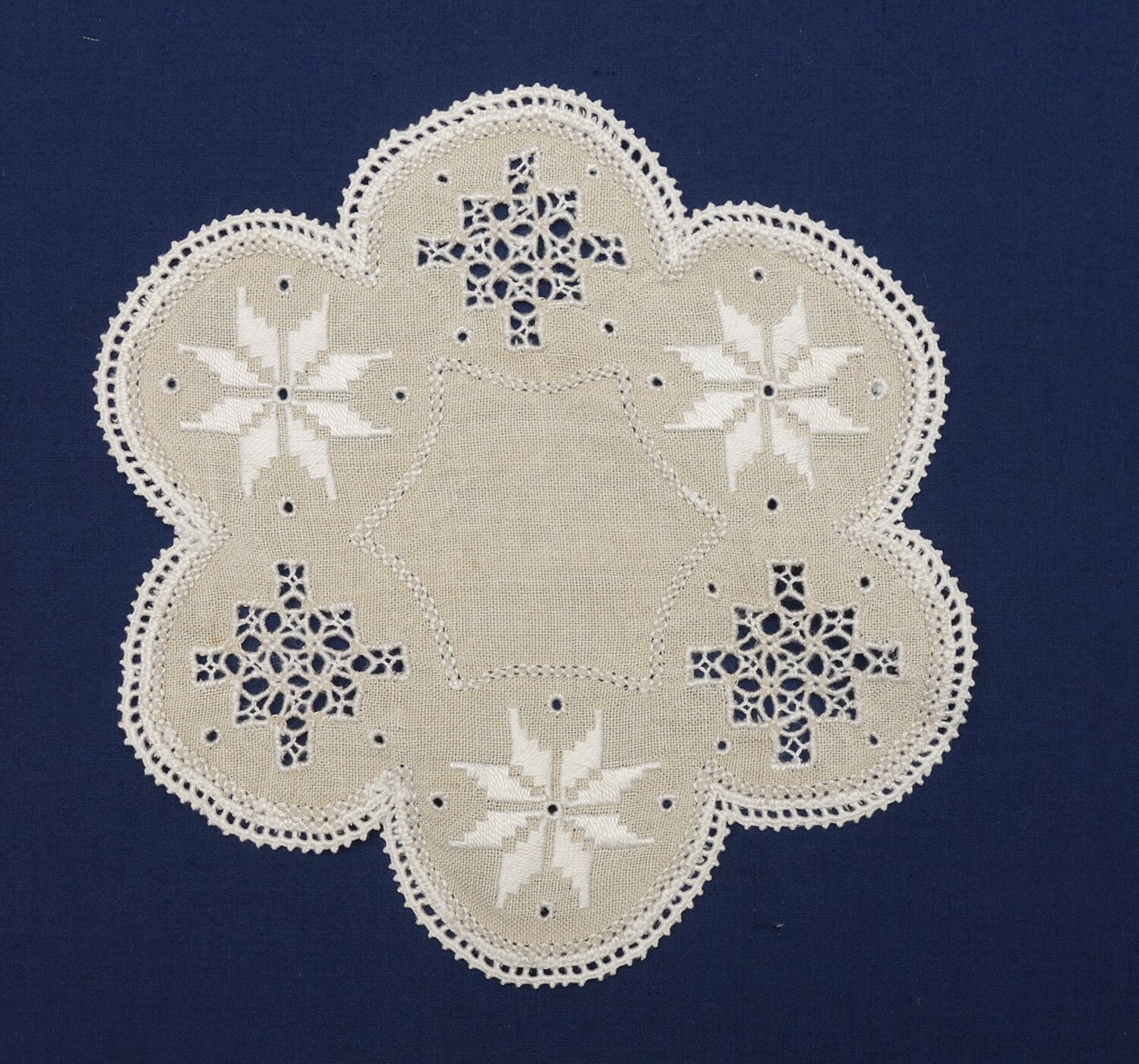 Fig. 2. Linen Lefkara whitework doily decorated with rosettes and ornate, cutwork squares, late 20th century (TRC 2018.2801).Leonardo da Vinci allegedly visited the island and obtained a piece of Lefkara lace for the altar of Milan Cathedral (Duomo). In 1981 the Cypriote authorities issued a postage stamp to commemorate this encounter (Fig. 1). A pattern of Lefkara lace is known as the "Leonardo da Vinci" design. It is said to resemble the tablecloth in Leonardo da Vinci's mural, The Last Supper, in the Church of Santa Maria delle Grazie, Milan.
Older and ‘traditional’ forms of Lefkara lace are made on linen and worked in white, cream or ecru silk threads (Fig. 3). More recent examples use DMC stranded or perlé cotton threads (Fig. 2). Designs used for Lefkara lace generally consist of geometric trellises enclosing stylised plant designs and geometric patterns. The work is always reversible. Lefkara lace was used on garments such as bodices, blouses, cloaks, etc. Modern versions tend to be used for runners, table cloths, panels and covers of various forms.
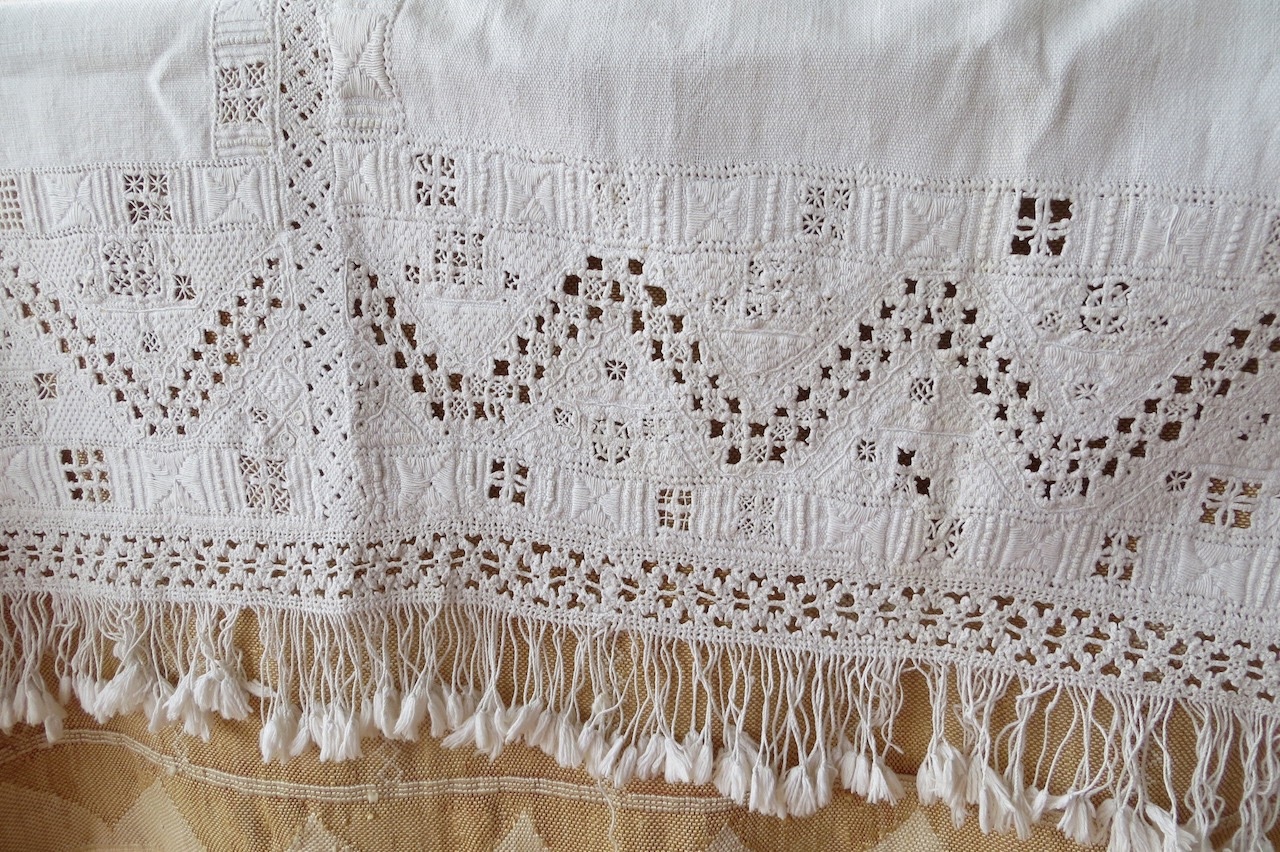 Fig. 3. Tasseled short edge of Lefkara lace cloth from Cyprus, 19th century (TRC 2021.2068). In the centre is the insert between the two lengths that make up the complete cloth
- Date: Thursday, 21st May, and repeated on Friday, 22nd May.
- Time: 13.00 to 16.00.
- Language: English.
- Costs: € 50 (including coffee and tea, and materials).
- Number of participants: 10 (per workshop).
- Please register in advance: Dit e-mailadres wordt beveiligd tegen spambots. JavaScript dient ingeschakeld te zijn om het te bekijken.