
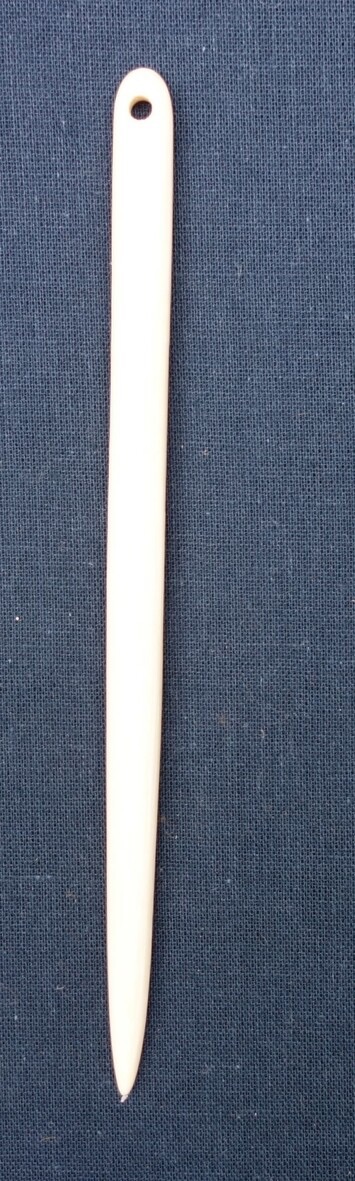
 Fig. 1. Needle made from mammoth ivory (modern!). TRC 2023.1681.by Emilie Lambert – collection manager TR
Today, we take wearing clothes for granted – but when did it actually start? This blog looks at when and why humans first began wearing clothing, and what it might have looked like. Even there are only rare finds of clothing from thousands of years ago scientists can still piece together clues using indirect evidence.
Clothing’s main purpose is to keep us warm. Around 1.6 million years ago, humans began to lose most of their body hair., and as natural insulation disappeared covering the body with other means became a necessity - especially in colder environments.
For a long period people wore what is referred to as simple clothing. This is in essence a single layer of minimally worked material draped over the body. Scientists believe humans wore such covewrings for at least 190,000 years. Most of these forms of clothing would have been animal furs and skins. They were treated with stone scrapers, separating the fat layers from the skin and then burnishing the material with antler lissoirs. Basic stitching can also be seen, with holes made through the thick skin with bone awls or stone burins, and a thread of twisted sinews or plant fibres.
Complex clothing, meaning tailored, fitted coverings, is first recorded from around 40,000 BC. This is around the time the Neanderthals were disappearing, leaving Homo sapiens as the only species of our genus. Complex coverings, although still made from animal hides and skins, would have allowed our species to inhabit climates otherwise too cold to bear, as close-fitted, layered clothing can insulate far better than draped coverings.
Indirect evidence for fitted clothes, such as eyed needles (compare a needle made from mammoth bone, Fig. 1), are found from 35.000 years ago and these tools are uniquely associated with Homo sapiens, although some evidence may point to earlier examples.
Dress would only move into its next phase at the start of the Holocene, some 12,000 years ago, when, because of climatic shifts, woven textiles were introduced which were preferred to hides and pelts. The TRC houses a bone awl with a decorated handle (Fig. 2; TRC 2020.0934). This item dates to the early 20th century, but comparable tools were used for the sewing of garments in the ancient past.
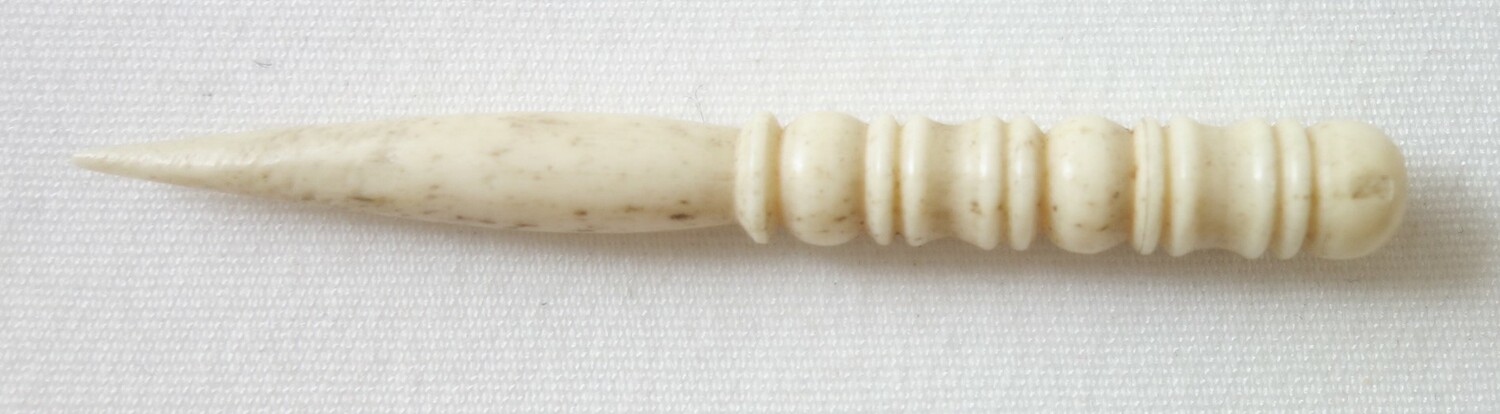 Fig. 2. Small bone tool with bone handle. The Netherlands, early 20th century (TRC 2020.0934).
When furs and skins were the main clothing materials, decoration already seems to have been everywhere. There are plenty of reports of head and body coverings sewn with teeth or shells. In burials, the placement of these items can even tell us how the decorations were arranged. The Aurignacian site of Sunghir in Russia is a classic example: its 30–34,000-year-old burials are exceptionally rich, with thousands of ivory beads preserved on the skeletons, revealing multiple layers of highly decorated clothing (Fig. 3)..
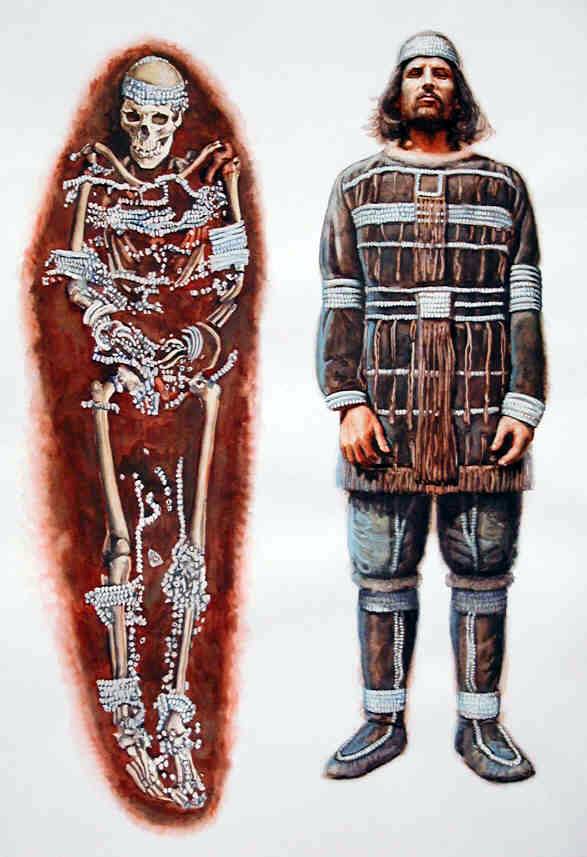 Fig. 3. Sunghir. Aurignacian clothing reconstructed from the layout of ivory beads in a burial. © Libor Balák (https://donsmaps.com/sungaea.html)
Early evidence for clothing can also be drawn from art and figurines. In the Upper Palaeolithic (particularly around 25,000 years ago), many of the famous Venus figurines are interpreted to be wearing clothing of various sorts. These include netted hats, skirts and aprons, which appear to be made primarily from cordage and narrow woven bands.
A ‘bast-culture’ was prominent throughout the Mesolithic and Neolithic (i.e. from 20.000 years ago onwards), with scarce but undeniable evidence for basketry, cordage, netting and twining.
Although we know that woven textiles were introduced with the Holocene around 10,000 years ago, there was still a significant use of non-woven clothing well into the Bronze Age. A good example is the famous Ötzi the Iceman, from the Central European Copper Age (ca. 3.200 BC), whose clothing was made entirely of leather and plant fibres.
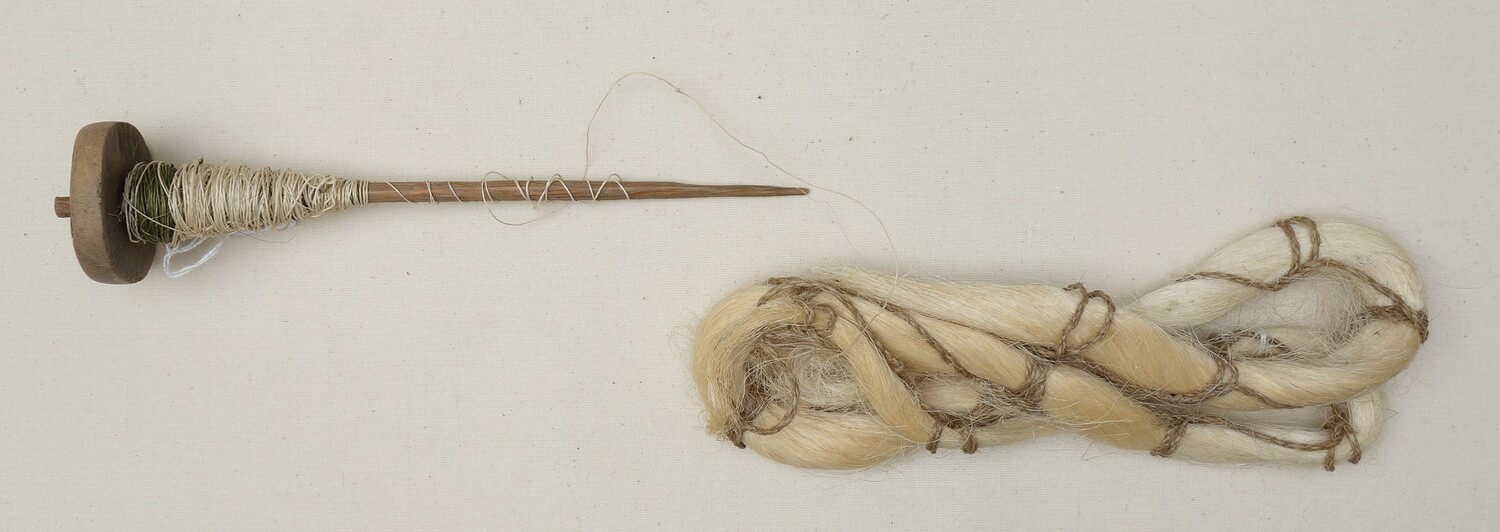 Fig. 4. TRC 2020.2796a Spindle with a stick shaft and a disc whorl. There is a spun, bast thread ('hanna') wrapped around the spindle shaft. Sri Lanka, 20th century (TRC 2020.2796a).
All this goes to show how knowledge of body coverings was crucial for survival, and early people were skilled in various forms of the relevant crafts. Tanning of leather, basketry, knotting, spinning and weaving techniques, were essential for human survival and development. Many ofd the tools developed thousands of years ago, were, or still are bing used (compare a 'modern' spindle from Sri Lanka, Fig. 4).
Further reading:
- Gilligan, I. (2019). Climate, clothing, and agriculture in prehistory: Linking evidence, causes, and effects. Cambridge University Press. https://doi.org/10.1017/9781108555883
- Marangou, C. (2020). Neolithic anthropomorphic figurines: Clothing, dress and costume. Revue de l'Archéologie du Vêtement et du Costume (ISSN 2728-0896), 1, 27-56.
- Rast-Eicher, A. (2005). Bast before Wool: The first textiles. In P. Bichler, K. Grömer, R. Hofmann-de Keijzer, A. Kern, H. Reschreiter (Eds.), Hallstatt textiles : Technical Analysis, Scientific Investigation and Experiment on Iron Age Textiles. (pp. 117-131). BAR International Series 1351. Archaeopress.
- https://www.iceman.it/en/clothing/