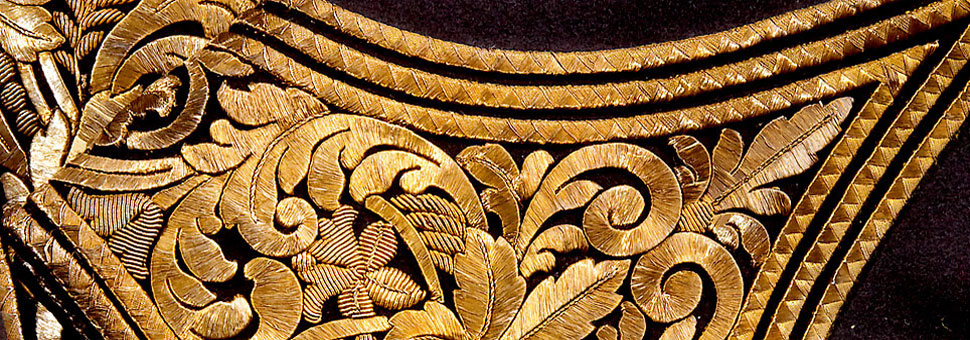
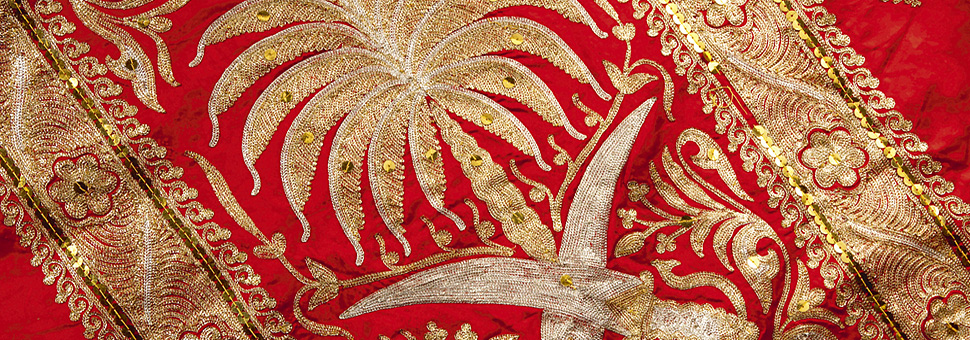
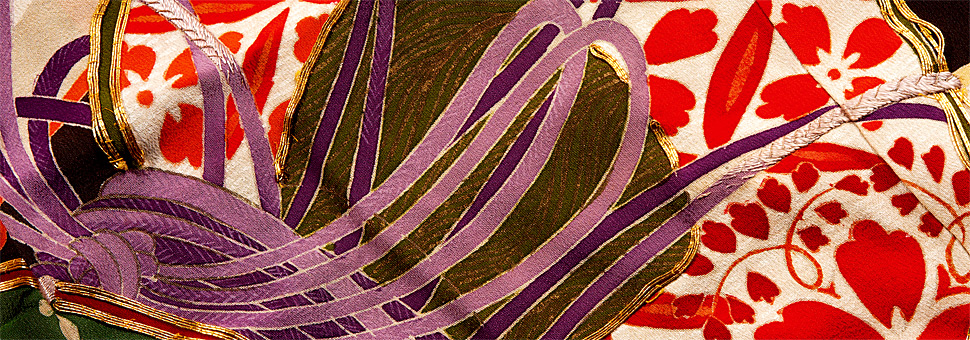

 Medieval statue of the Virgin Mary being taught by St Elizabeth (?). Troyes Cathedral. The statue shows the rich garments of Mary and her teacher. Photograph by author. Develop an interest (translation: obsession) in textiles and see the world! Well, perhaps not the whole world, but the study of textiles and building up the TRC Collection are certainly taking me to a variety of different countries and more is to come over the next few years.
This blog is being written during a trip to France, more specifically Troyes. Willem and I are en route to some friends who are making a donation of textiles, clothing and looms from the Philippines, Indonesia and Belgium! More about the donation in another blog.
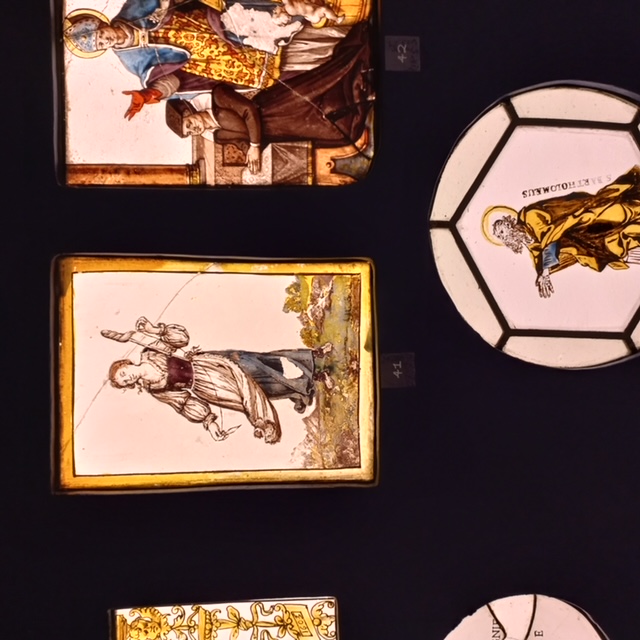 Stained glass, late 16th / early 17th century, with a woman spinning flax. Vauluisant Museum, Troyes. Photograph by author.This one is about Troyes, a medieval city in central France that has been known for many centuries for its production of woven, as well as machine knitted textiles, in wool, flax and silk, and later cotton. It is also an amazing ‘wooden’ city where the buildings of the old town and neighbouring districts are half-timbered and filled with wattle and daub, while later ones are of timber and brick. Well worth visiting just for the architecture.
The Vauluisant Museum is also well worth a visit. It has a small, but amazing collection of (mainly 16th century) statues and paintings and I spent time looking for embroidered details and found items such as blackwork collars on men’s shirts, orphries on copes, as well as embroidered velvet garments.
I was also looking for medieval bags and their uses and found several medieval paintings that included bags hanging from men’s waist belts. There is also a room dedicated to painted glass for windows. One piece, dating to the 16th century, includes the depiction of a woman spinning flax with a drop spindle and distaff.
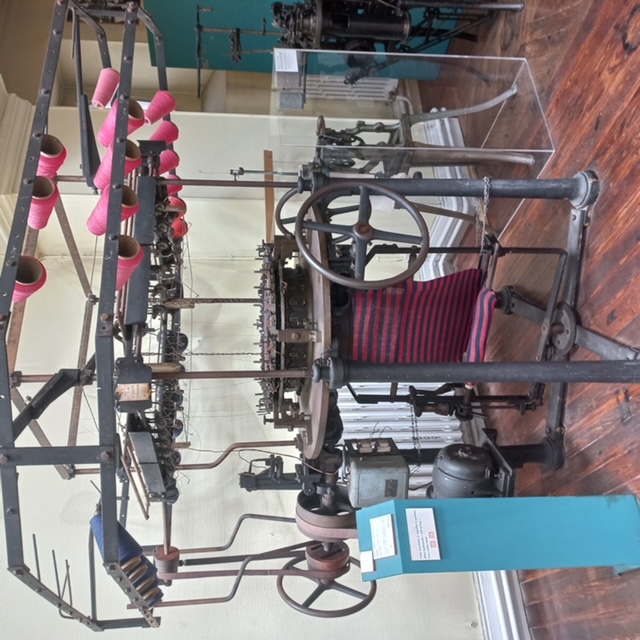 19th century knitting machine, Vauluisant Museum, Troyes. Photograph author.The museum is also home to a really interesting series of rooms with a permanent exhibition about the history of machine knitted cloth, a speciality of the city for hundreds of years. The displays and text boards (in French, with English summaries), take the viewer through the history of machine knitting going back to the Rev. Lee’s development of the first knitting machine in the late 16th century to 19th and early 20th century developments.
There are many machines in the exhibition as well as spinning equipment and finished products. Well worth seeing if you are interested in machine knitting in its various forms, which the TRC is because of its building up reference collections of hand and machine knitted forms (under the watchful eye of Alice van Duijnen, a TRC volunteer and a dedicated knitter and weaver).
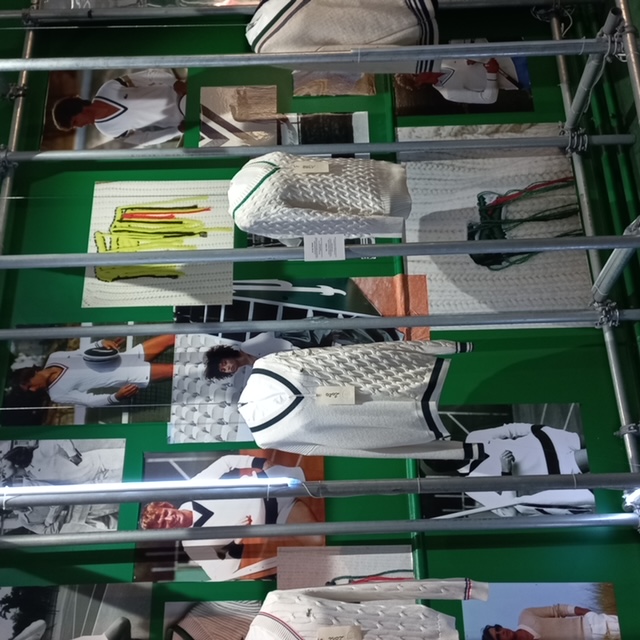 Lacosta exhibition, Vauluisant Museum, Troyes. Photograph by author.The museum also has a temporary exhibition (until 24th September 2023) about the history of a particular French knitwear company that started in Troyes, namely Lacosta, which is famous for its machine embroidered crocodile logo. It was fascinating seeing how the company has developed and changed over the last 100 years, in both general clothing and sports clothing in particular.
Unfortunately there are no catalogues to either the permanent exhibition or the temporary display. The only book that was available was by André Boisseau and is called Mémoires de Mailles (2014). It is very heavy so I could not carry it in my small handbag, and I will order it online for the TRC Library when I get back to Leiden.
Willem and I then went on to the medieval Troyes Cathedral, and again we were looking at architecture while searching for textiles. There was a side chapel that had a small display of copes from various centuries, as well as a modern cope presented this year for Pentacost. Willem was a bit disappointed not to find the stained glass window that is said to show King Gondophares, who was a reputed king of southern Afghanistan and whose name is often linked to the Three Magi.
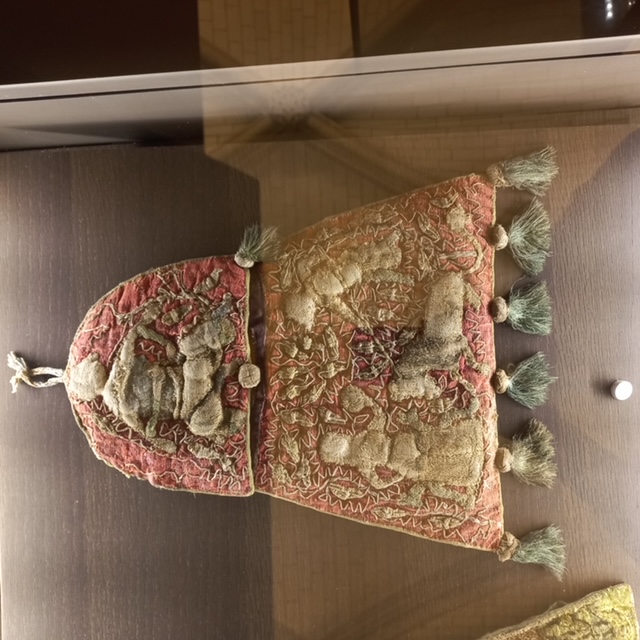 Embroidered 13th century aumonière with stump work. Troyes Cathedral. Photograph by author.In the treasury there was something that got me really excited! There are three medieval embroidered bags of the aumonière type, of a form which we saw in Sens Cathedral last year (see a special blog). Three very different styles, firstly a repeating, geometric pattern, then one with two girls in a garden scene, and then one I think is earlier in date with surface couched metal thread and stump (padded) embroidery. It has the embroidered arms of the counts of Champagne. These will be mentioned in the chapter on medieval bags in volume 4 of the Bloomsbury World Encyclopedia of Embroidery!
Troyes is certainly a city I would like to go back to and explore, both the old centre and its textile history.
Gillian Vogelsang-Eastwood, 9 June 2023