 Machine embroidered cigarette silk with a pair of birds, set within a heart. The birds are worked in ombré or shaded threads (1920-1930, TRC 2021.2473h).We have just had a question about the colour of yarns and in particular: when is a yarn ombré, shaded or variegated?
By coincidence, these differences can be clearly seen in a recent donation to the TRC Collection of some Dutch cigarette silks (zijdjes) from the 1920s to the early 1930s (see the blog).
Ombré (French: ‘shadowed’) and shaded are the same, and it occurs when a yarn or cloth is dyed so that it includes gradated shades of the same colour. So it may go from dark pink to light pink and back again. The two birds in the TRC Blog about cigarette silks were machine embroidered using shaded threads in various hues of blue and orange (TRC 2021.2473h).
 A machine embroidered butterfly made using shaded brown and shaded purple threads on the wings (1920-1930, the Netherlands; TRC 2021.2475b).
Another example of a cigarette silk in this technique is a butterfly (TRC 2021.2475b), which is worked in shades of brown and purple.
The technique of shading can be found in many different countries and can even be seen on Roman-period textiles from Syria dating from about AD 300. It was a popular technique in the West in the 1970s when garments such as tank tops were popular (and here I speak of personal experience as I wore a brown shaded tank top knitted by my mother….).
Variegated is similar to shaded, and it is where a yarn or cloth is dyed with a variety of contrasting colours, so it may be dyed brown, red, pink, yellow, and so forth. This technique can be seen on the body and part of the wings of another Dutch butterfly cigarette silk (TRC 2021.2477j) that dates to 1920 – 1930.
Like shaded threads, variegated threads can be found in many different countries and time periods and is generally used when a bold, colourful effect is required.
Gillian Vogelsang, 17 August 2021
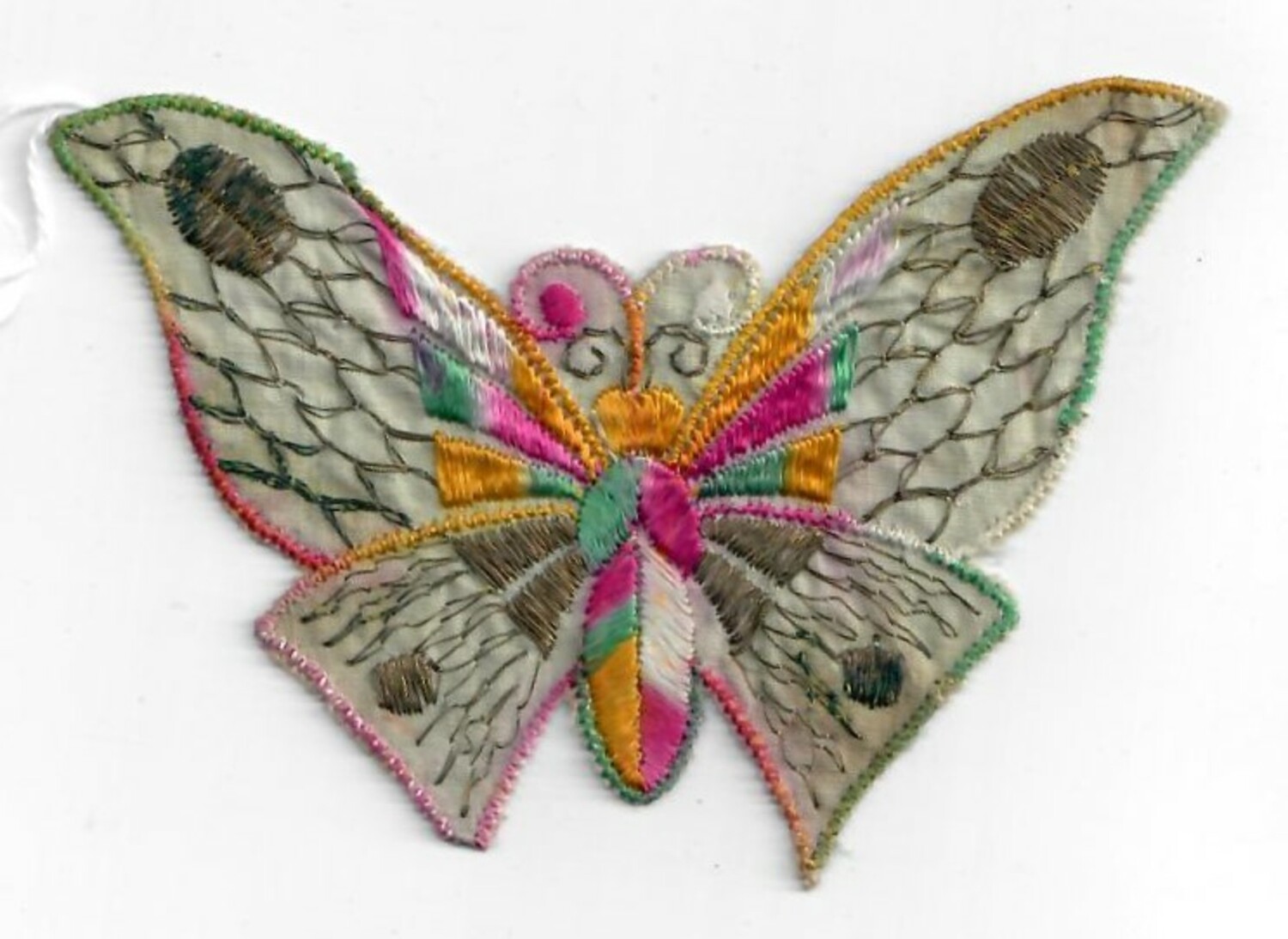 A machine embroidered butterfly made using variegated threads on the main body of the insect and part of wings (1920-1930, the Netherlands; TRC 2021.2477j).