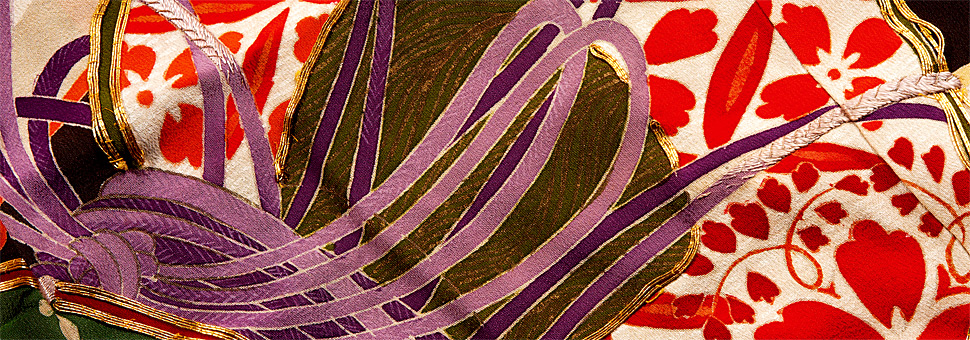
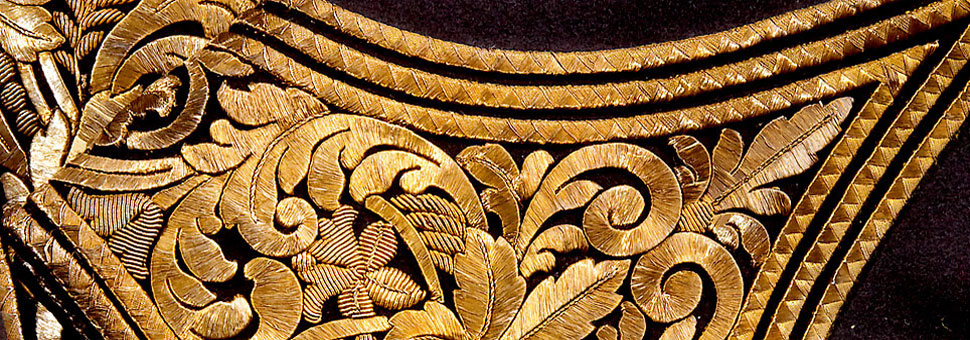

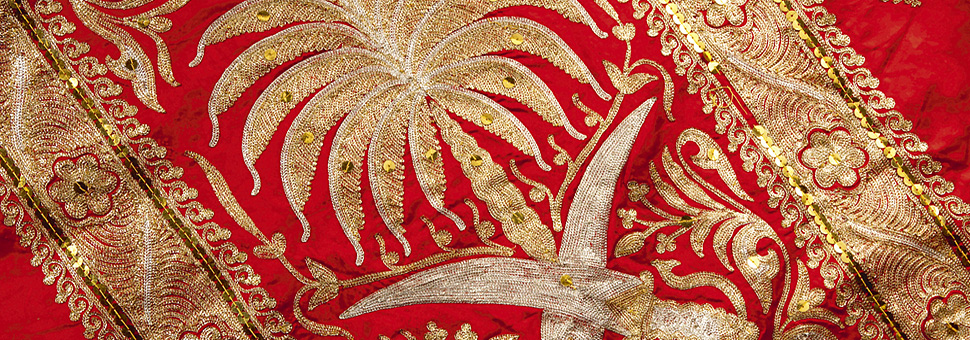
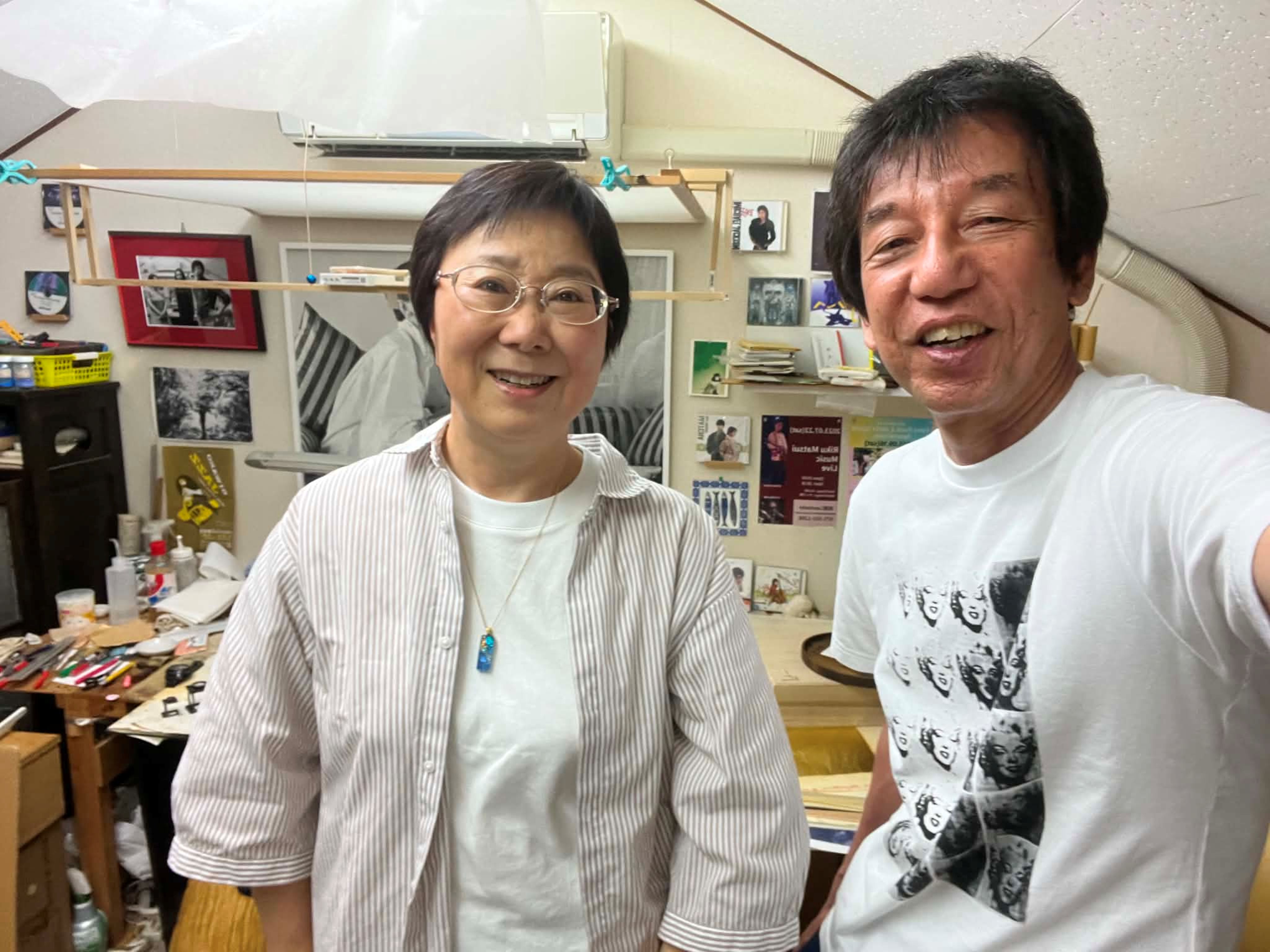
 Fig. 1. Masaru Matsui (right) and the author.In late May of this year, Kikuchi Naoko, a former volunteer at the TRC and now living in Japan, visited the atelier of the hikibaku craftsman, Masaru Matsui, who lives and works in Kyoto (Fig. 1). She wanted to know why her friend Natasha, who has a broad knowledge of textiles, was so fascinated by the so-called hikibaku textiles and had even moved to Kyoto to learn the technique. Naoko wrote the following introduction to this intricate technique.
Hikibaku in Japanese means 'pulled gold/silver foil'. Also known as hikihaku, it is an ancient, intricate technique, carried out by a ‘hakuya’ (a hikibaku-design craftsman), a ‘kiriya’ (cutting craftsman) and a ‘hataya’ (weaver).
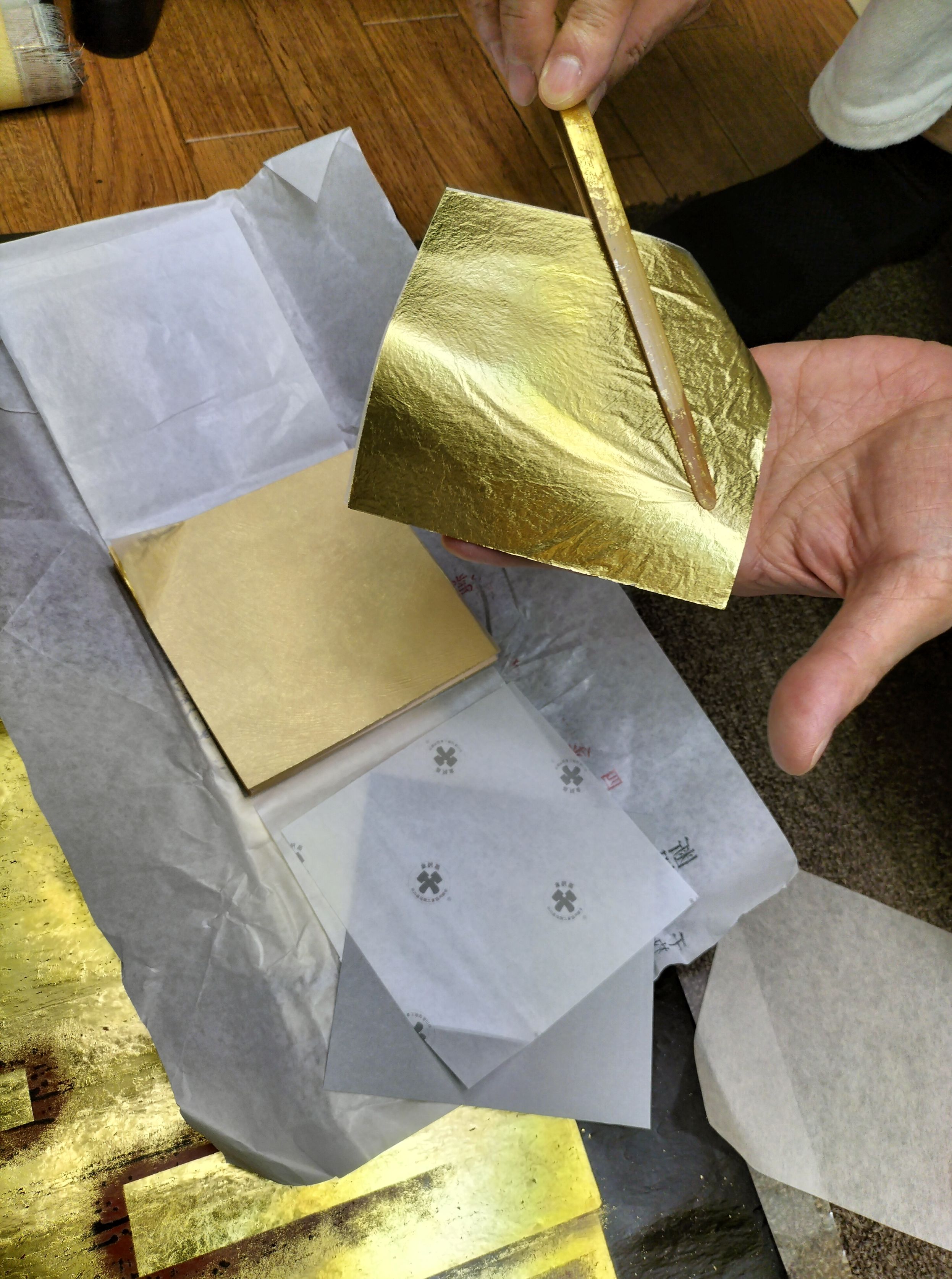 Fig. 2. Gold foil for hikibaku.
In short, the technique of hikibaku is based on the use of sheets of paper that are decorated with (coloured) lacquer and (metallic) foils (Fig. 2). A standard sheet of washi used for hikibaku is 45 cm wide and 60 cm long.
A hikibaku designer covers the paper with Japanese natural lacquer (urushi) or chemical lacquer, which works as both an adhesive and a paint. The basic colour of urushi is honey-brown, but can be altered by adding pigments or other substances to achieve different colours. To create a black colour, for instance, iron powder is added to the lacquer.
The use of urushi for hikibaku, however, is now losing its popularity, because it is difficult to handle. It changes colour, not only by adding pigments, but also with temperature, humidity and time. It may also cause a rash on the skin when wet. But Matsui still loves urushi because of its durability, glossy coat and colour.
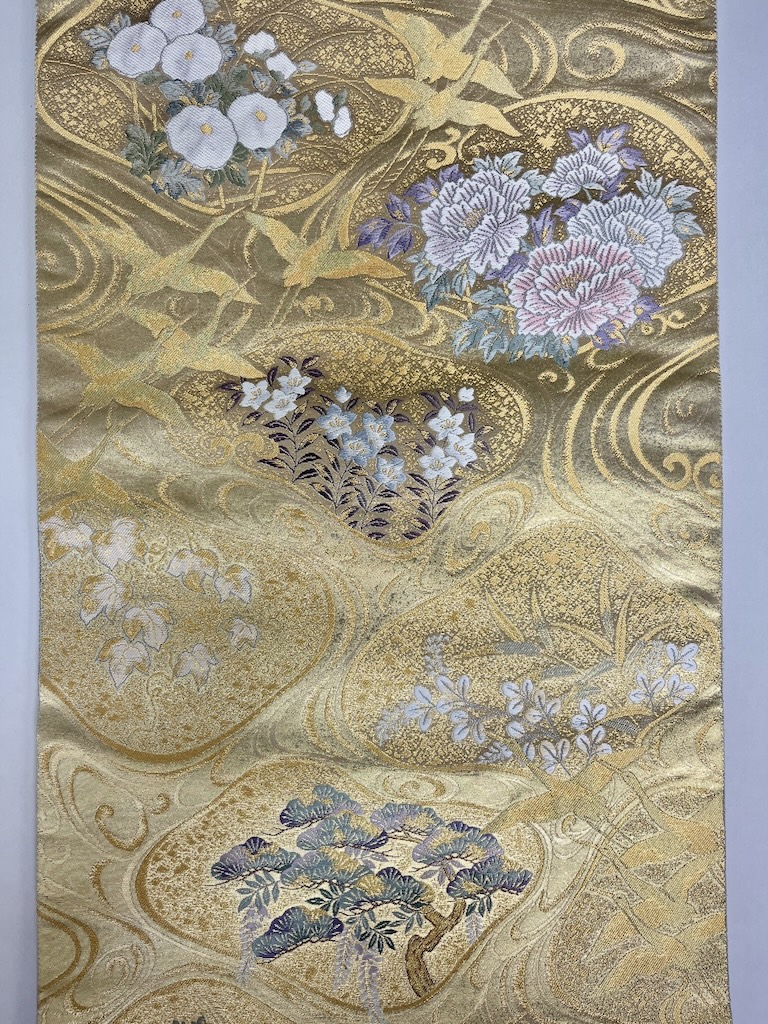 Fig. 3. Hikibaku obi by Masaru Matsui.Creating and cutting the pattern
After covering the paper with the coloured lacquer, the designer affixes foils and slivers of gold, silver, platinum, mother-of-pearl or lapis lazuli to complete the decorative pattern. Sometimes lacquer is painted over the foils and other pieces for more colour and stability. He then marks the paper on the back to make sure its original pattern can be maintained after cutting and weaving.
Then, after the design hs been added to the paper, the kiriya cuts the paper into thin strips of c. 0.3 mm. A precise and perfect cut is crucial, otherwise the decorative pattern cannot be correctly woven into the cloth. he will use a slitter or guillotine cutter, after sandwiching the sheet between layers of paper to keep it flat and stable.
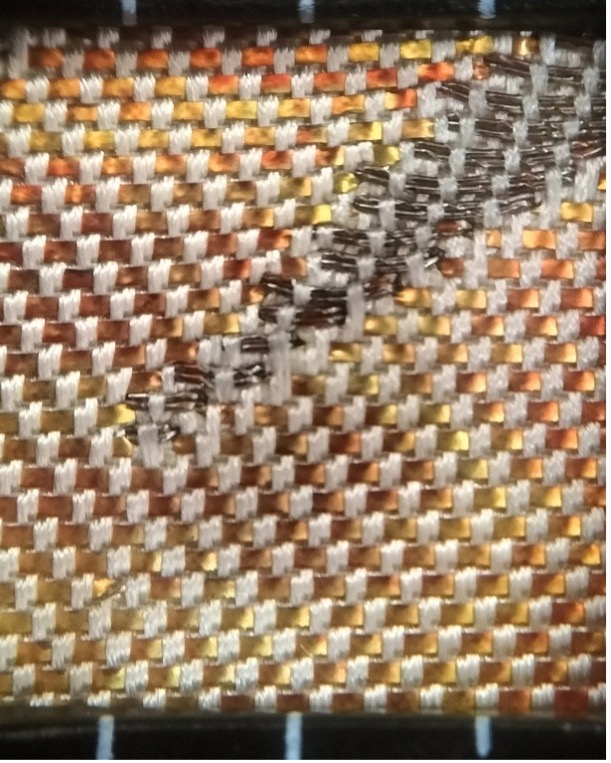 Fig. 4. The structure of a hikibaku weave. The weft threads are in silver-grey, the hikibaku strips are in yellow-orange-brown, and the warp threads are in a cream colour.To create an obi with hikibaku decoration (Fig. 3), the strips are pulled/woven directly over and under the warp threads of the cloth (Fig. 4). During the weaving, the marks of the pattern on the back of the strips are constantly checked with a mirror on the back of the loom, thus to recreate the pattern in the cloth. The weaving itself used to be carried out by hand, with a ‘hera’ (shuttle), but nowadays a powered loom is often used..
A finished, so-called fukuro obi (fukuro obi is folded twice on the back) is 30-32 cm wide and 4.3-4.5 m long. For one obi, five to six hikibaku sheets are required. Most fukuro obi have patterns on 60% of the whole length, and the hikibaku covers the full required length of the obi.
The finished textile has a smooth surface and subtle shine. No hikibaku obi is identical. It changes its look from different angles. The colours and shine of the garment, if urushi is used, become more intense over time.
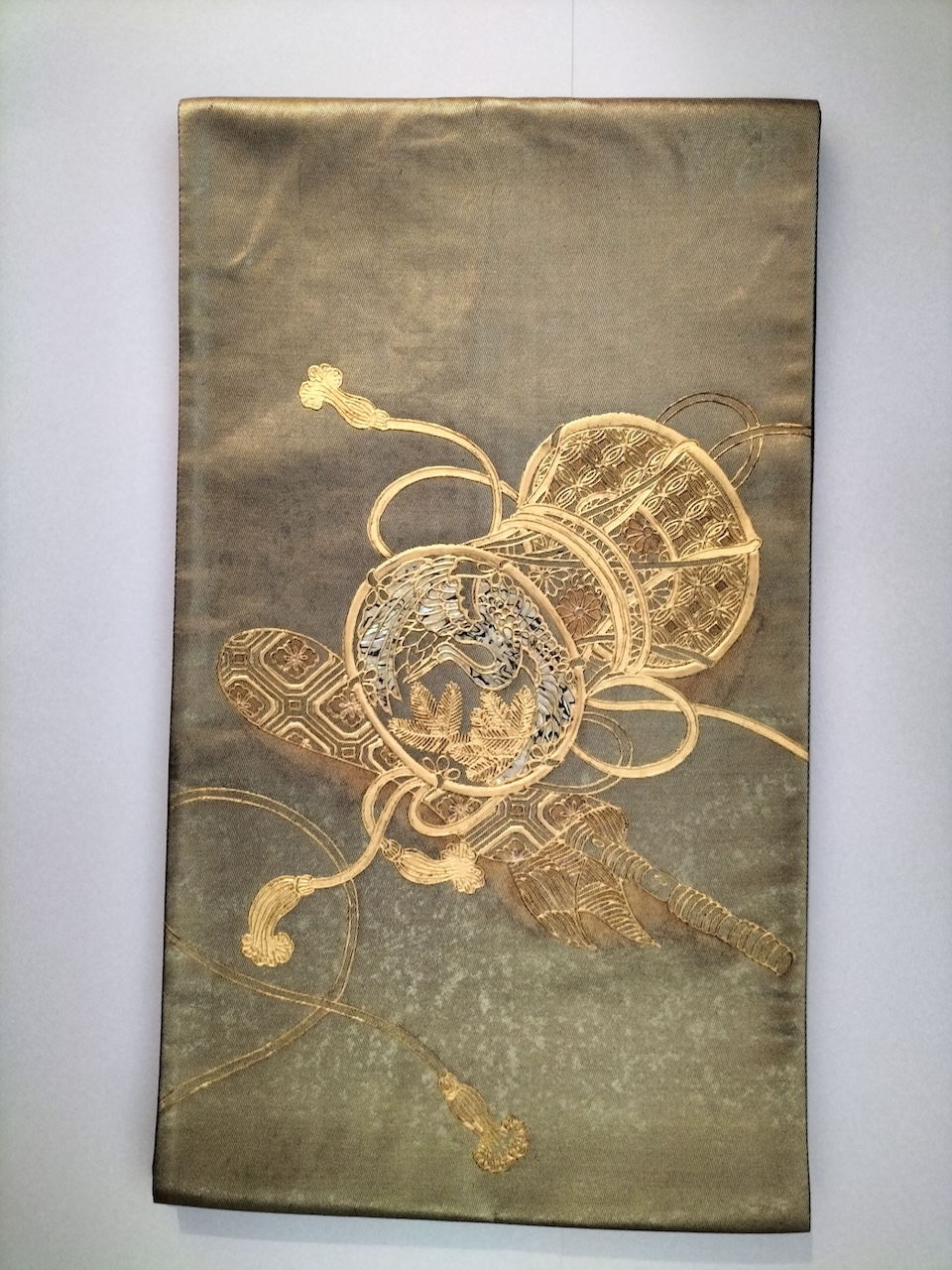 Fig. 5. Obi with a hikibaku design of drum and flutes in bags.To see how the foil pattern is created, cut, woven, selvedged, and sewn, please watch this film, produced by Okamoto Orimono. Attached are photoghraphs of two hikibaku obi which I found at the flea market of the Kitano-Tenmangu, Kyoto, after learning how to distinguish hikibaku obi (Figs. 5-6).
History
Foil weaving was introduced in Japan from China. In the late Heian period (10th – 12th century), priests who had studied Buddhism in Song China introduced brocade robes and other precious textiles to Japan. These included textiles that were decorated using foil strips. By the Muromachi period (in the late 16th century), textiles that were delicately decorated with foil paper were already woven in Nishijin (a Kyoto Nishijin district).
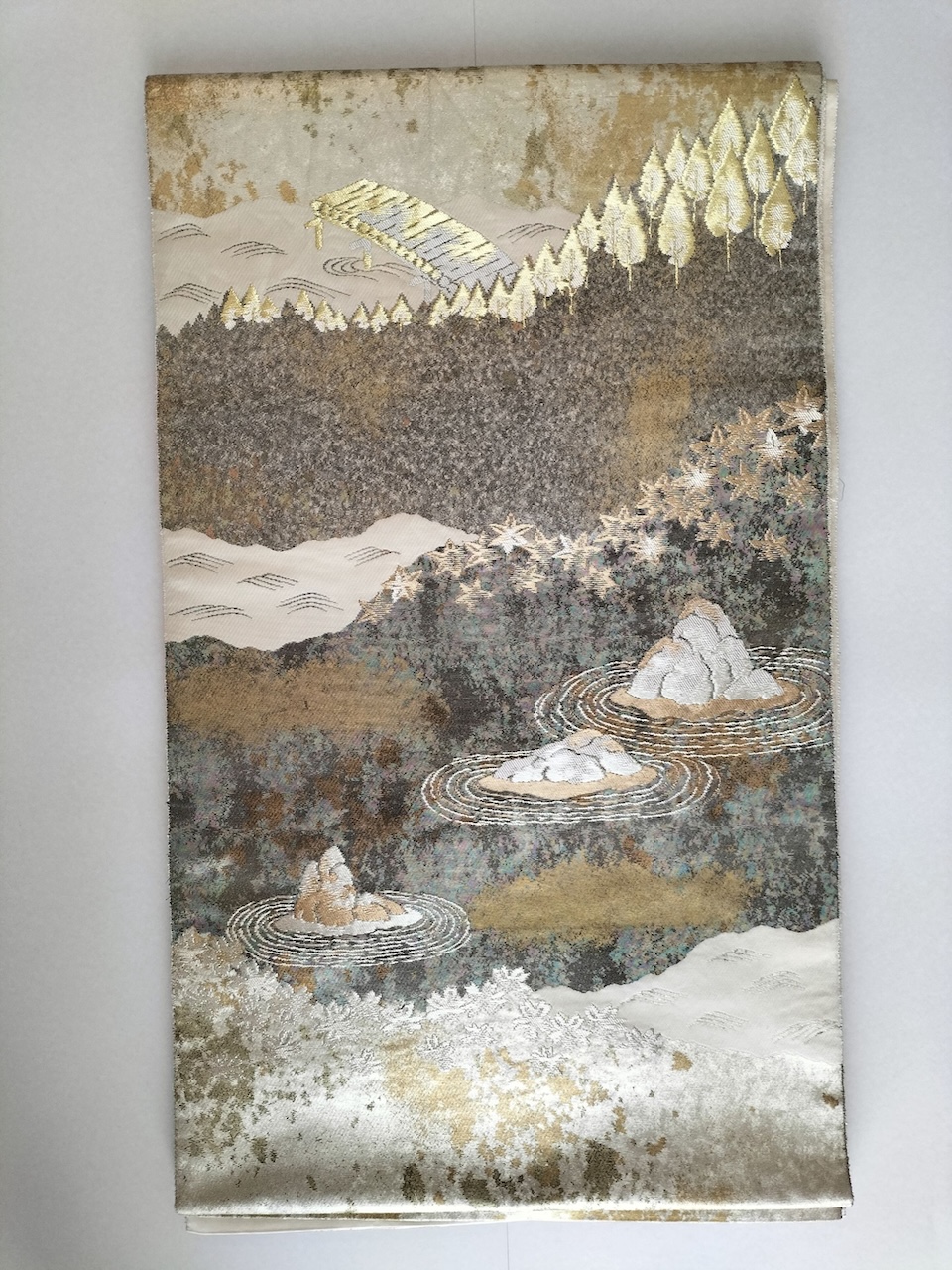 Fig. 6. Part of an obi with hikibaku garden pattern.The technique was introduced by craftsmen from Sakai, a port city south of Osaka, where Ming weavers from China had introduced the foil technique to Japan. The Sakai weavers had fled their city because of an ongoing war. The textiles woven in Nishijin were used to decorate temples, the robes of monks and Noh costumes, but eventually also for luxurious obi.
In the late 19th century, chemical lacquer and the mechanical slitter were introduced. Until then washi was folded and cut with a knife. In the post-war period (1950s – 1970s), the kimono industry flourished, and the slitter or guillotine cutter was much improved for mass production. In the 1980 -1990’s, a large variety of metallic foils were used to cater to people’s taste.
Masaru Matsui
Masaru Matsui started working as a salesman for his uncle's hikibaku company in 1983. Observing hikihaku craftsmen working for the company's clients, he learned how to make hikibaku and he became a traditional hakuya and hikibaku craftsman. With his skill and artistic talents, he accepted commissions from prestigious weaving companies, such as Kawashima Selkon Textiles. Even the then Empress Michiko purchased one of his hikihaku obi, which she wore on her birthday and other important occasions.
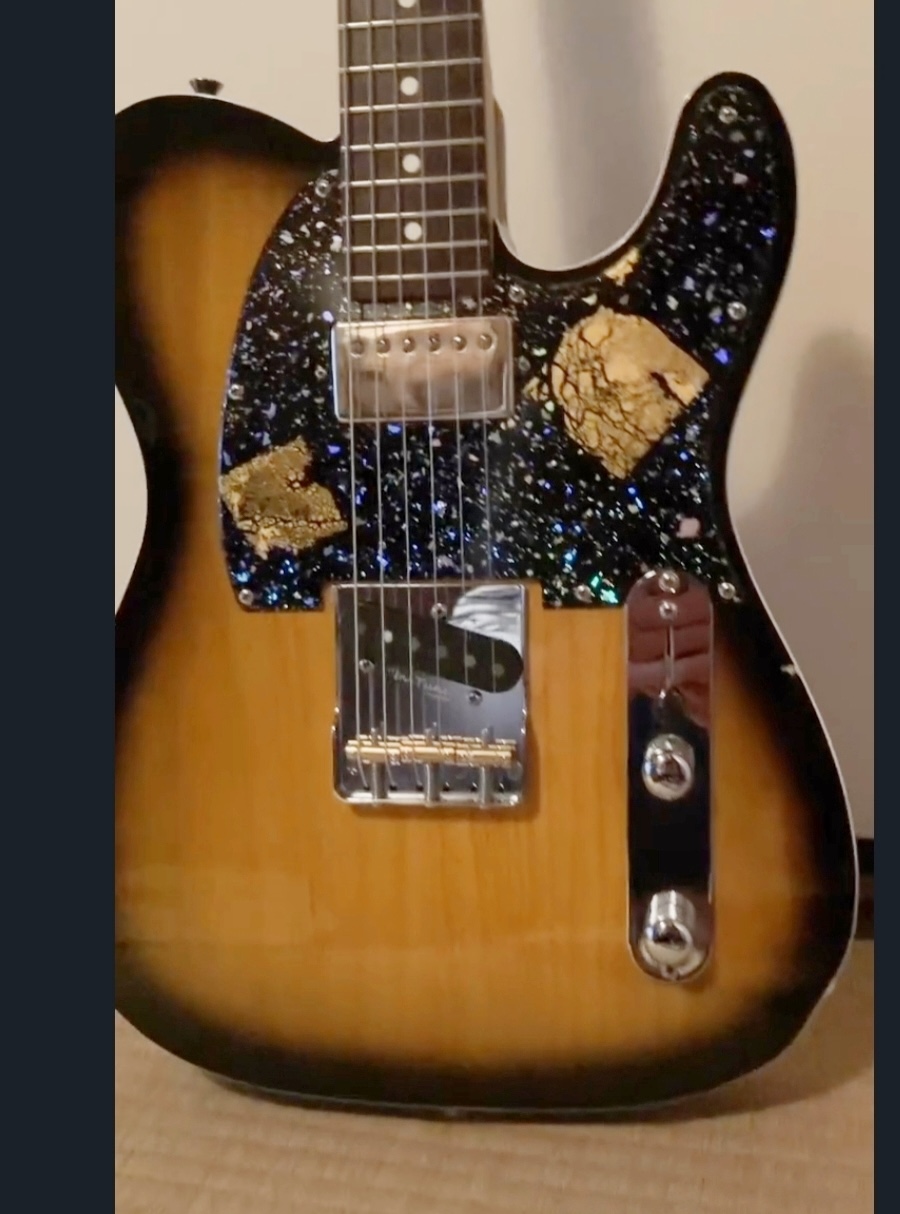 Fig. 7. The guitar of Riku, the son of Masaru Matsui, decorated with haku art.However, the kimono industry gradually declined, and so did that of hikibaku. Especially the number of craftsmen cutting the paper went down. Right now, only two are left, and both of them are over 70 years old.
When some years ago Masaru Matsui's ten-year old son Riku told his father that he wanted to become a hikibaku craftsman, Matsui suggested that Riku should pursue his own, different path. In later life, Riku became a guitarist (Fig. 7).
In recent years there has been a new development. The textile companies of Kawashima Selcon and Kusuka Fabric started to use hikibaku for interior decoration, such as for a high-end chair (Fig. 8) and luxurious car upholstery. Please read more about the chair of Kawashima Selcon and the BMW interior decoration from the links below;
- https://www.kawashimaselkon.co.jp/event/kokoromi2020/designer-mihara-yasuhiro/
- https://www.bmw.co.jp/ja/magazine/x7-nishiki-lounge.html
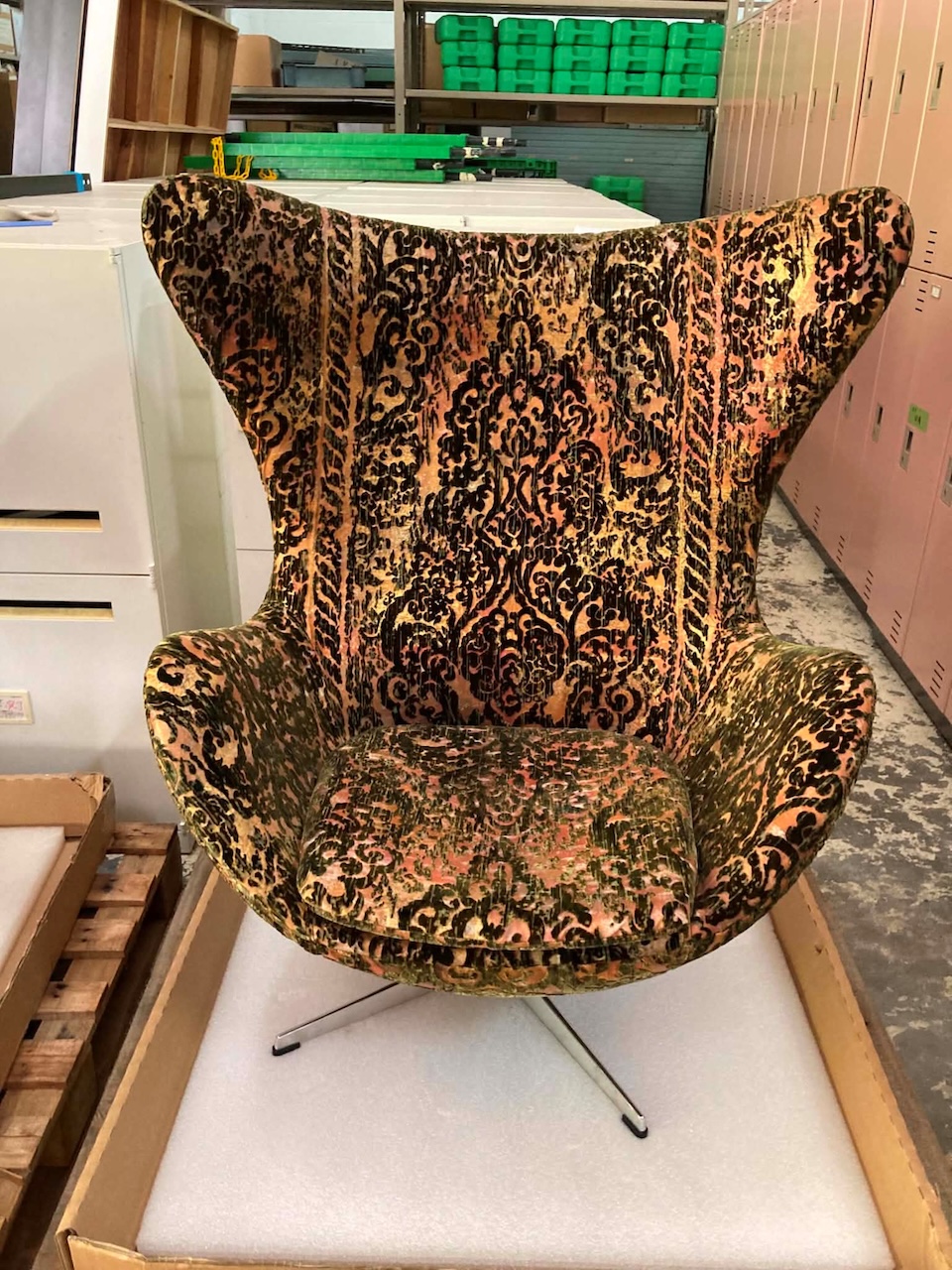 Fig. 8. Kawashima chair, with hikibaku decoration, by Masaru Matsui.With a growing market and the use of hikihaku for a broader range of interior decoration, the cutting of hikibaku strips still remains a problem. The maximum width of the guillotine blade is 120 cm, while many interior textiles require a width of 150 cm.
Matsui now considers using the cutting machine traditionally applied to produce the Saga – Nishiki brocades, whereby strips of metal-coated paper are used for warp threads over 4 metres long.
The machine has many wafer-thin circle blades to cut the threads from the paper. By setting the machine and paper horizontally, the width problem can be solved. The problem is the cost for its introduction, finding the right cutting craftsmen, and the difficulties in weaving.
In the meantime, Matsui started to use his design skills to decorate other items with what is called Haku art, such as smartphone cases, billiard cues (Fig. 9), and other objects. He feels fortunate that he can keep working, if not only for obi.
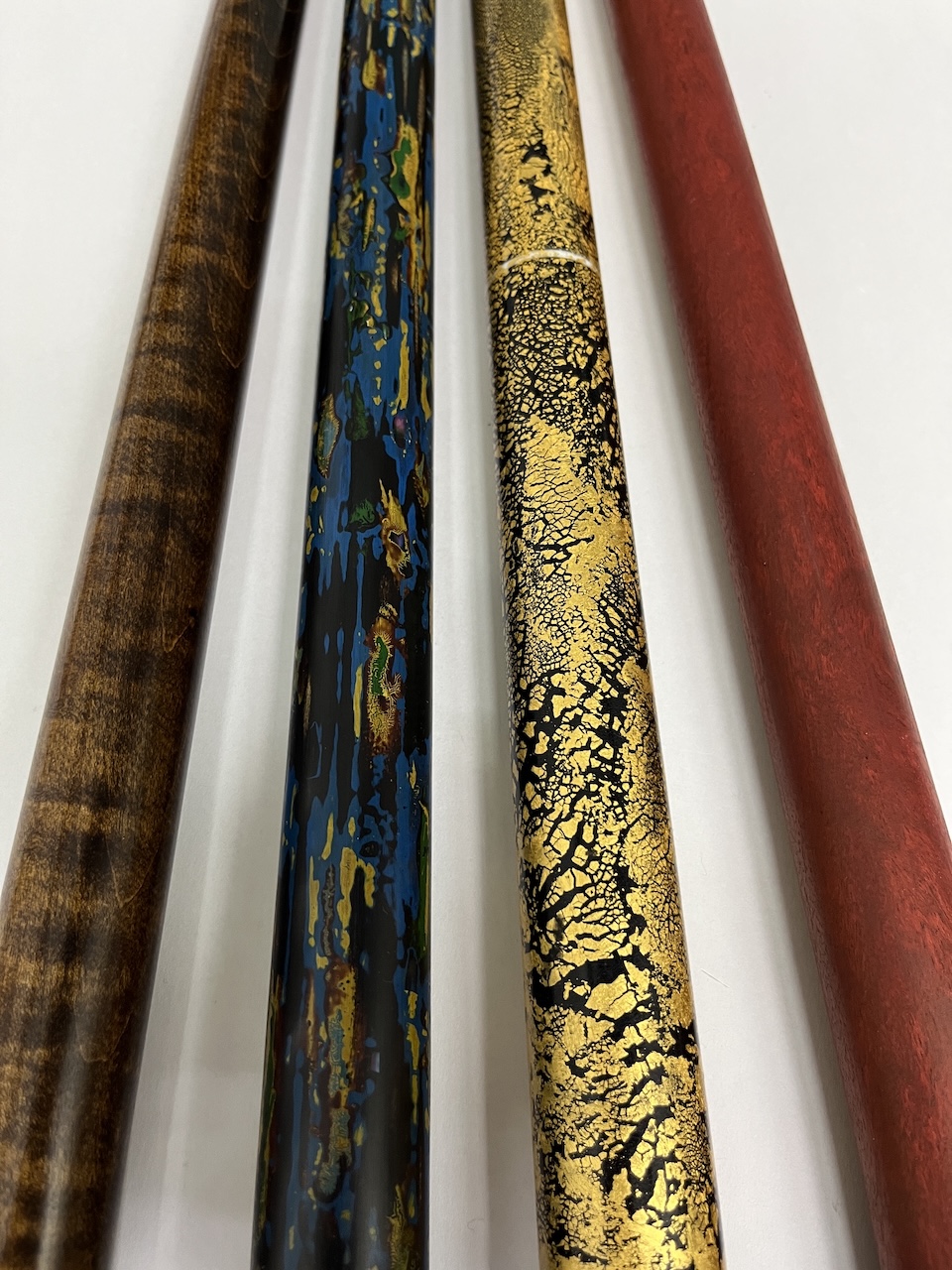 Fig. 9. Billiard cues decorated with hikibaku.As perhaps the last craftsman to use urushi for hikibaku, he hopes this technique is being properly recorded for the future. Although still taking commissions for the finest obi, he also wants to decorate large objects such as interior panels and plaster walls. There is no limit for the application of Haku art, Matsui says.
References:
- Kirihata, K. and Matsuo, H. (1986), IWANAMI GRAPHICS 34 Nishijin - ori, Traditional technique, [IWANAMI GRAPHICS Denshō no waza], Iwanami Shoten, Publishers
- Ogasawara, S. (1998), The basic knowledge of viewing dye and weaving [Some to ori no kanshō kiso chisiki], Shibundo.
- The Masaru Matsui website can be opened here.
13 July 2026