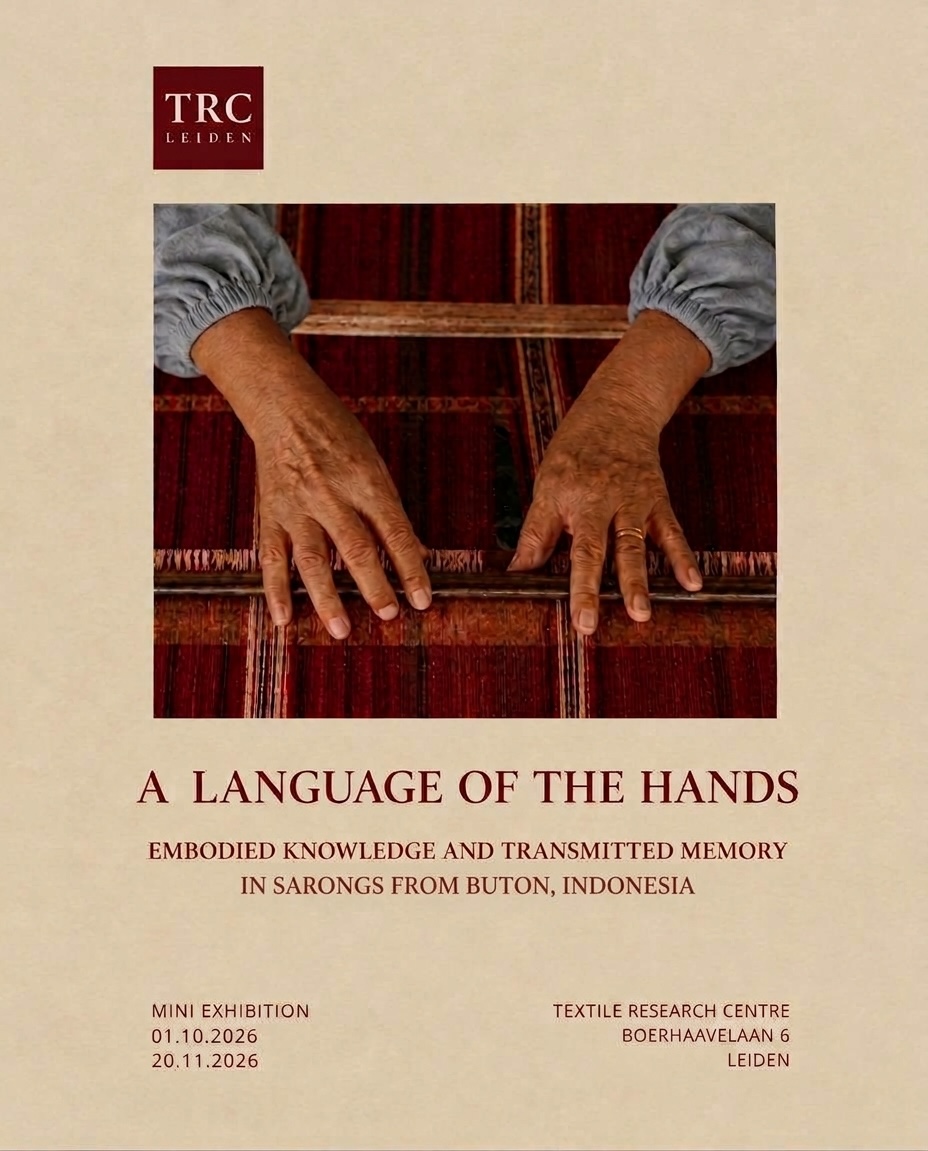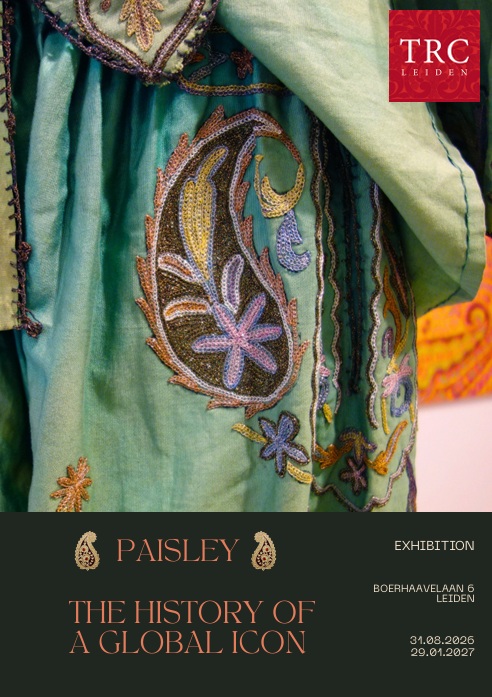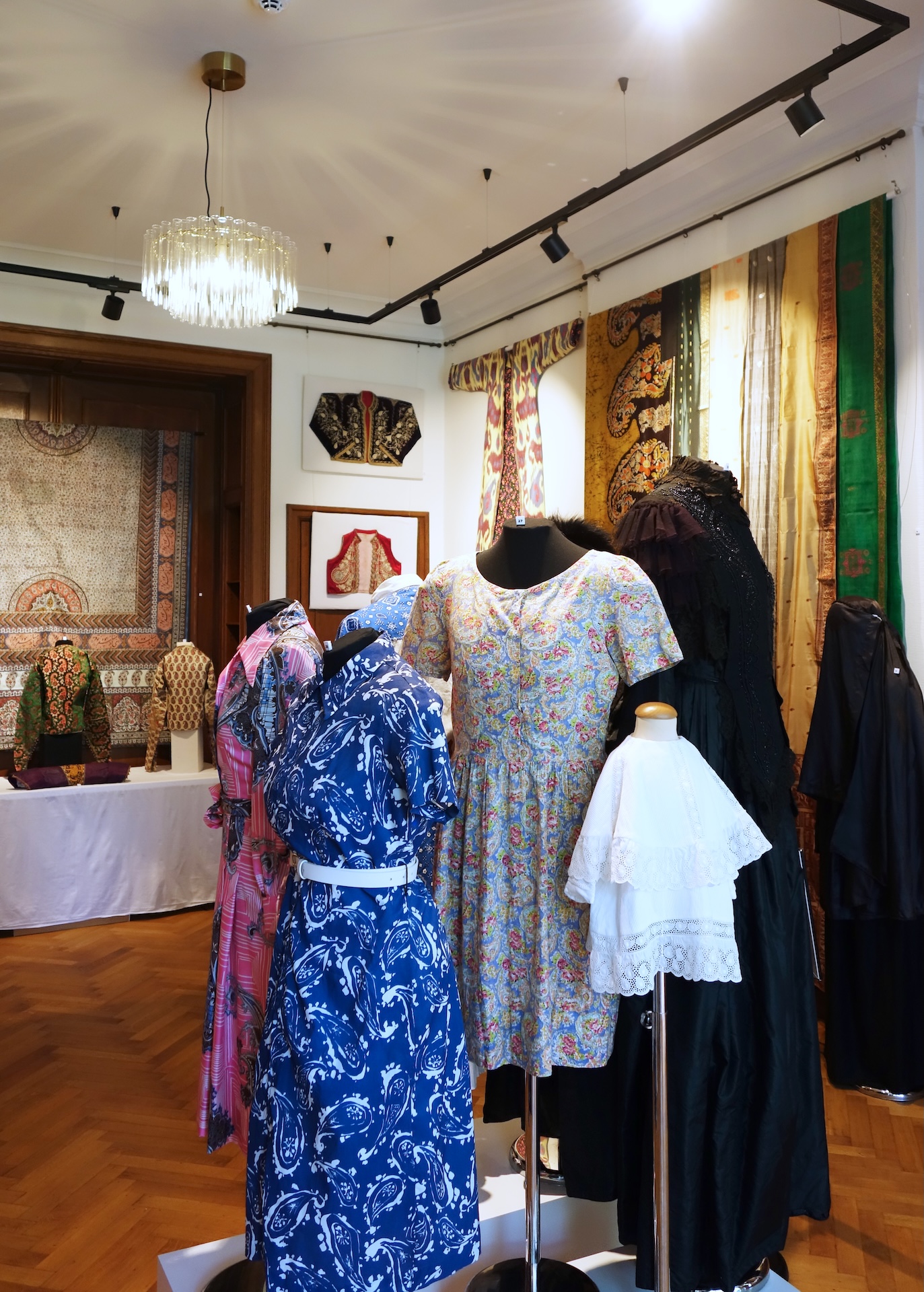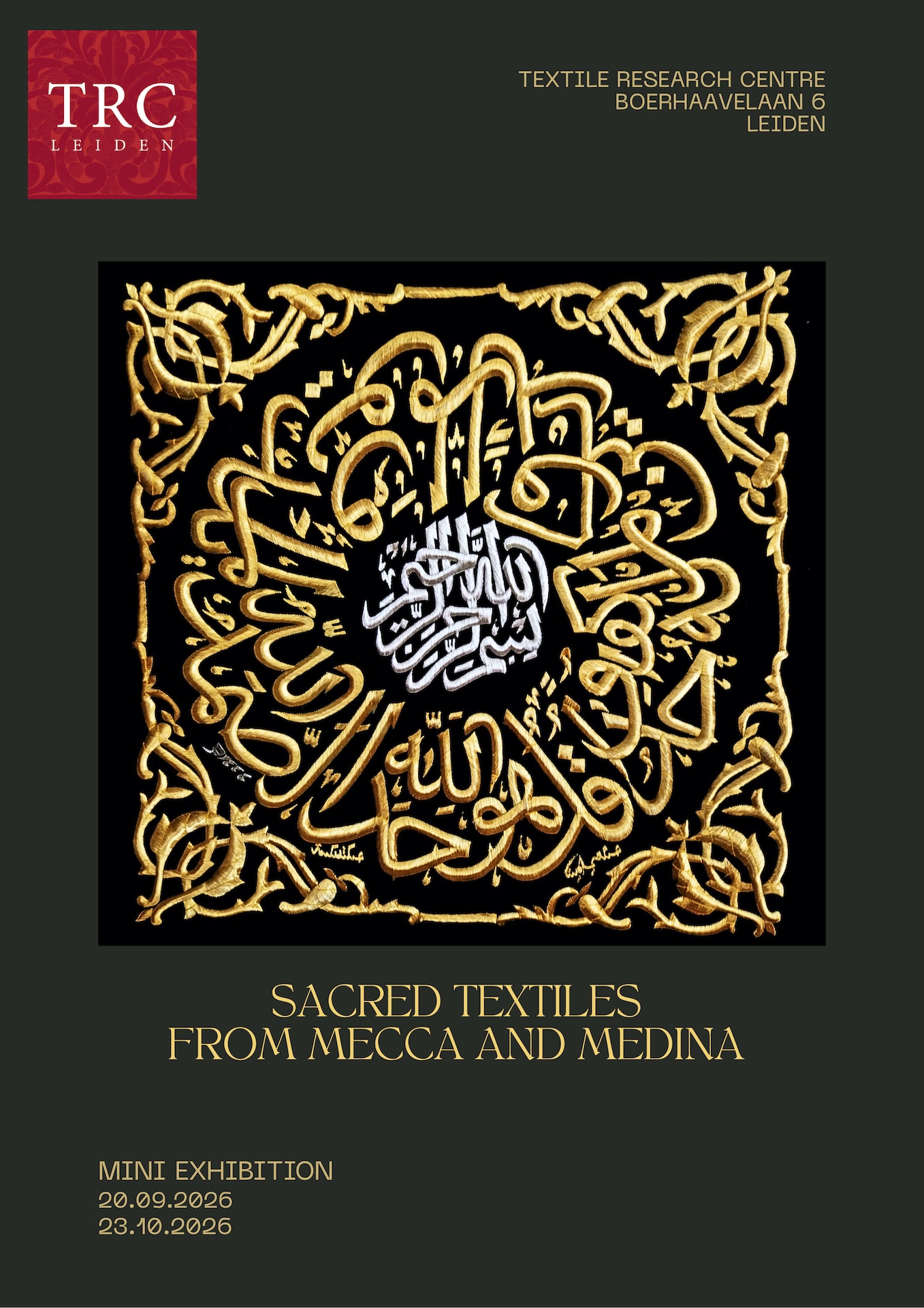
• F4
  • F2
  • F3
  • F1

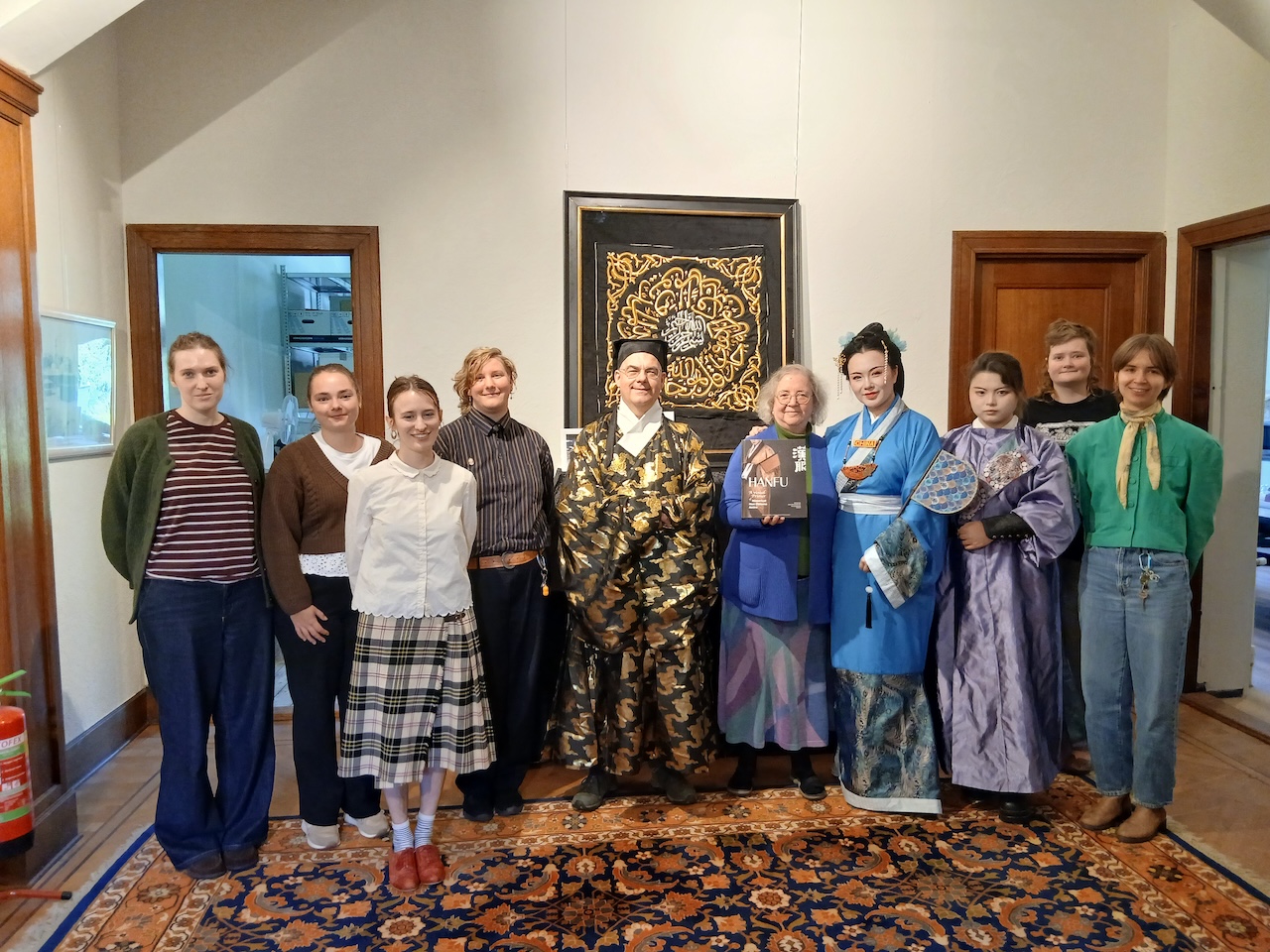
(Po Chun Hsu [Travis], 1 August 2026) It has been a few weeks since the workshop, and the colours of the memory are still so alive. I can vividly recall all of us sitting in the garden with Dr Gillian in the shade, spinning and learning to weave just as people would have done in earlier times: in a circle, leaning in and working together as a family. The five-day intensive course was an intimate and enriching experience that altered many of my perspectives on textiles, interweaving hands-on practice such as spinning, weaving, and dyeing, with a genuine skill set in textile appreciation, immediately applicable to textile studies, further academic pursuit, and textile connoisseurship.

I would like to start by highly recommending this course to anyone interested in textiles, whether you are an expert or just beginning the journey, to textile and fashion designers, or to anyone who simply wants to acquire an appreciation of what we wear every day. Dr. Gillian's passion and immense expertise made a course already magical in its own right, set in a culturally layered townhouse that encompasses Leiden's own history, now home to world textiles from all kinds of cultures and all walks of life, all the more memorable and lasting for a textile student. It was also a wonderful experience to study under a world-class expert in a subject she is passionate about. It’s moving, and there are always takeaways studying under a master like that.

The course is structured on a linear foundation and framework. We started from an introduction to the common fibre materials and progressed into textile analysis as we became equipped with material-identification skills. Over the first few days, Dr. Gillian built us up from the organic fibres such as cotton, silk, wool, and flax toward the more technically complex synthetic ones, and let us find our own way into the materials through scientific approaches, with microscopes and magnifying glasses; we ran countless tests on dyes and on the ashes of burnt threads, forming a rounded view of how to differentiate materials.

As we proceeded, Gillian provided generous assistance tailored to every student's needs: she explained genuinely difficult concepts in the simplest terms, expanded on the special areas individual participants were curious about, and recommended wonderfully handy textile books for future research. As an art history student who had read some of the standard books on textiles, I found her explanations exactly on point and easy to understand. My sincere advice: take the course, then reread everything. The books come alive differently once your own hands have spun, woven, and dyed. Her approach created a wonderful space for participants to thrive at their own pace and learn comfortably across the fundamental areas of textile study.

The last three days were an exhilarating journey for textile lovers. We roamed from Italy and France to Rome, Egypt, Iran, Japan, China, India, and Indonesia, from the Neolithic period to modern and contemporary production, learning how textiles were used and appreciated, and how to identify and cross-examine them through their techniques and terminology. Having handled samples of every nameable textile technique in the first days, this became a full-circle moment for many of us, as the fruits of our learning grew evident. I was extremely happy to find I could now differentiate damask, brocade, and lampas, questions that had been stuck in my head for a very long time. Delighted as I was, I also realised I could never go back to the perspective I held before the course, which has since caused serious trouble when shopping and at museums, gazing at dresses that sit so far behind the glass. The course ended with Gillian's first collected textile (the Egyptian fragment bought with a week's allowance) and maid-work rolls that documented everything the girls learned from needlework schools, which was an encouraging and heartfelt endnote for all of us still learning on this path.

I would love to recommend this course to anyone interested: it fundamentally alters your perspective and offers practical skills, accessible research resources, an open and culturally layered learning space, and an amazing experience at a wonderful price for everything it gave me. The place has all my blessings, and I can definitely see myself coming back to the TRC for more.

The Textile Research Centre (TRC) in Leiden runs regular intensive courses. Details and booking are available on the TRC website.

The remaining dates for 2026 and 2027 are: 12-16 Oct.; 22-26 Febr.; 19-23 April; 21-25 June; 23-27 Aug.; 25-29 Oct.

(Gillian Vogelsang, 1 July 2026) Two years ago, I wrote a blog called The Three A’s and Afghanistan, which was about how ideas, patterns and objects, move across the world and always have done so. In that context I mentioned the importance of the three A’s for the TRC’s approach to textiles, namely Adoption, Adaptation, and Acknowledgement.

A jacket made from a red cotton cloth decorated with a multi-coloured floral and paisley pattern. From the island of Marken, The Netherlands, 1937 (TRC 2007.0525c).A jacket made from a red cotton cloth decorated with a multi-coloured floral and paisley pattern. From the island of Marken, The Netherlands, 1937 (TRC 2007.0525c).

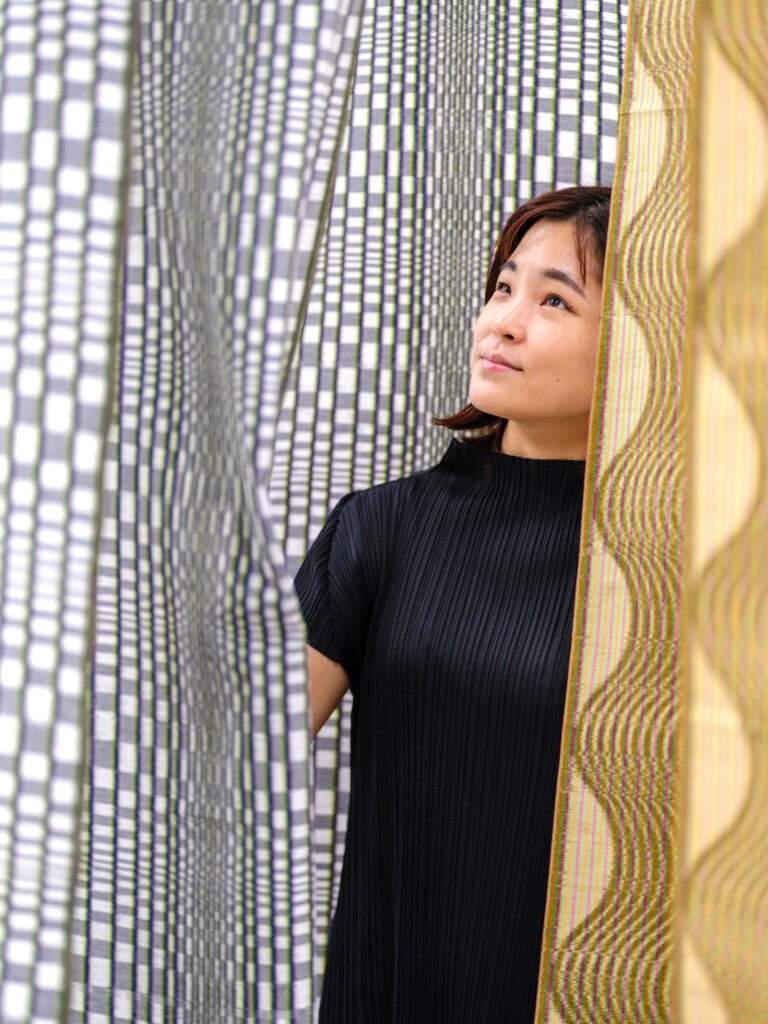
I could not resist putting this on the TRC webpages: an interview with Gillian Vogelsang-E`astwood, director TRC, published by an online news service about the Netherlands. I am very proud of her! Click on the photograph to read the item. Willem Vogelsang.

Gillian Vogelsang-Eastwood, photographed for DutchNews, June 2026.Gillian Vogelsang-Eastwood, photographed for DutchNews, June 2026.

Het Leidsch Dagblad publiceerde vandaag, woensdag 10 juni, een artikel van twee pagina's over de TRC, de verhuizing naar de Boerhaavelaan en de ambities voor de toekomst. Het vestigt ook de aandacht op de textielboekenmarkt aanstaande zaterdag, vanaf 10.00 uur.

Find the books you have long been looking for, and help support the TRC by buying some of them! 

We are going to have our annual book sale on Saturday 13th June, from 10.00 until 15.00. Hundreds of second-hand textile, clothing and accessory books will be on sale, at very reduced prices! 

The TRC regularly receives donations of books. We select them en see whether we can use them and whether the titles may already be included in the extensive TRC textile library. If we cannot use the books, we very much want to pass them on to other textiles friends against a low price.

Why don't you pop in and have a look? You may find the book that you have long been looking for. You will also have the chance to see the TRC’s current exhibition about appliqué textiles called khayamiya which come from Egypt, as well as seeing the TRC’s new building and garden, and of course meeting TRC staff and others.

Our address is: Boerhaavelaan 6, 2334 EN Leiden, just behind the Leiden Central Railway Station.

The Textile Research Centre, Leiden.The Textile Research Centre, Leiden.For three years starting mid-2026, the Textile Research Centre, Leiden, the Netherlands, is offering a total of seven junior and four senior fellowships for up to six months each. The fellowships are being sponsored by the Gieskes-Strijbis Foundation, Amsterdam. Fellows are invited to carry out research based on the TRC’s extensive textiles and dress collection. The junior fellows will be supervised and assisted by TRC staff; senior fellows will carry out independent research.

The TRC will regularly advertise for the fellowships. Fellows are selected by a special committee of TRC staff and/or Board members after, if appropriate, the advice of external specialists.

The first fellow, appointed per 1 April, is Flora Kovacs-Wester, who on 23 May 2026 wrote an interim report.

We are now opening the second round of the fellowships that covers:

  • Two junior positions
  • One senior position

These will be starting in October 2026 (with a degree of flexibility), for a duration of up to 6 months. Applications for these positions should be submitted by email to the TRC by 20 June 2026 (This email address is being protected from spambots. You need JavaScript enabled to view it.)  with the reference: ‘Fellowship programme Junior/ Senior' (depending on the position applied for).

In various recent blogs we referred to the TRC’s need for extra storage to house the TRC Collection. We have promised more information and here it is!

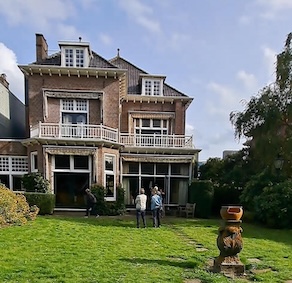
Front of Boerhaavelaan 6, the new home of the TRC. The Annex will be built to the left.Front of Boerhaavelaan 6, the new home of the TRC. The Annex will be built to the left.As you will know, the TRC is an international textile knowledge centre that has just moved into new premises (Boerhaavelaan 6, Leiden) thanks to the help of Leiden Council, the semi-governmental organisation, Monumentenbezit, and many anonymous benefactors.

The building (B6) is an urban villa that dates to about 1909 and was expanded in the 1920s. It was the home of one family, the Barge-Nauta's, for nearly 100 years (see a recent TRC blog).

The TRC currently has a handling collection of over 54,000 registered items of textiles, clothing and accessories. The Collection includes objects from all over the world (culture and textiles have no artificial boundaries), dating from prehistory to the present day. We have, for example, some of the oldest textile fragments in the world, as well as modern items representing current events and trends.

The Collection is one of the largest in this part of Europe, and we are very much aware that it will continue to grow in the future. It is a handling collection that people can see, touch and feel, as well as gain inspiration.

The Spring 2026 issue (No. 227) of the international magazine HALI includes a six-page article, with some splendid photographs, explaining the creation of The Atlas of World Embroidery (Princeton University Press, Febr. 2026). The article and book were written by Gillian Vogelsang-Eastwood, director of the TRC. A Dutch version of the book, Atlas van de Borduurkunst, came out on the same date and was published by WBooks.

The article is published on pp. 228-229, 230-231, and 232-233.

HALI Vol. 227, 2026, pp.  228-229.HALI Vol. 227, 2026, pp. 228-229.

Search in the TRC website

Contact

Boerhaavelaan 6
2334 EN Leiden.
Tel. +31 (0)71 5134144 (office hours)  
office@trcleiden.org 

The TRC is open every day from 10.00 to 15.00

facebook 2015 logo detail 

instagram vernieuwt uiterlijk en logo


Bank account number

NL39 INGB 0002 9823 59, in the name of the Stichting Textile Research Centre.

Donations

The TRC is dependent on project support and individual donations. All of our work is being carried out by volunteers. To support the TRC activities, we therefore welcome your financial assistance: donations can be transferred to bank account number (IBAN) NL39 INGB 000 298 2359, in the name of the Stichting Textile Research Centre. BIC code is: INGBNL2A.

 You can also, very simply, if you have an iDEAL app, use the iDEAL button and fill in the amount of support you want to donate: 


Since the TRC is officially recognised as a non-profit making cultural institution (ANBI), donations are tax deductible for 125% for individuals, and 150% for commercial companies. For more information, click here