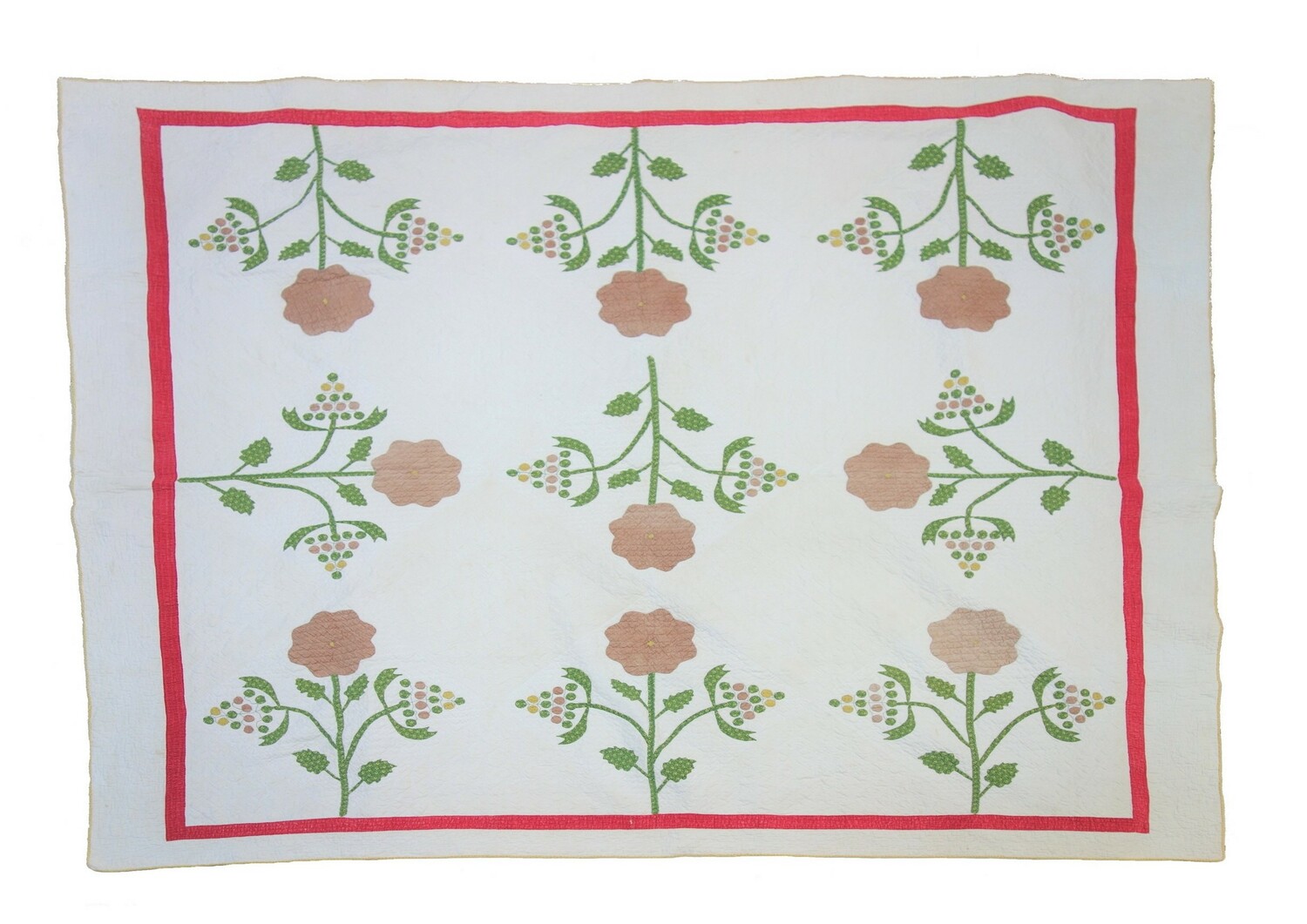
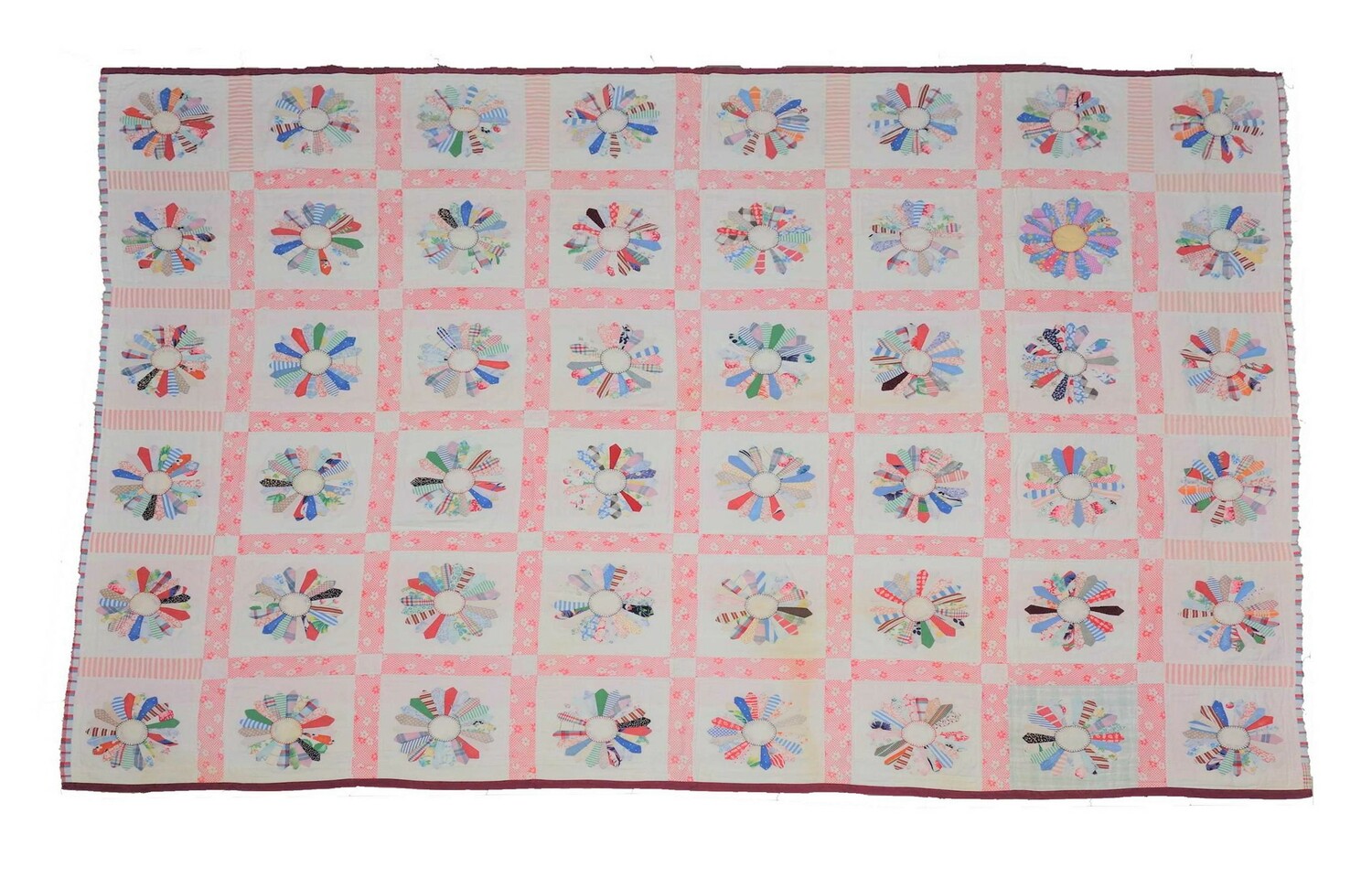
(Emilie Lambert, Collection manager, TRC) The TRC houses over 300 pairs of gloves, mittens and gauntlets in the collection. They are made of leather, wool or silk, and made in lace or netw. They may be knitted, and be simply practical or purely decorative. The sheer variety, both technically and culturally, is enough for its own deep dive and some are already highlighted in previous blogs such as one about Scottish examples witten by Hanke van Prooije in 2025). All the items in the collection, however, which originate from Romania to Australia and Congo, do not predate the 1900s.
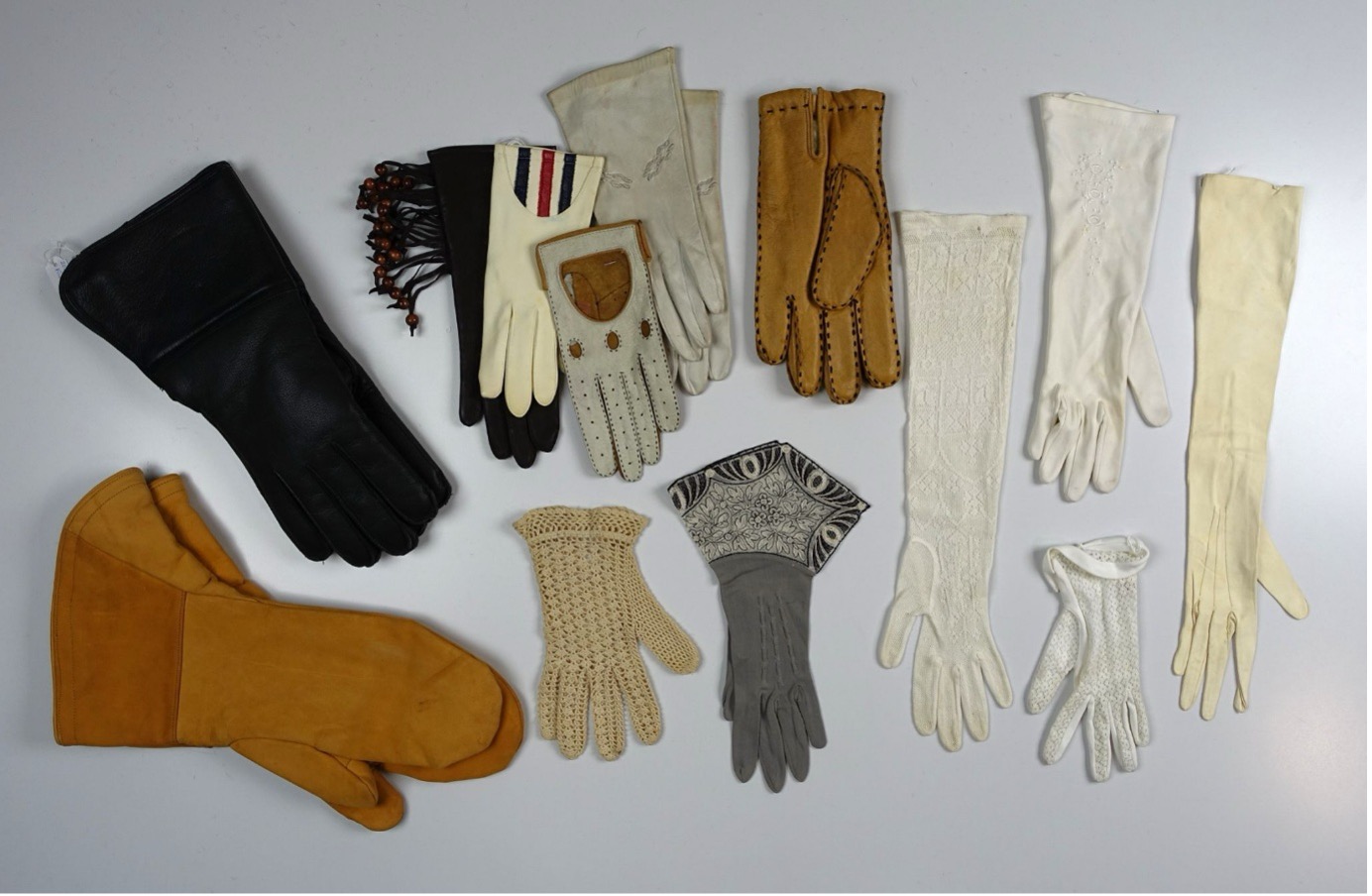 Fig 1: Assortment of gloves in the TRC collection showing the wide variety in materials, shape, and decoration used.
Curious about the history of gloves, I browsed the TRC library and quickly found a book by Annemieke Willemsen [current curator of medieval collections at the RMO in Leiden] on medieval gloves, mittens and gauntlets, through which I discovered many intriguing avenues for discussion.
Gloves, mittens & gauntlets
It seems that mittens (Dutch: want), with all the fingers enclosed in a single pocket and with a separate thumb, may have preceded the glove with its individual fingers (Dutch: handschoen), perhaps because its construction is simpler. However, both forms have been consistently worn throughout the last few centuries. Split mittens, which separate the third and fourth fingers, also existed and were commonly worn in the medieval period by shepherds who needed slightly greater mobility for their fingers (Willemsen 2015a/b??, p. 19).
The distinction between a glove and a gauntlet is primarily one of function. A gauntlet is a type of glove made from heavy or protective materials, such as metal armour or thick, padded leather, with the aim of protecting the hands from injury. While gauntlets are often associated with metal armour used in combat, the term can also extend to heavy-duty gloves used in metalworking, motorcycling, or animal handling. In other words, every gauntlet is a glove, but not every glove is a gauntlet.
Protection from the cold is one of the most familiar functions of gloves and mittens. Cloth, woollen, knitted, and needlebound examples were often intended to provide warmth, sometimes with additional fur lining. Gloves have also been used as protective equipment in various sports and occupations. Medical sources even describe gloves made from fish or chicken skin to protect infected or damaged skin during the night (Willemsen 2015a/b??, p. 13).
Not all gloves, however, were primarily practical or protective. Delicate gloves could function as fashionable accessories and status symbols, as seen in intricate lace or embroidered examples. Gloves could also carry important symbolism, such as those of a monarch or priest.
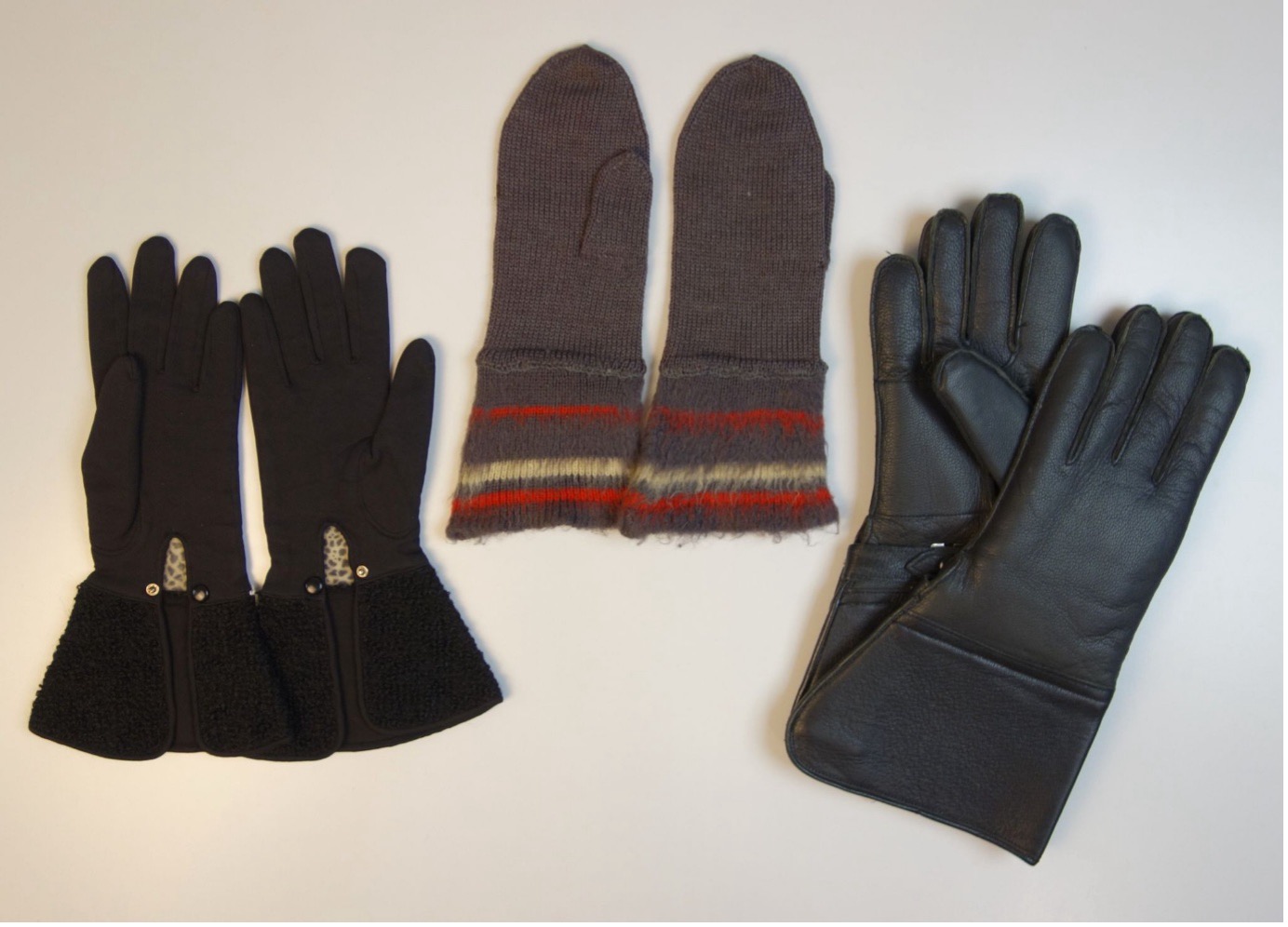 Fig 2: Left to right: a pair of gloves (TRC 2025.0641a-b), mittens (TRC 2007.0762a-b), and gauntlets (TRC 2025.0905a-b)
Early history
Hand coverings must have been used in deep prehistory, and these could have been woven out of plant fibre or sewn from leather. Gloves are referenced frequently in Antiquity, but hard evidence of their use before then is scarce, particularly as they are made of entirely degradable materials.
Many sources note the earliest archaeological example of a surviving glove comes from the tomb of Tutankhamun. He would have worn these ceremonial linen gloves sometime before his death in 1323 BC (Redwood, p. 7). This draws an interesting link to the TRC as our director Gillian extensively studied the Tutankhamun textile finds.
Willemsen’s book also goes into detail about archaeological finds in the Netherlands. The oldest find - a thumbless wool knit mitten from Dorestad - dates to 800 AD. Thanks to the Dutch wetlands, many more woollen and leather gloves were preserved through the centuries, many being found in Amsterdam and Dordrecht. Figure 3: The oldest glove found in the Netherlands, dating to 800 AD (Willemsen, p. 5)
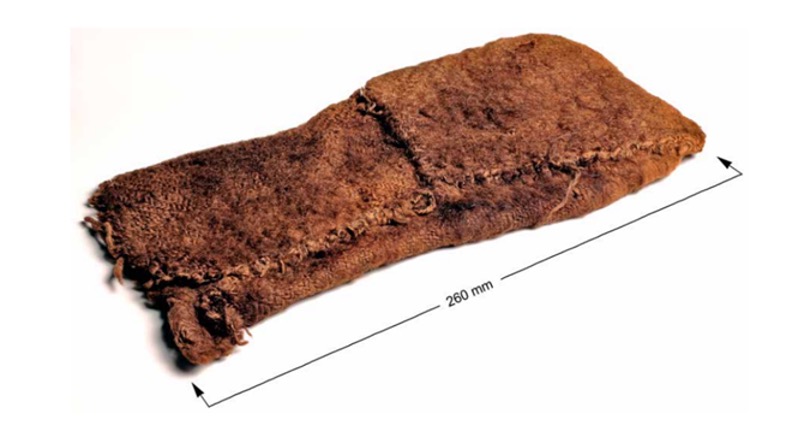 Figure 3: The oldest glove found in the Netherlands, dating to 800 AD (Willemsen, p. 5).
Various fashions
Gloves were also undoubtedly conveyors of fashion and status. It would be unreasonable not to mention the excessively decorated gloves in prestigious, 17th century royal fashion with heavily embroidered cuffs, in silver, gold, and coloured thread that would have cost a small fortune.
One style that really stood out to me was a period of illusionary finger-lengthening. Around the reign of Queen Elizabeth I, in late 16th/early 17th century Britain, it was fashionable to elongate a glove’s fingertips around a centimetre past the reach of each finger for a look of longer, slimmer fingers (Willemsen, p.14). Fig 4: Elongated fingertips on 17th century glove (Willemsen, p.15).
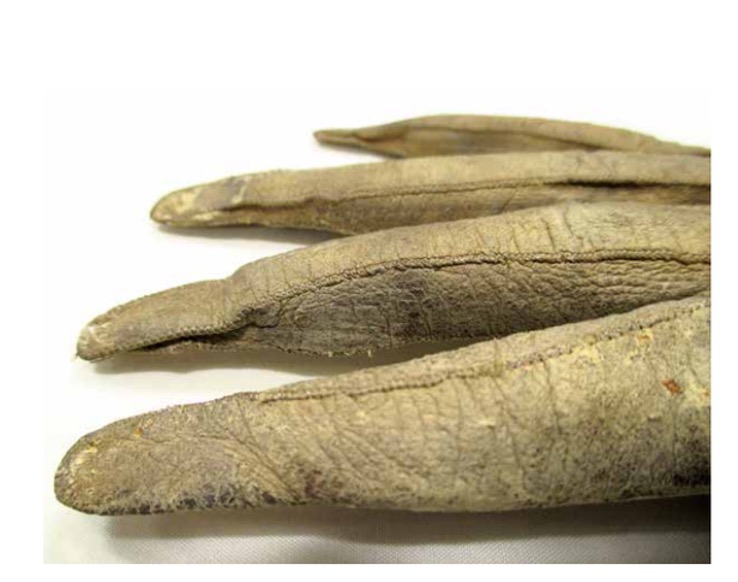 Fig 4: Elongated fingertips on 17th-century glove (Willemsen, p.15).
Production
Leather mittens and gloves were made to fit the individual, usually constructed by cutting a ‘double glove’ – two handprints conjoined to erase the need of sewing one seam and then a separate thumb is added (Fig. 5). Sheep and goat skins were common and deerskin used for the wealthy (Willemsen, p.12).
Gloves were for a long while produced in small workshops, either specialised only in glove making or in combination with other fine leatherwork. Production then moved into large factories, though through the 19th century they outsourced the stitching of gloves to women and children at home to gain extra income as gloveresses. The sewing machine drastically changed the industry, and most glove production nowadays is factory-made. They are also made in a few sizes, and it is difficult to find someone to make personalized gloves made to measure.
Most gloves were everyday items they would get heavily worn, so it is not uncommon for them to be patched and repaired repeatedly. To counteract this, Icelandic fishermen would make a mitten with two thumbs - so one wears them on both hands or back-to-front. Fig 5: Glove sewing pattern showing the double-hand construction with separate thumb piece (https://www.18thcenturynotebook.com/mens-leather-gloves).
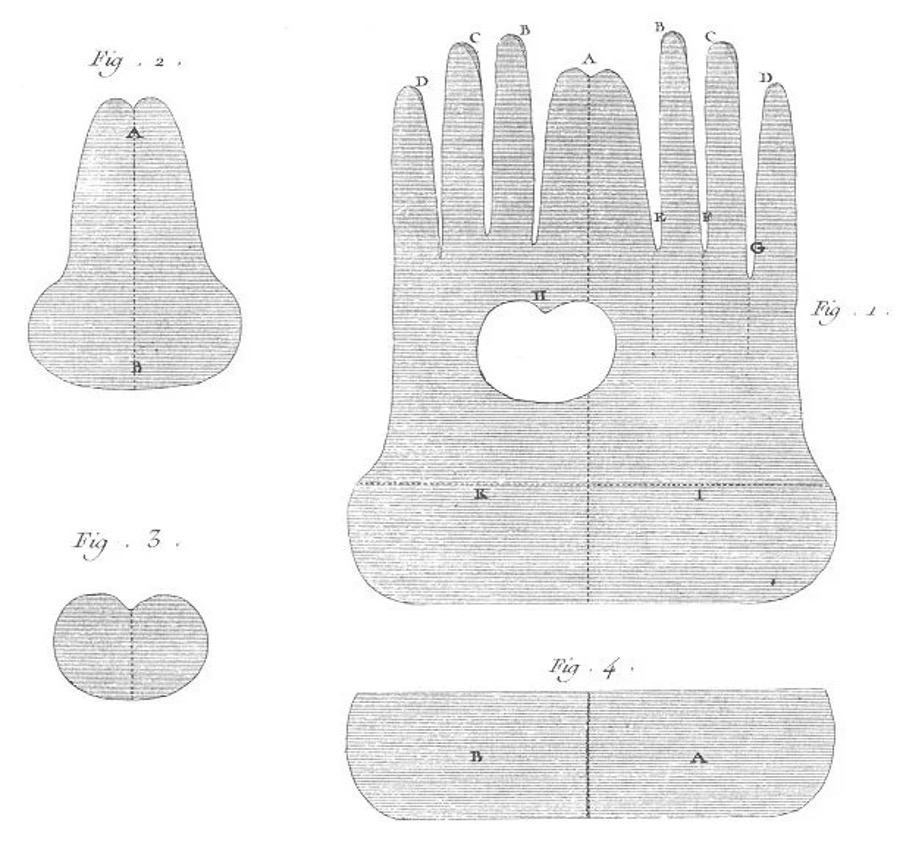 Fig 5: Glove sewing pattern showing the double-hand construction with separate thumb piece (https://www.18thcenturynotebook.com/mens-leather-gloves)
Symbolism
There is also a whole world of symbolism when it comes to gloves, that differ greatly throughout cultures and time. Some general themes are still familiar to us and some completely obscure. In many circumstances the gloves provide a physical and symbolic barrier between an individual and the action they take - think of a judge, or executioner (Willemsen, p. 30). In religion too, liturgical gloves indicate the holy power in the hands rather than those of the preacher (Willemsen, p. 32). In courting, one removes gloves providing a bare hand to kiss in greeting, and keeping gloves on would be seen as a sign of hostility. Additionally,“a woman dropping her glove could be understood as a woman offering her body,” (Willemsen, p.15). In combat too, throwing the gauntlet or picking a fight. The variation here really shows how aspects of dress have many cultural effects.
Conclusion
I thoroughly enjoyed this exploration of gloves and their history. And as I was talking about it, I was enthusiastically handed a handful of newly donated gloves to add to the catalogue!
Sources
- Annemarieke Willemsen (2015), 'The Geoff Egan Memorial Lecture 2013. Taking up the glove: finds, uses and meanings of gloves, mittens and gauntlets in western Europe, c. AD 1300–1700,' Post-Medieval Archaeology, 49:1, 1-36.
- Annemarieke Willemsen (2015),'Van Hand tot hand. Handschoenen en wanten in de Nederlanden voor 1700,' Rijksmuseum van Oudheden, Leiden.
- Mike Redwood (2016), Gloves and Glove-making. London, Bloomsbury.
Assorted leather gloves in the TRC collection including thick, wool-lined mittens, big military, motorboking gauntlets and leather gloves with various forms of decoration - fringing, colour, stamped and punched.
Assorted gloves in the TRC collection come in many shapes and sizes. Crochet, embroidered, silk, knit, suede, net. Wrist to elbow and anything in between.



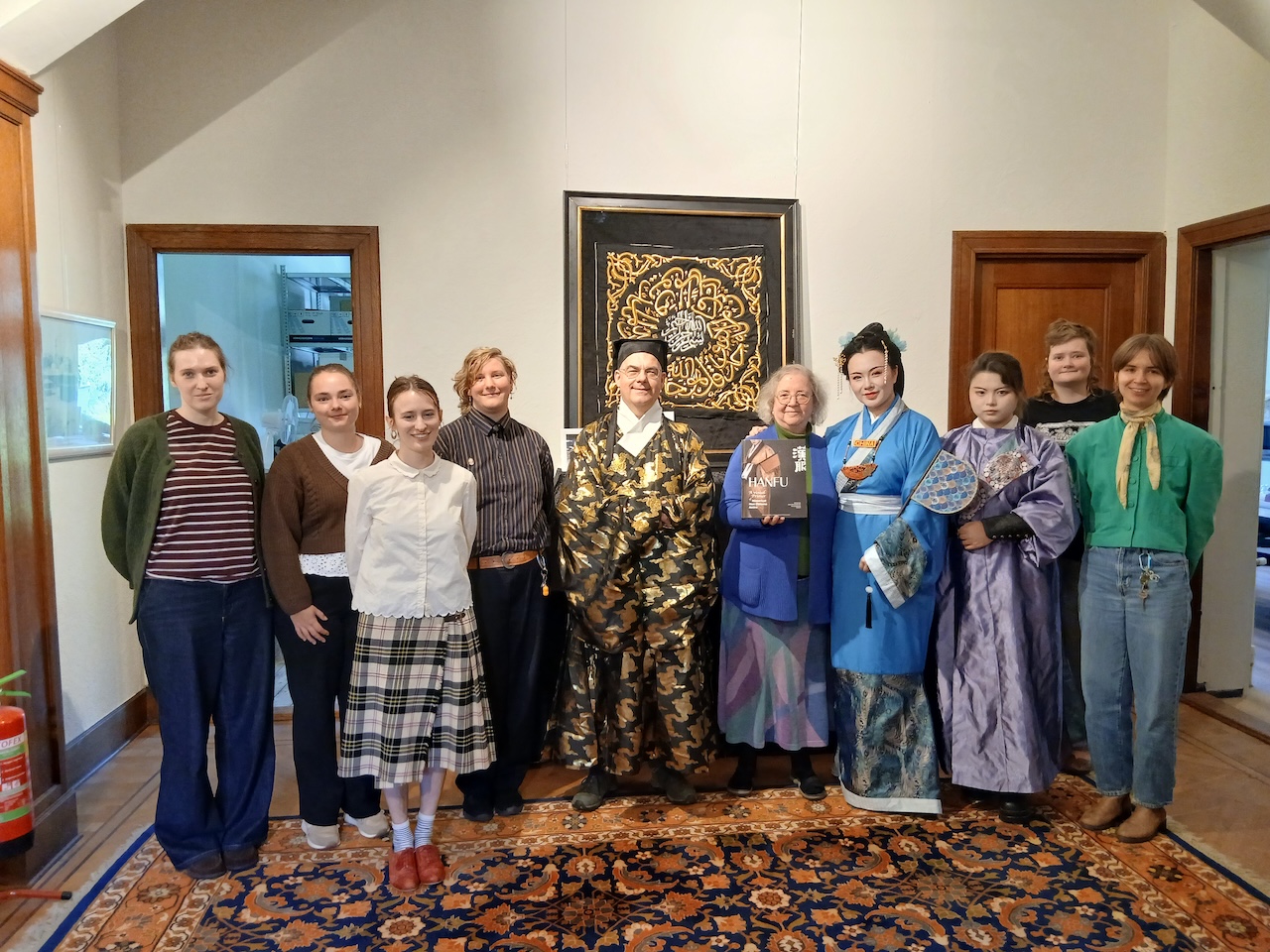 Our guests in Hanfu clothing at the TRC, 5 October 2026.

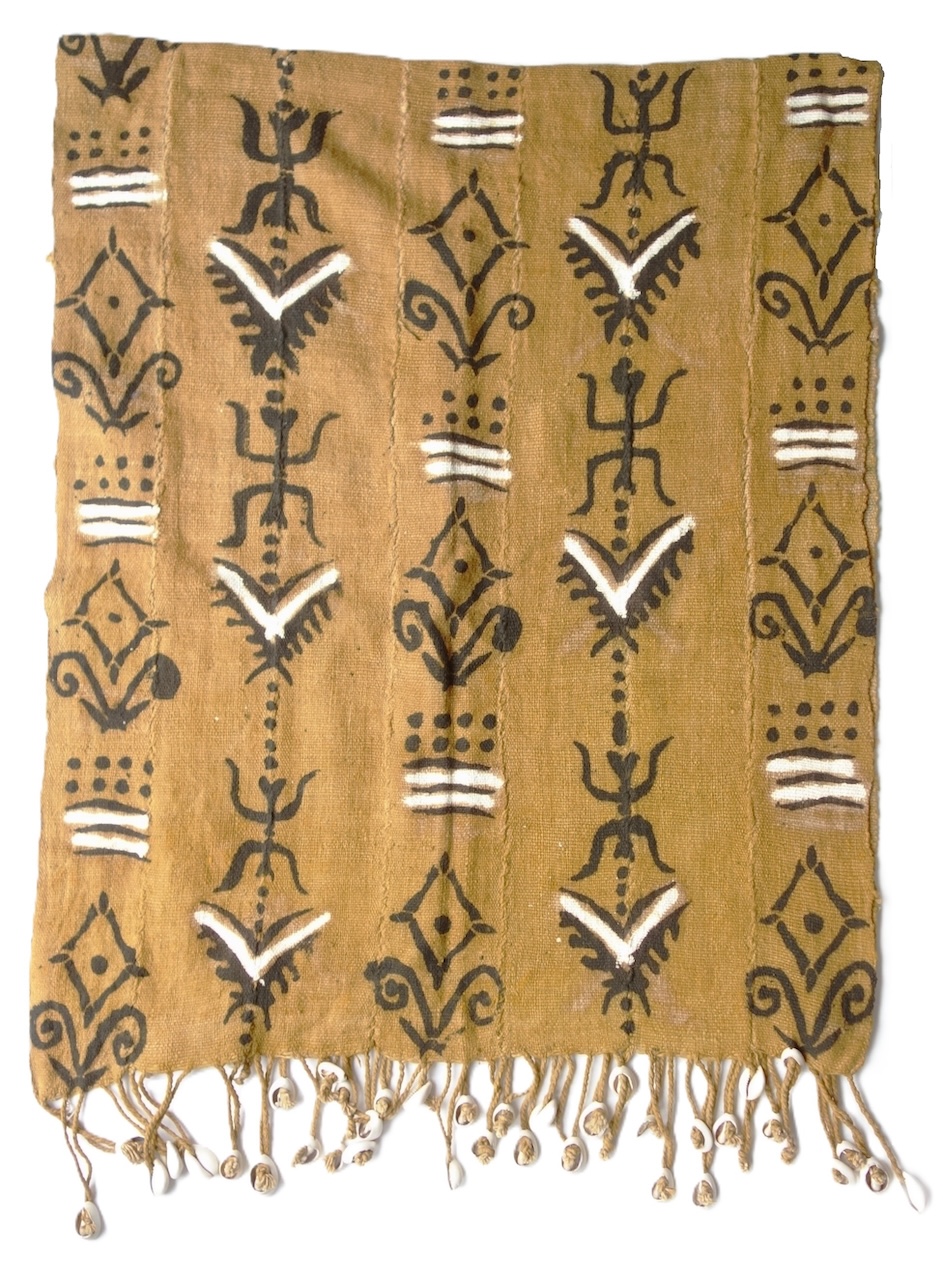
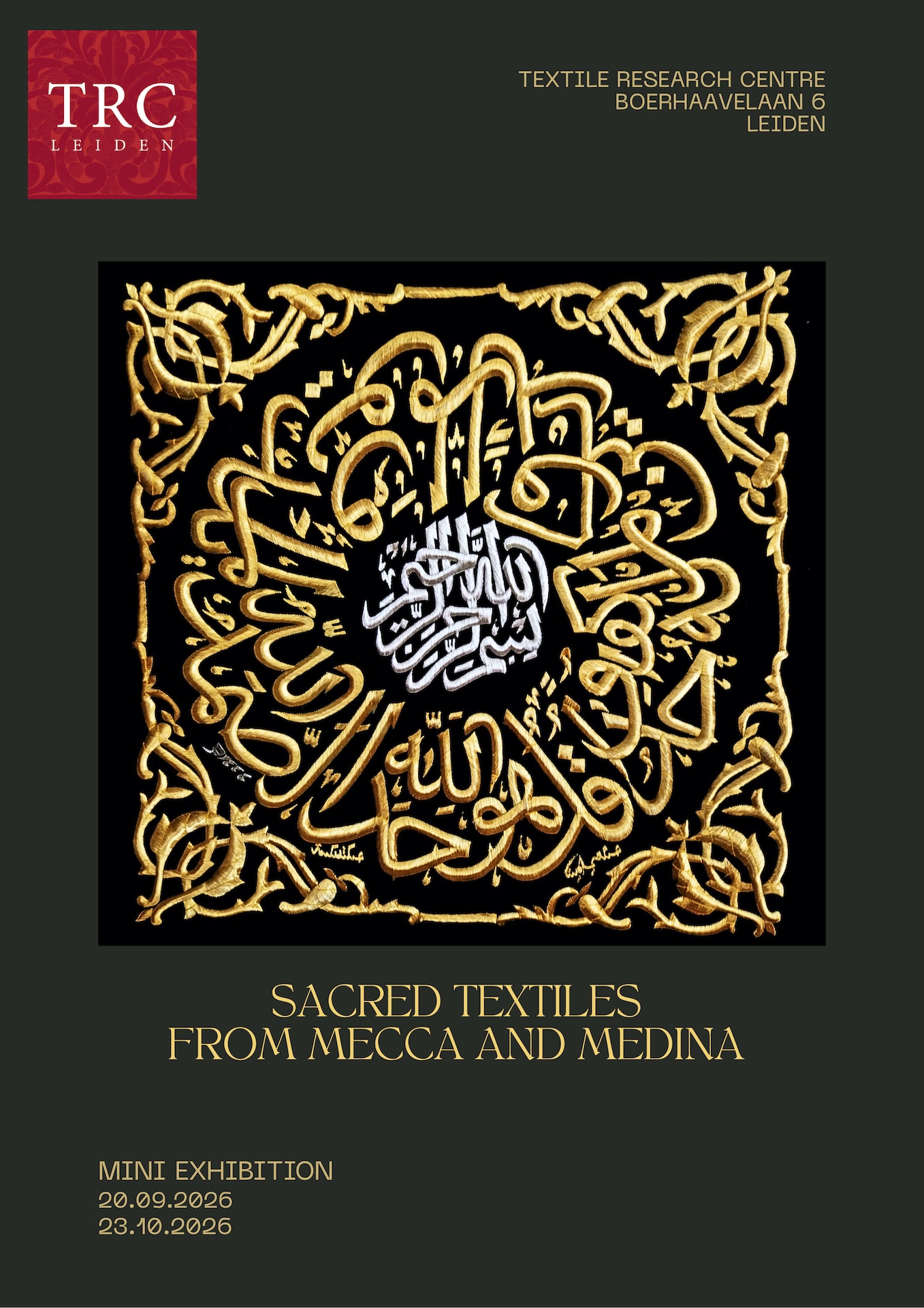 (Gillian Vogelsang, 21 September 2026) "The TRC and the Stichting Güney are proud to present …. " This may sound like a cliché but in this case it is totally true. We were and are proud of the 'Sacred Textiles from Mecca and Medina' mini-exhibition, which was opened last Sunday, 20th September, in the presence of the Turkish ambassador designate, Dr. Burak Akçapar.