• F2
  • F1
  • F3
  • F4

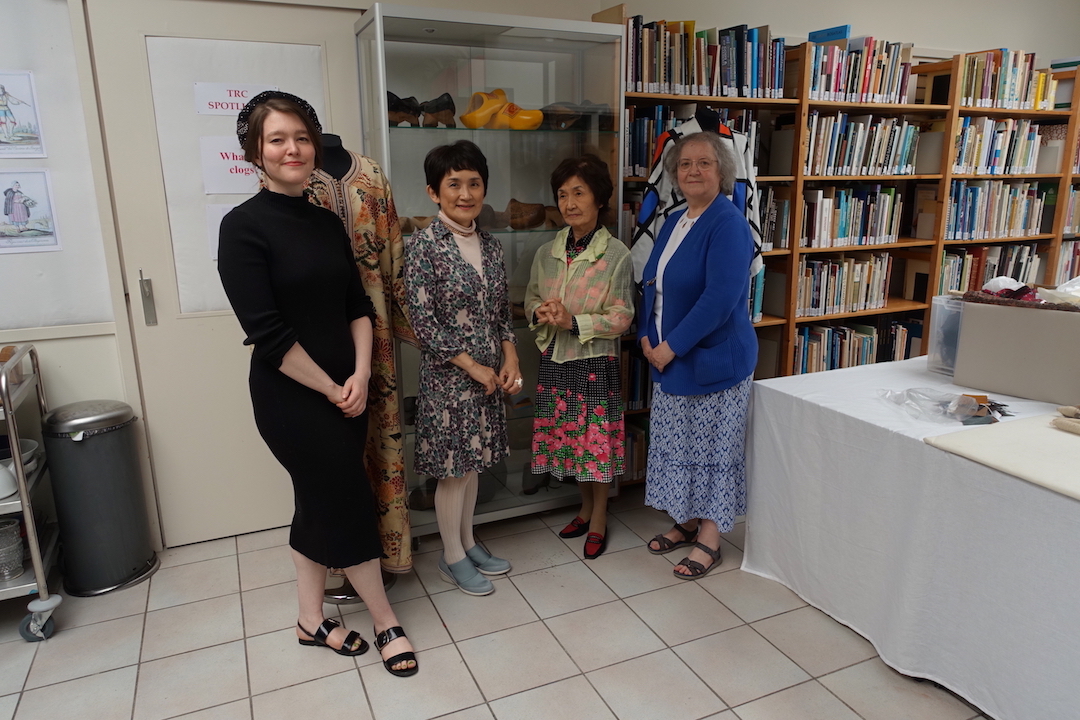
Over the last month or so we have had various questions about the TRC Reference Collection, and in particular how it is organised and used. These questions have come from individuals as well as various museums and groups, notably one in Kortrijk, Belgium, as well as Arraiolos (Portugal) and Lucknow, (India). So this blog is about the TRC Reference Collection and its function(s).

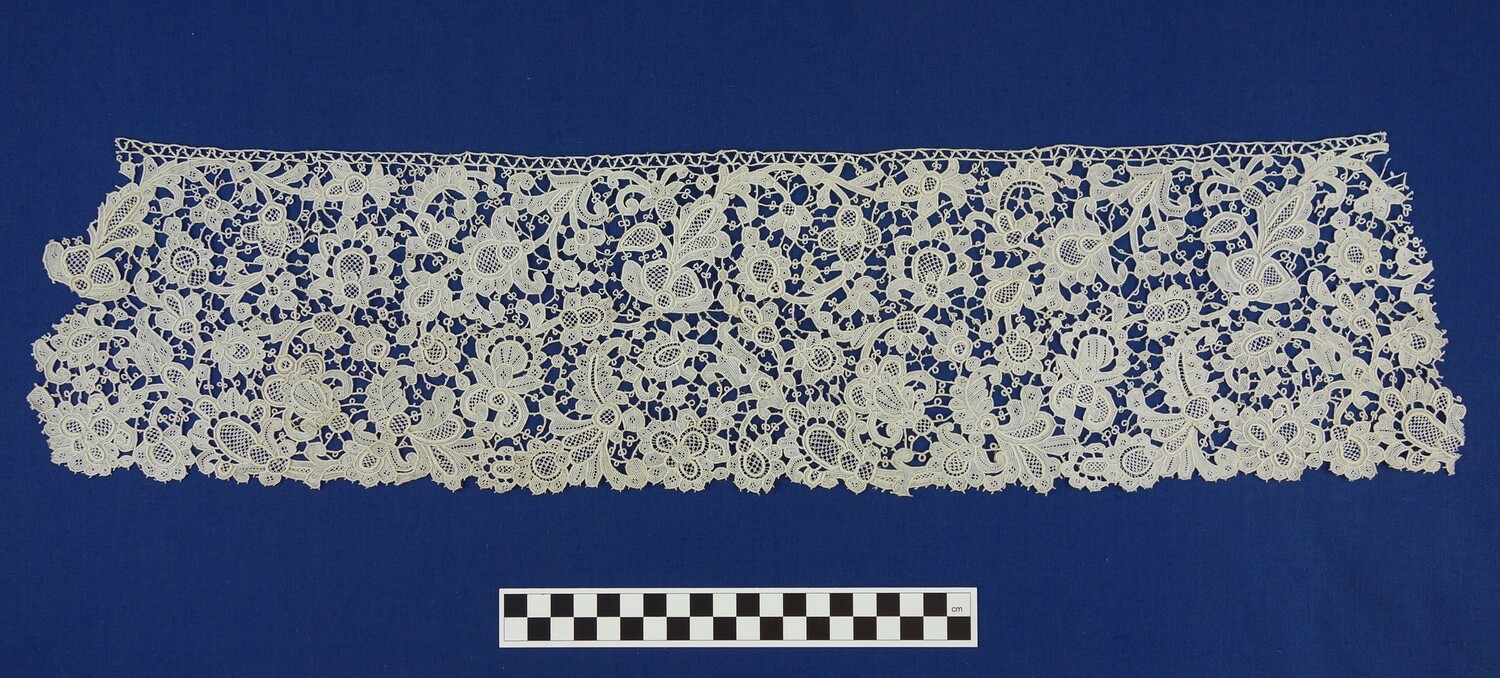
Sample of needle lace, the Netherlands, 20th century (TRC 2007.0559).Sample of needle lace, the Netherlands, 20th century (TRC 2007.0559).

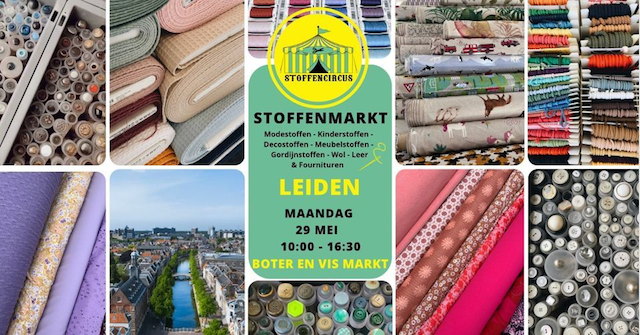
As part of building up the TRC’s reference collection, today Renske, a TRC colleague, and I went to a special textile market in Leiden (29th May) – it occurs twice a year and includes many stalls selling a wide range of woven and printed textiles, tulle and net, machine laces and embroideries, haberdashery (from pins to buckles, via threads of many kinds), knitting yarns, as well as one stall selling leather. Great fun! For the market of 30 October last year we published another blog.

Announcement for the 29 May textile market in LeidenAnnouncement for the 29 May textile market in Leiden

Author in front of Durham Cathedral, 25 May 2023. Photograph: Willem VogelsangAuthor in front of Durham Cathedral, 25 May 2023. Photograph: Willem VogelsangI am looking out of my hotel window at the spectacular sight of the towers of the medieval cathedral of Durham and neighbouring castle; a building complex with over a thousand years of history. I could sit here for a very long time! However, this blog is about saints and embroidery, not early medieval buildings.

In previous blogs Willem and I have talked about our visits to look at the St Petrock’s altar cloth in Exeter Cathedral, England, and also about the embroideries associated with Frankish St Harlindis and St Relindis in Maaseik, Belgium, about St Thomas Becket’s garments and embroideries in Sens, France  and the embroidered cope associated with St Thomas Becket in Kortrijk, Belgium.

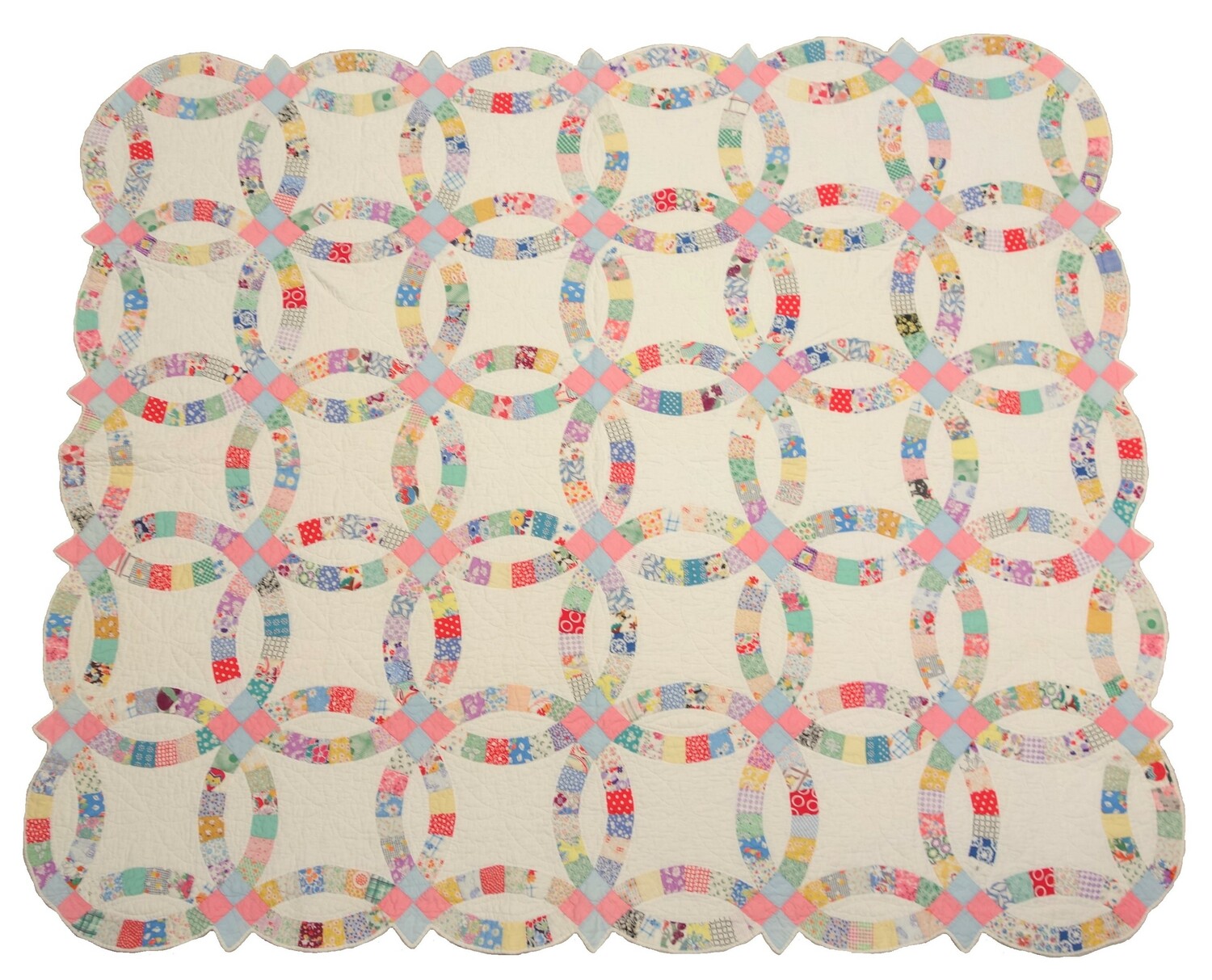
Double Wedding Ring quilt from Canada, 1930s (TRC 2023.0626).Double Wedding Ring quilt from Canada, 1930s (TRC 2023.0626).Quilts and the TRC have been the focus of various discussions!

We recently welcomed, for example, various visitors who came to examine our collection of American quilts, two of them were Americans who came a few days ago.

At the same time we had a material culture group from Heidelberg University, Germany (a blog about this visit will be published shortly), who came to see Asian textiles and garments. Their tutor (who is a quilter) and some of the students, however, spotted the quilts and wanted to see and know more about them as well.

I have just come back (10th – 16th May 2023) from an intense, yet relaxing time spent in Estonia looking at embroidered textiles for information and inclusion in Vol 5 of the Bloomsbury World Encyclopedia of Embroidery.

In addition, Willem and I were able to see and hear about a far wider range of textiles, dress and their uses, both in Estonia and in neighbouring countries. We also came away very impressed with the country, its museums and indeed, its food and countryside.

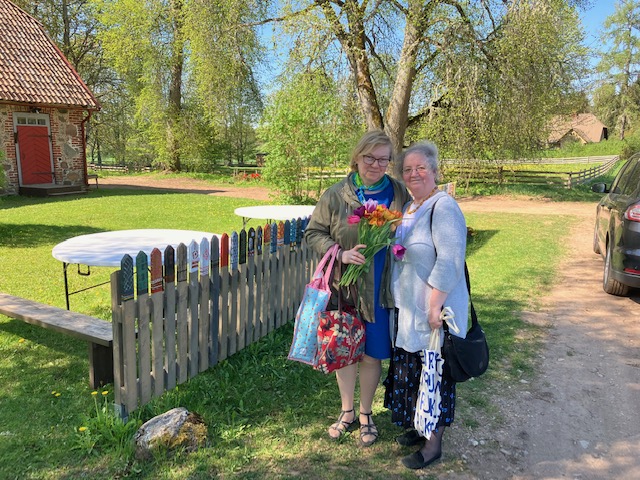
Merle Ernits and Gillian Vogelsang at the Heimtali Museum, Estonia; in the background a garden fence painted with knitted socksMerle Ernits and Gillian Vogelsang at the Heimtali Museum, Estonia; in the background a garden fence painted with knitted socks

We are visiting the small university city of Tartu in southeastern Estonia, as part of the preparation of Vol. 5 of the Bloomsbury World Encyclopedia of Embroidery (central and eastern Europe). What we did not expect to see was a workshop run by Estonian volunteers and Ukrainian refugees that designs and produces camouflage nets for the Ukrainian army. Since last year, they have produced more than three thousand square metres of netting.

Camouflage netting for Ukraine in the making: University of Tartu, Estonia. 11 May 2023. Photograph by Willem Vogelsang.Camouflage netting for Ukraine in the making: University of Tartu, Estonia. 11 May 2023. Photograph by Willem Vogelsang.

Francesc Masriera, 'Winter 1882'.  Museu Nacional d'Art de Catalunya. Public domain.Francesc Masriera, 'Winter 1882'. Museu Nacional d'Art de Catalunya. Public domain.Just by coincidence, we received on the same day two donations of muffs, one (TRC 2023.0627a) made of muskrat and originating from Canada and the other (TRC 2023.0630) is made of astrakhan and was acquired here in Leiden.

Muffs used to be very common, but it is unusual to see them nowadays. Perhaps they are due for a revival as a part of sustainability and decreasing energy resources?

A muff, also known as a hand warmer, consists of a cylinder that is open at both ends. It is often hung around the neck on a long cord or metal chain.

There may also be a purse attached to one side or set into the top of the muff (the muskrat example mentioned above had a strip of hooks and eyes inside the purse that date to the Second World War, TRC 2023.0627b).

Brown muff made from muskrat and lined with pale brown silk. Canada, mid-20th century (TRC 2023.0627a).Brown muff made from muskrat and lined with pale brown silk. Canada, mid-20th century (TRC 2023.0627a).The word muff derives from Old French mouffle for a thick glove or mitten, a term itself probably linked to an Old Germanic word, compare Dutch vel, for 'hide' or 'skin'. There appears to be no link with Dutch mof, a derogatory term for someone with the German nationality.

Muffs were usually worn in cold weather and as a result they were often made from furs such as astrakhan, ermine, beaver, fox, mink, muskrat, raccoon, sable, feathers (such as goose, peacock, swans), as well as from felt, velvet or another thick, warm material.

More fashionable forms, however, may be made of silks, satins and moiré cloth.

Muff made from black astrakhan and lined with black cloth. The Netherlands, mid-20th century (TRC 2023.0630).Muff made from black astrakhan and lined with black cloth. The Netherlands, mid-20th century (TRC 2023.0630).More expensive versions were decorated with lace (both bobbin and needle forms). Cheaper versions were sometimes made of rolls of cloth that were padded with sheep’s fleece. Sometimes mini-heaters in the form of metal cylinders containing heated charcoal were placed inside muffs to help keep the hands really warm. There are currently battery-operated examples available!

The wearing and use of muffs became popular in Europe in the 16th century and quickly developed into fashion statements. The earlier muffs tended to be small, but as time went on fashionable forms became larger and decorated with feathers, embroidery, expensive materials, etc.

Late 19th century photograph showing a young girl from Scotland with her hands tucked into a muff (TRC 2019.0002).Late 19th century photograph showing a young girl from Scotland with her hands tucked into a muff (TRC 2019.0002).It is clear from depictions in prints, paintings, as well as from small figurines, especially in the 18th century, that both men (including soldiers) and women wore a wide variety of muffs. But by the early 19th century it would appear that muffs had become primarily associated with women.

The use of muffs died out in the latter half of the 20th century, partly due to increased use and availability of gloves, as well as a general move against the wearing of furs.

The TRC is planning a mini-exhibition on the theme of muffs and we are looking for actual examples (especially those with a known history), prints, photographs, etc. Should you be willing to donate relevant items to the TRC, please contact us (This email address is being protected from spambots. You need JavaScript enabled to view it.).

Gillian Vogelsang-Eastwood, 8 May 2023 

Search in the TRC website

Contact

Boerhaavelaan 6
2334 EN Leiden.
Tel. +31 (0)71 5134144 (office hours)  
office@trcleiden.org 

The TRC is open every day from 10.00 to 15.00

facebook 2015 logo detail 

instagram vernieuwt uiterlijk en logo


Bank account number

NL39 INGB 0002 9823 59, in the name of the Stichting Textile Research Centre.

Donations

The TRC is dependent on project support and individual donations. All of our work is being carried out by volunteers. To support the TRC activities, we therefore welcome your financial assistance: donations can be transferred to bank account number (IBAN) NL39 INGB 000 298 2359, in the name of the Stichting Textile Research Centre. BIC code is: INGBNL2A.

 You can also, very simply, if you have an iDEAL app, use the iDEAL button and fill in the amount of support you want to donate: 


Since the TRC is officially recognised as a non-profit making cultural institution (ANBI), donations are tax deductible for 125% for individuals, and 150% for commercial companies. For more information, click here