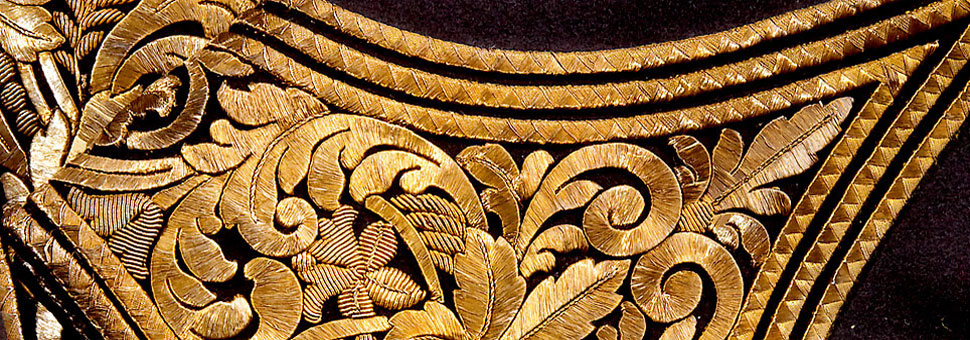
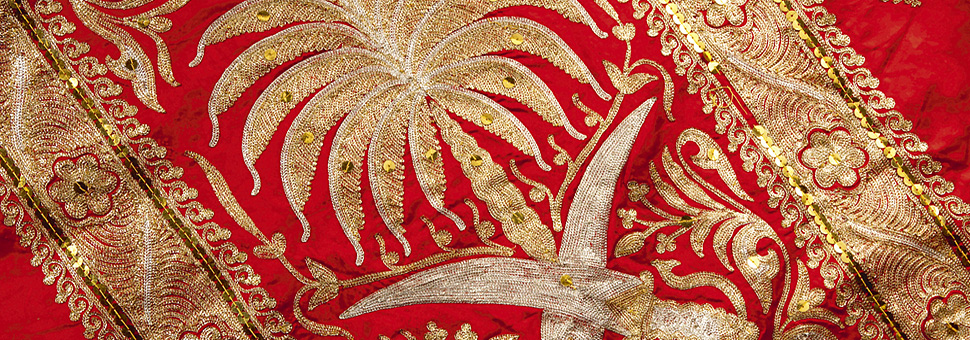

 Italian, 18th century embroidered waistcoat, from the Palazzo Mocenigo, Venice.Venice has been a centre for making and trading textiles for centuries. There are two definite places to see for textiles lovers. Palazzo Mocenigo, housed in a 17th century palace, is home to the Centre for Textile and Costume Studies. Most of the displays involve the restored palace itself and its rich furnishings, but there are many beautiful textiles in nearly every room. These include numerous 18th century Venetian velvets and brocades, and some rarer 13th and 14th century fabrics.
The palazzo also has many examples of textiles that can sometimes be overlooked: male clothing. You can see the 18th century black wool or red damask robes of public officials, and a whole room devoted to waistcoats. Fifty-six waistcoats, mostly from the late 18th century, are on display.
Today’s waistcoat evolved from a knee length, completely buttoned from the front, jacket that was worn underneath a coat for extra warmth. The front was usually of some costly material, such as silk, while the back was made from less expensive cotton or linen. In the 18th century this jacket grew shorter, until it reached just below the waist. By the end of the century it had lost its sleeves. Most of the waistcoats on display are silk, often beautifully embroidered, sometimes with gold or silver thread.
In 2014 the Centre joined Google’s #WeWearCulture project. This project showcases the museum’s work and can be seen at https://artsandculture.google.com/project/fashion
Reaching the next textile highlight involves a ferry ride to Burano, an island in Venice’s lagoon. Burano has a long history of lace making. During the winter of 1871-72, the island’s economic mainstay of fishing was destroyed when the lagoon froze. Women returned to lacemaking to generate income, and a lacemaking school was set up. The old school grounds today house the Lace Museum, with its incredible collection of both needle lace and bobbin lace. There is lace beginning from the 16th century to today. The permanent exhibition begins with several short videos, in different languages, on how lace is made. There is also an excellent display which shows lace making all across Europe.
 Length of Italian needle lace, late 16th century. Lace Museum, Burano, Venice.There are lots of tourist shops which sell machine lace on this small island. If you are looking for handmade bobbin lace, one of the best places to go is Atelier Martine Vidal, which also has a beautiful collection of antique lace on display. Venetians proudly claim that needle lace was invented in the 1500s in Venice itself. A visit to the Lace Museum may not confirm this claim, but it certainly shows you why Venetians are proud of their lacemaking tradition.
Shelley Anderson, Friday 23rd March 2018.