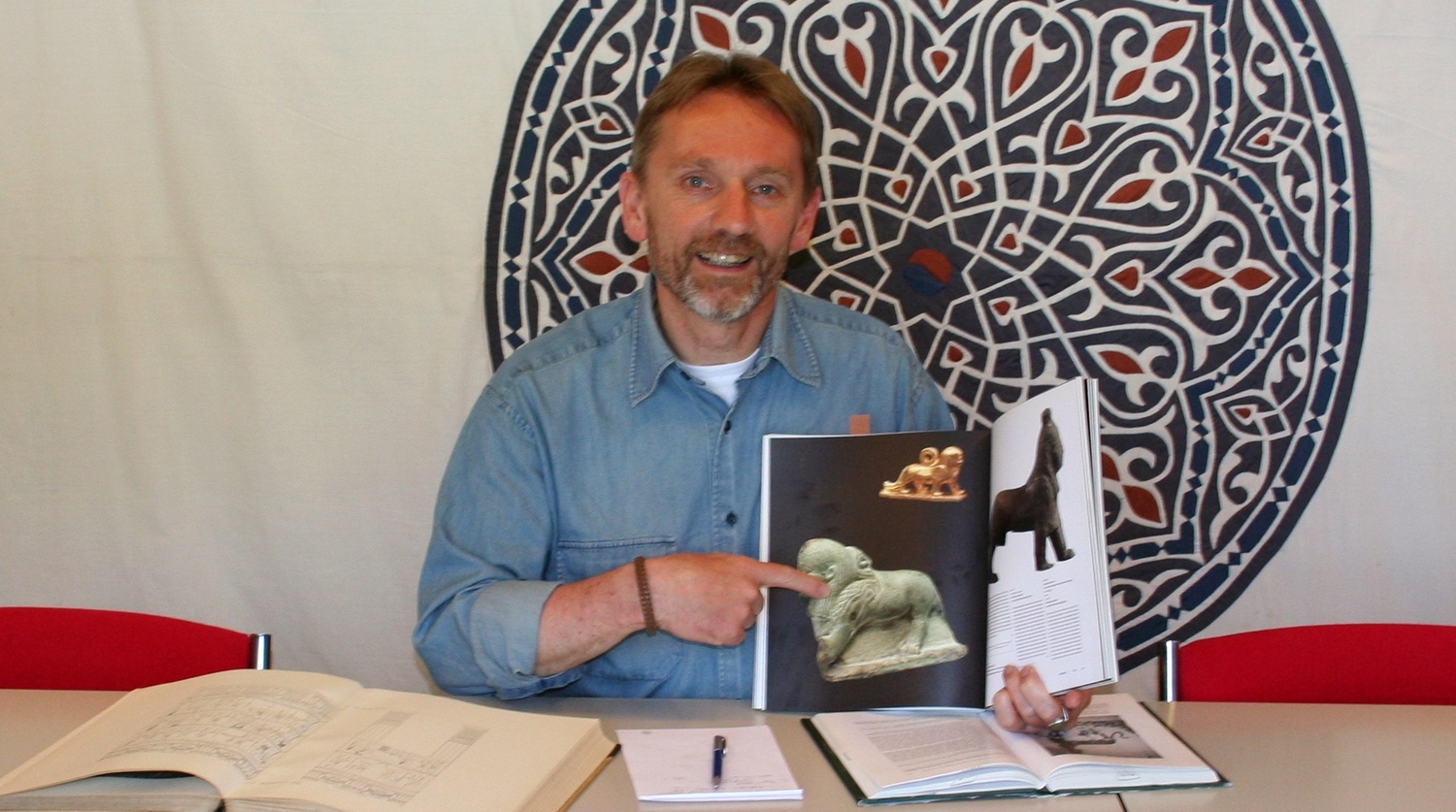
 Prof. Olaf Kaper, guest curator of the exhibition Queens of the Nile, and board member of the TRC.I enjoy exhibits where both the achievements and the foibles of people come through. And despite thousands of years, it is the ancient Egyptians’ humanity that comes across in the exhibition “Queens of the Nile” at the National Antiquities Museum (Rijksmuseum van Oudheden) in Leiden (the Netherlands), running now until 17 April 2017. There are some 350 objects on display that chart the lives of Great Royal Wives, such as Ahmose Nefertari, Nefertiti, Hatshepsut and Nefertari.
A Pharaoh had many wives. This was a potential source of serious trouble, as the long papyrus scroll on display, detailing a harem conspiracy instigated by Tiye against Ramses III shows. But there was only one Great Royal Wife, who was likened in power to the goddesses Hathor and Sekmet (the latter has two stunning, lion-headed statues in the exhibit). Ahmose Nefertari, who controlled temple administration, was indeed worshipped as a goddess by the artisans who worked in the Valley of the Kings. There is a replica of the famous bust of Queen Nefertiti, who helped make a religious revolution in ancient Egypt. I personally enjoyed the granite statue of Hatshepsut. While she wears the kingly nemes-headdress, she also wears a woman’s dress. What she doesn’t wear is the usual false beard, which she used to indicate her status as a king.
And there is a reconstruction of the tomb, in the Valley of the Queens, of Queen Nefertari (not to be confused with the earlier Ahmose Nefertari). This tomb has beautiful wall paintings. In one of these, the Queen is shown bearing a tray with four forked symbols (hieroglyphs for ‘textiles’) in front of the god Ptah. Textiles played an important role in the rituals for resurrection, from actual mummy wrappings to symbolic offerings. The TRC made an exact replica of the linen garments Queen Nefertari would have worn in life (see more here). It is a display like this that makes these women come alive. These garments, and a small wooden statuette of a young girl, named Nefertemau, were the most poignant for me. Nefertemau died still a child. Her mother commissioned the statuette for her dead daughter in order to ‘make her name live.’
When you visit the exhibit, be sure to see the Museum’s new re-opened Egyptian wing. It does feel more spacious than before. The largest room contains statues. Every fold or plait in the image is clearly carved, from the stiff kilts of the men to the ankle-length dresses of the women. In the next room are some real treasures—a large display case with beautifully woven (and perhaps embroidered?) fragments of Coptic textiles. Go to the back of the display case and open the drawers. Inside are some exquisite fragments of approximately two dozen Coptic textiles. The colours (red, blue, orange and brown) still glow, and the designs of people, plants, and animals are lovely. The human figures include the chubby, slightly lop-sided figures that characterize Coptic art. I am guessing, based on Coptic textiles in the TRC collection, that these are wool on linen, from the 3rd to 6th centuries CE. I guess because, strangely, there was no information given at all about these exquisite pieces. A TRC colleague did write to the Museum about this and got a prompt reply that information texts were still being prepared and will be put up soon.
Shelley Anderson, Tuesday 13th December 2016