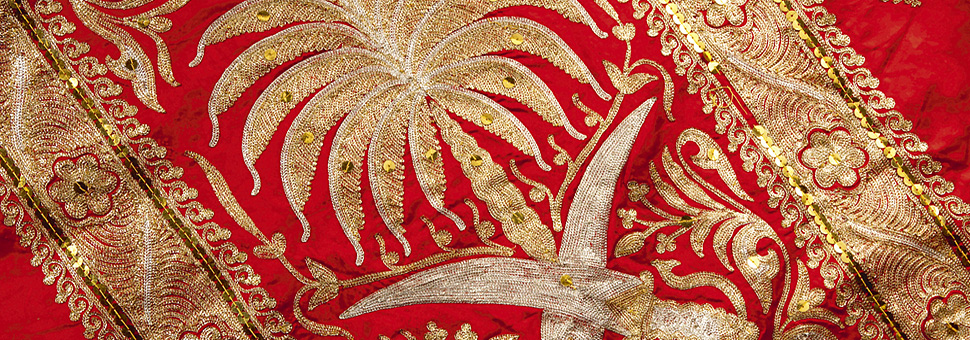
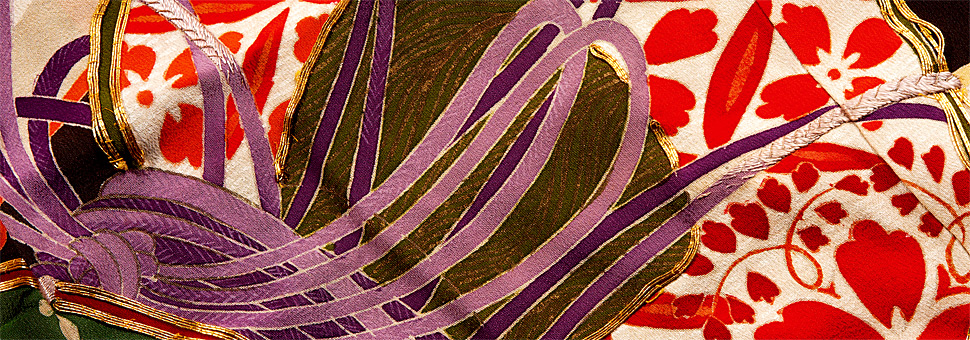

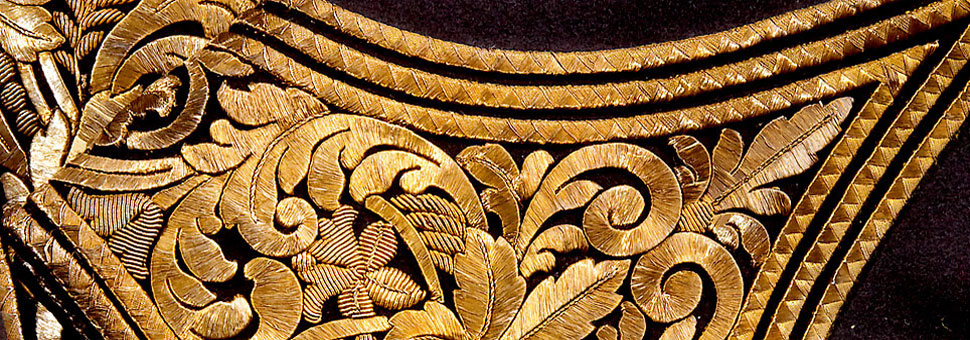
 Nuihaku met maanbloemen en takkenbossen, Japan, 1700-1800, collectie Okura Museum of ArtRefinement and elegance are two words that come to mind when I think of Japanese textiles. A small exhibition now on display in Amsterdam’s Rijksmuseum highlight this point. Kimonos from the Okura Collection (running from now until 13 December 2016 in the Museum’s Asian Art department) features seven 18th to 19th century kimonos used as costumes in Noh theatre.
This type of theatre began in Japan in the 14th century and continues until today. It is very stylized, with stock characters, and combines song, dance and music. It was popular with the Japanese aristocracy. The colours and quality of the costumes (and masks, some examples of which are also on display) helped with characterization. Costumes became more luxurious, decorated in gold and silver leaf, over the centuries, reflecting more elite clothing as the rich flocked to Noh theatre.
On display, for example, is a kariginu, an outer garment worn by noblemen when they were hunting. It is fastened on the side with a thick multi-coloured cord. This cord, which also appears on the sleeve openings, looked to me like kumihimo, a Japanese braiding technique. (There are numerous YouTube tutorials on kumihimo, see here). This garment, like all of the textiles on display, is made of silk, and decorated with gold leaf. Another garment, used to represent an aristocratic woman in Noh theatre, is a 19th-century karaori. This silk costume is beautifully decorated in gold thread with good luck symbols, such as red poppies and mythological birds.
Karaori means ‘Chinese style textile’ and originally referred to a type of richly-decorated fabric (silk, often in a twill weave) that looked embroidered, but was in fact woven. This technique first appeared around the end of the 14th century in Japan. Similarly, another kimono (weft-dyed, 18th century, green silk) on display looks to be decorated with lovely blocks of patchwork, but is woven. It was fashionable in the 15th century to re-use old brocade for patchwork in kimonos—until weavers learned to imitate the look.
One stunning textile, at least, appeared to be designed specifically for the theatre. This is a hangiri, a sort of pants suit. It has a deep red colour with two large dragons in gold brocade. Also on display is a choken, an unlined outer garment of silk gauze, decorated in a purple wisteria and gold fan motif, which much have looked beautiful when danced in. Last but not least there are two nuihaku, kimonos worn by younger actresses. One is an 18th century silk damask embroidered with moonflowers and red brushwood, a literary reference to the classical Japanese novel Tale of Genji. This textile is considered the highlight of the exhibit. I found all of the textiles very beautiful. The only disappointment was the fact that not more costumes were on display.
Shelley Anderson, 8 November 2016