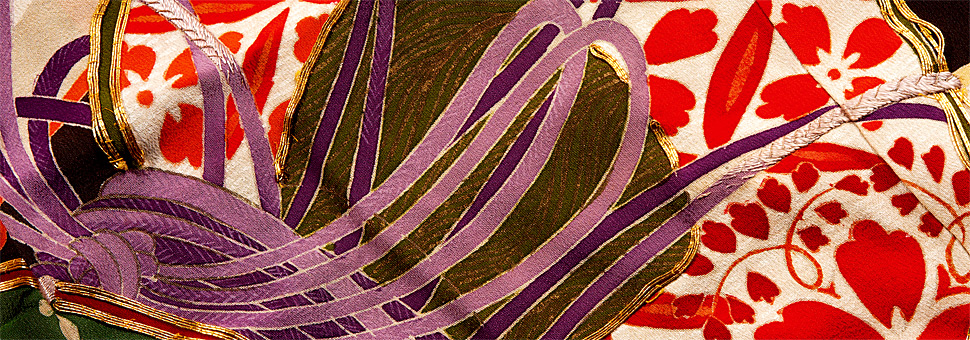
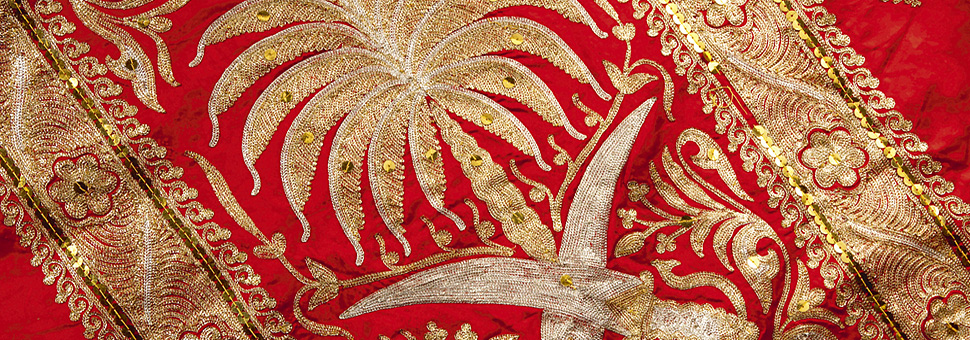

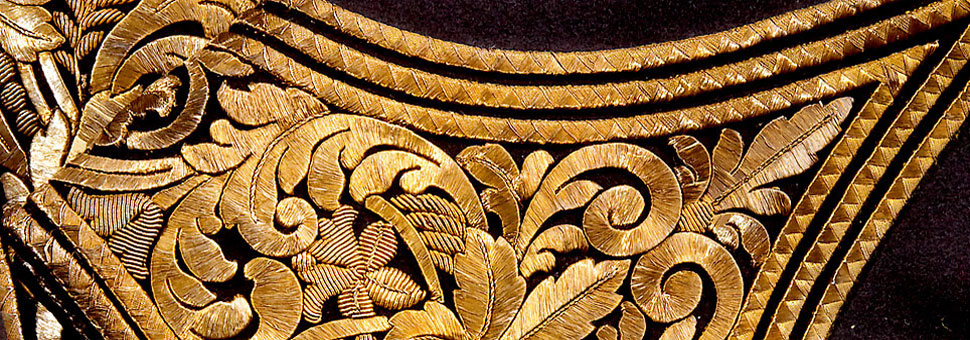
 Impression of the exhibition 'The Ornate and the Beautiful, Bishop’s Palace, Wells, from 16th April – 31st August 2016.Wells in south-west England was a surprise. I had not expected much, but it is a lovely medieval/Georgian city with a beautiful cathedral and bishop's palace (complete with moat, drawbridge and porticulis to keep the unruly citizens of the town at bay). Wells Cathedral likes embrodery and even has embroidery tours!
The main focus is on the embroideries designed and made for the quire (choir) of the Cathedral, between 1937 and 1952. They include 39 panels for the backs of the canopied stalls, many more hassocks, as well as seat runners and long kneelers. Also on display is an early-12th century cope chest. In the small St. George Chapel there are several hassocks and kneelers dedicated to those who fell during the First World War (1914-1918). These include several that were especially designed to fit around pillared seats.
Near the chapel there are several late-20th century altar frontals that are woven, as well as one that is embroidered. Several of the many tomb effigies depicting early bishops of Wells are still painted. These help to give an idea of the ornate nature of the ecclesiastical vestments worn and their design/colour combinations. In this respect, it is worth noting that until the 31th August there is an exhibition in the Palace called "The Ornate and the Beautiful" about ecclesiastical (embroidered) garments from the 14th to 20th centuries. Most of the thirty or so items on display are from the collections of nearby Downside Abbey (Catholic) and Wells Cathedral (Anglican). Many of the items have never been on display to the public before.
The items in the exhibition include a variety of chasubles, a few copes (as well as a large, medieval cope chest), and some orphreys, especially a beautiful orphrey that dates to the medieval period and is made in a form of opus anglicanum. There was also a small, but intriguing book cover from the 18th century, which had the embroidered arms of a bishop. In addition, there were relevant items of jewellery, such as bishop's rings and crosses. The exhibition included interesting and useful text boards about the various individual and groups of objects on display. Sadly there is no catalogue to the exhibition, which is a pity as the exhibition was otherwise well put together.
Also in Wells there is the Wells and Mendip Museum, which recently staged an exhibition about samplers. The museum was given a large collection of these objects by the late Eveleen Perkins. The samplers date back to the 18th century. Many of the them were in the temporary exhibition (spring 2016), while there is a group of 35 examples that are on permenant display. Again there is no catalogue to this collection. Hopefully in the future this situation will change.
Gillian Vogelsang-Eastwood, 6 August 2016.