
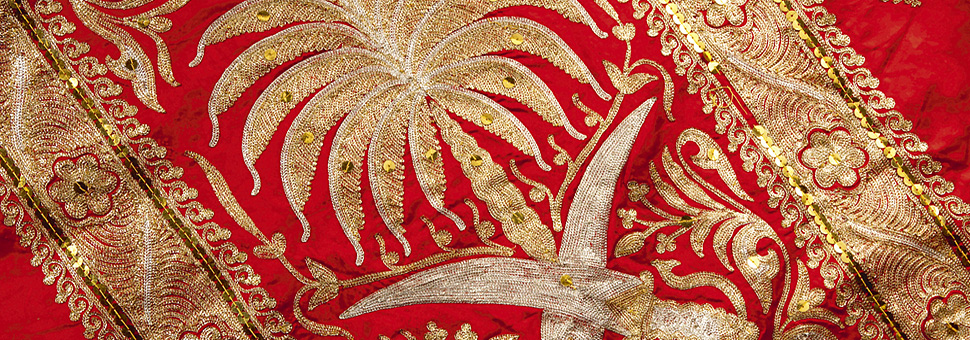
 British Museum, LondonThanks to an invitation by the British Foundation for the Study of Arabia I was able to attend the 50th Seminar for Arabian Studies, which was held at the British Museum from 29th -31st July 2016. I presented a paper about embroidery from the Arabian Peninsula. This was one of several papers about textiles, dress and accessories presented and discussed yesterday morning. The directly relevant papers included those by Aude Mongiatti, about the technical analysis of Omani silver jewellery; Lezley George, about the fashionable aspects of wearing an abayeh in the UAE; Martin Ledstrup, on men and the wearing of national dress in Ras al-Khaimah; Keireine Canavan about hand weaving among the el-Sadu in Kuwait, and finally Neil Richardson about weaving in Oman and its survival in the modern world (especially how camel racing has promoted the production of hand woven animal trappings).
What I really enjoyed during the meeting was how the various speakers often referred to the lectures by the other contributors. This created a strong feeling of cohesion, and the various lectures clearly complemented each other. The diversity of styles of lecturing was very noticeable, but all were interesting. Well done to everyone who was involved in the organisation of the conference!
In the afternoon a group of us travelled across London to Blythe House, an old and massive Post Office building where various museums, including the British Museum and the Victoria and Albert Museum, have storage depots. Here we were treated to a special viewing of Arabian Peninsular garments and textiles, including some magnificent Saudi and Yemeni embroidered dresses. Walking around the depot was an eye opener for some, as regards the problems of dealing with such a vast and diverse collection. We were allowed to see (but not touch) an eighteenth century bark garment from the Pacific region, which is associated with Capt. Cook and is one of the first items in the British Museum's collection. A reminder of just how impressive, varied and important the BM's textile and dress collection actually is.
Gillian Vogelsang-Eastwood, London, 30 July 2016