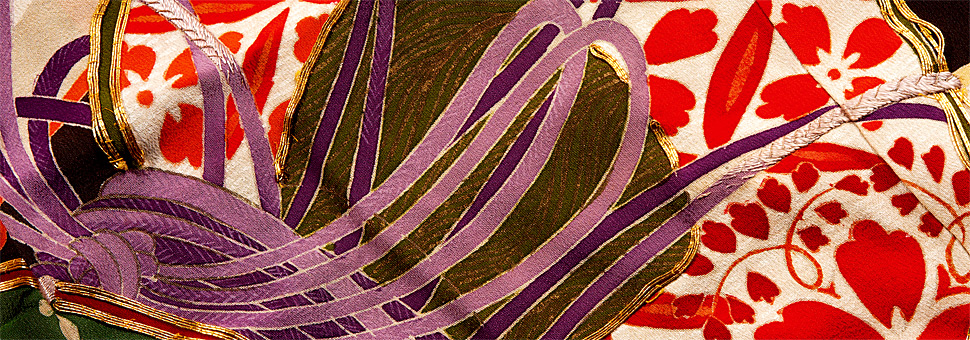
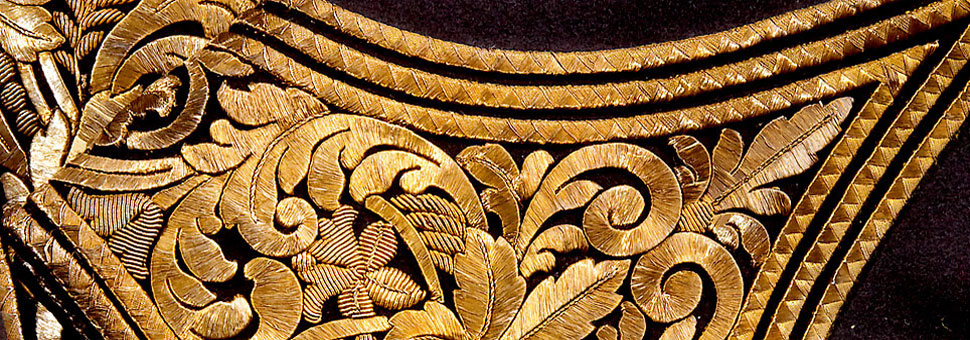

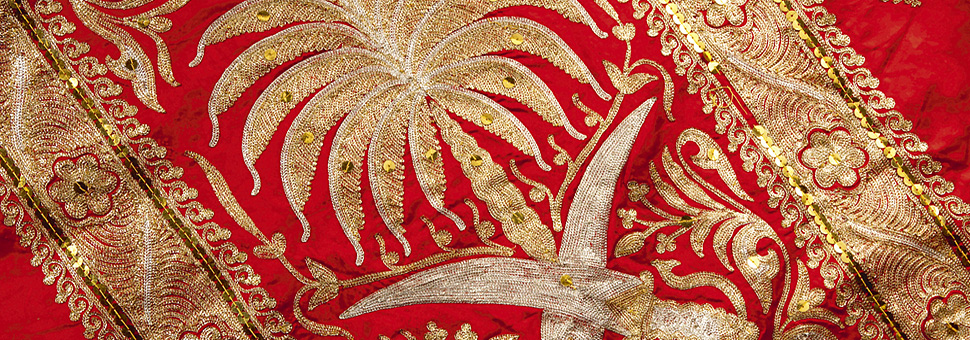
We visited the Greek Folk Art Museum, Athens, this morning and spent a pleasant few hours looking at their exhibitions relating to the production of textiles (spinning equipment, including spindles and distaffs), metal work (with an emphasis on jewellery and swords), as well as their extensive collection of regional costumes and embroideries.
Throughout the museum great care has been taken in the presentation of the objects and in providing adequate information (in Greek and English). There are numerous photographs illustrating how the garments and jewellery were worn. Interesting details are being explained, such as the role in society of the first borns on the island of Karpathos. Both the first male and female children had a very different life, with different clothing, jewellery and expectations than their younger siblings.
The embroidery gallery is divided according to region rather than, for example, technique, and the main styles are clearly indicated. In addition, the use of embroidery for household furnishings, including beds, curtains, cushions and so forth are described and illustrated with some amazing examples. There was no information about the specific techniques used for the various styles, but there are books (all in Greek) on sale in the small shop that cover these aspects.
The museum is in the old quarter near the Acropolis and it is not easy to find, especially as it has been divided into various buildings in the same neighbourhood - so, the Greek pottery museum is housed in a nearby buliding that was originally a mosque. But it is well worth the effort to find the costume and embroidery museum and enjoy the display and friendliness of the staff.
Gillian Vogelsang-Eastwood, 13 July 2014