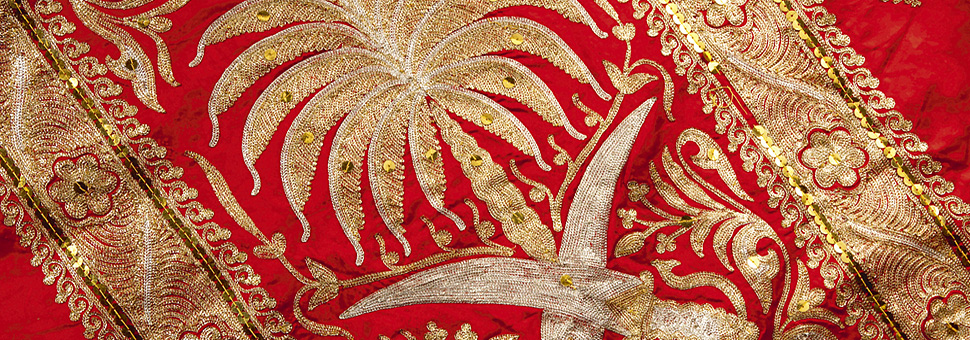
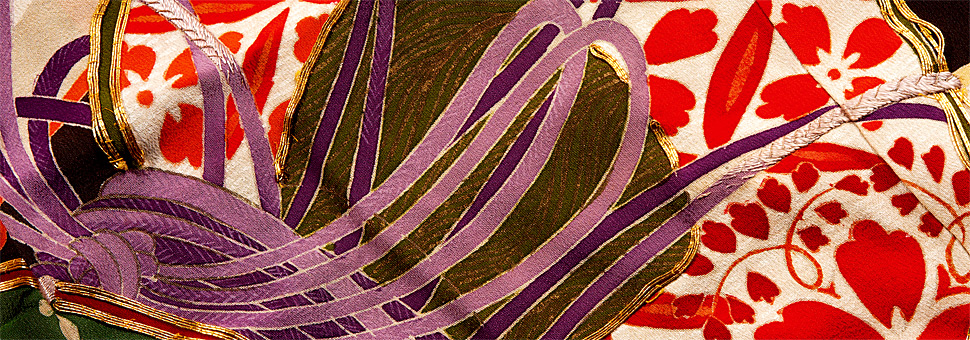
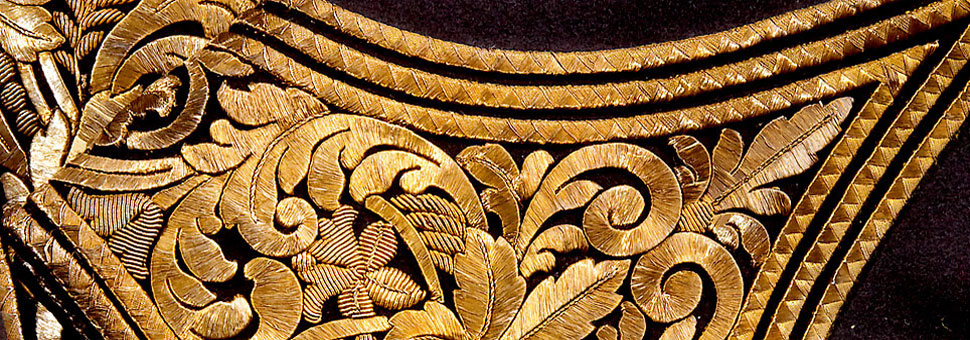

We arrived in Vienna early this afternoon and went straight to the Kaiserliche Schatzkammer (Imperial Treasury). This is a must for people interested in medieval and later Western and Central European embroidery. There are numerous examples of ecclesiastical embroidery, especially copes, from the 14th century, as well as an impressive collection of heraldic garments (tabards in particular) ranging in date from the 16th to the early 18th centuries.
Personally, the most impressive group of embroideries was that from Sicily. The mantle of King Rogier II of Sicily alone is worth visiting the museum. With a maximum width of 345 cm, it is worked in gold and pearls on a crimson ground and has the motifs of a striped lion attacking a camel, with an inscription in Arabic underneath. It dates to c. 1134. In the same room as the mantle is a medieval royal gown made from Chinese silk and embroidered in the West with gold and pearls, as well as silk hoses, gloves, shoes and various other gowns, all embroidered using a variety of techniques.
Gillian Vogelsang-Eastwood, 3 July 2014