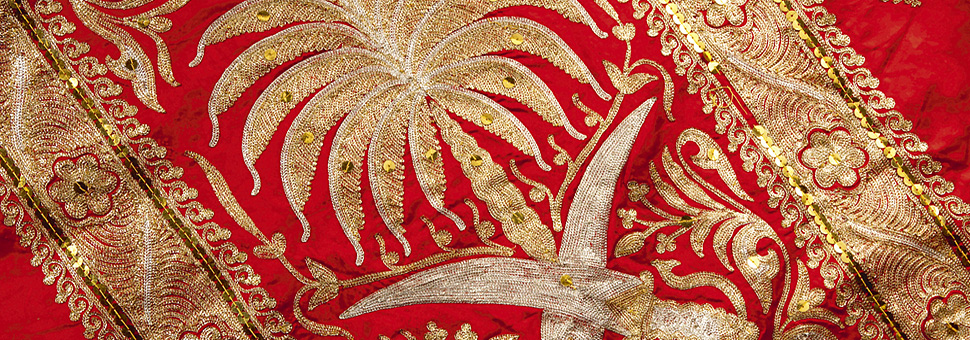
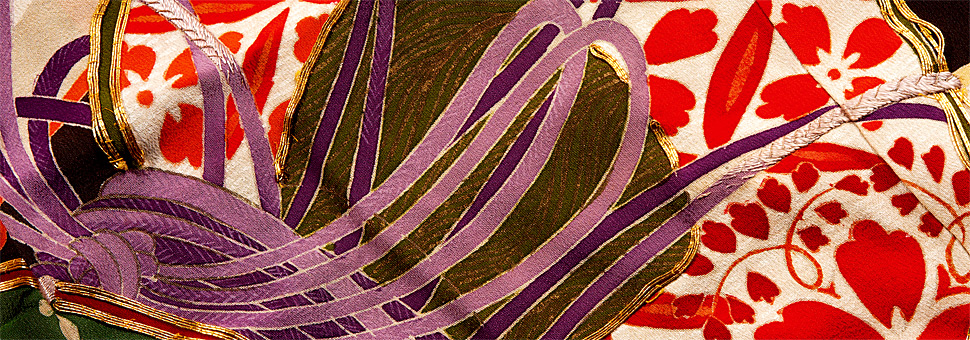

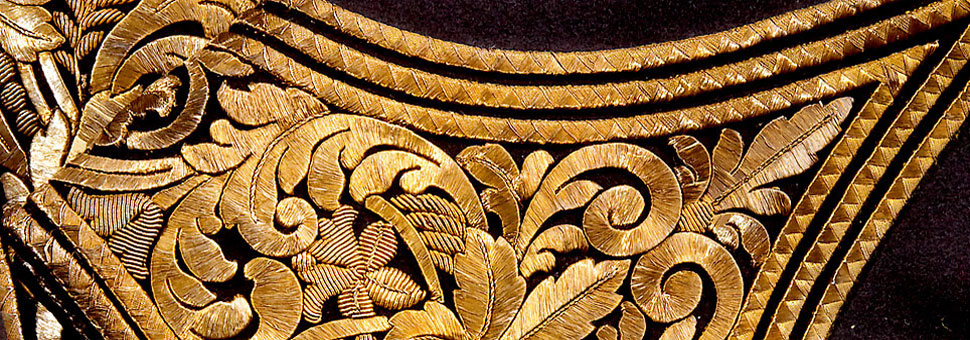
The last few days have been busy and exciting at the TRC and beyond! So what is new? We have been working hard on the Arizona collection and nearly 400 items are now online. Then via the post came five garments from Socotra, an island just south of Yemen, thanks to Julian Jansen van Rensburg from the Royal Botanic Garden Edinburgh.
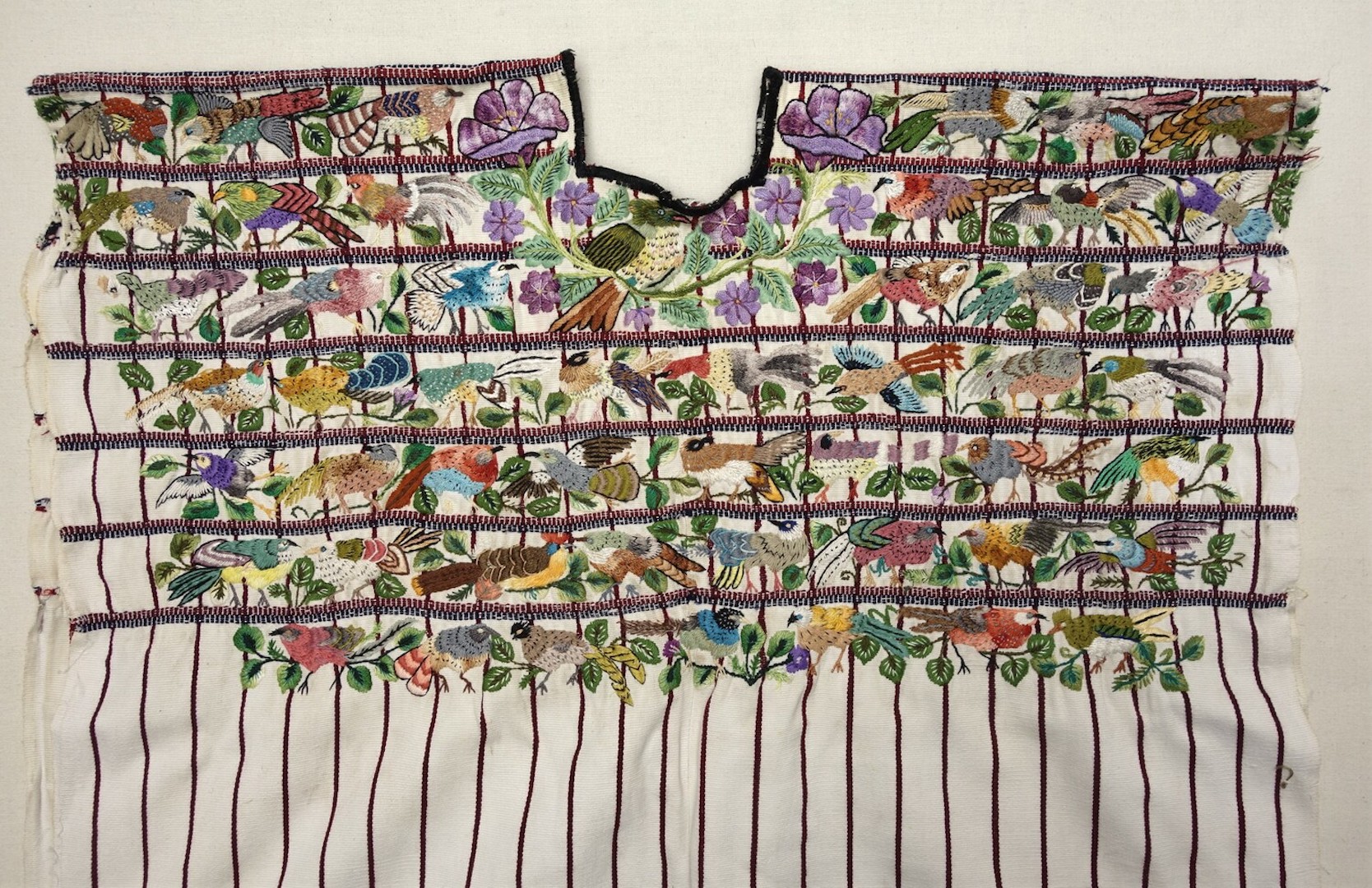 Embroidered woman's blouse (huipil) from Guatemala, 1930s ? (TRC 2022.1243).
On the same day a box arrived from Los Angeles, from Chuck Knobler, an old friend of the TRC who has been sending groups of Guatemalan and Mexican textiles and garments to the TRC for the past few years. This latest box included a woman’s huipil with embroidered birds on it. I would very much like to know if the birds are imaginary or reflect local species. All of the Yemeni and Guatemalan/Mexican textiles will be online next week.
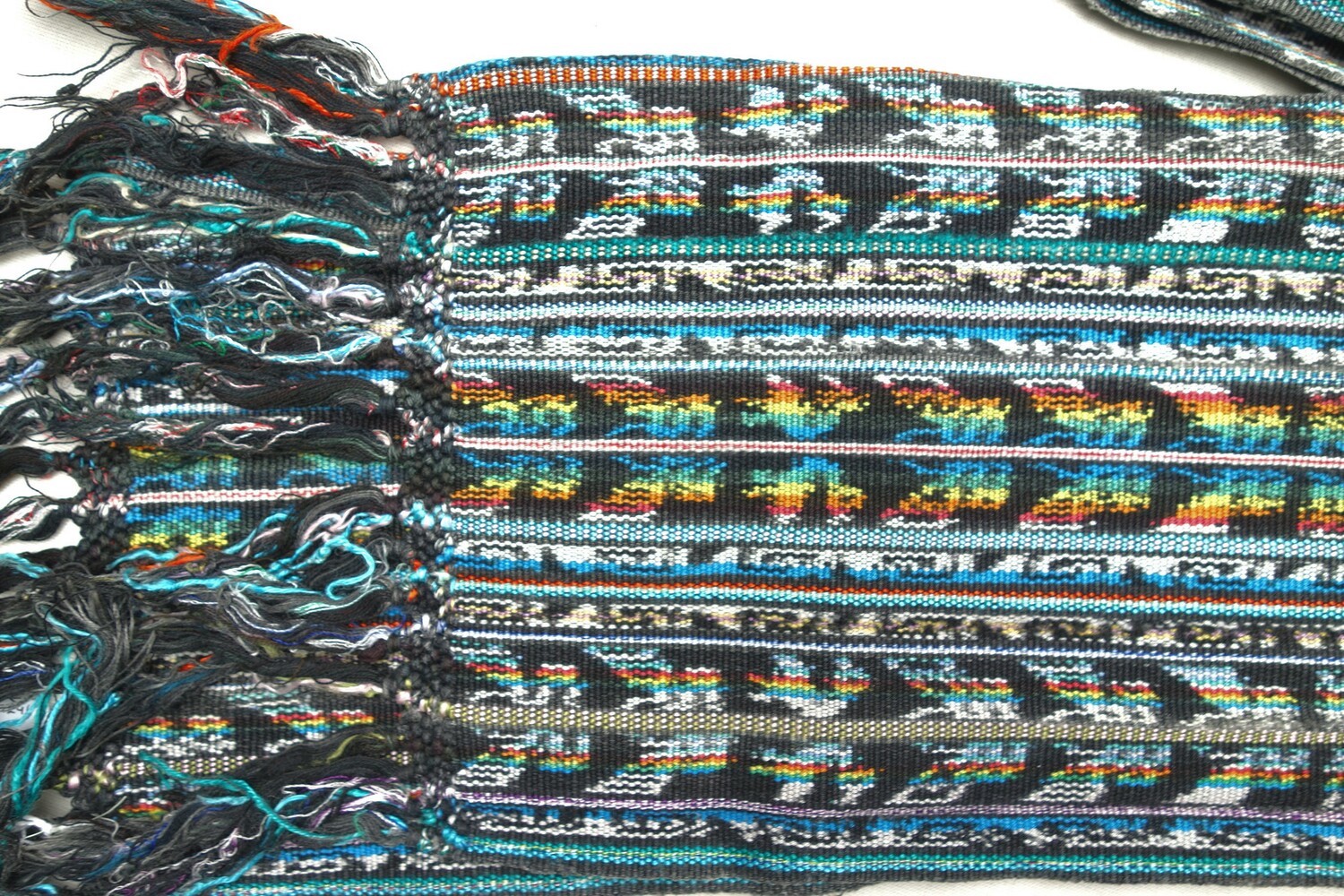 Detail of ikat sash for a man, Guatemala, late-20th century (TRC 2022.1246).
Then we went to see a building that might become the new home for the TRC. It is large enough to cover our needs for many years – 900 sq m, but it would require a lot of work to make the space suitable for what we want to do and the location is not perfect, but not bad (one bus stop further down from where we are now). If we can find an individual, commercial sponsor or foundation willing to support the TRC we could seriously think about such a move. And then the world of textiles would change in both Leiden and indeed the Netherlands!
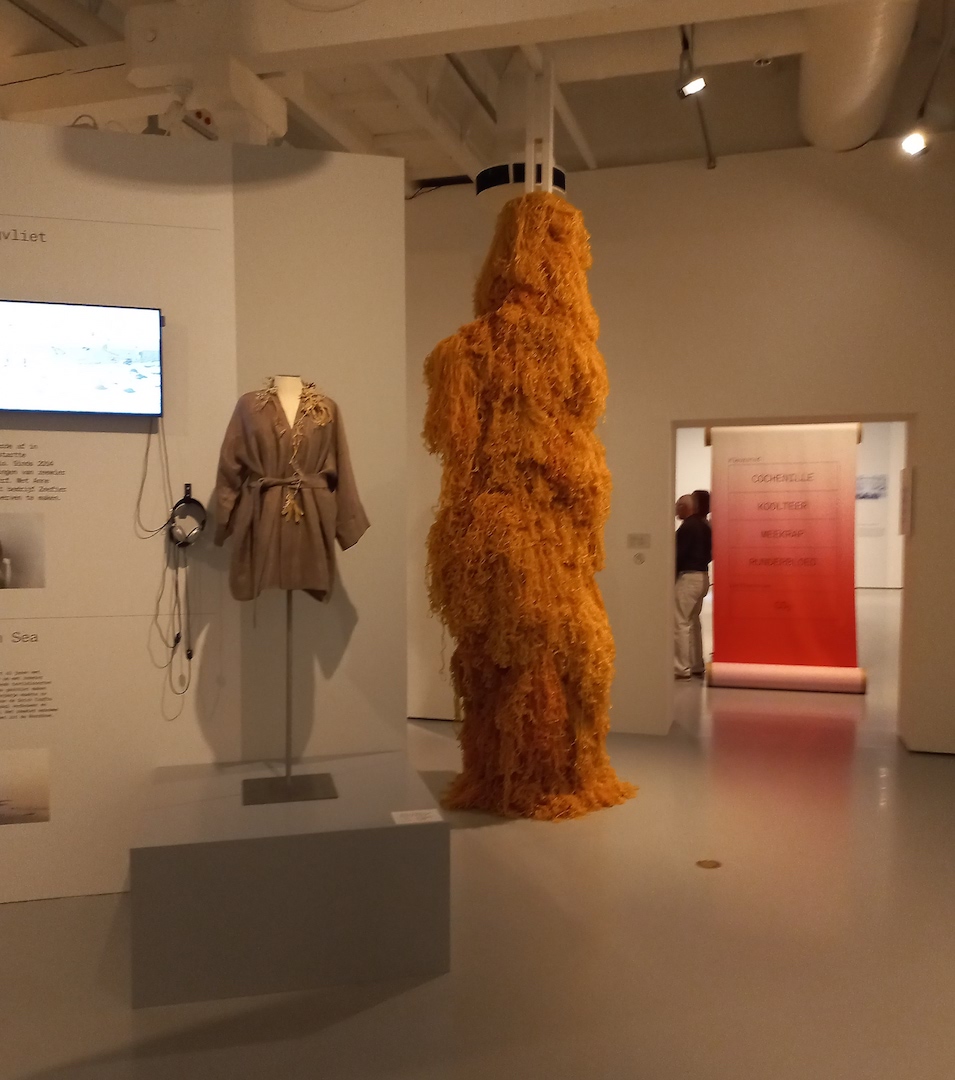 Detail of the exhibition 'To dye for', Textielmuseum, Tilburg, 2022.Then Willem and I went away for a few days to see an exhibition called “In het licht van Cuyp” in the city of Dordrecht, about the 17th century Dutch artist Albert Cuyp and his influence on British artists such as Gainsborough, Constable and Turner. Cuyp certainly liked light and cows!
After lunch it was onto Tilburg to see the Textielmuseum’s latest exhibition called ‘Kleurstof’ (‘To Dye For’) about various dyes and textile artists. I was asked by Polly Leonard to write a review of the exhibition for the London-based textile journal, Selvedge. I have mixed feelings about the exhibition as I am not really into conceptual art, I prefer facts, techniques and information, not abstract ideas. But there were some really interesting pieces – but if I am honest I just preferred to be in the Museum's machine hall watching the looms at work.
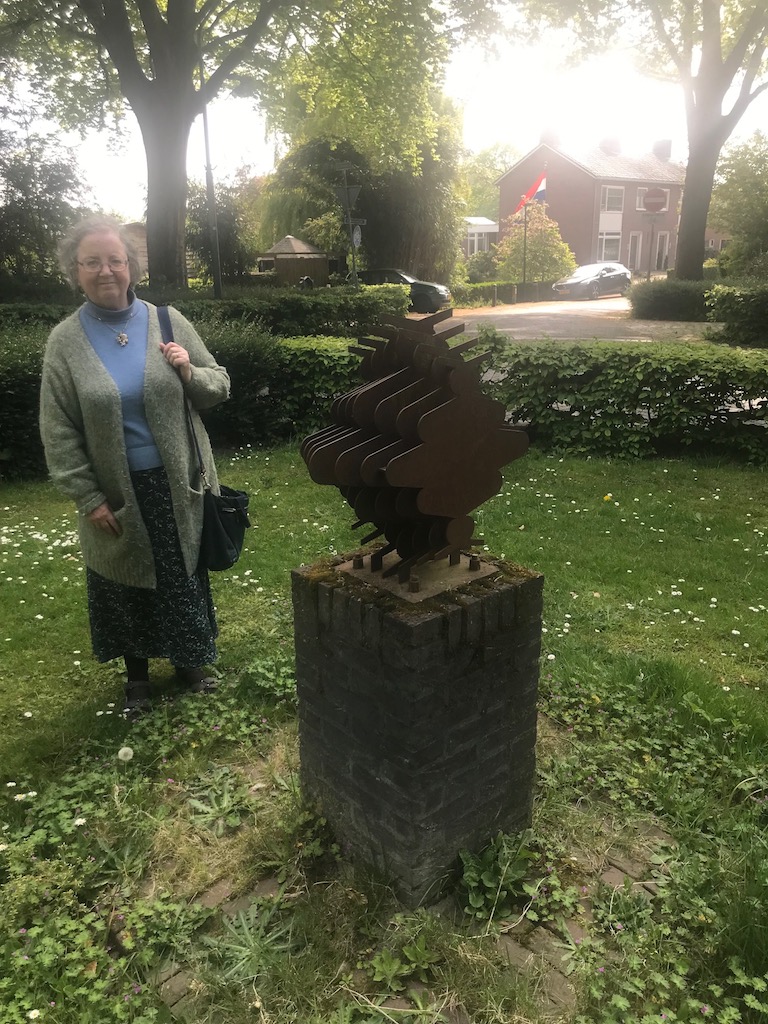 Author at the monument for the 's Gravenmoer bobbin lace makers.A little while ago we published a couple of blogs about ‘s-Gravenmoer lace based on the work of Bettie Stijnman.. During our trip we had the chance to actually go to the small village of ‘s-Gravenmoer, which lies in Noord-Brabant, not far from Tilburg, and where a hundred years or so ago there was a thriving cottage industry for a type of bobbin lace with geometric patterns named after the village. It was one of the few forms of bobbin lace commercially produced in the Netherlands, as compared with the many forms from Belgium and northern France. Nowadays, the only thing that reminds of this form of lace in the village is a small metal monument that was inspired by the shape of one of the motifs found on the lace.
The evening was spent with Ina Blaas-Dhont and her husband. Ina is a well-known ‘s-Gravenmoer lace maker and member of a local group that is keeping the name and practice of s-Gravenmoer lace alive. Every few years they have an exhibition and we have said they would be more than welcome to come to the TRC to display their lace and show visitors how this form of bobbin lace is made..
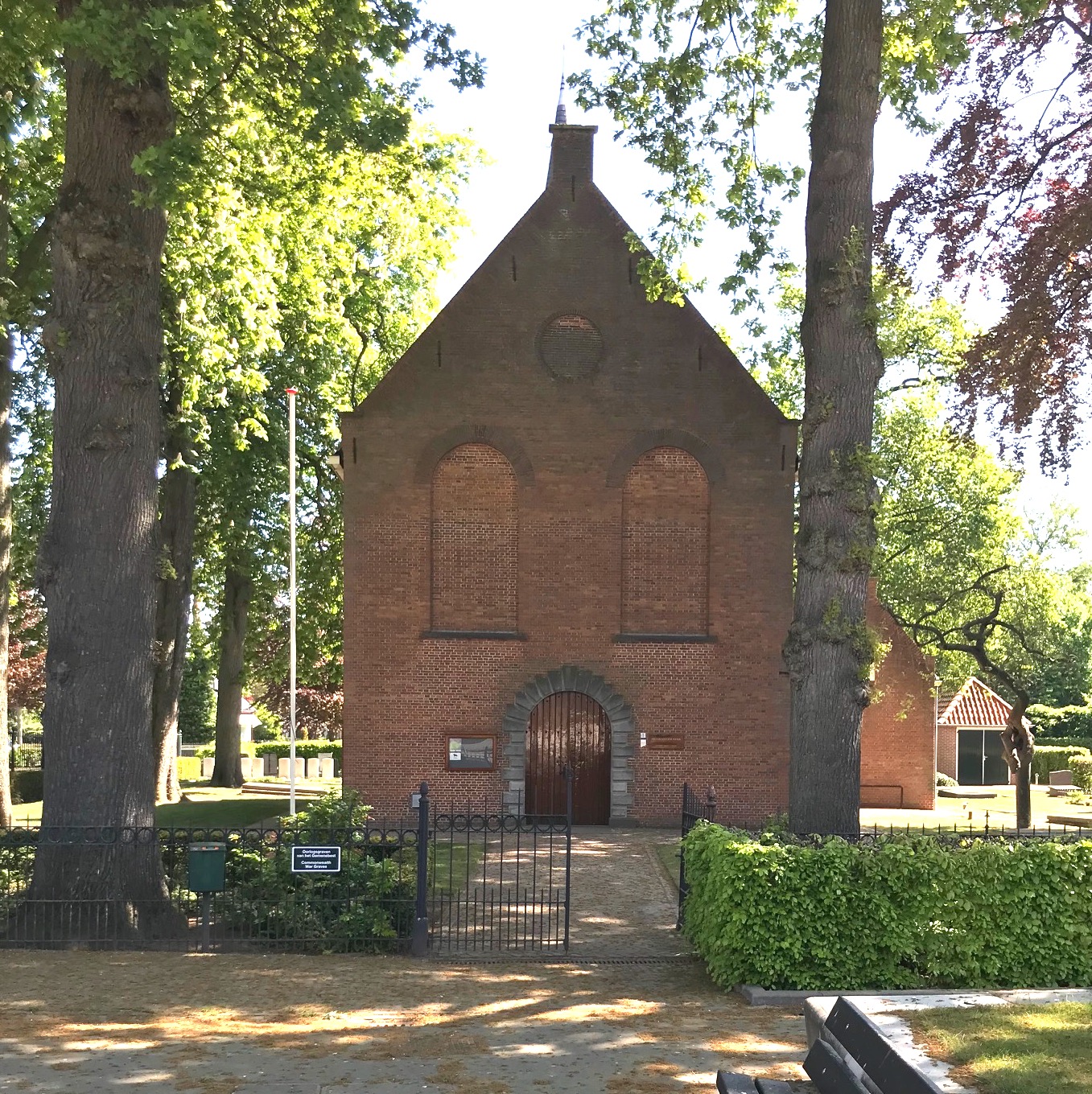 The small Protestant church of Zundert, where the father of Vincent van Gogh was the vicar from 1849 until 1871, and where Vincent was baptised on 24 April 1853. The churchyard contains the grave of Vincent's elder brother, also called Vincent, who was born in 1852 and died in infancy.Ina also showed me her collection of Dutch embroidered net (tulle) that was used for decorating the crowns of some types of Dutch regional lace caps.
Some years ago she wrote a book called “Omoogjes en Cornelenpootjes: De techniek van tuleborduren” (2008) about this form of embroidery and we now have a copy that will shortly be going into the TRC Library. It gives step-by-step description of how to stitch the various forms of Dutch embroidered tulle, with images of numerous motifs, designs and original caps . A snapshot about this form of embroidery will appear in vol. 4 of the Bloomsbury Encyclopedia of World Embroidery! It was a lovely end to an exciting day.
The next morning was spent seeing various places associated with Vincent van Gogh (birthplace, church, etc, no textiles involved) and then onto Essen, Belgium, to meet Mrs May Suykerbuick who has very kindly decided to give the TRC a collection of textiles and garments from former Czechoslovakia, as well as from Tunisia and some Coptic pieces from Egypt which date to about the 8th century AD.
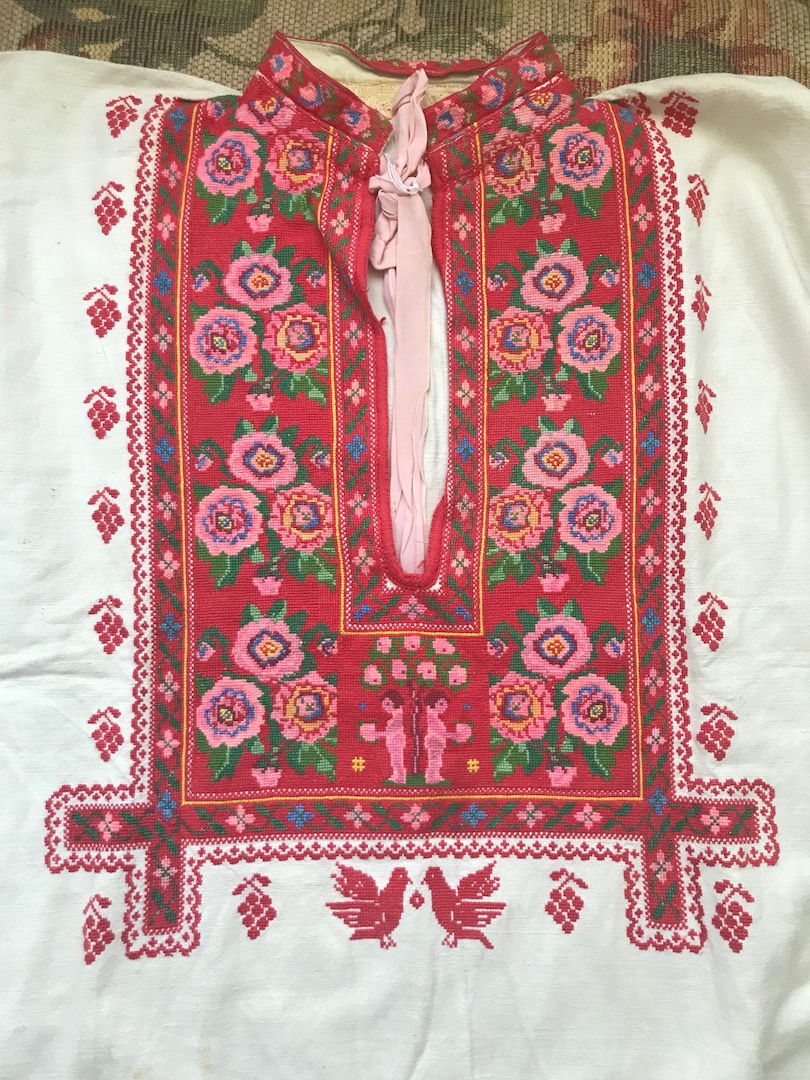 Embroidered chest panel for a woman's blouse from former Czechoslovakia, 20th century. Donation by May Suykerbuick.We were met by Mrs Suykerbuick as well as Frieda Sorber, an old friend and supporter of the TRC Leiden, as well as being an acknowledged expert on the subject of textiles, especially from North Africa. There are about 150 items in the donation so it will be several weeks before the Suykerbuick collection comes online, but there are many items that will be of interested to those involved in European regional textile and dress.
As normal, I am now wondering what next week will bring. One thing is certain it will not be boring.
Gillian Vogelsang-Eastwood, 7 May 2022