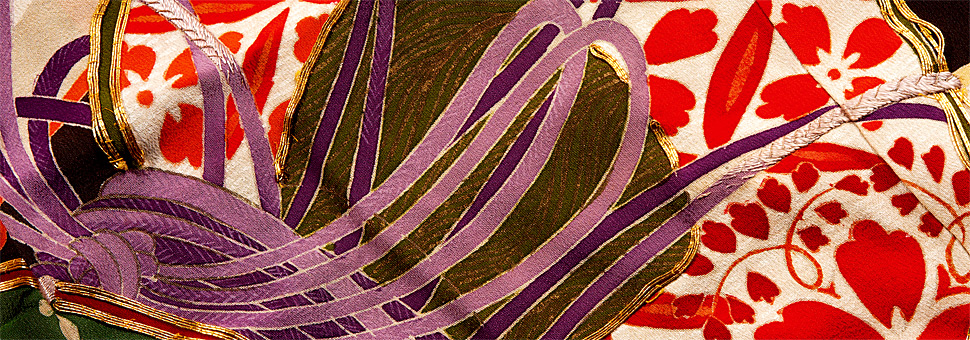

Last week Julie Kuperus kindly gave the TRC Leiden various pieces of a large length of cloth that were stitched and pinned together (TRC 2021.2225). She bought the cloth in about 1978 in the Cross River State in southern Nigeria.
 Detail of a shrine cloth from southern Nigeria, c. 1978 (TRC 2021.2225).
When put together, the cloth pieces create a ‘House of the Dead’ or shrine cloth (or funeral shrine), called a nwimo in the Ibibio language. These are made to commemorate a particular person who has died, as well as providing a route for the person’s spirit to go to the ancestors. This type of shrine is associated with various Nigerian peoples such as the Annang (Anang, Anaang) and the Ibibio who live in the southeast of the country.
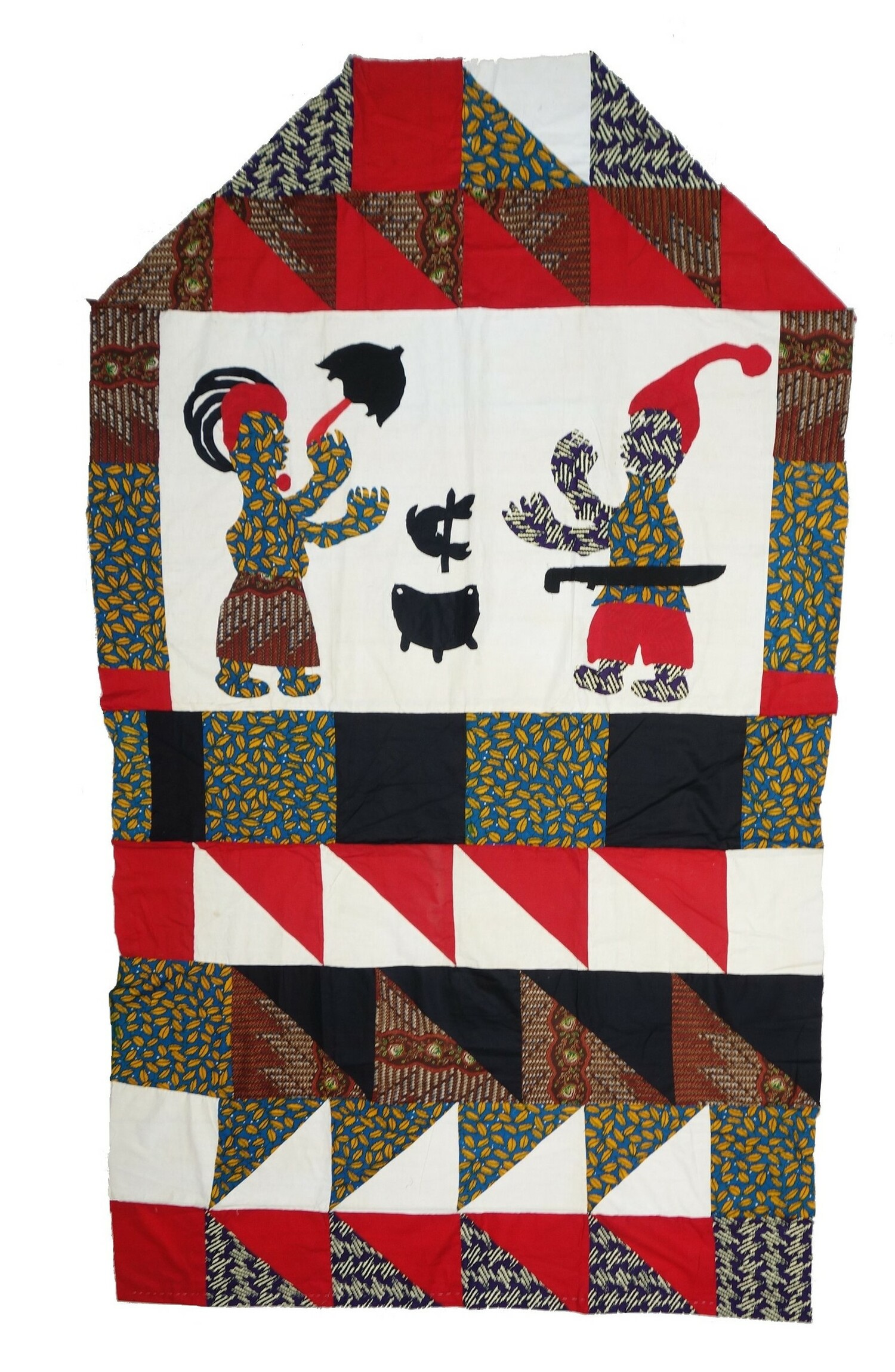 Shrine cloth from southern Nigeria, c. 1978, 278 x 152 cm (TRC 2021.2225).Such shrines are often made up of three sections, a roof, a central band that ‘says’ something about the person commemorated, and a lower section. This type of shrine is normally made from pieces of cloth that are mainly red (blood and life), black (ancestors) and white (death). The shrine sections are often made up of squares and triangles. The more important the person, especially for men such as a chief or member of a secret society, the more elaborate the shrine cloth.
If the deceased is a man, then the central panel also includes items such as beer bottles, swords or hunted animals. If the dead person is a woman, then female items such as their hair style (spikes with knots for a woman, simply spikes for a widow) and an umbrella/parasol will be emphasised.
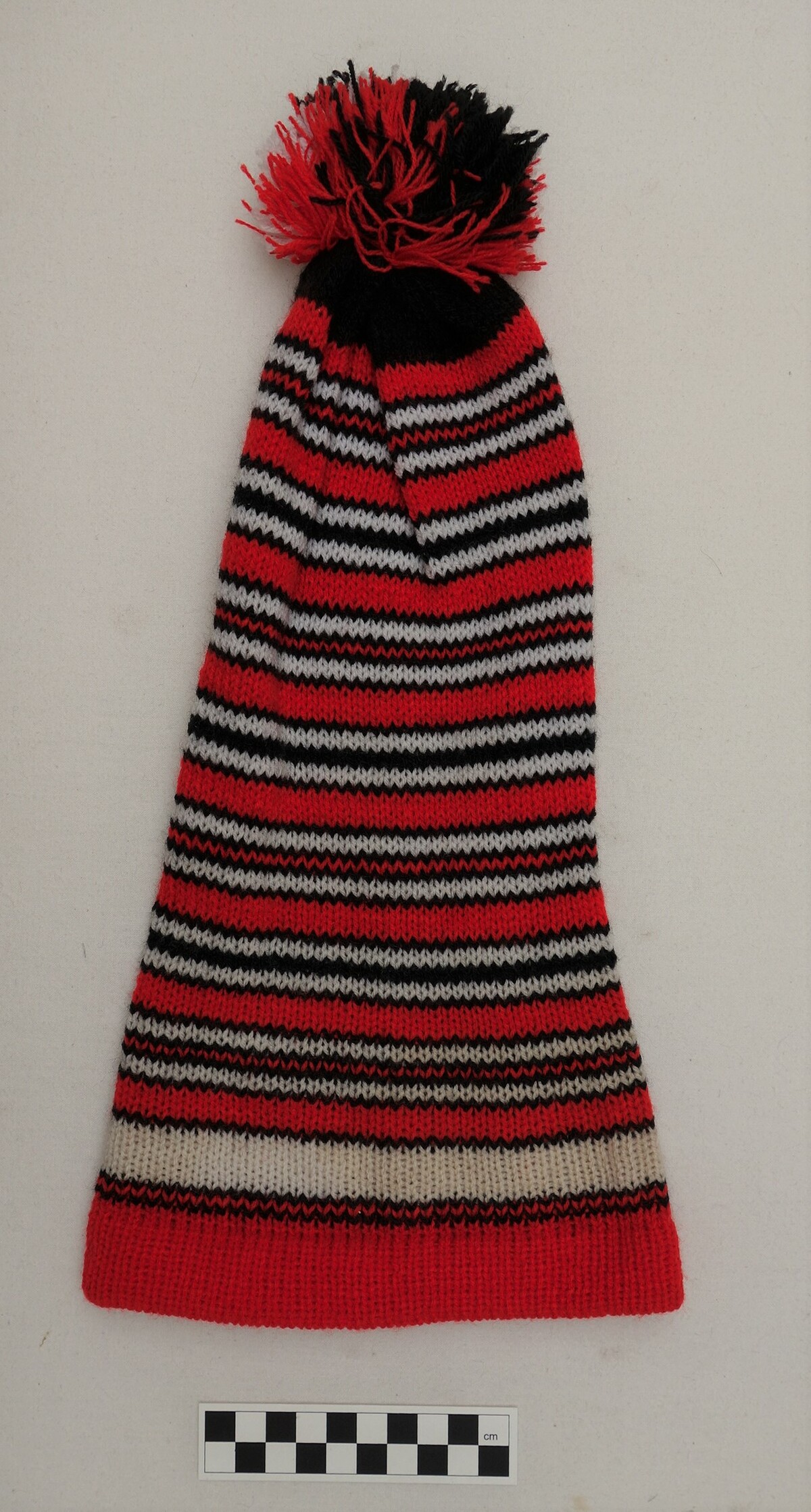 Hand knitted cap from Nigeria, mid-1970s (TRC 2014.0968).In addition, both men and women might wear a characteristic headwear that looks like a skull cap with a thick tassel ending in a pom-pom (see for example a Nigerian, knitted cap with pompom dating from 1976; TRC 2014.0968). Another image often used on shrines is a cooking pot with forms representing the food that would be eaten at the funeral feast.
The example of a funeral shrine given to the TRC is made up various pieces of decorative wax resist cloth that are stitched together using a patchwork technique. There is a central, plain white cloth that has two stylised figures and forms stitched using appliqué techniques. The same type of cloth used for the shrine has been used for the bodies of the two figures, both of whom are wearing red headwear.
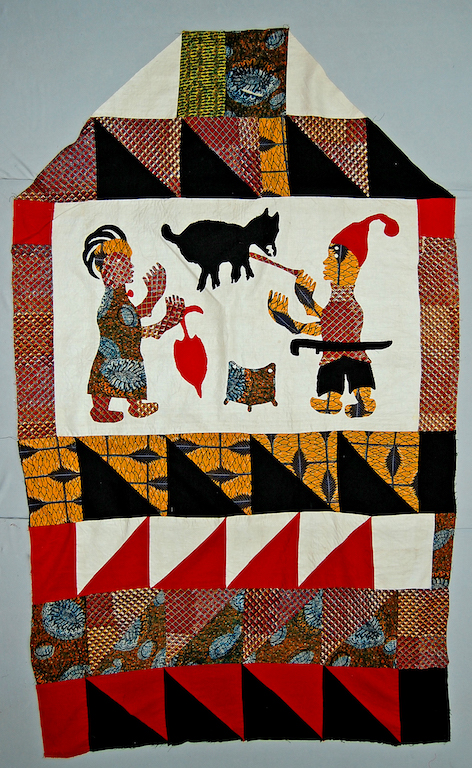 Shrine cloth from southern Nigeria, acquired in 1978. British Museum Af1978,18.49. © The Trustees of the British Museum.The figures actually represent a man with a sword and a woman with an open umbrella. The woman has spiked hair with no knots, so perhaps her recently deceased husband is represented, or she has now died and husband and wife (both deceased) are depicted. In addition there is a cooking pit with what might be two birds or fish on a stick for the community feast.
It is worth noting that in the British Museum, London, there is a very similar cloth that was acquired by the museum, from Keith and Jill Nicklin in 1978. The BM example (Af1978,18.49) also depicts a man and woman, but in this case the man is holding a sword and the woman a closed parasol (described as a bird). It so happens that Julie Kuperus bought the cloth in 1978 when she was travelling together with the same Keith and Jill Nicklin.
Gillian Vogelsang, 22 July 2021