
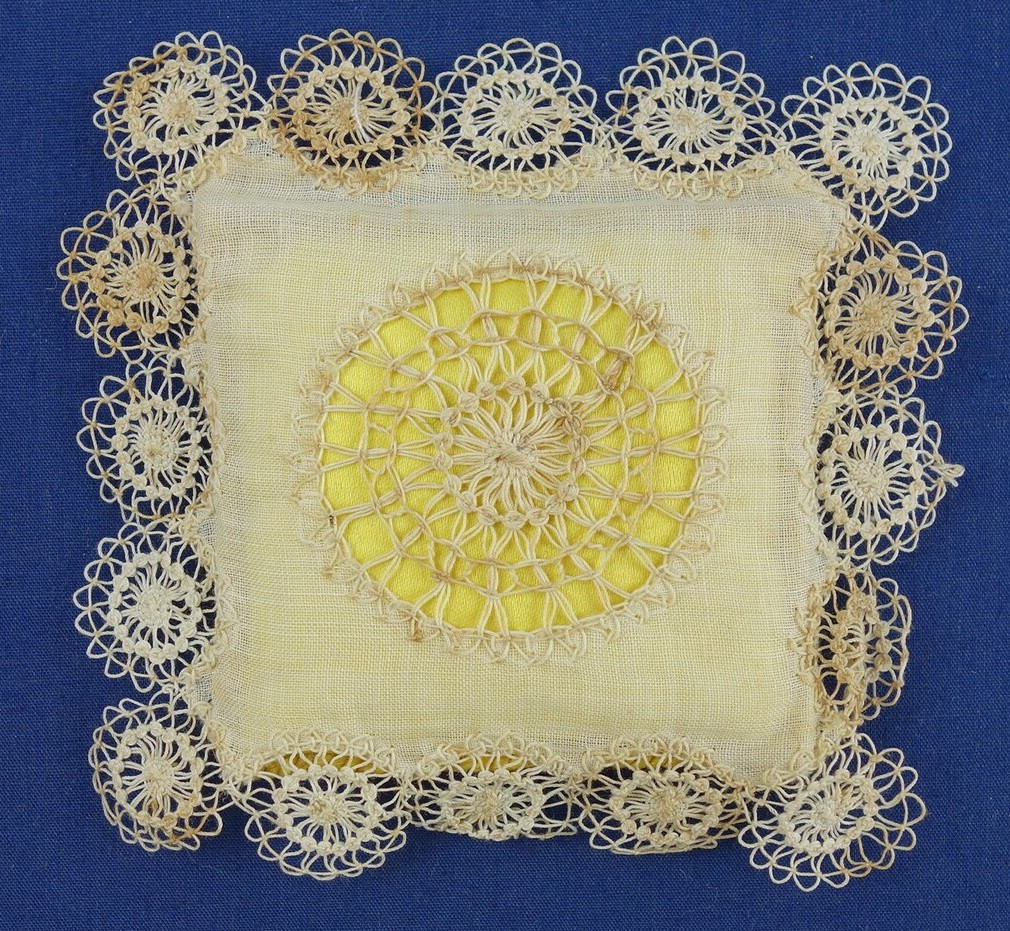
 Early 20th century pin cushion from The Netherlands (TRC 2007.0615).The TRC’s collection of some 31,000 objects includes not just some incredible textiles, but also textile tools. My favourites among the tools include some Japanese sewing needles (polished by hand, to insure they move easily through silk; compare TRC 2013.0432a-f) and a beautiful yellow silk and linen pin cushion (TRC 2007.0615), decorated with Tenerife lace. My pin cushion is in the shape of a more prosaic, and common, red tomato. Attached to it is a small strawberry filled with emery powder.
I like it because my mother had the same sort of pin cushion, as do hundreds of thousands of other sewers. But why a pin cushion in the shape of a tomato? According to the internet, this type of pin cushion originated in the folk belief that a tomato placed on a shelf protected a house from bad luck. If tomatoes were out of season, cloth substitutes were made.
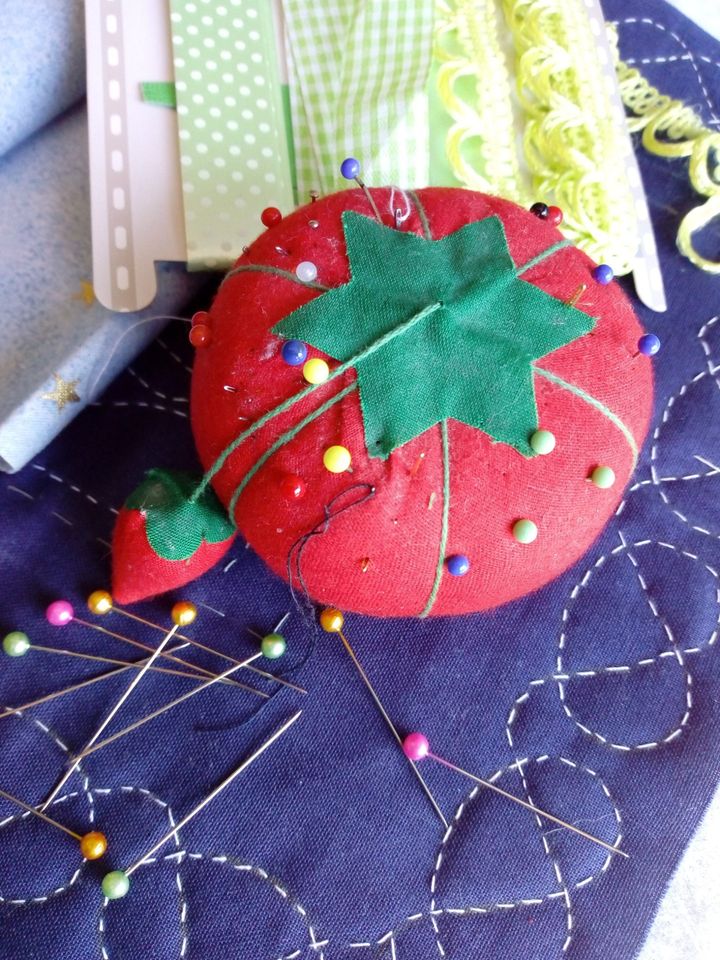 Pin cushion in the shape of a tomato, owned by the author.That explanation immediately struck me as dubious. Tomatoes weren’t introduced into Europe from the Americas until the 16th century, and they were originally viewed with suspicion. Tomatoes do, after all, belong to the nightshade family, which includes several poisonous plants. I know that wealthy Europeans once rented exotic looking pineapples to display on their tables, but tomatoes?
Tomatoes rot quickly, and a rotten tomato would hardly be a status symbol. More research revealed that during the Victorian era velvet pin cushions appeared in the shape of different kinds of fruits and vegetables. According to this explanation tomato pin cushions became popular because they were easy to make and, being red, easy to see when you were searching through your sewing box. This sounds much more plausible to me, but I’m still curious as to why this sort of pin cushion became so popular.
If any readers have ideas I would enjoy hearing them. Until then, I’ll keep researching.
Shelley Anderson, 13 October 2020