
Like many people during the pandemic, I miss travelling. But the on-line conference Textiles On The Move (6-9 October 2020) has satisfied that craving. Researchers, experts and curators from around the world come together to explore the movement of textiles and garments in Asia, and between Asia and the rest of the world.
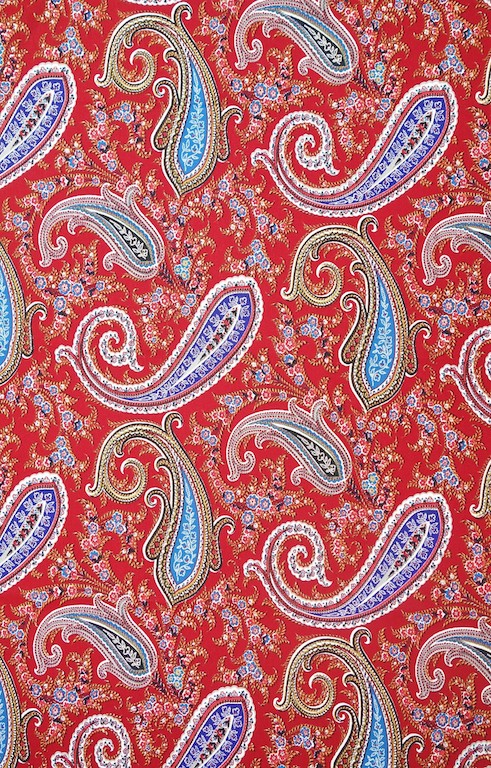 Modern example of Tissu Provencal with the paisley motif, ca. 2020 (TRC 2020.3192).The online programme includes a series of presentations, video documentaries, guided tours, a round table discussion, with participants using chat boxes to ask questions after each session. The documentary on Minangkabau textiles and loom highlighted traditional skills that still have a local market. It was produced by the Tracing Patterns Foundation (Berkeley, Cal.), one of the conference organisers and a TRC partner.
I learned of many new resources, including the Washington, DC-based Cotsen Textile Traces Study Collection, which comprises some 4,000 fragments of textiles from Asia, the Middle East, Africa, Europe and the Americas.
Another resource is the Javanese Batik Collection of King Chulalongkorn of Siam, currently on display at the Queen Sirikit Museum of Textiles (Thailand). This includes over 300 beautifully preserved batiks dating from the 19th to early 20th centuries, with garments worn by royalty and (even rarer) by ordinary people. Many of the pieces were from batik ateliers run by Dutch women, like the mother-daughter team of W.F. van Lawick van Pabst, who created innovative designs mixing traditional Javanese skills with 19th century European motifs. The exhibition will be on display at the World Culture Museum in Sweden in 2021.
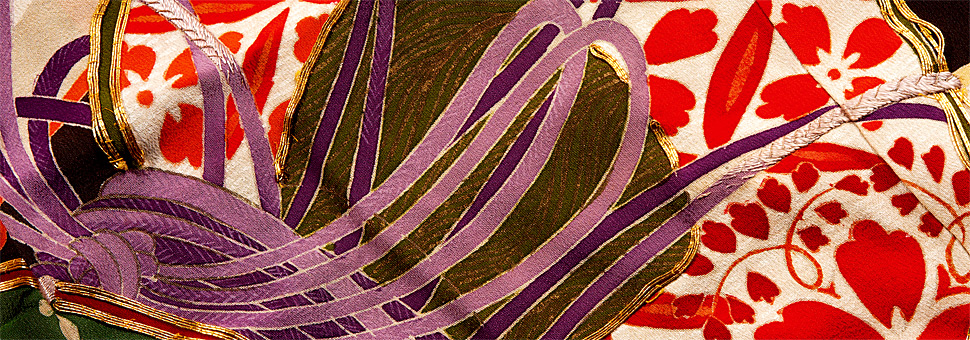
Yet another resource is the five-part video, now on YouTube, of the V&A’s stunning exhibit Kimono: Kyoto to Catwalk.
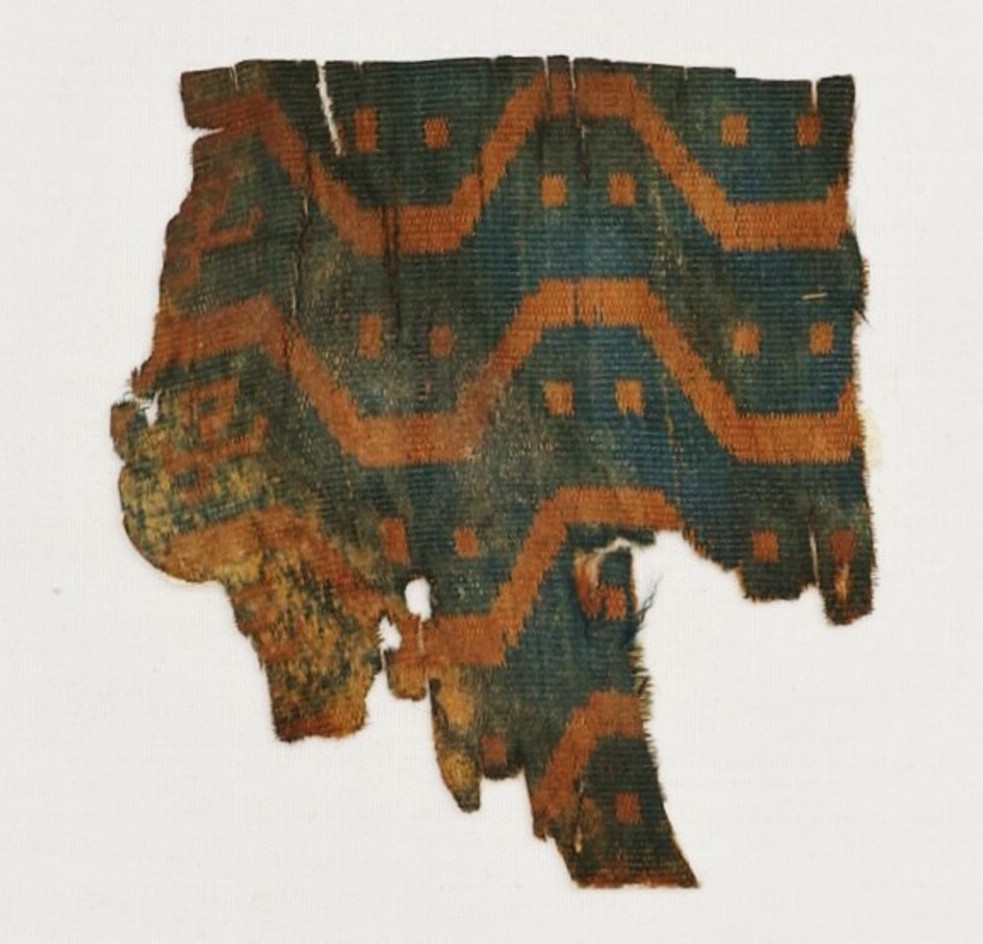 Small fragment of Jin silk from Niya, Xinjiang, western China, ca. 100 AD (TRC 2000.0009).How can a single motif travel and conquer the world? Buteh (the Paisley motif) can do so, as TRC Director Dr. Gillian Vogelsang explained during one presentation. Whether you call it a mango, an almond, a seed from the Tree of Life, this curving shape now appears on everything, from bandanas to underwear, dresses, to sports gloves. It also occurs in the Tissus Provencaux, a textile tradition from southern France based on Indian chintz (the subject of a talk in the same conference on Friday 9 October).
The buteh/paisley is popular in every region except China, perhaps, she speculated, because China already has a similar motif, the yin/yang symbol. The Textile Research Centre in Leiden will hold an exhibition on buteh beginning in February 2021. Special thanks to Erica Riccobon, who has been researching the motif since it first appeared hundreds of years ago, as for instance carved into stone in a mosque in Afghanistan in the 10th century.
Whether you want to know more about ancient Chinese Jin-silks or modern African kangas, then the conference takes you there. Textiles On The Move is being organised by the Tracing Patterns Foundation, the International Institute for Asian Studies and the Textile Research Centre. The sessions are recorded and available mid-October until 15 November at www.iias.asia.
Shelley Anderson, 8 October 2020