
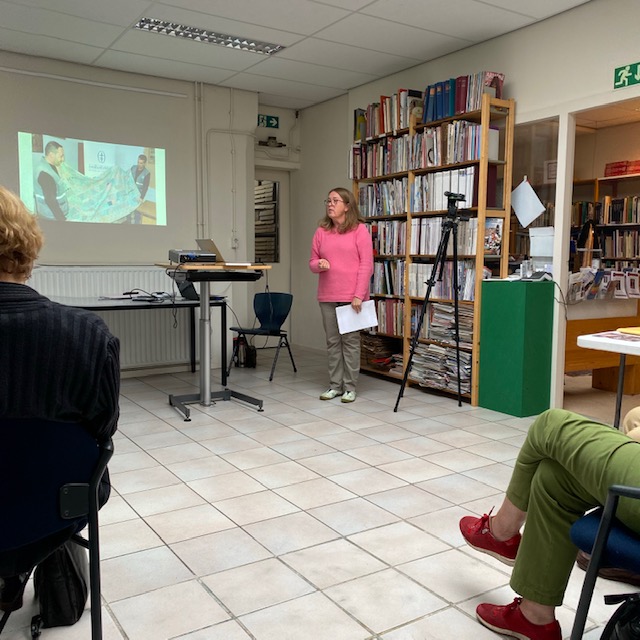
 Maria Friesen talking at the TRC in Leiden about Mennonite comforters, 26th Sept. 2020. Photograph by Lynn Kaplanian-Buller.Last Saturday, 26th September, eight of us gathered at the TRC in Leiden under Gillian Vogelsang’s warm guidance and hospitality, to hear Maria Friesen’s presentation on ‘Passing on the comfort received in the past”. Maria's presentation, which was preceded by a brief introduction to the TRC by Gillian, has been filmed to share among anyone interested, and the film will soon be made available.
Maria Friesen is the coordinator of the European comforter groups that donate their comforters (relief quilts) to the Mennonite Central Committee (MCC). She came from Switzerland to tell us about how the most recent comforter-making project evolved among Mennonite initiators in Switzerland and spread to more groups in Europe.
In order to create a context, she told us about the history of the Mennonite Central Committee, which was founded 100 years ago. During her talk, Maria included many photographs that she had collected for the official celebrations, which unfortunately had to be cancelled because of the corona pandemic.
What’s so special about the 50,000 Mennonite comforters made and sent to people in need every year? It is because many of the quilters, in the past and present, have a refugee background themselves. They received comfort, then passed it on.
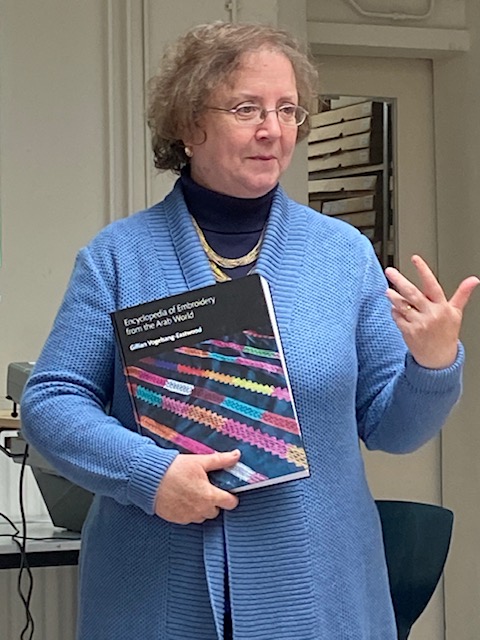 Gillian Vogelsang introducing the TRC at a meeting with Maria Friessen, Saturday 26th September 2020. Photograph by Lynn Kaplanian-Buller.Many Mennonites and other Anabaptists left northern Europe in the 17th century to help drain the marshes around Danzig now in Poland) in return for religious freedom. Later, many of them moved further east and south and formed colonies in southern Russia, nowadays Ukraine, where they developed the land and became prosperous. When North America welcomed settlers in the 19th century and promised religious freedom, many of them migrated from Russia to those prairies. They were followed by others after the Russian revolution at the start of the 20th century, when farms were pillaged by anarchists and confiscated by the State. Many settlers in Russia, who had lived together with their own language and culture for 150 years, had to flee. They were helped by various Mennonite congregational groups in North America, who pooled their logistical resources to form the Mennonite Central Committee.
During World War Two, many of these same people were now settled and doing well in Canada and the US. They started sewing quilts and comforters, canning vegetables, fruit and meat to send to their European cousins at the end of the war. Two earlier TRC blog posts tell about how the quilts now on exhibit at TRC came to Friesland and to southern Germany.
Many years later, since the start of the civil war in Syria, Maria Friesen in Switzerland, together with another friend from the local Mennonite community, decided to start making comforters for Syrian refugees. Within weeks there were not two of them, but several people making comforters on a regular basis.
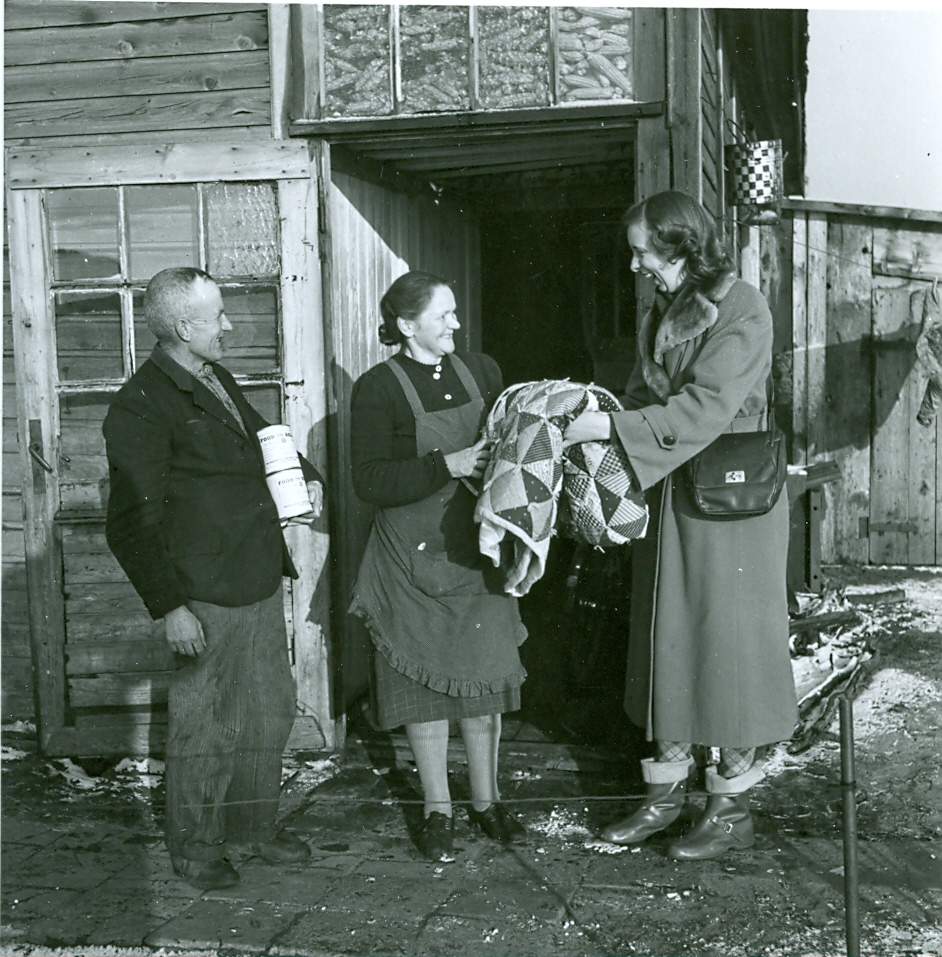 Distributing comforters among those in need in post-war Europe.
Sometimes Syrian refugees in Switzerland join the group, which also gives them the opportunity to practise their new language. Others come for shorter or longer periods for many reasons, yet there is a core group who keep recycling material by producing colourful comforters for people in refugee camps.
Now there are more than thirty such groups in northern Europe. Their production of comforters as well as school and hygiene kits filled a sea container in 2018 and another will be transported soon.
Lynn Kaplanian-Buller, 28 September 2020