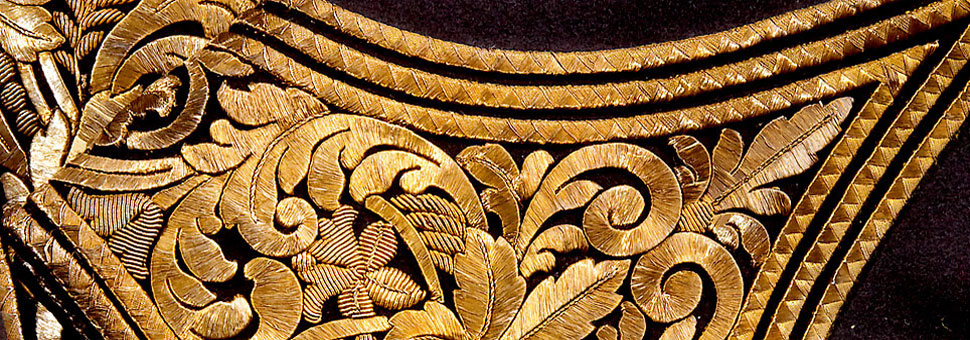
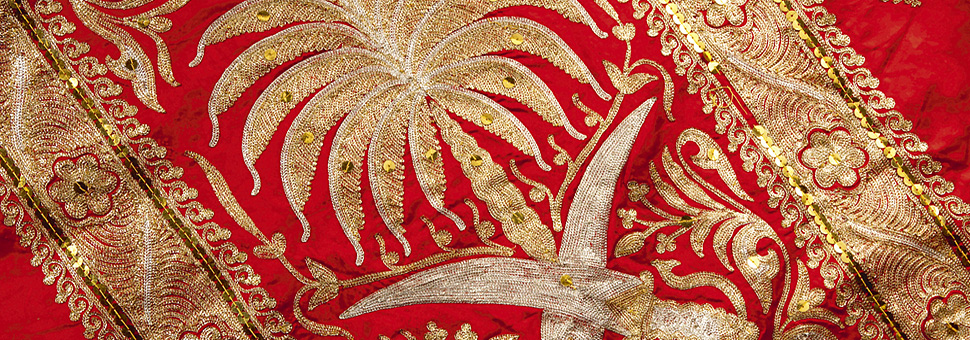
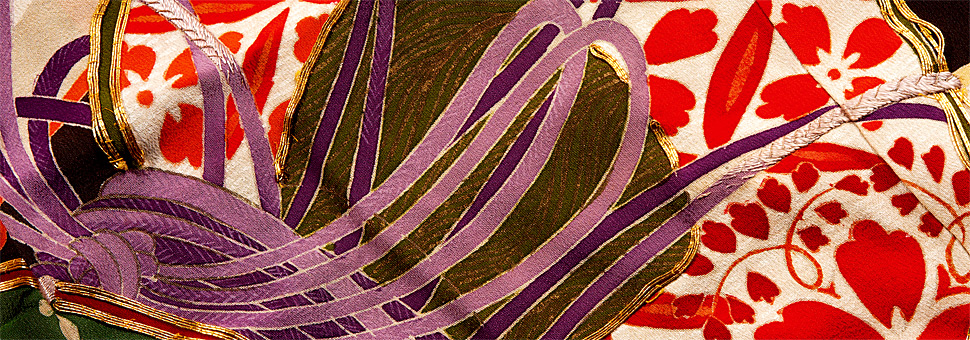

(Gillian Vogelsang, 5 October 2026) A few days ago, Danni Wang, a woman of Chinese origin who lives in The Netherlands, came to the TRC with two of her friends, all of whom were dressed in Hanfu. They looked so different and ‘exotic’. And yes, that was the whole point. Hanfu has become more and more popular over the last twenty or so years with many Chinese, both in China itself and among the diaspora, as well as others who love Chinese history and culture.
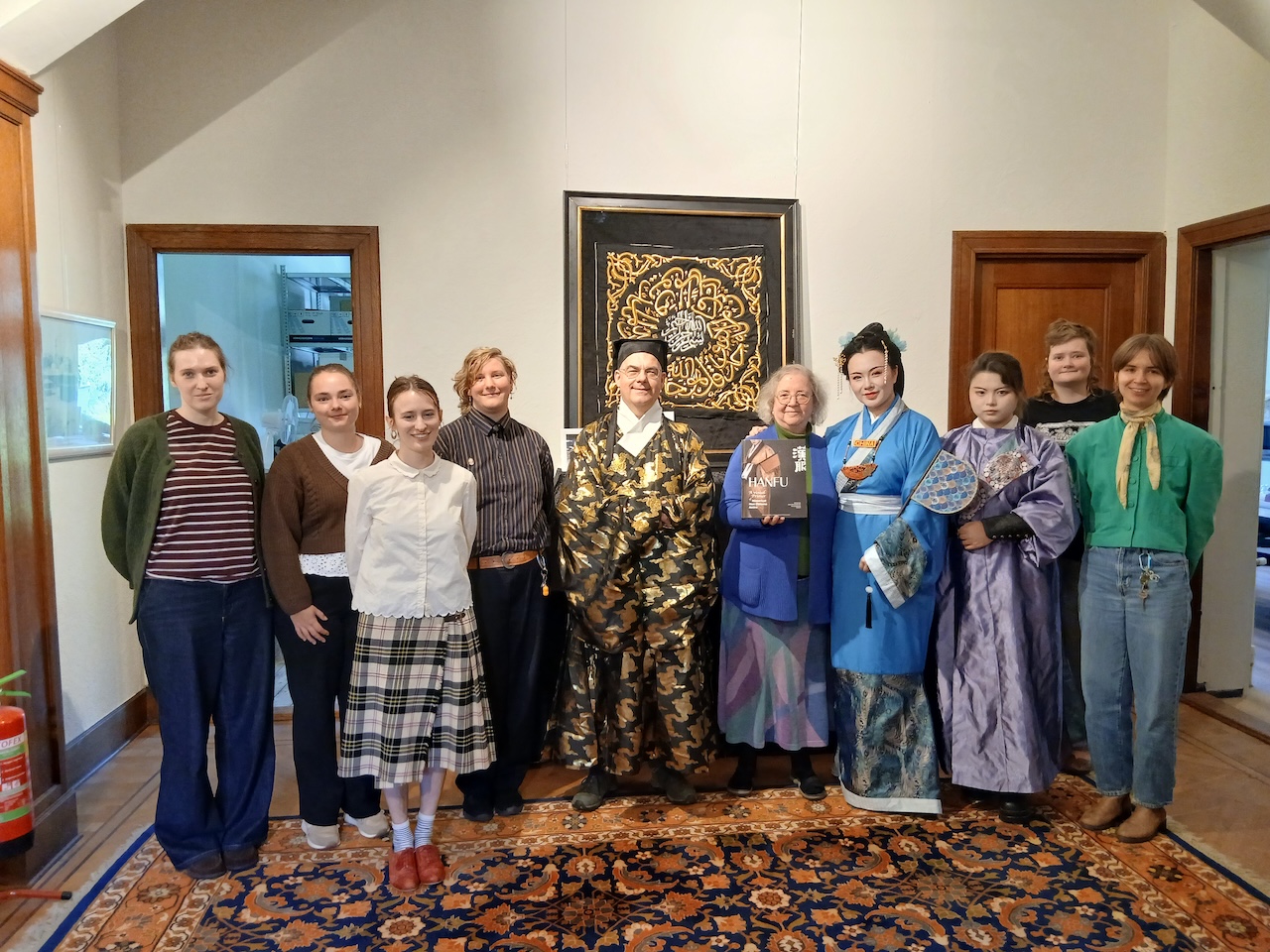 Our guests in Hanfu clothing at the TRC, 5 October 2026.
Hanfu literally means ‘Han clothing’ or Hanzhuang ('Han attire') and refers to the Han Chinese ethnic majority, who were the dominant force in China for over four thousand years until the end of the Ming dynasty (1368-1644) and the establishment of the Manchu dynasty (1644-1912). Hanfu is a modern adaptation (and interpretation) of Han clothing.
 I first encountered Hanfu when I was in China in 2018, attending a conference at the National Silk Museum, Hangzhou, I saw several men and women wearing Hanfu and they looked so much more interesting than some of their companions. It piqued my own curiosity about this clothing development.
Manchu related items such as the qipao (cheongsam) and much later the Communist-era Mao suit (apparently inspired by Japanese school uniforms), not to mention Western-style clothing and fashions, are regarded as the antithesis of modern Hanfu. Hanfu and the wearing of it is about being Han Chinese and for many it means re-discovering their cultural heritage, roots and identity.
Basically Han clothing consisted of a tunic and skirt for a woman, and a long gown for a man, although some garments, especially when horse riding, could be worn by either. But this is a simplification of a complex subject, which is full of nuances! As with so many clothing forms, Han Chinese fashion, materials and designs changed over time. also depending on social position (farmer, merchant, warrior, priest, emperor, etc), economic means, religion, as well as what was locally available and the politics of the period. Consequently, there are different forms of modern Hanfu!.
In March 2024 the TRC presented an exhibition about traditional Chinese dress forms that included Han, Manchu and Mao garments from the TRC Collection. We did not include any Hanfu examples, something we will change in the future as it is part of the development of Han Chinese dress traditions.
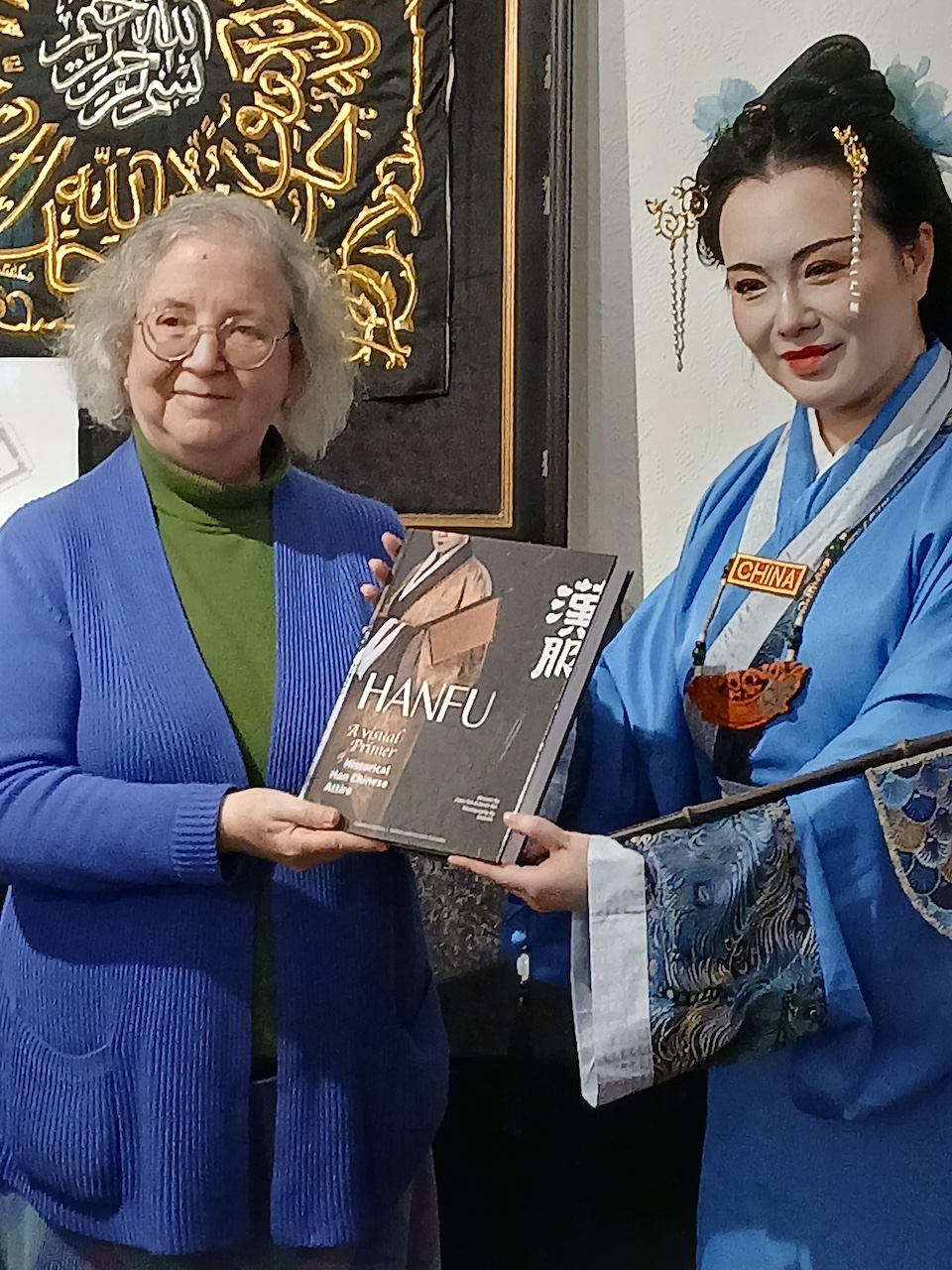 Danni Wang presents a copy of the Hanfu book to Gillian Vogelsang.Hanfu book
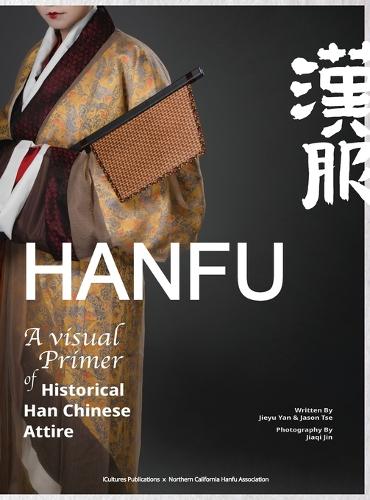
But why had Danni and her companions come to the TRC? She wanted to present a copy of a book called Hanfu – A Visual Primer of Historical Han Chinese Attire, by Jieyu Yan and Jason Tse, (2025, Icultures Publications, ISBN: 9798987135365). It is a lovely, full-colour book with a lot of information about the history of Han Chinese dress forms and codes, patterns, sources of inspiration, etc., and their interpretation to produce many forms of Hanfu. Well worth having in any library with an interest in dress traditions from around the world.
Other possibilities
We also talked about the possibility of having various events based on the concept of Hanfu at the TRC, such as a series of lectures and workshops. My thoughts quickly led to talks about the history of Han Chinese dress forms, the differences between Han Chinese dress and other ethnic groups, how to make and wear Han Chinese clothing, make-up for women, embroidery forms, sewing techniques, etc. Also the relationship between dress and music, and …..
I am sure a lot more ideas will be discussed and put into the TRC Agenda in due course!
See also two relevant websites: