• F3
  • F1
  • F2
  • F4

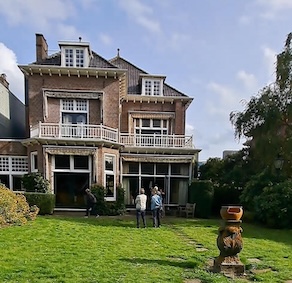
Fig. 1. Boerhaavelaan 6 as seen from the garden. TRC plans to use part of the garden to grow textile-related plants, in cooperation with the Leiden University Botanical Gardens. Photograph Willem Vogelsang, 2025.Fig. 1. Boerhaavelaan 6 as seen from the garden. TRC plans to use part of the garden to grow textile-related plants, in cooperation with the Leiden University Botanical Gardens. Photograph Willem Vogelsang, 2025.In April 2026, the Textile Research Centre (TRC) moved from its former address along the Hogewoerd in the centre of Leiden, into a new 'home'. It is an early-twentieth century urban villa just behind the main Leiden railway station (Fig. 1). The house, at  Boerhaavelaan 6, was occupied by the same family for more than one hundred years.

The last resident, Mrs Hélène Nauta-Barge, lived there for her entire life, almost uninterruptedly, until she died in 2023, aged 99. Since then it has become the property of the Stichting Monumentenbezit, which now rents it out to the TRC upon the recommendation of Leiden City Council,

The house has a fascinating background and reflects the rich, and sometimes turbulent history of Leiden.

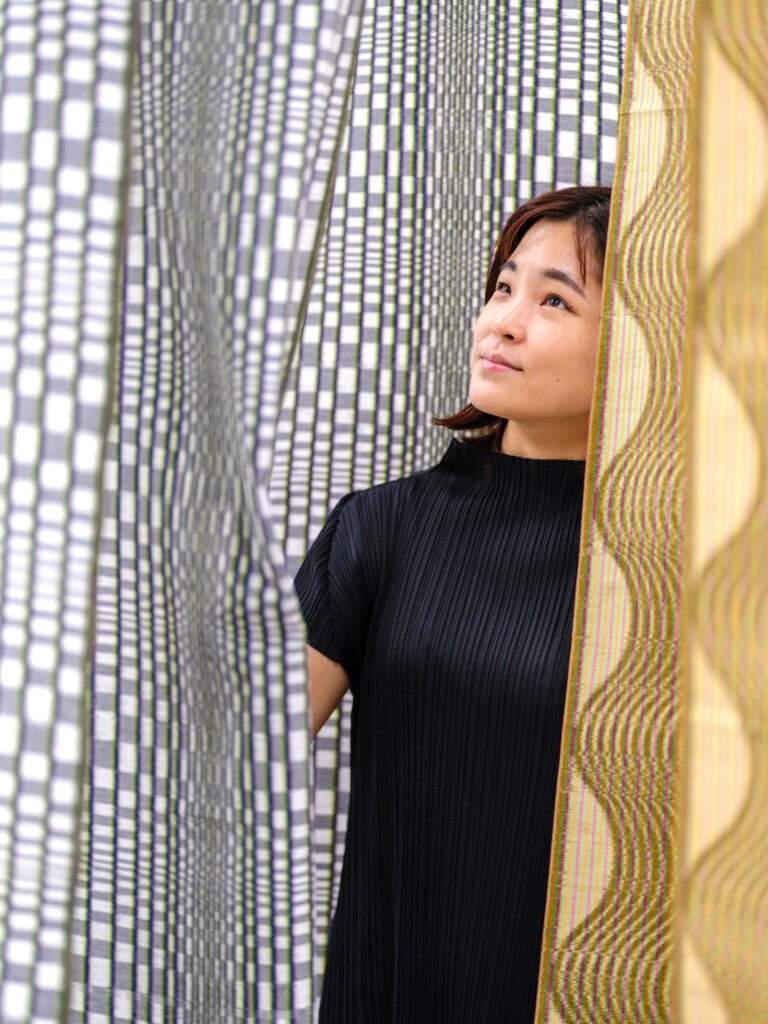
Fig. 1. Kasuri cloth sample (TRC 2017.1478-23). Japan, 20th century.Fig. 1. Kasuri cloth sample (TRC 2017.1478-23). Japan, 20th century.This April, I began my research fellowship at the TRC Leiden as the first junior fellow in the TRC Fellowship Programme, sponsored by the Gieskes-Strijbis Foundation, Amsterdam. My project, Thread, Dye, and Pattern: A Historical Study of Japanese Kasuri Techniques in the TRC Leiden Ikat Cloth Sample Collection (Pepin Collection), focuses on the extraordinary technical and artistic complexity of Japanese kasuri textiles preserved in the TRC collection.

Japanese kasuri — a form of ikat in which yarns are resist-dyed before weaving — is one of those textile traditions that becomes more fascinating the closer one looks. At first glance, the fabrics may appear deceptively simple: indigo blues, geometric forms, softened edges (compare TRC 2017.1478-23; Fig. 1). Yet under magnification, entire worlds of technical decision-making emerge. Tiny variations in binding, dye penetration, thread tension, and weave alignment all contribute to the final pattern.

During these first months, much of my work has focused on developing methods for closely analysing the kasuri samples in the TRC collection. Through this research, I aim to better understand which dyeing and weaving techniques are represented in the samples, how yarn structure and resist methods interact to create patterns, and whether particular textiles can be linked to regional Japanese kasuri traditions such as Kurume kasuri from Fukuoka, Iyo kasuri from Ehime, or Ryukyu kasuri from Okinawa.

Find the books you have long been looking for, and help support the TRC by buying some of them! 

We are going to have our annual book sale on Saturday 13th June, starting from 10.00 until 15.00. Hundreds of second-hand textile, clothing and accessory books will be on sale, at very reduced prices! 

The TRC regularly receives donations of books. We select them en see whether we can use them and whether the titles may already be included in the extensive TRC textile library. If we cannot use the books, we very much want to pass them on to other textiles friends against a low price.

Why don't you pop in and have a look? You may find the book that you have long been looking for. You will also have the chance to see the TRC’s current exhibition about appliqué textiles called khayamiya which come from Egypt, as well as seeing the TRC’s new building and garden, and of course meeting TRC staff and others.

Our address is: Boerhaavelaan 6, 2334 EN Leiden, just behind the Leiden Central Railway Station.

The Spring 2026 issue (No. 227) of the international magazine HALI includes a six-page article, with some splendid photographs, explaining the creation of The Atlas of World Embroidery (Princeton University Press, Febr. 2026). The article and book were written by Gillian Vogelsang-Eastwood, director of the TRC. A Dutch version of the book, Atlas van de Borduurkunst, came out on the same date and was published by WBooks.

The article is published on pp. 228-229, 230-231, and 232-233.

HALI Vol. 227, 2026, pp.  228-229.HALI Vol. 227, 2026, pp. 228-229.

The Textile Research Centre, Leiden.The Textile Research Centre, Leiden.From early 2026, the Textile Research Centre, Leiden, the Netherlands, is offering a total of seven junior and four senior fellowships for up to six months each. The first junior fellow has started her work in Leiden in April.

The fellowships are being sponsored by the Gieskes-Strijbis Foundation, Amsterdam. Fellows are invited to carry out research based on the TRC’s extensive textiles and dress collection of some 53,000 objects (click here for the catalogue). The junior fellows are supervised and assisted by TRC staff; senior fellows carry out independent research.

We are now opening the second round of the fellowships that covers:

  • Two junior positions
  • One senior position

These will be starting in October 2026 (with a degree of flexibility), for a duration of up to 6 months. Applications for these positions should be submitted by email to the TRC by 20 June 2026 (This email address is being protected from spambots. You need JavaScript enabled to view it.)  with the reference: ‘Fellowship programme Junior/ Senior' (depending on the position applied for).

The move to Boerhaavelaan 6 is nearly finished, just a few more weeks and all the rebuilding, painting, furnishing, packing and putting away of boxes will be over! A great relief to all.

I would just like to extend a big ‘Thank You’ to everyone who has made a donation to the TRC moving fund. It made such a difference to have your support, best wishes and interest in what we are doing and plan to do. Please feel free to come and see what you have helped to create - the new and improved TRC is an elegant, early 20th century town villa!

Inevitably, we continue looking for help with different projects, and any further financial assistance will be greatly appreciated.

The TRC will open again to the public on Monday 11th May, but in the meantime, workshops, study days and lectures are already being presented. And I can assure you, there is lots more to come!.

Gillian Vogelsang-Eastwood, Director TRC, 4 April 2026.

Yesterday, Friday 20th March, the rental contract for Boerhaavelaan 6 was signed between the owners, the Stichting Monumentenbezit, and the TRC! This may be one small step for mankind, but it is one large step for TRC’s plans for becoming the international hub for textile and dress studies and for making Leiden into the ‘City of Textile Knowledge’ a reality! 

Photograph, from left to right: Mark van den Bos, Director Monumentenbezit, Dr. Gillian Vogelsang-Eastwood, Director TRC and Prof. Bas ter Haar Romeny, Chair of the TRC Board.Photograph, from left to right: Mark van den Bos, Director Monumentenbezit, Dr. Gillian Vogelsang-Eastwood, Director TRC and Prof. Bas ter Haar Romeny, Chair of the TRC Board.

An extensive programme of research, events, and textile outreach is being organised for this year and indeed for the years to come. And the signing of the contract is a very significant moment for us all.

The new premises of the TRC, from the back garden.The new premises of the TRC, from the back garden.Robert Spiegelman is an American friend of the TRC who has been visiting Leiden and the TRC for some years, and has been supporting our work in many ways.  Here is his personal appeal:

I am a huge, and hugely unlikely supporter of the TRC.

Let me explain. I am an American who loves Leiden and spends more than a tenth of my time there every year. A few years back, my curiosity was peaked. I had read about the TRC and while cycling by I met Gillian. It was truly inspirational. She gave me a tour, told me about their work, explained the plan/intention to go from an “academic volunteer run knowledge center” in a nondescript street front location to become everything it could be, a fully professionally run organization and an internationally recognized expert and leader. The dedicated group has done an amazing job.

I was impressed and immediately began making contributions to keep the lights on.

Why do I say “unlikely?” While I love Leiden, it is not my home. I have no interest in fashion and while I suppose textiles and textile history are important, neither was an interest of mine. What impressed me was the importance of the work that was being done, the idea that textiles, fashion, and the textile trade could be used to trace changes in civilization worldwide for several centuries. The parallels are fascinating.

Search in the TRC website

Contact

Boerhaavelaan 6
2334 EN Leiden.
Tel. +31 (0)6 28830428  
office@trcleiden.org 

The TRC is open every day from 10.00 to 15.00

facebook 2015 logo detail 

instagram vernieuwt uiterlijk en logo


Bank account number

NL39 INGB 0002 9823 59, in the name of the Stichting Textile Research Centre.

Donations

The TRC is dependent on project support and individual donations. All of our work is being carried out by volunteers. To support the TRC activities, we therefore welcome your financial assistance: donations can be transferred to bank account number (IBAN) NL39 INGB 000 298 2359, in the name of the Stichting Textile Research Centre. BIC code is: INGBNL2A.

 You can also, very simply, if you have an iDEAL app, use the iDEAL button and fill in the amount of support you want to donate: 


Since the TRC is officially recognised as a non-profit making cultural institution (ANBI), donations are tax deductible for 125% for individuals, and 150% for commercial companies. For more information, click here