
At the beginning of August 2009, the TRC was given a Pashtun woman’s outfit from Afghanistan by Mr. and Mrs. Zuidersma, Oldenzaal. The outfit consists of a pair of baggy under trousers (shalwar), a dress (kamiz), and a long headcovering (chador). The dress and headcovering are made from a Chinese brocade (synthetic), with a small floral motif. The cloth is predominantly green, a colour that is very popular with the Pashtun people. The trousers are of a matching green material.
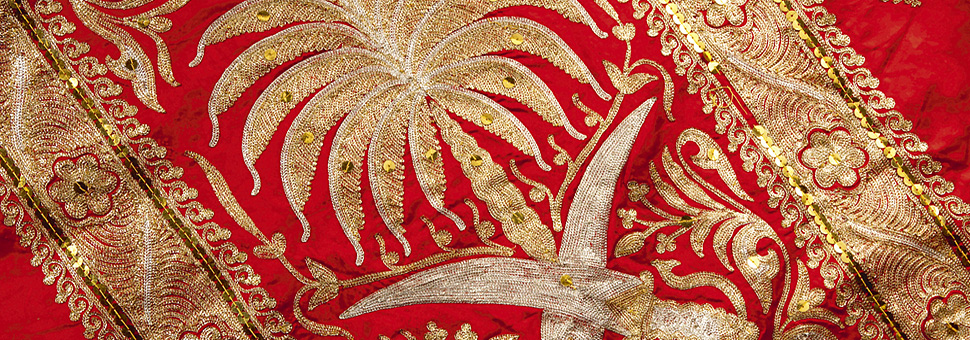
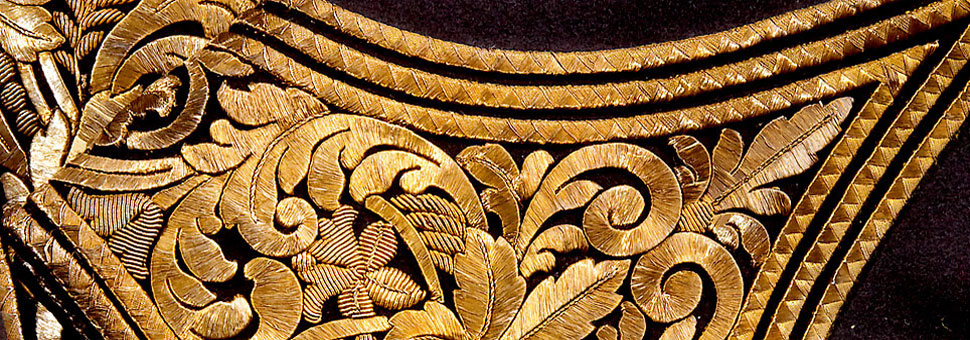
The dress is heavily embroidered around the neck opening, sleeves, and lower hem line, in silver metal thread embroidery. This type of decoration is often associated with Kabul, the capital of Afghanistan. In addition, there are panels of beadwork at the sleeve heads, and at the waist. The dress is further decorated with two, long strips of beading that end in mirrors. These are hung from the shoulders and hang down the front of the dress to just above waist height. The use of beading in this manner is very popular among Pashtun women.
The style of dress, colour and decoration all indicate that it is an expensive outfit that would have been worn at a wedding or similar festival. Bridal dresses are often decorated in the same manner, but are predominantly in red. So this dress may be for a bride who specifically wanted to wear green (a colour directly associated with Islam) or it was worn by an important guest at the festival, such as a relative from the bride’s immediately family (sister, sister-in-law, etc).
Khilat
The outfit was given to Mr. Zuidersma, who worked in Afghanistan in 2007-2008 as part of the rebuilding programme of the country. It was presented by one of the local police chiefs. A few months later, the same police chief gave another outfit, but not as beautifully worked, to a (female) Dutch diplomat, which is also now in the TRC collection.
The tradition of giving textiles and clothing, khilat, in order to honour a guest is a long standing tradition in Central and Southwest Asia. It is usually given by someone in authority to a guest or someone of lower rank. Normally a man is given man’s clothing, a woman, woman’s clothing. By accepting or putting on the garments, a bond is established between the giver and receiver with traditional and implied rights and responsibilities. In these cases, however, the police chief was trying to please the receivers by presenting them with something beautiful and typically Afghan. Something that would remind them of the police chief when they returned to their own country.
The concept of khilat was used in June 2009 by the Dutch military in Uruzgan (South Afghanistan) when they presented some local dignitaries with lengths of cloth for making into clothing. In this case, cloth suitable for male garments was given to male elders, so establishing a direct, and hopefully positive, link between the givers and the receivers.
The display is available for loan and includes the outfit, two photographs and a short text describing the history and role of this style of clothing.