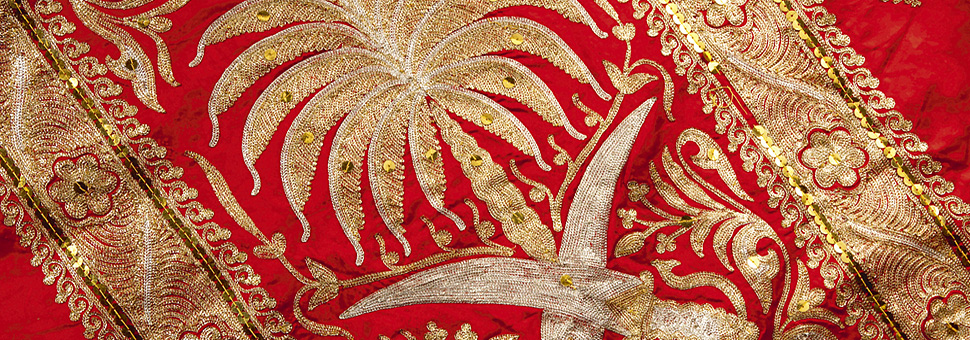
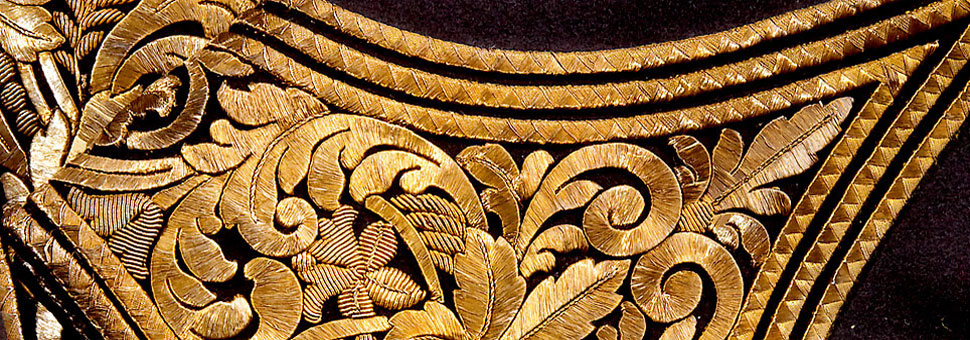
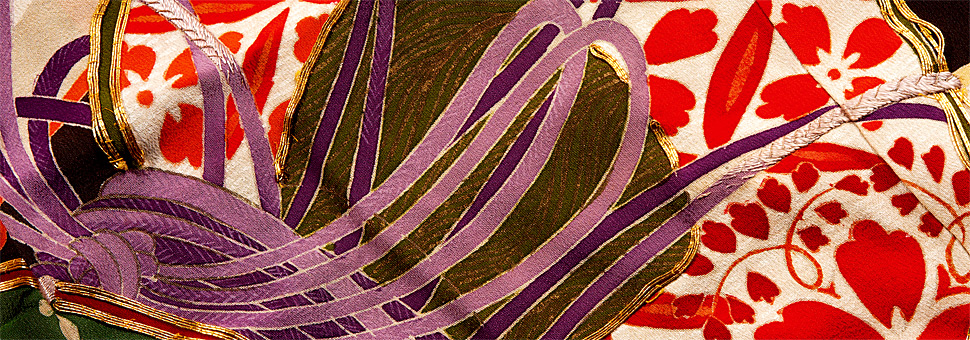
The TRC in Leiden has just finished a 1-day study day on the theme of ‘What is embroidery’ (29 July 2020) and a 5-day intensive textile course (17-21 August), which also included a session about the basic nature of embroidery. What is actually required to make a piece of embroidery? What tools are needed? Which stitches are used? When is this form of decoration actually carried out? And what is it used for, and how?
The general consensus was that (technically) embroidery is worked on a finished piece of material (whether it is woven, non-woven, leather, etc), using some form of yarn, with one or more stitches, worked with a needle, a hook or a similar tool.
 Embroidered part of a woman's headdress from late 20th century Yemen (TRC 2015.0610).
But there are always exceptions!
In particular, we had a discussion about a type of woman’s headdress from the Al-Mahwit Governorate in the mountains to the west of Sana’a in Yemen. The TRC Leiden has four examples of this form (TRC 2015.0608, 2015.0609, 2015.0610, 2015.0611). They are all made up of numerous black cords that are fastened together by using lines of chain stitch in yellow and red. In addition, these lines of chain stitch are worked into interconnecting geometric shapes. The headdresses are worn with their main decorative band over the head, while the plain cords are hanging down the wearer's back.
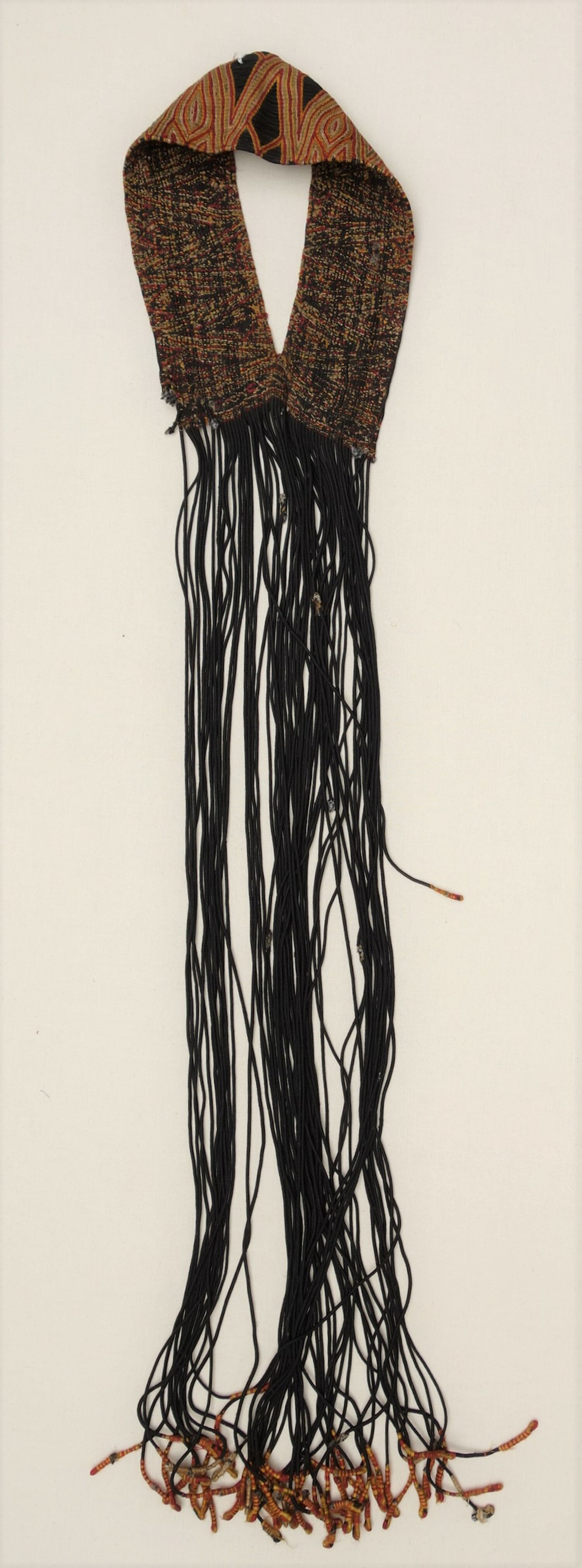 Embroidered (?) woman's headdress from late 20th century Yemen (TRC 2015.0610).It would appear this type of headdress was made by stretching the cords between two fixed posts and then working them with the chain stitch. But we are not exactly sure how, nor do we know if the embroiderers used a needle or a hook to make the stitches. Is this type of headdress still being made or, because of the horrendous civil war in the country, has this intriguing technique been lost?
As noted, a feature of the bands is that there is no ground material. The combination of stitches and cords creates the ground. So is it a form of decorative, non-woven cloth? Such a group of materials are usually classed as being interlaced (such as bobbin lace), looping (such as knitting or crochet), or knotted (such as macrame). It would appear that the headbands belong to the looping group.
So is it an example of a decorative, looping form of non-woven ground that uses a well-known embroidery technique (chain stitch), or is it a piece of embroidery without a ground? And actually, does it really matter?
It is not an earth shattering detail, but since at the TRC we are building up a reference collection with standard definitions and key words, it is good to realise what is ‘normal’ embroidery and what is an exception.
Some years ago the then Yemen ambassador to The Netherlands asked if the TRC Leiden could become a cultural ark for Yemeni textiles and dress because of the dramatic situation in his country. We hope to do so. Over the next few months we are continuing to make sure that all of our Yemeni collection is being made accessible online with details and photographs, as well as to highlight, in different ways, different examples of Yemeni textiles and garments from our collection.
In addition, as part of our policy to focus on this historic and varied culture, Yemeni embroidered garments will feature prominently in a study day on the theme of embroidery from the Arabian Peninsula, scheduled for the 23rd October 2020.
Gillian Vogelsang, 25th August 2020