• F3
  • F1
  • F2
  • F4

The World Atlas of Tattoo, by Anna Felicity Friedman (2015).The World Atlas of Tattoo, by Anna Felicity Friedman (2015).The TRC Library has become an important, international resource for anyone involved in textiles and dress studies, as well as anyone ‘simply’ looking for inspiration. There are over 5500 titles in the library which range from how-to books to academic publications looking at very specific subjects. The books in the library range in date from the mid-17th century to the present day.

The following group of books are a selection of the publications recently added to the library, and reflect the range of publications that are being produced about textiles and dress, which is such an essential aspect of cultural history and indeed the history of human beings in general.

The recommended books are in a variety of languages, including Basque, Dutch, English, Spanish and Turkish and reflect the multi-lingual nature of the TRC Library.

We would like to thank various publishers, museums and authors for sending copies of books to the TRC Library. It is appreciated.

The following books are being reviewed (see below):
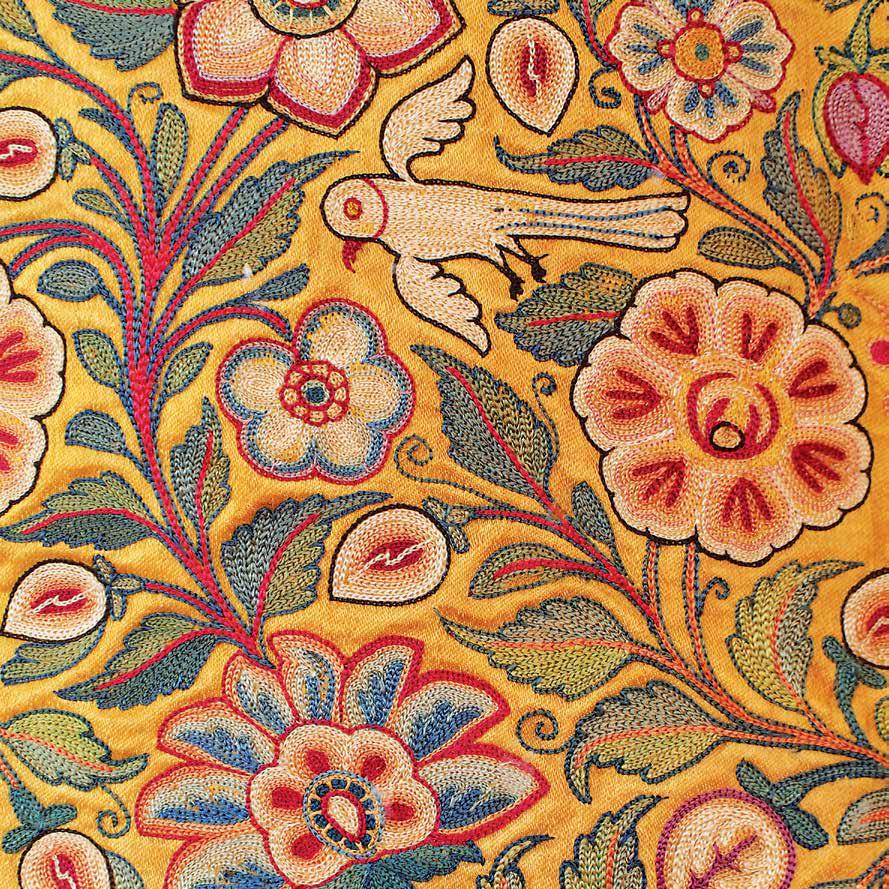
KÜHNEL, Tanja (2016). Stickereien/Needlework, Saltzburg, Verlag Anton Pustet, ISBN: 978-3-7925-0828-9. Black/white and colour illustrations, 299 pp., glossary, bibliography. Price: c. €35.

This is the third volume presenting different aspects of the Aichhorn Collection in Austria. The collection was made by Ferdinand Aichhorn and reflects his driving interest in Asian textiles, which apparently started following a visit to Jakarta (Indonesia) in 1977. Aichhorn is the owner of the Textil Kunst Galerie in Saltzburg, Austria.

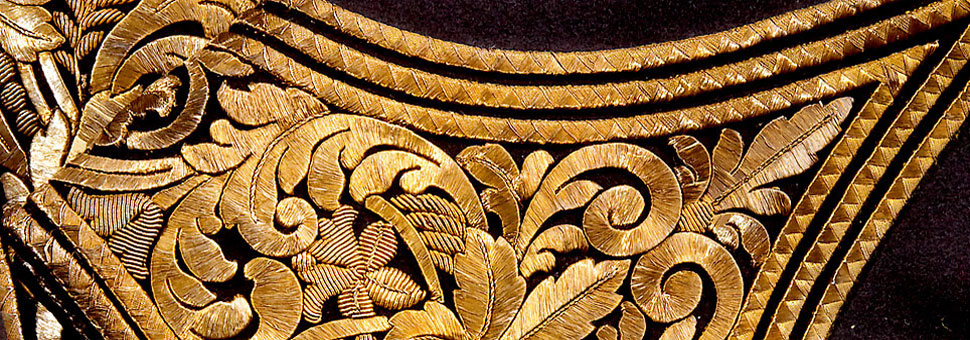
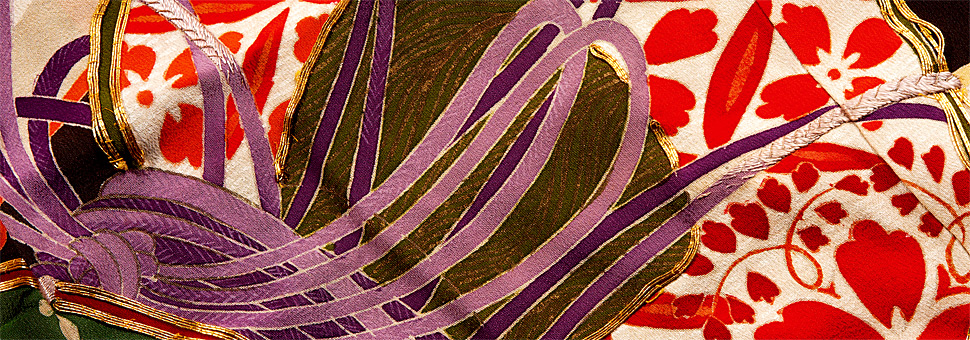
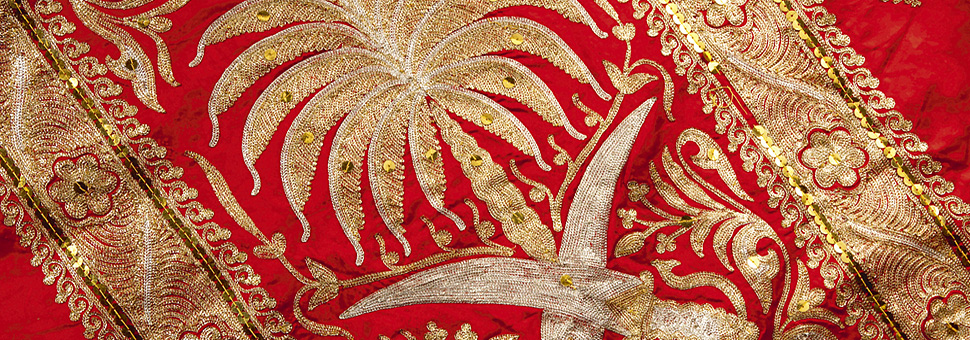
Example of a textile illustrated in 'Stickereien'.Example of a textile illustrated in 'Stickereien'.The first Aichhorn Textile volume looked at ikat, while the second dealt with resist dyed textiles. This volume looks at embroidered and appliqué, as well as felt rugs and woven, Kashmir shawls. The latter two groups are presumably there because there were not enough items for a separate volume. It includes a wide range of colour photographs of complete and detail illustrations, as well as extended captions (rather than introductory chapters).

The embroideries come mainly from Asia, including Bangladesh, India and Pakistan, Uzbekistan, the Golden Triangle (Laos, northern Thailand, southwest China), China and Mongolia, while the appliqués come from India, Panama, Indonesia and Northern Thailand.

Recommendation: The book is copiously illustrated, and there are many details about designs and symbolism, but it is noticeable how little information there is about technique (except, perhaps about cross stitch, see page 144), and it is clear that this is an inspiration book rather than a how-to book. A few more details about materials and stitches, however, would have been useful.

Gillian Vogelsang-Eastwood, 1 January 2023

Example of Basque embroideryExample of Basque embroideryMIANGOLARRA, Mariasun de and Eva M. ELORZA (2017). Gurutze-Puntuko Brodatuak San Temo Museoaren Bilduman/Bordados de Punto De Cruz en la Colección del Museo San Telmo, Donostia-San Sebastian, Gipuzkoa: San Telmo Museum, ISBN: 978-84-617-7586-6, Folder, 208 pp., colour illustrations, 68 embroidery charts, text in Basque and Spanish, plus at the end of the book there is a translation of the introduction in English and French.

The San Telmo Museum, Donostia-San Sebastian, Gipuzkoa (Spain), is home to an extensive collection of embroidery from the Basque region of northern Spain. These embroideries were used for a range of household and personal uses, including items associated with a woman’s trousseau such as sheets, curtains, pillowcases and bedspreads, as well as items of clothing such as aprons and petticoats. In addition, embroidered shrouds were also a feature of Basque life. Many of these relevant items were acquired by the museum between 1916-1926.

The main feature of the book is the inclusion of 68 charts of Basque embroidery with repeating geometric patterns, that range from simple, narrow bands, to complex patterns that take time to understand. They are worked on an even weave linen ground using counted thread techniques. They are carried out in cross stitch and double running stitch (Holbein stitch). The authors recommend using DMC Mouline cotton yarn for working the various patterns.

All the examples illustrated are worked in blue linen thread that was originally hand spun and locally dyed.

Recommendation: If you are interested in Basque culture and/or this form of embroidery, then this book is must for your library! I am looking forward to working some of the patterns and understanding in greater detail how they were and are worked.

Gillian Vogelsang-Eastwood, 1 January 2023

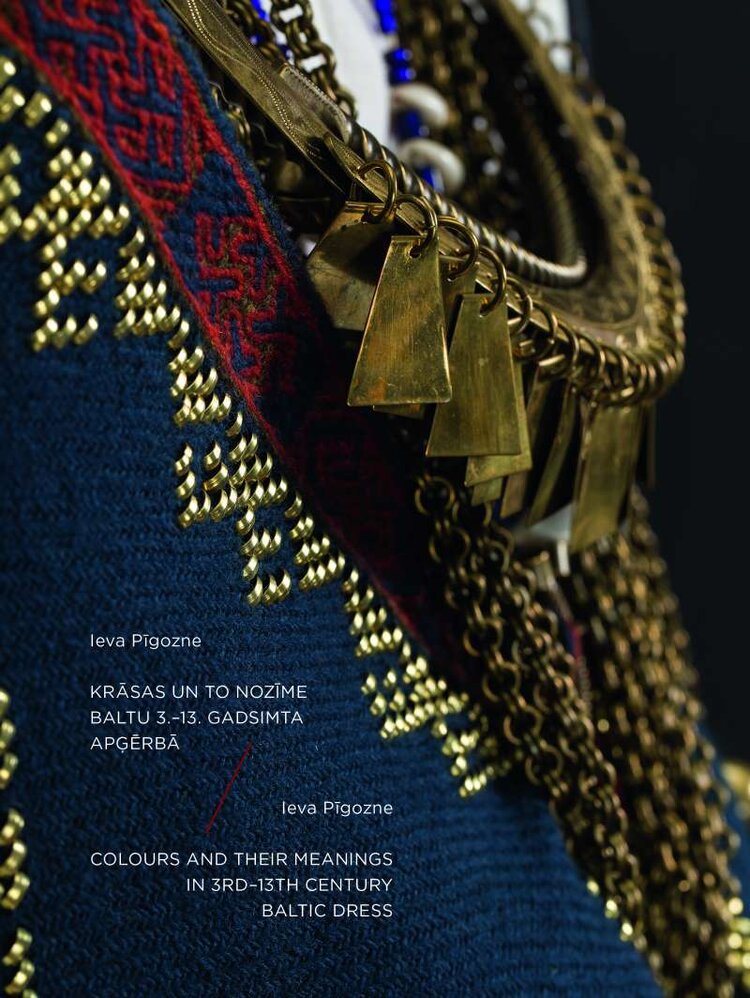
PIGOZNE, Ieva (2020). Colours and Their Meanings in 3rd-13th Century Baltic Dress, Riga: Latvijas Nacionalais kulturas centrs. ISBN 9934528401, 2020, hardback, 294 pp., colour photographs, lists of archaeological Latvian textiles, bibliography. Price: €18.
This study is a peer-reviewed doctoral thesis, in both Latvian and English, which examines 3rd to 13th century Baltic tribal textile remains. The study attempts three things: to identify the fragments of original colours; how the colours were made; and the meaning the colours were given.

The study’s methodology is interesting. Spectroscopic analysis was used, but also a thorough analysis of traditional folklore and folk songs that mention specific colours.

Prof. Pigozne concludes that dark blue and brown were the main colours for garments, with red and yellow used for ornamentation.

There are several full colour photographs of the archaeological textile fragments (many preserved because of the bronze rings used to ornament garments), and photographs of modern reconstructions of the garments. The book includes a complete list of textile fragments from the period, with information where they were found, about the material and the original colours.

Recommendation: The language is very accessible and the study will interest other colour researchers, re-enactors and dyers.

Shelley Anderson, 1 January 2023

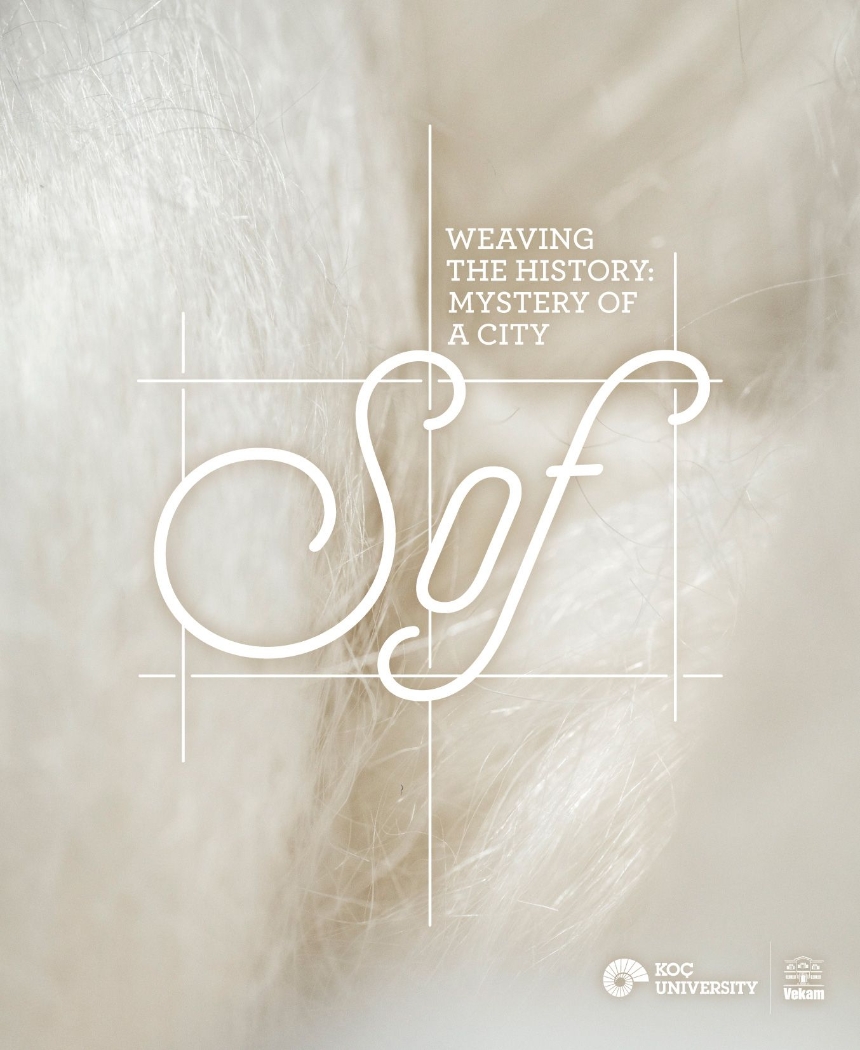
YENISEHIRLIOGLU, Filiz and Gözde ÇERÇIOGLU (2018). Sof: Weaving the History of a City, Ankara: Koç University. ISBN 978-6059388139. Softback, pp. 317, fully illustrated with black/white and colour images, bibliography. Price: €19.80.


This book is a catalogue for an exhibition with the same name that took place in the Koç Museum, Ankara in 2018, but it is more than capable of being a ‘stand alone’ volume. The book is filled with very interesting information about sof, a type of Turkish cloth made from angora goat hair that is more commonly known as mohair.

As indicated in this volume, Angora goats, also known as Ankara goats, have been used for hundreds of years for the production of high quality cloth.

The book covers a wide range of subjects that trace the production of mohair cloth from animals and fibre to end products, including spinning, dyeing and weaving, as well as the use of this type of fibre and cloth for local and export (especially to Europe including the Netherlands). There is even a chapter on the representation of the Angora goat in paintings, stamps and banknotes in order to emphasise just how important this animal has become over time.

Recommendation: A really interesting book with a wide range of information that is both intriguing and stimulating to find out more about this form of cloth that was so important from the late medieval period onwards, both in the Ottoman Empire and surrounding countries.

Gillian Vogelsang-Eastwood, 1 January 2023

Zoek in TRC website

Contact

Boerhaavelaan 6
2334 EN Leiden.
Tel. +31 (0)6 28830428  
office@trcleiden.org

facebook 2015 logo detail


instagram vernieuwt uiterlijk en logo


Bankrekening

NL39 INGB 0002 9823 59, t.a.v. Stichting Textile Research Centre.

Openingstijden

Het TRC is gesloten tot maandag 4 mei vanwege de verhuizing naar de Boerhaavelaan. We blijven bereikbaar via email (office@trcleiden.org) of telefoon: 06-28830428.

Financiële giften

Het TRC is afhankelijk van project-financiering en privé-donaties. Al ons werk wordt verricht door vrijwilligers. Ter ondersteuning van de vele activiteiten van het TRC vragen wij U daarom om financiële steun:

Giften kunt U overmaken op bankrekeningnummer (IBAN) NL39 INGB 000 298 2359, t.n.v. Stichting Textile Research Centre. BIC code is: INGBNL2A

U kunt ook, heel simpel, indien u een iDEAL app heeft, de iDEAL-knop hieronder gebruiken en door een bepaald bedrag in te vullen: 


Omdat het TRC officieel is erkend als een Algemeen Nut Beogende Instelling (ANBI), en daarbij ook nog als een Culturele Instelling, zijn particuliere giften voor 125% aftrekbaar van de belasting, en voor bedrijven zelfs voor 150%. Voor meer informatie, klik hier