• F4
  • F3
  • F2
  • F1

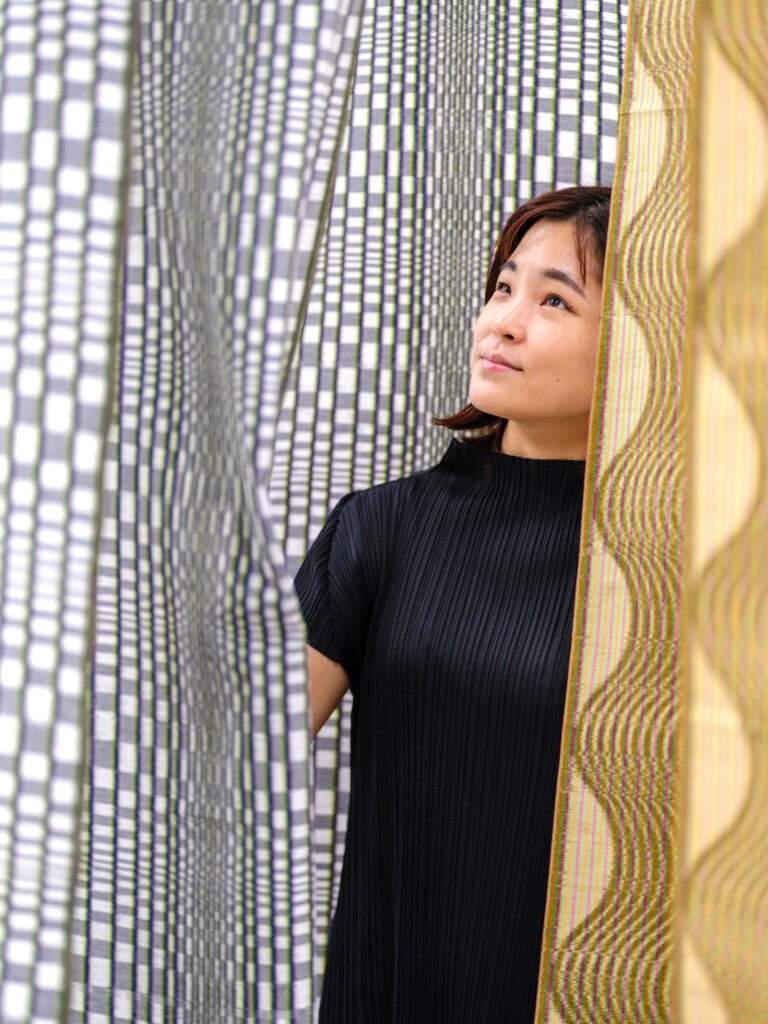
Fig. 1. Masaru Matsui (right) and the author.Fig. 1. Masaru Matsui (right) and the author.(Kikuchi Naoko, 10 July 2026) Late May, I visited the atelier of the hikihaku craftsman, Masaru Matsui, who lives and works in Kyoto (Fig. 1). I wanted to know why my friend Natasha, with a broad knowledge of world textiles, was so much fascinated by the so-called hikihaku textiles and even moved to Kyoto to learn the technique.

Hikihaku in Japanese means 'woven foil'. Also known as hikibaku, it is an ancient, intricate technique, carried out by a ‘hakuya’ (a hikihaku-design craftsman), a ‘kiriya’ (cutting craftsman) and a ‘hataya’ (weaver). Masaru Matsui from Kyoto is a hakuya. The technique of hikihaku is based on the use of sheets of paper that are covered with (coloured) lacquer and (metallic) foils and slivers (Fig. 2), applied in decorative patterns, then cut into extremely thin and narrow strips that are subsequently woven into the warp structure of a piece of cloth. The strips are added to the cloth in such a way that the decorative patterns that were cut up in strips re-emerge on one side of the woven cloth.

Fig. 2. Gold foil for hikibaku.Fig. 2. Gold foil for hikibaku.A standard sheet of washi used for hikihaku is 45 cm wide and 60 cm long. A hikihaku designer covers the paper with urushi lacquer or another substance, which works as both an adhesive and a paint. To create a black lacquer, for instance, iron powder is added. The basic colour of urushi is honey-brown, but can be altered by adding pigments or other substances to achieve different colours. The use of urushi for hikihaku, however, is now becoming less popular, because its handling is difficult. It changes colour with temperature, humidity and time, and also may cause a rash on the skin when wet. But Matsui still loves urushi because of its durability, glossy coat and colour.

After covering the paper with the coloured lacquer, he adheres the foils and slivers of gold, silver, platinum, mother-of-pearl or lapis lazuli to complete the intended decorative pattern. He then marks the paper on the back and cuts it into thin strips of c. 0.3 mm. A precise and perfect cut is crucial, otherwise the decorative pattern cannot be correctly woven into the cloth. A highly skilled craftsman will cut the strips with a slitter, sandwiching them between layers of papers to keep them flat and stable. 

Fig. 3. Hikibaku obi created by Masaru Matsui.Fig. 3. Hikibaku obi created by Masaru Matsui.To create an obi with hikihaku decoration (Fig. 3), the strips are woven over and under the warp threads of the cloth. During the weaving, the marks of the pattern on the back of the strips are constantly checked with the mirror that is placed on the back of the loom. The weaving itself used to be carried out by hand, with a ‘hera’ (shuttle), but nowadays a shuttle loom is often being used. 

Fig. 4. Hikibaku obi with a hikibaku design of drum and flutes in bags.Fig. 4. Hikibaku obi with a hikibaku design of drum and flutes in bags.

During the weaving process, a selvedge is created. The finished obi is 30 -32 cm wide and 4.3-4.5 m long. For one obi, five to six hikihaku sheets are required. The hikihaku covers the full length of the obi, but not the full width. The finished textile has a smooth surface and subtle shine. No hikibaku obi is identical. The colours and shine of the garment, if urushi is used, become more intense over time.

To see how the foil pattern is created, cut, woven, selvedged, and sewn, please watch this film, produced by Okamoto Orimono.

Attached are photoghraphs of two hikihaku obi which I found at the flea market of the Kitano-Tenmangu, Kyoto, after learning how to distinguish hikihaku obi (Figs. 4-5).  

Fig. 5. Fragment of an obi with hikibaku garden pattern.Fig. 5. Fragment of an obi with hikibaku garden pattern.History

Foil weaving was introduced in Japan from China. In the late Heian period (10th – 12th century), Chinese priests introduced brocade robes and other precious textiles. They included textiles that were decorated with foil strips. During the Muromachi period (in the late 16th century), textiles that were delicately decorated with  foil paper were woven in Nishijin (a Kyoto district). Local craftsmen had learnt the technique from Ming craftsmen who had migrated to Sakai in Japan. These textiles were used for the decoration of temples, for the robes of monks and for Noh costumes, but eventually also for luxurious obi.

In the late 19th century, chemical lacquer and the mechanical slitter were introduced. Until then washi was folded and cut with a knife. In the post-war period (1950s – 1970s), the kimono industry flourished, and the slitter or guillotine cutter was much improved for mass production. In the 1980 -1990’s, a large variety of metallic foils were used to cater to people’s taste.

Fig. 6. Kawashima chair, with hikibaku decoration, by Masaru Matsui.Fig. 6. Kawashima chair, with hikibaku decoration, by Masaru Matsui.Masaru Matsui

Masaru Matsui started working as a salesman for the hikihaku company of his uncle in 1983.  Observing hikihaku craftsmen working for their clients, he learned how to make hikihaku. As the demand was high, Matsui started to make hikihaku himself and officially became a traditional hikihaku craftsman. With his skill and artistic talent, he took commissions from prestigious weaving companies such as Kawashima Selkon. Even the then Empress Michiko purchased one of his hikihaku obi, which she wore on her birthday and other important occasions.

However, the kimono industry gradually declined. When his ten-year old son Riku said that he wanted to become a hikihaku craftsman, Matsui suggested that Riku should pursue his own path. In later, Riku became a guitarist (Fig. 7). The number of craftsmen cutting the paper also declined sharply – only two are left, both over 70 years old.

However, the textile companies of Kawashima Selcon and Kusuka Fabric have since started to use hikihaku for interior decoration, such as for high-end chair (Fig. 6) and the luxurious car upholstery. Please read more about the high-end chair of Kawashima Selcon and the BMW interior decoration from the links below; 

Fig. 7. The guitar of Riku, the son of Masaru Matsui, decorated with hikibaku.Fig. 7. The guitar of Riku, the son of Masaru Matsui, decorated with hikibaku.In spite of a growing market, the use of hikihaku for a broader range of interior decoration, the cutting of hikibaku strips remains a problem. The maximum width of the guillotine blade is 120 cm, while many interior textiles require a width of 150 cm. Matsui now considers using the cutting machine for Saga – Nishiki, whereby hikibaku is used for warp threads over 4 m long. The machine has many wafer-thin circle blades to cut the warps, and hikihaku is rolled up on the other side. By setting it horizontally, the width problem can be solved. The problem is the introduction cost, finding cutting craftsmen, and the difficulties in weaving.

In the meantime, Matsui started to use his design skills for other items; smartphone cases, instrument decoration, billiard cues and mini art panels. Applying hikihaku to wood works well, because urushi is the sap of lacquer trees. He loves the fact that his designs continue old traditions. He feels fortunate that he can keep working, if not only for obi. As the last craftsman to use urushi for hikihaku, he hopes this technique is well-recorded for the future. Although still taking commissions for the finest obi, he also wants to decorate large objects such as interior panels and plaster walls. There is no limit for application of gold leaf,  says Matsui.

References:

  • Kirihata, K. and Matsuo, H. (1986), IWANAMI GRAPHICS 34 Nishijin - ori, Traditional technique, [IWANAMI GRAPHICS Denshō no waza], Iwanami Shoten, Publishers
  • Ogasawara, S. (1998), The basic knowledge of viewing dye and weaving [Some to ori no kanshō kiso chisiki], Shibundo

Fig. 1. Observing the micro-structure of different textile fibers during a TRC course. Photograph by author.Fig. 1. Observing the micro-structure of different textile fibers during a TRC course. Photograph by author.(Frieda Iting Chen, 11 July 2026) This February, I started my internship at the Textile Research Centre (TRC) Leiden as part of my master's programme. Coming from a background in anthropology and heritage studies, I was excited to gain hands-on experience in museum practice and to learn how textile collections are researched, documented, and presented to the public.

Learning through courses and workshops

During my internship, I participated in a variety of workshops and courses organised by the TRC. These activities introduced me to different aspects of textile studies, from textile production techniques to museum collections. Unlike university lectures, these sessions emphasise hands-on learning and allow participants to experience different textile techniques firsthand.

Fig. 2. Learning how to card raw wool before spinning it into yarn. Photograph by author.Fig. 2. Learning how to card raw wool before spinning it into yarn. Photograph by author.For example, during one of the courses, I had the chance to observe the microstructure of different textile fibres (Fig. 1). By observing cotton, wool, and other fibres under a microscope, I learned how their physical characteristics differ and how these differences influence the appearance, texture, and properties of textiles. This experience also helped me better understand how fibre identification is carried out in textile research.

Another memorable experience was wool processing. I learned how raw wool is prepared to align the fibres before being spined into yarn (Fig.  2). Although the process required patience and practice, it gave me a much deeper understanding of how wool textiles are made, from raw fibre to finished yarn.

I also had the opportunity to learn basic weaving techniques using a small tabletop loom (Fig.  3). Through the weaving process, I came to understand how factors such as the tension of the threads, the density of the weave, and even the smallest adjustments can affect the appearance and texture of the final textile.

Fig. 3. Learning basic weaving techniques on a tabletop loom. Photograph by author.Fig. 3. Learning basic weaving techniques on a tabletop loom. Photograph by author.Together, these hands-on projects provided me with a much deeper understanding of textile production, from the microstructure of fibres to the processes of spinning and weaving.

Besides learning about textiles only through books or museum displays, I was able to experience how they are actually made. This practical knowledge has also changed the way I observe textile collections, allowing me to better understand the techniques and decisions behind each finished piece.

Textile Inspiration Day

Another memorable experience during my internship was participating in Textile Inspiration Day on 14 March, an annual event held in Leiden that brings together textile enthusiasts, artists, and organisations, it created a welcoming space where people with a shared interest in textiles could meet, exchange ideas, and learn from one another.

Fig. 4. Welcoming visitors to the TRC stand during Textile Inspiration Day.Fig. 4. Welcoming visitors to the TRC stand during Textile Inspiration Day.During the event, I assisted with guided tours at the TRC stand, introducing visitors to TRC and some selected textiles produced betwee 1920 and 1945 and answering questions about us (Fig. 4). It was a really precious opportunity to communicate textile knowledge to the public.

What I enjoyed the most was seeing how textiles could bring people together. Visitors came from different backgrounds, but they shared a common curiosity about textiles. Some exchanged techniques, while others shared personal stories about weaving or sewing.

It reminded me again that textiles are not only objects that are being worn or displayed in museums, but also a way of connecting people through shared interests and experiences.

Fig. 5. Photographing a Japanese indigo-dyed handkerchief from the TRC collection. Photograph by author.Fig. 5. Photographing a Japanese indigo-dyed handkerchief from the TRC collection. Photograph by author.Photographing the collection

Besides participating in public events, I also had the opportunity to work behind the scenes by assisting with the photography of the TRC collection (Fig. 5). Before my internship, I had never considered how much preparation was involved in documenting museum collections.

From setting up the lighting and background to carefully positioning each object, every step was important in creating clear and accurate images for the textile. This experience introduced me to an important part of the museum's daily work that visitors rarely get to see.

Curating an Exhibition and Guiding Visitors

One of the most rewarding parts of my internship was contributing to the preparation of a mini exhibition under the guidance of Augusta de Gunzbourg, TRC's exhibition and education officer. We chose the Miao people from China as the exhibition theme, because the TRC has an extensive collection of Miao textiles, representing a wide range of regional styles and traditions.

Fig. 6. Installing exhibition texts and making the final adjustments before the exhibition opening. Photograph by author.                                                                                                                                                                    Fig. 6. Installing exhibition texts and making the final adjustments before the exhibition opening. Photograph by author. This experience allowed me to see how research could be transformed into an exhibition that is accessible and engaging for the public. The preparation began with exploring the collection. I examined numerous storage boxes and carefully selected objects that best illustrated the diversity of Miao clothing. At the same time, I read many academic studies to identify the different Miao subgroups represented by each textile and to better understand their distinctive clothing traditions.

The exhibition was organised around three main themes: the construction and decorative elements of Miao dress, the diversity of Miao clothing traditions, and the ways contemporary Miao clothing incorporates influences from Han Chinese and Western fashions. Based on this research, I also wrote the exhibition texts to introduce the objects and provide visitors with cultural and historical context.

In addition to the research, I had the opportunity to participate in the practical side of exhibition preparation. I learned how to make display mounts for the textiles, installed the objects, and decided their placements within the exhibition space (Fig. 6). These tasks showed me that exhibition design is not only about presenting beautiful objects, but also about thinking carefully about how visitors move through a space and how stories can be communicated effectively.

Fig. 7. Visitors exploring the exhibition and learning about Miao textiles through guided tours. Photograph by author.Fig. 7. Visitors exploring the exhibition and learning about Miao textiles through guided tours. Photograph by author.Throughout the entire process, I was guided by Augusta, who generously shared her experiences in exhibition planning and museum practice. Working alongside her gave me valuable practical skills and a much better understanding of how object selection, exhibition design, and interpretation come together to create an engaging exhibition.

At the end of the exhibition, I invited several of my fellow students from Leiden University to visit (Figs. 7-8). It was rewarding to share the exhibition with them and introduce them to the diversity of Miao textiles.

Fig. 8. Visitors exploring the exhibition and learning about Miao textiles through guided tours. Photograph buy author.Fig. 8. Visitors exploring the exhibition and learning about Miao textiles through guided tours. Photograph buy author.Conclusion

Looking back, what I will remember most is not only the textiles themselves, but also everything that happens behind the scenes, from research and documentation to exhibition design and conversations with visitors. This internship has shown me how museums connect collections, knowledge, and people, and it has inspired me to continue exploring museum practice in the future.

Finally, I would like to thank everyone at the TRC for creating such a supportive environment. I am especially grateful for their kindness, patience, and willingness to offer guidance whenever I needed help. Their support made this internship both an enjoyable and rewarding learning experience.

(Gillian Vogelsang, 1 July 2026) Two years ago, I wrote a blog called The Three A’s and Afghanistan, which was about how ideas, patterns and objects, move across the world and always have done so. In that context I mentioned the importance of the three A’s for the TRC’s approach to textiles, namely Adoption, Adaptation, and Acknowledgement.

A jacket made from a red cotton cloth decorated with a multi-coloured floral and paisley pattern. From the island of Marken, The Netherlands, 1937 (TRC 2007.0525c).A jacket made from a red cotton cloth decorated with a multi-coloured floral and paisley pattern. From the island of Marken, The Netherlands, 1937 (TRC 2007.0525c).

The Textile Research Centre, Boerhaavelaan 6, Leiden.The Textile Research Centre, Boerhaavelaan 6, Leiden.The TRC has recently moved to new premises, an early 20th century urban villa just behind the Leiden railway station. There is a lot of work to be done and we are looking for several new volunteers!

In particular we need:

- An experienced librarian who can take over the running and development of the TRC textile and dress library (currently standing at 7000 registered books), as well as help build up an image library that will include prints, photographs, postcards, charts and patterns. One to two days per week.

- A general assistant to help on a regular basis with the TRC Collection of textiles, clothing and accessories from around the world. Experience in object photography would be an advantage.

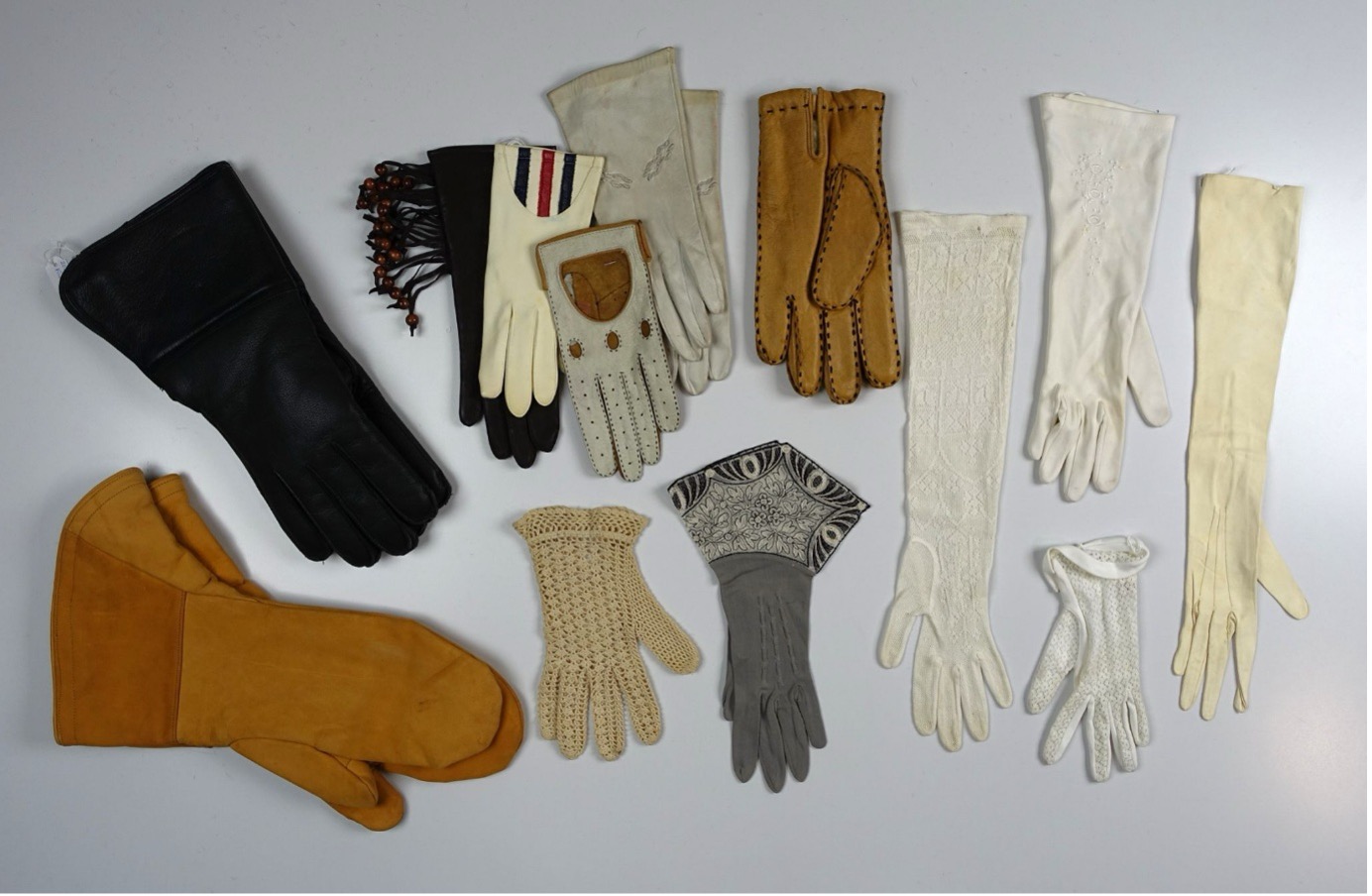
 - A volunteer is also needed to help catalogue the TRC's extensive and growing collection of hand (bobbin, needle, crochet, knitted, etc.) and machine-made lace. These items take the form of individual samples, as well as items (caps, lappets, gloves, garments, etc) made from or decorated with lace.

If you are interested, please contact Gillian Vogelsang-Eastwood, Dit e-mailadres wordt beveiligd tegen spambots. JavaScript dient ingeschakeld te zijn om het te bekijken., or 06-28830428

I could not resist putting this on the TRC webpages: an interview with Gillian Vogelsang-E`astwood, director TRC, published by an online news service about the Netherlands. I am very proud of her! Click on the photograph to read the item. Willem Vogelsang.

Gillian Vogelsang-Eastwood, photographed for DutchNews, June 2026.Gillian Vogelsang-Eastwood, photographed for DutchNews, June 2026.

Het Leidsch Dagblad publiceerde vandaag, woensdag 10 juni, een artikel van twee pagina's over de TRC, de verhuizing naar de Boerhaavelaan en de ambities voor de toekomst. Het vestigt ook de aandacht op de textielboekenmarkt aanstaande zaterdag, vanaf 10.00 uur.

Find the books you have long been looking for, and help support the TRC by buying some of them! 

We are going to have our annual book sale on Saturday 13th June, from 10.00 until 15.00. Hundreds of second-hand textile, clothing and accessory books will be on sale, at very reduced prices! 

The TRC regularly receives donations of books. We select them en see whether we can use them and whether the titles may already be included in the extensive TRC textile library. If we cannot use the books, we very much want to pass them on to other textiles friends against a low price.

Why don't you pop in and have a look? You may find the book that you have long been looking for. You will also have the chance to see the TRC’s current exhibition about appliqué textiles called khayamiya which come from Egypt, as well as seeing the TRC’s new building and garden, and of course meeting TRC staff and others.

Our address is: Boerhaavelaan 6, 2334 EN Leiden, just behind the Leiden Central Railway Station.

The Textile Research Centre, Leiden.The Textile Research Centre, Leiden.For three years starting mid-2026, the Textile Research Centre, Leiden, the Netherlands, is offering a total of seven junior and four senior fellowships for up to six months each. The fellowships are being sponsored by the Gieskes-Strijbis Foundation, Amsterdam. Fellows are invited to carry out research based on the TRC’s extensive textiles and dress collection. The junior fellows will be supervised and assisted by TRC staff; senior fellows will carry out independent research.

The TRC will regularly advertise for the fellowships. Fellows are selected by a special committee of TRC staff and/or Board members after, if appropriate, the advice of external specialists.

The first fellow, appointed per 1 April, is Flora Kovacs-Wester, who on 23 May 2026 wrote an interim report.

We are now opening the second round of the fellowships that covers:

  • Two junior positions
  • One senior position

These will be starting in October 2026 (with a degree of flexibility), for a duration of up to 6 months. Applications for these positions should be submitted by email to the TRC by 20 June 2026 (Dit e-mailadres wordt beveiligd tegen spambots. JavaScript dient ingeschakeld te zijn om het te bekijken.)  with the reference: ‘Fellowship programme Junior/ Senior' (depending on the position applied for).

Subcategorieën

Zoek in TRC website

Contact

Boerhaavelaan 6
2334 EN Leiden.
Tel. +31 (0)71 5134144 (kantooruren)  
office@trcleiden.org

Het TRC is elke dag geopend tussen 10.00 en 15.00 uur.

facebook 2015 logo detail


instagram vernieuwt uiterlijk en logo


Bankrekening

NL39 INGB 0002 9823 59, t.a.v. Stichting Textile Research Centre.

Financiële giften

Het TRC is afhankelijk van project-financiering en privé-donaties. Al ons werk wordt verricht door vrijwilligers. Ter ondersteuning van de vele activiteiten van het TRC vragen wij U daarom om financiële steun:

Giften kunt U overmaken op bankrekeningnummer (IBAN) NL39 INGB 000 298 2359, t.n.v. Stichting Textile Research Centre. BIC code is: INGBNL2A

U kunt ook, heel simpel, indien u een iDEAL app heeft, de iDEAL-knop hieronder gebruiken en door een bepaald bedrag in te vullen: 


Omdat het TRC officieel is erkend als een Algemeen Nut Beogende Instelling (ANBI), en daarbij ook nog als een Culturele Instelling, zijn particuliere giften voor 125% aftrekbaar van de belasting, en voor bedrijven zelfs voor 150%. Voor meer informatie, klik hier