
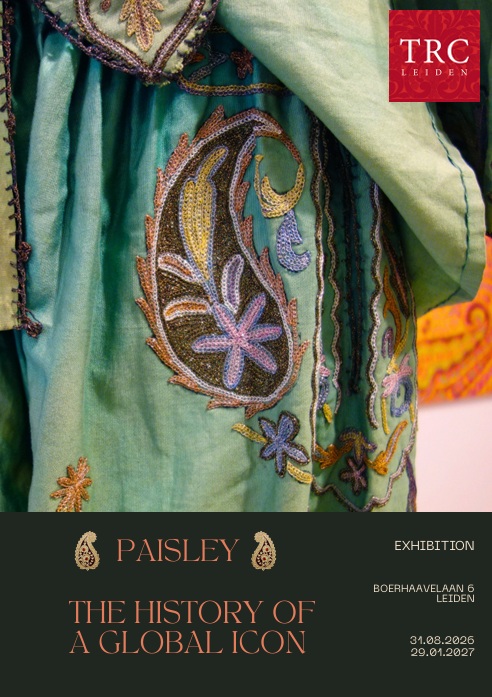
On 31 August, the TRC opened its doors for a new exhibition: Paisley: The History of a Global Icon (by the curator, Augusta de Gunzbourg)
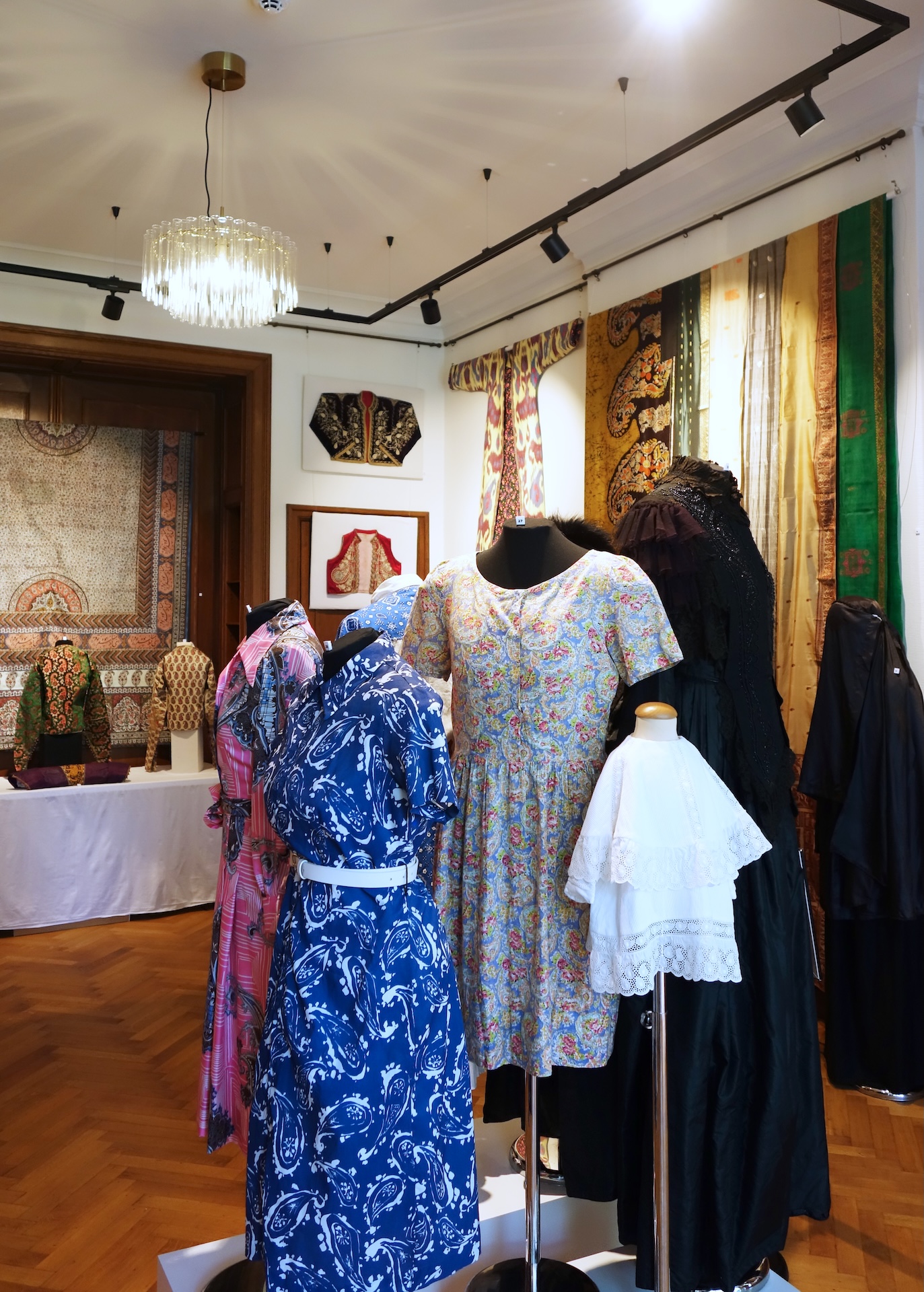 The new Paisley exhibition at the TRC. Photograph by the curator, Augusta de Gunzbourg.We all know the motif, that cone shape that is curved at the top, which is found on Kashmir shawls, men’s ties, 1970’s hippie prints, or even on cowboy bandanas. Paisley is everywhere !
It is so well-known that it is generally accepted as just being one of those patterns that have always been there, but we rarely think think about its origins and why it is so popular all over the world.
The TRC exhibition is a re-edited, expanded version of one of its past, and online exhibitions (interrupted by the COVID-pandemic) about the famous Paisley motif, and this time mounted in the TRC's new premises along the Boerhaavelaan (No.6) in Leiden.
The exhibition explores the history of the Paisley motif, its ancient origins and its development to the present day. It also looks at how it is currently used for a wide variety of textiles and garments all over the globe.
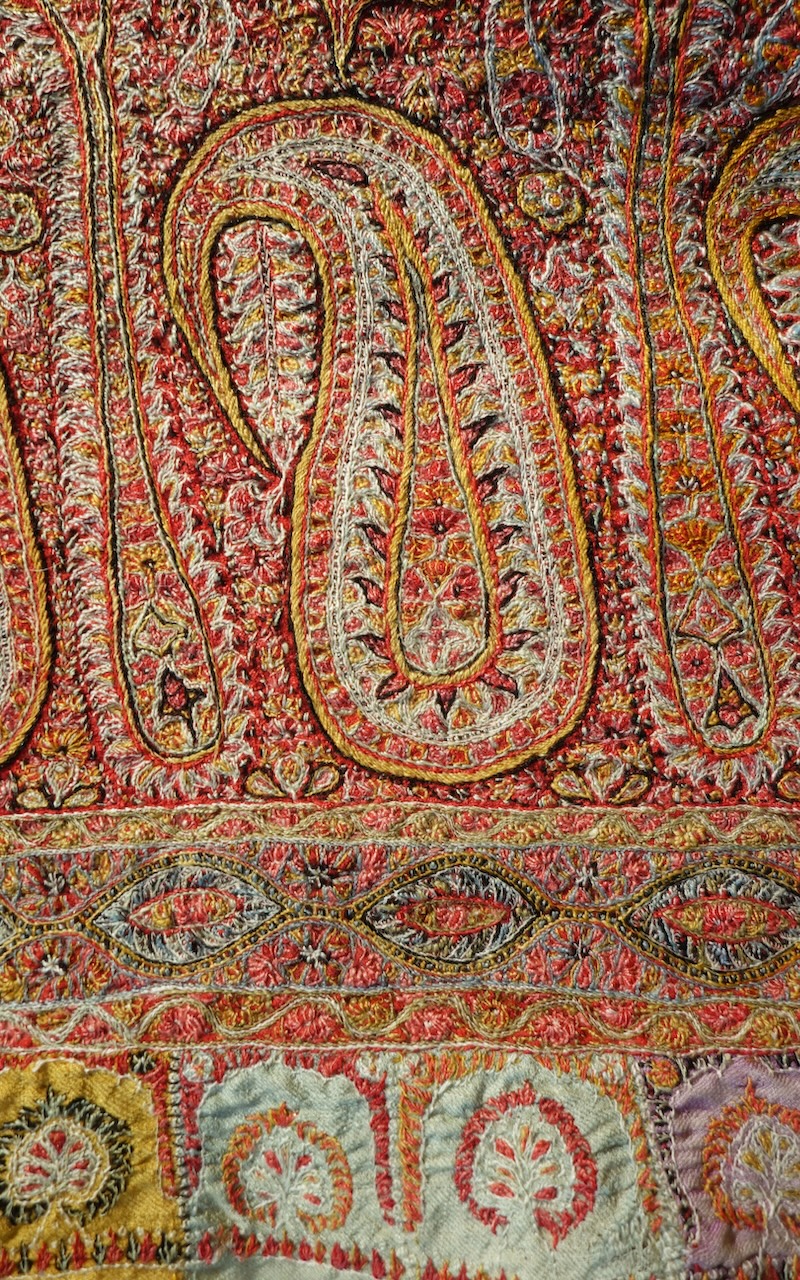 The Paisley (buteh) motif on a Kashmir shawl, presented in the TRC Paisley exhibition.The motif first appeared in Iran under the name of buteh. It was further developed for use on the famous Kashmiri shawls. It was exported to Europe, through the (British) East India Company, from the 17th century onwards. In Europe it was copied and used in local industry, and hence again distributed across Europe.
The motif, although quintessentially Eastern in origin where its name often is a variation on buteh, owes its Western name to the Scottish town of Paisley, a major weaving site during the Industrial Revolution.
Nowadays and with few exceptions, Paisley is seen as a traditional “local" motif in most countries around the world, even though it is in fact used globally.
The exhibition can be seen at the TRC during opening hours, every week-day between ten in the morning and three in the afternoon, and on special occasions further to be announced.
The exhibition can be seen until 29 January 2027. Entrance is free.
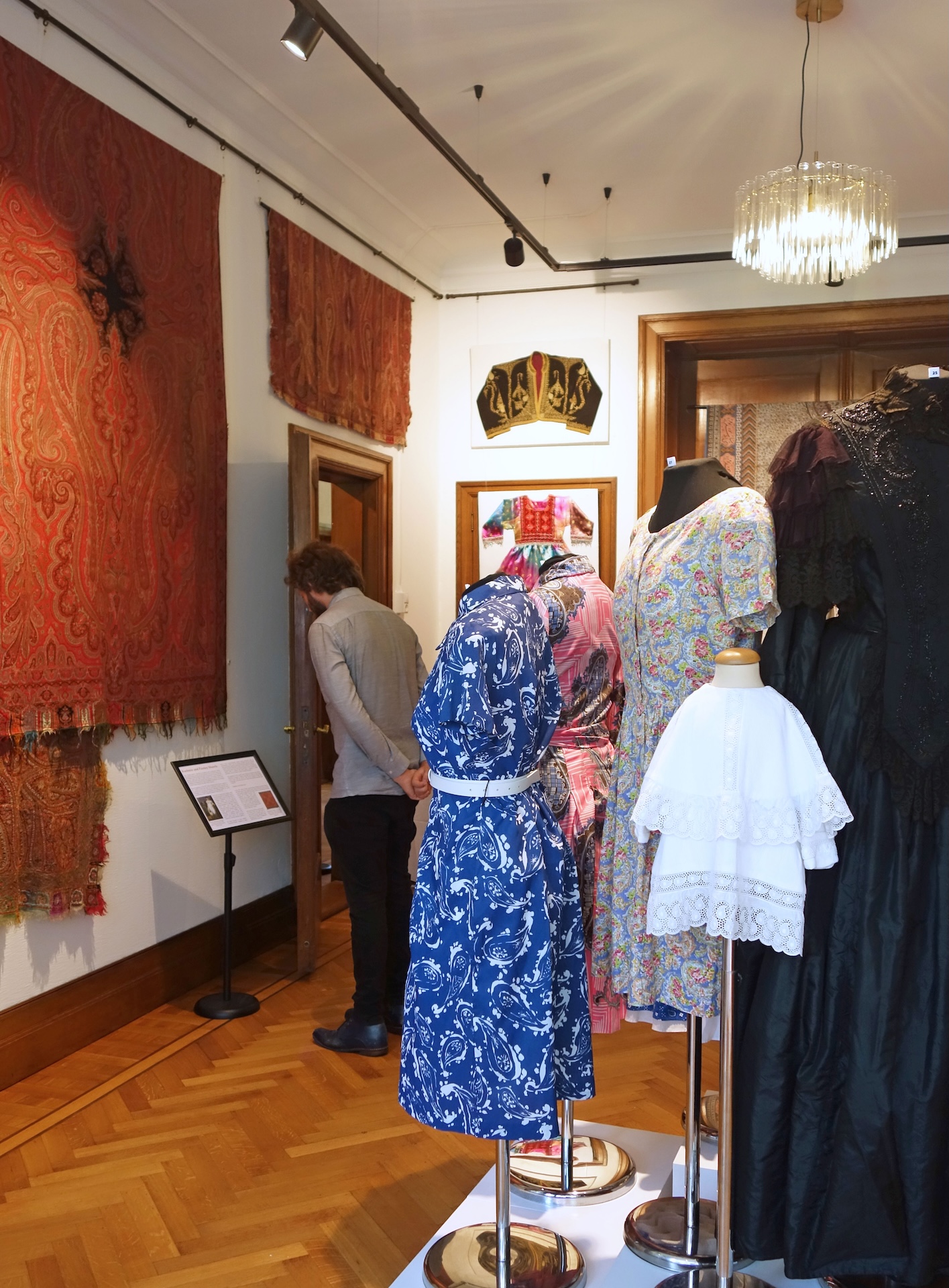 Paisley exhibition at the TRC. Photograph by the author.
 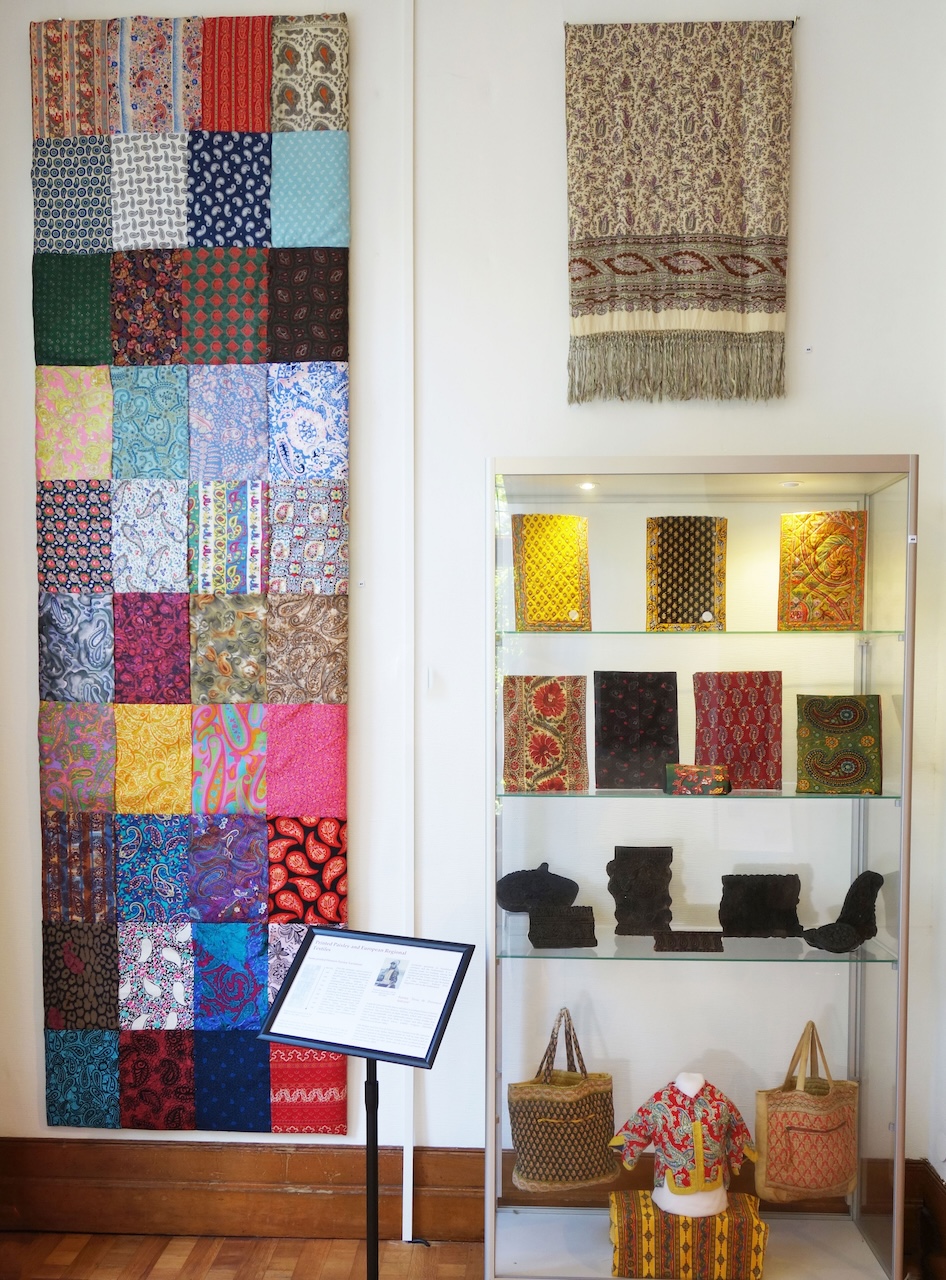 Paisley exhibition at the TRC. Photograph by the author.
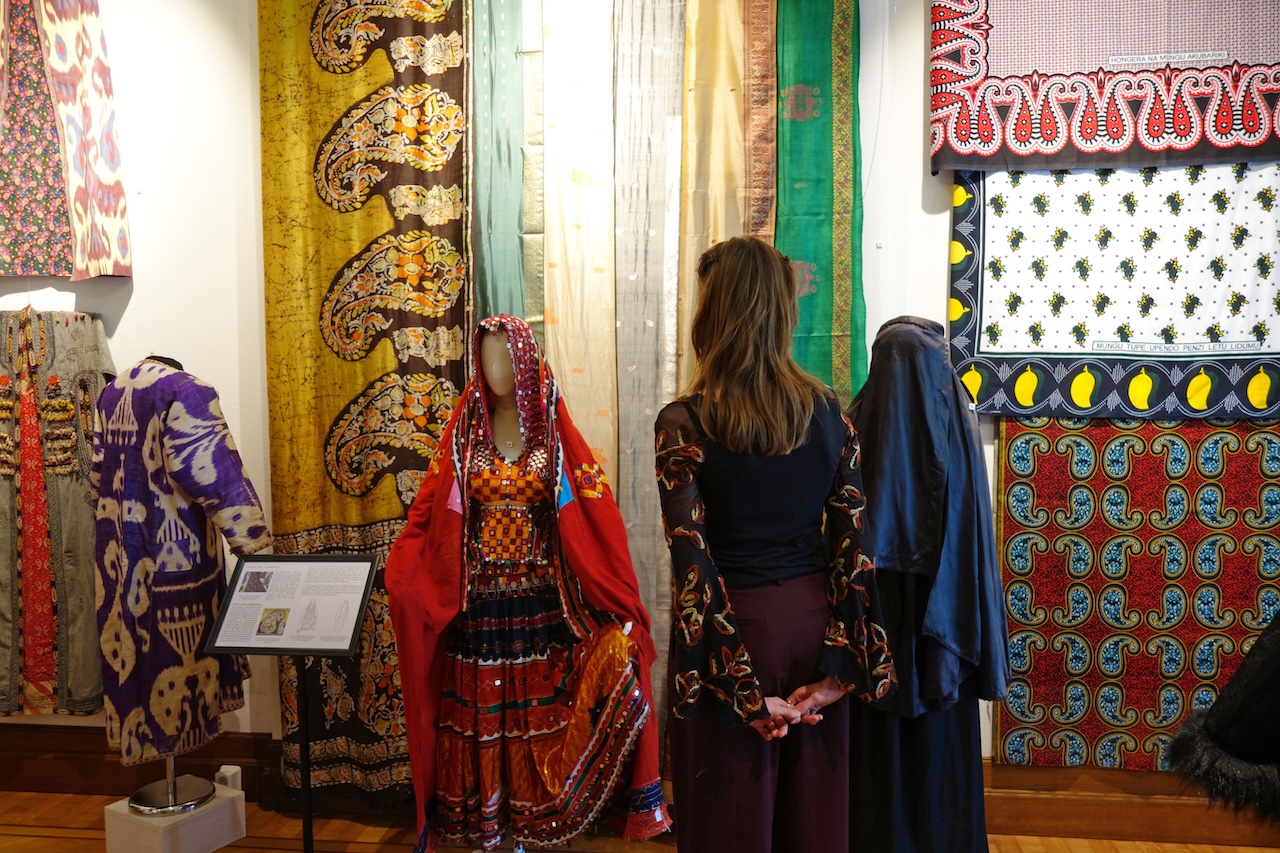 Paisley exhibition at the TRC. Photograph by the author.
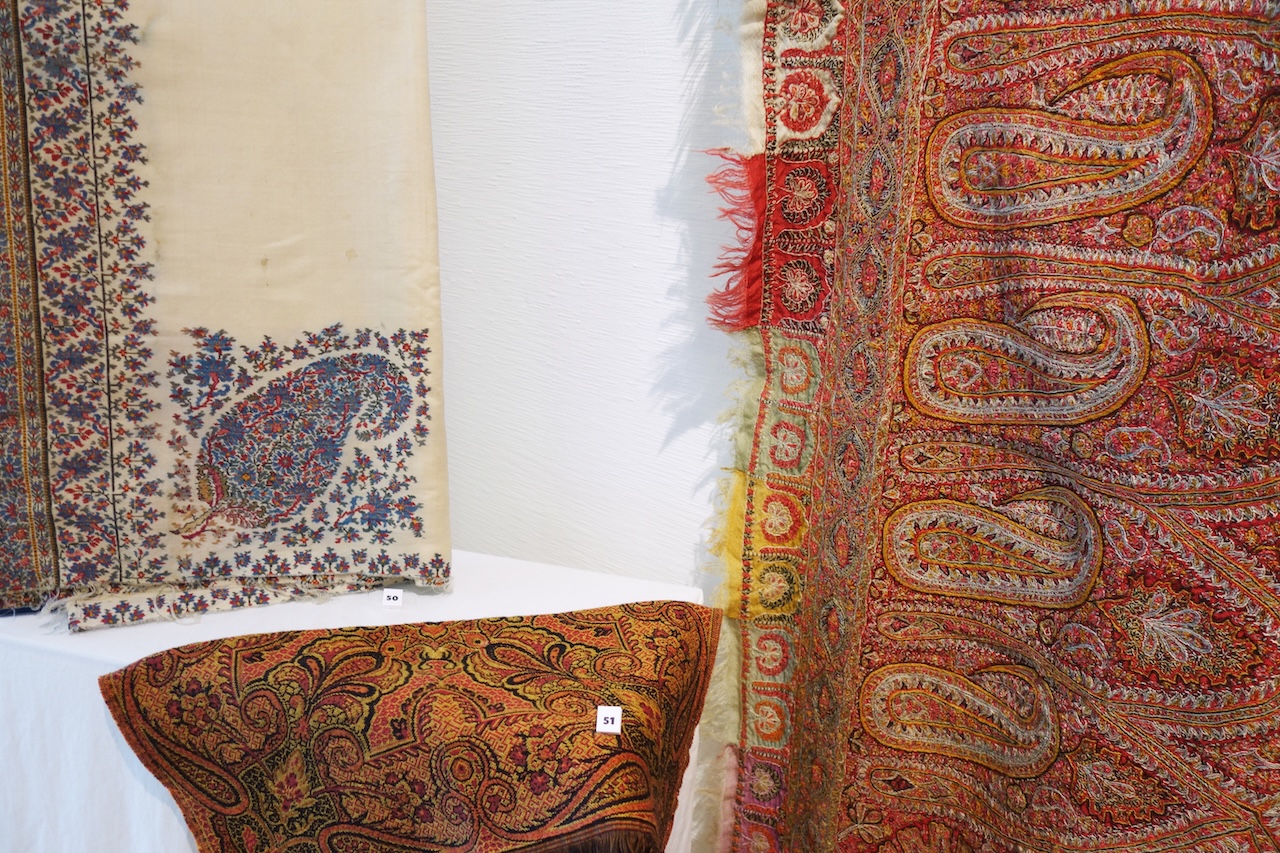 Textiles with Paisley (buteh) motifs, presented in the TRC exhibition.