• F1
  • F2
  • F4
  • F3

Tarz embroidery is a centuries-old Moroccan art where stories, symbols and skills meet. This techniques has been carried from one generation to the next, teaching precision and dedication with every stitch. The detailed patterns carry underlying meaning, reflecting on themes like protection, harmony and happiness. Tarz embroidery courtesy of Nadia el BarnoussiTarz embroidery courtesy of Nadia el Barnoussi
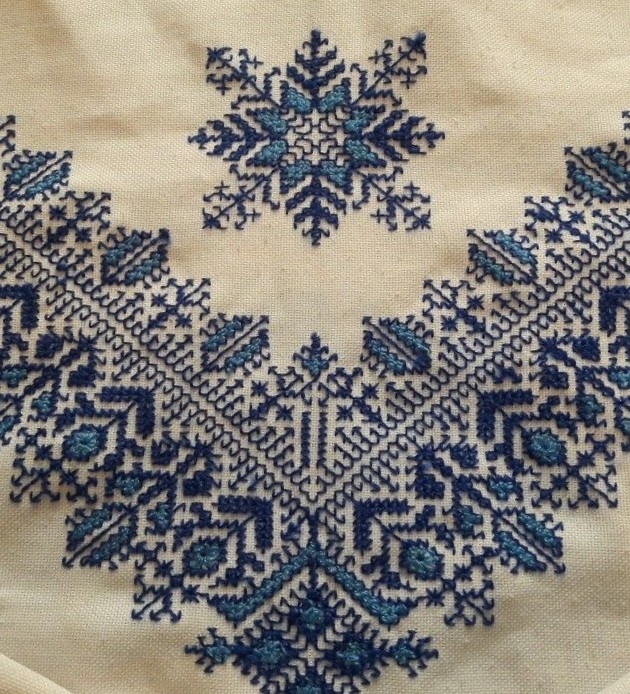
Nadia el Barnoussi is fashion and textile designer inspired by her own heritage and narratives of the Amazigh people, who are native to Nothern Africa. Her work balances tradition and innovation. She uses a variety of textile techniques to translate the rich Amazigh past to the present day.

"Handcrafting allows for an attention to detail, which extends beyond the design, growing into a story. This story connects past and present, reviving the beauty of Moroccan crafts. As a designer I feel called to continue these stories and pass them on to the next generation."

- Nadia el Barnoussi

  • Date: Wednesday, the 18th of November 2026.
  • Time: 10.00 - 13.00.
  • Venue: TRC Leiden, Boerhaavelaan 6, 2334 EN, Leiden.
  • Teacher: Nadia el Barnoussi
  • Language: Dutch, English if necessary.
  • Costs: 45 euros. Coffee, tea and materials are provided.
  • Maximum number of participants: 8. Minimum: 4.
    • If the minimum number of participants is reached, confirmation and invoices shall be sent.

Please register in advance: This email address is being protected from spambots. You need JavaScript enabled to view it.

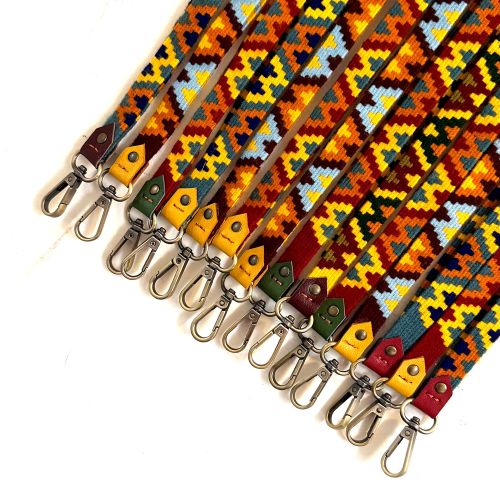
A Persian kilim is a traditional flat-woven textile from Iran, known for its geometric patterns, vivid colors, and hand-weaving techniques passed down through generations.Kilim woven key chains, image by courtesy of Mohamad KhezriKilim woven key chains, image by courtesy of Mohamad Khezri Lightweight and flexible, kilims embody Iran’s rich cultural heritage and often tell stories of community, nature, and everyday life.

This workshop introduces participants to the art of miniature kilim weaving, offering a hands-on and enriching experience. By adapting traditional methods to smaller scales, participants will explore their creativity while learning a unique cultural craft bridging past and present. Each participant creates a small woven piece such as a bracelet, bookmark, or keychain.

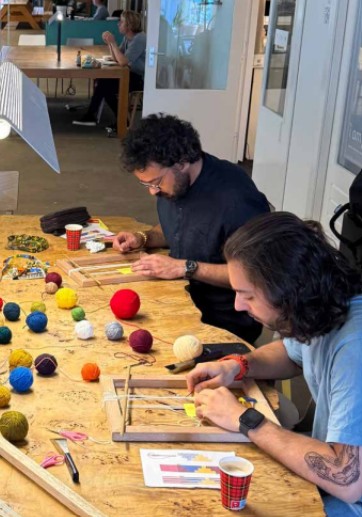
The workshop is designed for craft enthusiasts, art students, and anyone interested in textile arts, regardless of prior experience. Participants will benefit from a welcoming and collaborative environment making it suitable for all skill levels.Kilim weaving in progress, image courtesy of Mohamad Khezri.Kilim weaving in progress, image courtesy of Mohamad Khezri.

  • Date: Wednesday, the 21st of October 2026.
  • Time: 10.00 - 14.00.
  • Venue: TRC Leiden, Boerhaavelaan 6, 2334 EN, Leiden.
  • Teacher: Mohamad Khezri.
  • Language: English.
  • Costs: 45 euros. Coffee, tea and materials are provided.
  • Maximum number of participants: 8. Minimum: 4.
    • If the minimum number of participants is reached, confirmation and invoices shall be sent.

Please register in advance: This email address is being protected from spambots. You need JavaScript enabled to view it.
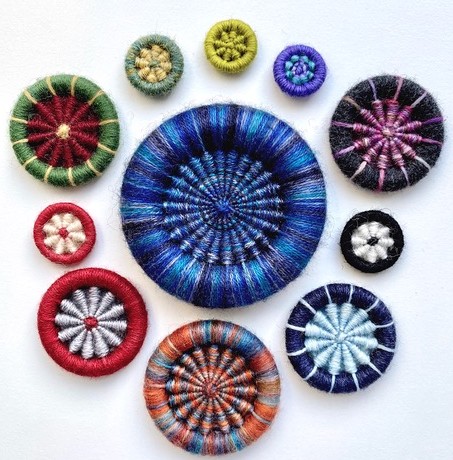
A Dorset button is a style of craft-made button originating in the English county of Dorset. Their manufacture was at a peak between 1622 and 1850, after which they were overtaken by machine-made buttons from factories. The most common form is the cartwheel button. Dorset buttons are a great way to use up small amounts for yarn. Also do they offer you a method to have buttons in the same material as your knitted or crocheted projects.

Dorset buttonsDorset buttons

In this workshop you will learn to create a cartwheel button, and discover the design possibilities. No special skills are required to join this workshop. Materials will be provided.

This workshop is given by Alice van Duijnen, who is experienced in many textile techniques ever since she learned knitting at the age of 6. She has taught knitting, crochet and weaving. As volunteer at the TRC she works on the technique oriented Reference Collection.

  • Date: Wednesday, the 30th of September 2026.
  • Time: 10.00 - 13.00.
  • Venue: TRC Leiden, Boerhaavelaan 6, 2334 EN, Leiden.
  • Teacher: Alice van Duijnen.
  • Language: Dutch/English, as required
  • Costs: 45 euros. Coffee, tea and materials are provided.
  • Maximum number of participants: 8. Minimum: 4.
    • If the minimum number of participants is reached, confirmation and invoices shall be sent.

Please register in advance: This email address is being protected from spambots. You need JavaScript enabled to view it.
Examples of historical sewing stitchesExamples of historical sewing stitchesThis is the second edition of the historical hand sewing workshop at the TRC this year. Due to unexpected large interest, the workshop will be repeated on the 9th of October.

The sewing machine is a 19th-century invention. Before that, people sewed by hand. Textile finds from prehistoric times, the Roman period and the Middle Ages show which stitches the seamstresses used. During the workshop we look at these finds and make a pouch for which we use as many different stitches as possible for the seams and hems, ranging from simple and purely functional to elegant braiding stitches. For a blog about this workshop held in 2020, written by Nelleke Ganzevoort, click here.

Participants do not need to bring anything, except patience and possibly their reading glasses (because some stitches are quite delicate). 

This Wednesday morning workshop is given by Dorothee Olthof, an expert in the field of archaeological textiles and in the reconstruction of medieval and later clothing.

  • Date: Friday, the 9th of October 2026.
  • Time: 10.00 - 13.00 pm.
  • Venue: TRC Leiden, Boerhaavelaan 6, 2334 EN, Leiden.
  • Teacher: Dorothee Olthof.
  • Language: Dutch/English, as required
  • Costs: 45 euros. Coffee, tea and materials are provided. Reading glasses might be necessary for the more delicate stitches.
  • Maximum number of participants: 8. Minimum: 4. If the minimum number of participants is reached, confirmation and invoices shall be sent.

Please register in advance: This email address is being protected from spambots. You need JavaScript enabled to view it.

Embroidered dress yoke from Hebron, Palestine, early 20th century (TRC 2016.2035).Embroidered dress yoke from Hebron, Palestine, early 20th century (TRC 2016.2035).Embroidery has been used to decorate Palestinian clothing for centuries, it has been a way to express both individual skills and a connection to the village.

During the workshop we are going to talk about the rich and fascinating history of Palestinian dress, the meaning of some common embroidered patterns and the transformation that Palestinian dress went through until now. Subsequently, the participants will learn the basics of the Palestinian cross stitch by following a specific pattern from a particular region of Palestine. All materials will be provided by the TRC, and use will be made of the TRC Collection for showing examples.

  • Date: Wednesday, 20 May 2026.
  • Time: 10.00 - 13.00 pm.
  • Venue: TRC Leiden, Boerhaavelaan 6, 2334 EN, Leiden.
  • Teacher:  Fatima Abbadi.
  • Language: English (Dutch if necessary).
  • Costs: 45 euros. Coffee, tea and materials are provided.
  • Maximum number of participants: 8. Minimum: 4. If the minimum number of participants is reached, confirmation and invoices shall be sent.

 Please register in advance: This email address is being protected from spambots. You need JavaScript enabled to view it.


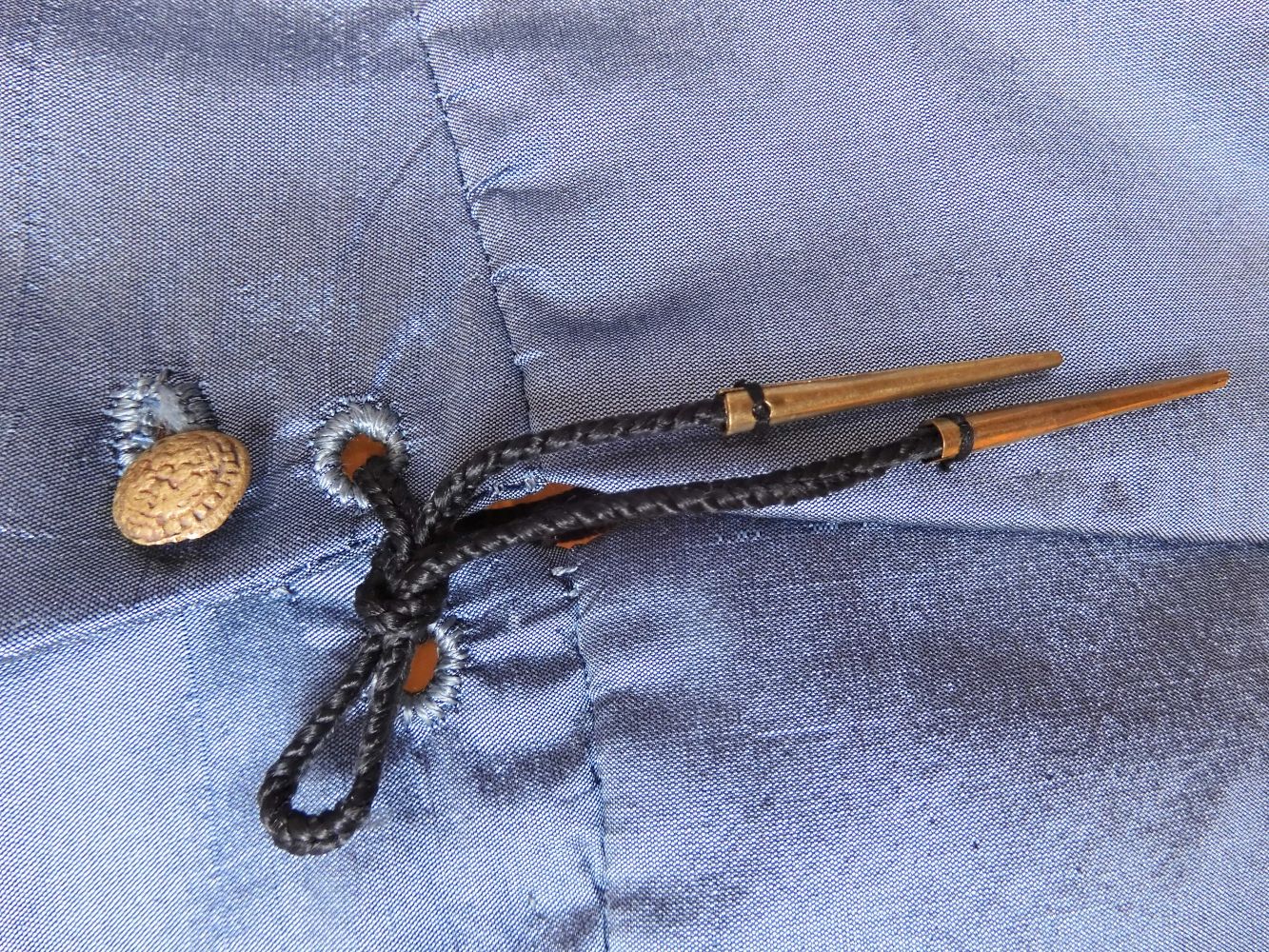
Aglets, also called points, are the ties used in medieval and early modern times to fasten garments: leather laces, plyed or knotted cords, braided or woven bands. We will start from historical images showing where and how aglets were used. A short presentation of historical materials and techniques will follow, and then the participants will be making one or more aglets themselves. A choice of several materials and techniques will be offered. There are no special requirements of knowledge or skills, and participants do not need to bring any tools or materials themselves.

This Wednesday workshop is taught by Geeske Kruseman, a dress historian specialising in early modern and medieval clothing. An aglet at the bottom of the buttons downs the centre front of a doublet c.1565-1570; the aglet is silk, woven on 2 tablets. Reconstruction and photo G.M. Kruseman.An aglet at the bottom of the buttons downs the centre front of a doublet c.1565-1570; the aglet is silk, woven on 2 tablets. Reconstruction and photo G.M. Kruseman.

  • Date: Wednesday, 19 August 2026.
  • Time: 10.00 - 13.00.
  • Venue: TRC Leiden, Boerhaavelaan 6, 2334 EN, Leiden.
  • Teacher: Geeske Kruseman.
  • Language: Dutch and/or English, as required
  • Costs: 45 euros. Coffee, tea and materials are provided.
  • Maximum number of participants: 8. Minimum: 4. If the minimum number of participants is reached, confirmation and invoices shall be sent.

 Please register in advance: This email address is being protected from spambots. You need JavaScript enabled to view it.
 

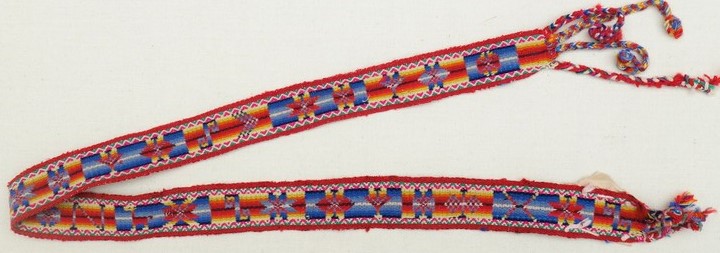
Tablet weaving (also known as card weaving) is an old technique for weaving strong, narrow and colourful bands. Already before Roman times. people used this technique to weave beautiful bands with patterns.

Card woven band from Bolivia, 20th century (TRC.2020.2778).Card woven band from Bolivia, 20th century (TRC.2020.2778).

During the workshop we look at examples from different times and different places. Then the participants learn how to card weave themselves. They also receive advice to weave as neatly and evenly as possible.

In principle, participants do not have to bring anything, but if you have weaving cards yourself, you can of course bring them. Please indicate when registering if you can bring your own cards, so that the teacher knows how many to provide. 

This Wednesday morning workshop is given by Dorothee Olthof, an expert in the field of archaeological textiles and the reconstruction of medieval and later clothing.

  • Date: Wednesday, 18 March 2026.
  • Time: 10.00 - 13.00 pm.
  • Venue: TRC Leiden, Boerhaavelaan 6, 2334 EN, Leiden.
  • Teacher: Dorothee Olthof.
  • Language: Dutch and/or English.
  • Costs: 45 euros. Coffee, tea and materials are provided.
  • Maximum number of participants: Maximum 10, minimum 4. If the minimum number of participants is reached, confirmation and invoices shall be sent.

The tablet weaving workshop is full. 

 Please register well in advance: This email address is being protected from spambots. You need JavaScript enabled to view it.
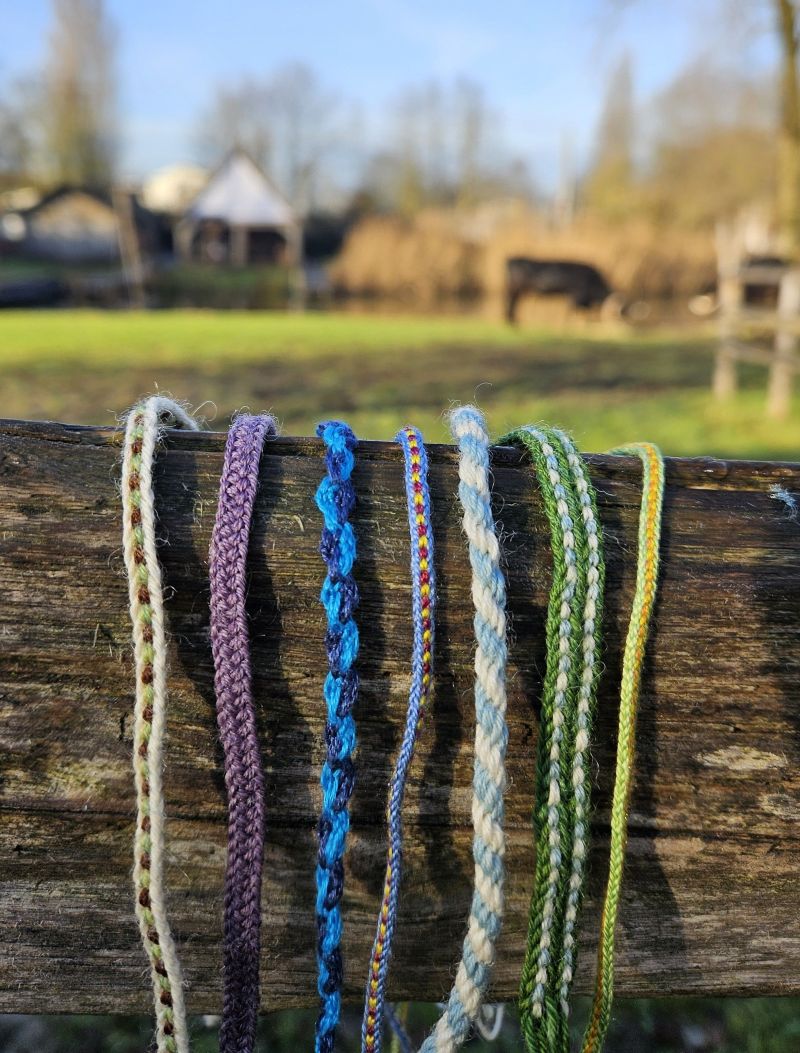
Examples of fingerloop braiding. Source: Karin VingerhoetsExamples of fingerloop braiding. Source: Karin VingerhoetsFingerloop braiding is an old technique to create decorative, but strong, cords. These cords have been used for centuries to close pouches or clothing, or to apply wax seals to official documents. Today these beautiful cords are wonderful bracelets or bookmarks.

The workshop will start with a presentation on historical examples of fingerloop braiding, after which participants will learn the technique themselves. There is ample time to make multiple cords, using multiple patterns. Whoever feels confident in their abilities can join forces to create a two create a two-person braid! 

The patterns we will use come from Tak V bowes departed by Elizabeth Benns & Gina Barrett. This work is based on an earlier 15th century manuscript from the collection of the British Library.

Fingerloop braiding requires some manual agility, but patience is the most important skill to bring. Materials will be provided for, but participants can bring their own threads if they wish to experiment.

This wednesday morning workshop will be taught by Karin Vingerhoets. She is a volunteer with the weavershouse in (pre)-historical museumpark Archeon. She specialises in historical textile techniques.

  • Date: Woensdag 16 september 2026.
  • Time: 10.00 - 13.00 uur.
  • Location: TRC Leiden, Boerhaavelaan 6, 2334 EN, Leiden.
  • Teacher: Karin Vingerhoets.
  • Language: Dutch (English if necessary).
  • Costs: 45 euros. Coffee, tea, biscuits and materials are included.
  • Maximum number of participants 8, minimum number of participants 4. When the minimum amount of participant has been reached, you will receive the confirmation and the invoice.

You can sign up for this workshop by emailing us at: This email address is being protected from spambots. You need JavaScript enabled to view it.
Search in the TRC website

Contact

Boerhaavelaan 6
2334 EN Leiden.
Tel. +31 (0)71 5134144 (office hours)  
office@trcleiden.org 

The TRC is open every day from 10.00 to 15.00

facebook 2015 logo detail 

instagram vernieuwt uiterlijk en logo


Bank account number

NL39 INGB 0002 9823 59, in the name of the Stichting Textile Research Centre.

Donations

The TRC is dependent on project support and individual donations. All of our work is being carried out by volunteers. To support the TRC activities, we therefore welcome your financial assistance: donations can be transferred to bank account number (IBAN) NL39 INGB 000 298 2359, in the name of the Stichting Textile Research Centre. BIC code is: INGBNL2A.

 You can also, very simply, if you have an iDEAL app, use the iDEAL button and fill in the amount of support you want to donate: 


Since the TRC is officially recognised as a non-profit making cultural institution (ANBI), donations are tax deductible for 125% for individuals, and 150% for commercial companies. For more information, click here